Preloader Close
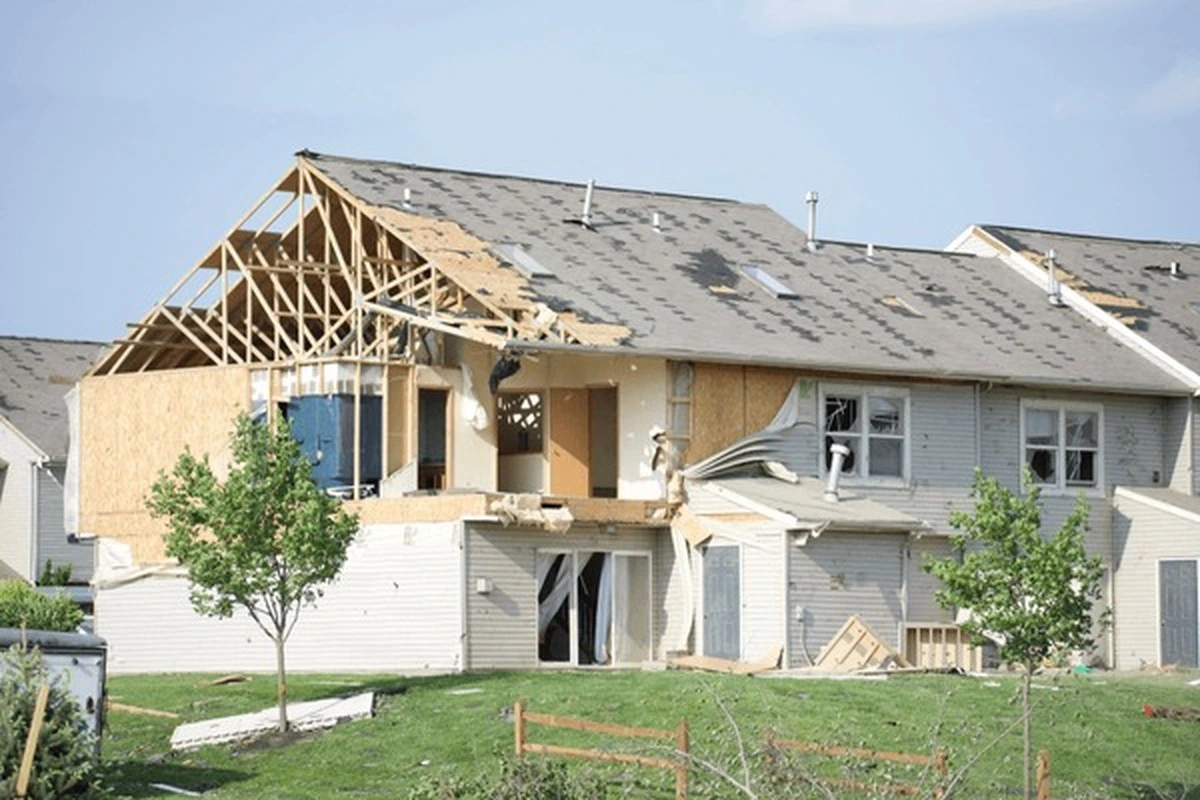
Wind storms can tear asphalt shingles from your roof, exposing underlayment and creating immediate leak risks that threaten ceilings, insulation, and structural integrity. Learning how to repair roof shingles blown off safely and correctly protects your home from water damage while saving hundreds compared to emergency contractor callouts. This comprehensive guide demonstrates proper repair techniques, explains the best way to adhere shingles to a roof to prevent future blow-offs, and clarifies when professional help becomes necessary.
Most homeowners can successfully replace 1-3 blown-off shingles using basic tools and proper fastening techniques, though steep roofs, widespread damage, or heights exceeding two stories require licensed contractors for safety and warranty compliance. Understanding correct nail placement, supplemental adhesive application, and wind-resistant installation methods ensures repairs withstand future storms rather than failing weeks later.
Table of Contents
Is it safe to repair blown-off shingles yourself?
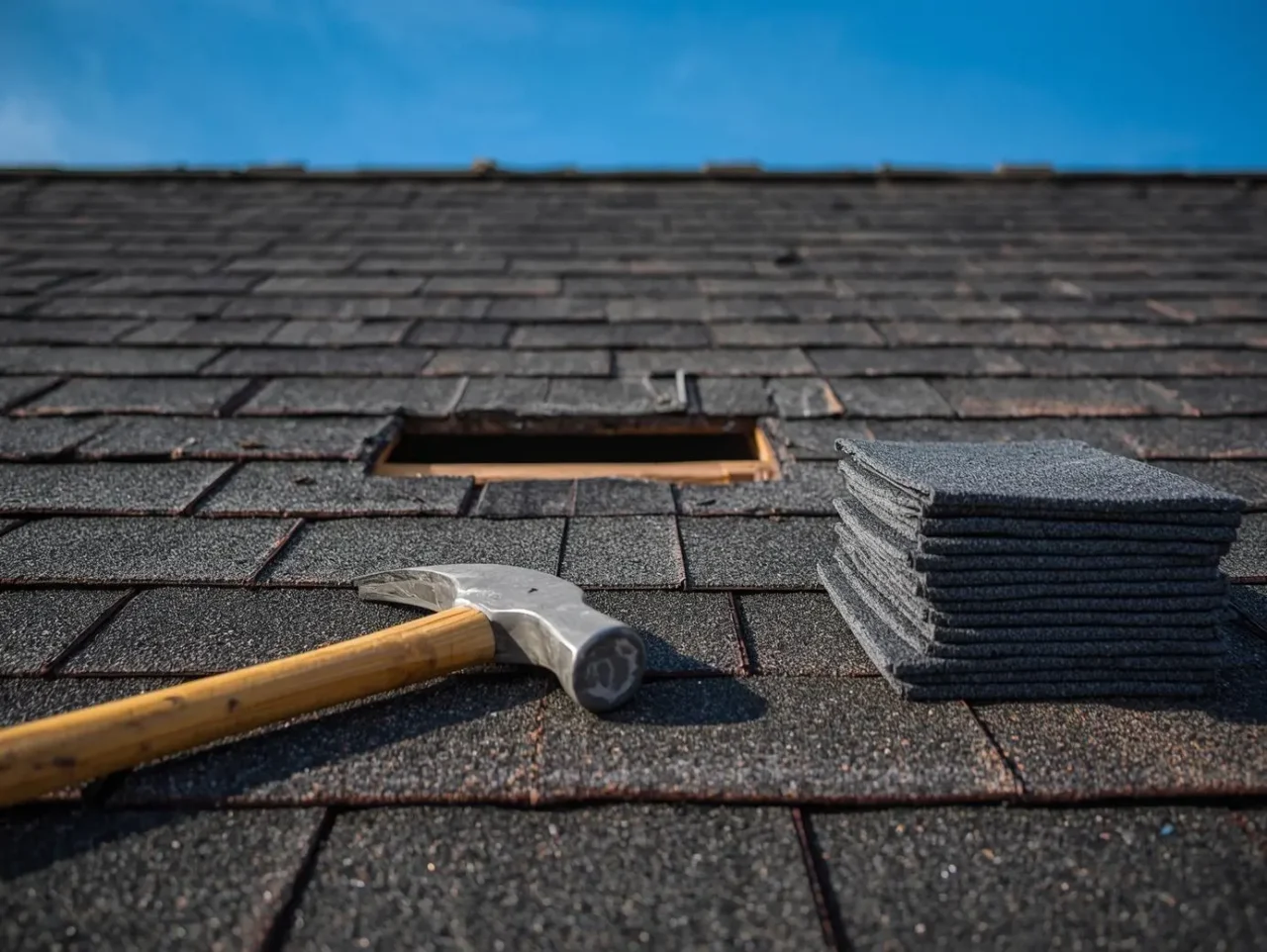
Determining whether how to repair roof shingles blown off is a DIY project or requires professional contractors depends on roof accessibility, damage extent, and your physical capabilities.
When to call professional roof installation companies
Professional roofing contractors should handle repairs when:
- Roof pitch exceeds 6:12 slope (too steep for safe DIY work without fall protection equipment)
- Building height reaches two full stories or higher above ground
- More than 10-15 shingles have blown off across multiple roof sections
- Visible roof deck sagging, soft spots, or dark discoloration indicating rot
- Active interior leaking with ceiling stains, dripping, or wet insulation
- Damage concentrated near chimneys, skylights, valleys, or complex flashing areas
- You lack confidence, physical ability, or appropriate ladder equipment
Emergency tarping and permanent repairs by licensed contractors typically cost $300-$800 for small localized damage, providing professional workmanship and liability insurance protection if accidents occur.
DIY may be reasonable when
Homeowner repairs make sense for:
- Damage limited to 1-5 shingles in easily accessible areas
- Low-slope roofs (4:12 or less) allowing comfortable standing
- Single-story homes with safe ladder access
- Dry weather conditions with no precipitation forecast for 24-48 hours
- No wind gusts exceeding 15 mph during repair work
- Intact roof deck without soft spots or structural concerns
Essential safety equipment and practices
Never attempt roof work without proper safety precautions:
Ladder safety:
- Position ladder on firm, level ground at proper 75-degree angle (1 foot out for every 4 feet up)
- Extend ladder minimum 3 feet above roof edge for safe mounting
- Secure ladder base and top to prevent shifting
- Use ladder stabilizers on gabled ends to avoid gutter damage
Personal protection:
- Wear rubber-soled work boots with aggressive tread (never smooth-bottomed shoes)
- Use fall protection harnesses when pitch exceeds 4:12 or height exceeds 12 feet
- Avoid working alone—have someone nearby to assist in emergencies
- Never repair roofs when wet, icy, or in temperatures above 90°F (shingles become soft and tear easily)
Weather timing:
- Schedule repairs during mild, dry conditions (60-75°F optimal)
- Complete work during morning hours when roofs are coolest and least slippery
- Avoid high-wind days when gusts can lift tarps or unsteady workers
Tools and materials needed to reattach shingles
Gathering all supplies before climbing eliminates dangerous mid-job ladder trips.
Required tools
Hand tools:
- Flat pry bar or shingle ripper (thin profile for sliding under shingles without damage)
- Hammer or pneumatic roofing nailer (hammer adequate for small repairs)
- Utility knife with hooked roofing blades (straight blades slip and cause injuries)
- Caulk gun for tube roofing cement application
- Tape measure for shingle alignment verification
- Broom or leaf blower for debris removal before sealing
Safety equipment:
- Extension ladder rated for your weight plus materials
- Work gloves protecting against sharp metal and hot shingles
- Safety glasses preventing granule debris from entering eyes
- Knee pads if working extensively on roof surface
Essential materials
Fasteners and adhesives:
- Galvanized roofing nails (1¼” for standard ¾” decking, 1½” for thicker decking or multiple shingle layers)
- Ring-shank nails provide 40-50% better holding power than smooth-shank nails, especially critical for wind-resistant repairs
- Roofing cement or bitumen-based adhesive (asphalt-based formulations bond properly to shingle backing)
- Avoid silicone-based sealants which don’t bond to bitumen materials
Replacement shingles:
- Match existing shingle brand, style, and color when possible (check attic or garage for leftover shingles from original installation)
- If exact match unavailable, select closest color and replace small cluster (3-5 shingles) rather than single mismatched shingle for better appearance
- Standard three-tab shingles measure 12″ × 36″ with 5″ exposure
- Architectural/dimensional shingles vary by manufacturer—measure existing shingles before purchasing
Supplemental materials if needed:
- Roofing felt or synthetic underlayment patches for torn underlayment
- Plastic sheeting or tarps for emergency weatherproofing
- Lumber (2×4 boards) and screws for tarp securement if temporary protection required
Step-by-step: how to repair roof shingles blown off
Following proper sequence prevents additional damage while ensuring durable repairs.
Step 1: Document damage for insurance
Photograph all damage thoroughly before repairs:
- Take wide-angle shots showing overall roof and damage location
- Capture close-up images of missing shingles, exposed underlayment, and nail holes
- Photograph surrounding areas showing potentially loosened adjacent shingles
- Record date, time, and weather conditions when damage occurred
- Document any interior water damage (ceiling stains, wet insulation, dripping)
Insurance claims require comprehensive documentation, and repairs may void coverage if performed before adjuster inspection—contact your insurance company first if damage is extensive.
Step 2: Inspect exposed area and surrounding shingles
Assess full repair scope before beginning work:
Check underlayment condition:
- Intact black felt or synthetic underlayment indicates minimal urgency
- Torn, punctured, or missing underlayment requires immediate patching before shingle replacement
- Visible wood decking demands professional evaluation—water may have penetrated interior
Examine adjacent shingles:
- Lift edges of surrounding shingles gently to check for loosened nails or broken seal strips
- Identify creased, cracked, or torn shingles requiring replacement beyond obvious damage
- Look for missing granules indicating advanced age and reduced remaining lifespan
Step 3: Remove damaged shingle remnants completely
Eliminate all old material ensuring clean installation surface:
- Slide flat pry bar carefully under shingle above damaged area, lifting gently to access nails
- Locate and remove all nails securing damaged shingle (typically 4 nails at mid-span “common bond” line, plus 4 nails near top edge “headlap”)
- Pry nails upward by sliding bar under shingle, lifting together, then tapping shingle down to leave nail standing proud for easy removal
- Pull damaged shingle free once all fasteners are removed
- Remove or pound down any remaining exposed nails creating puncture hazards
- Clear debris and granules from installation area so replacement shingle sits flat
Step 4: Patch underlayment if torn
Repair underlayment before installing replacement shingles:
- Cut away loose, flapping underlayment pieces
- Apply roofing cement around tear perimeter
- Place underlayment patch overlapping torn area by 6″ on all sides
- Orient patch so upper edge goes under existing underlayment (water flows downward without penetration)
- Secure edges with roofing cement—avoid nailing through patches when possible
Step 5: Slide replacement shingle into position
Proper alignment ensures weather-tight seal and uniform appearance:
- Position new shingle by sliding under shingle course above damaged area
- Align bottom edge with exposure line of adjacent shingles (typically 5″ exposure for three-tab, 5⅝” for many architectural shingles)
- Ensure side edges match neighboring shingles without gaps or overlaps
- Verify shingle lies flat without buckling, folding, or raised edges
Step 6: Fasten shingle correctly using proper nailing technique
Correct fastening represents the best way to adhere shingles to a roof for long-term wind resistance:
Nail quantity and placement:
- Use minimum 4 nails for three-tab shingles, 6 nails for architectural shingles in normal wind zones
- High-wind areas require 6 nails per shingle regardless of type for enhanced holding power
- Position nails in manufacturer-designated nail zone (usually ¾” to 1″ above shingle slots for three-tab, per instructions for architectural)
- Space nails evenly across shingle width avoiding concentration at edges
- Ensure nails penetrate both replacement shingle and shingle below at common bond line
Proper driving technique:
- Drive nails flush with shingle surface—not overdriven (breaking through mat) or underdriven (sitting proud and creating snag points)
- Ring-shank nails require careful hammering to avoid overdriving while ensuring proper seating
- Angle nails perpendicular to roof surface for maximum holding power
- Replace all nails in overlapping shingle above that were removed during damaged shingle extraction
Step 7: Apply roofing cement to secure tabs
Supplemental adhesive provides immediate wind resistance while shingles develop full seal:
Where to apply adhesive:
- Place quarter-sized dab (approximately ¾” diameter) of roofing cement under each shingle tab
- Position adhesive 1″ from tab edge to prevent squeeze-out when pressed
- Apply four dabs per three-tab shingle, 5-6 dabs per architectural shingle depending on width
Proper application technique:
- Lift tab gently with one hand while applying adhesive with other
- Press tab firmly into cement for 10-15 seconds ensuring contact
- Avoid excessive adhesive creating visible bumps or unsightly squeeze-out
- Use asphalt-based roofing cement specifically formulated for shingle bonding
- Never use construction adhesive, silicone sealants, or non-roofing products which fail to bond properly
Seal surrounding lifted shingles:
- Check adjacent shingles for loose tabs lifted by same wind event
- Apply roofing cement under any tabs that don’t lie flat against roof surface
- Press firmly after application ensuring full adhesive contact
Step 8: Final inspection and cleanup
Complete thorough check before considering job finished:
- Verify all replaced shingles align properly with surrounding courses
- Confirm no exposed nail heads remain in repair area
- Check that overlapping shingles above are re-fastened if nails were removed
- Ensure all tabs are pressed down and making contact with roof surface
- Clean loose granules and debris from repair zone
- Inspect surrounding area for additional damage requiring attention
- Dispose of old shingles, nails, and materials properly
![Properly repaired roof shingles aligned flush with existing courses showing correct installation]
Best way to adhere shingles to a roof (preventing future blow-offs)
Understanding why shingles blow off prevents repeat failures after repairs.
Prioritize proper fastening over excessive adhesive
The most wind-resistant shingle installations rely on correct mechanical fastening as primary attachment method, with adhesive serving supplemental role:
Why nailing matters most:
- Properly placed nails create 8-12 penetration points per shingle securing it to deck structure
- Ring-shank nails increase withdrawal resistance by 40-50% compared to smooth-shank nails through mechanical grip
- Six-nail patterns in high-wind zones double fastening points versus standard four-nail installation
- Correct nail placement in manufacturer-designated zones prevents tearing through shingle when wind creates uplift forces
Adhesive limitations:
- Roofing cement provides immediate holding power but degrades over 5-10 years from UV exposure and thermal cycling
- Excessive adhesive application creates rigid bonds that crack rather than flex with thermal expansion
- Adhesive alone cannot resist sustained wind loads without proper mechanical fastening
When roofing cement enhances wind resistance
Strategic adhesive use supplements proper nailing in specific scenarios:
Appropriate applications:
- Hand-sealing newly installed shingles in temperatures below 60°F when factory seal strips won’t activate promptly
- Re-securing lifted tabs after wind events before seal strips can re-bond
- Reinforcing edge shingles along rakes and eaves experiencing highest wind pressures
- Adhering shingles in high-wind coastal zones requiring supplemental tab bonding beyond factory seals
Application best practices:
- Use bitumen-based roofing cement compatible with asphalt shingle backing
- Apply sparingly—quarter-sized dabs provide adequate bonding without creating rigid spots that crack
- Position adhesive away from visible shingle edges to prevent unsightly squeeze-out
- Polyurethane sealants offer superior adhesion and flexibility for specialty applications
Common mistakes causing shingle blow-offs
Avoid installation errors that compromise wind resistance:
Improper nailing:
- High nailing—placing fasteners above manufacturer nail zone reduces holding power by 50%+
- Overdriving nails through shingle mat eliminates holding capacity
- Underdriving nails leaves tabs elevated where wind can catch underneath
- Using too few nails (only 4 in high-wind zones requiring 6)
- Smooth-shank nails in areas requiring ring-shank nails for wind resistance
Inadequate edge detailing:
- Missing or improperly installed starter strips along eaves and rakes
- Insufficient adhesive application on edge shingles experiencing peak wind loads
- Lack of drip edge allowing wind to get under shingle edges
Installation timing issues:
- Installing shingles in cold weather (below 40°F) prevents factory seal activation
- Failing to hand-seal tabs when temperatures don’t support self-sealing
- Installing during high-wind conditions preventing proper tab sealing
Material degradation:
- Attempting to glue down aging shingles with brittle, inflexible cement that cracks
- Using non-roofing adhesives incompatible with bitumen materials
- Applying excessive adhesive creating rigid bonds that fail rather than flex
If blow-offs keep happening
Repeated shingle loss indicates systemic problems requiring professional evaluation:
- Pattern nailing errors across entire roof (high nailing, insufficient fasteners)
- Aged shingles with deteriorated seal strips and brittle composition unable to resist wind
- Soft or damaged roof decking unable to hold fasteners properly
- Severe wind exposure requiring upgraded wind-rated shingles or alternative roofing systems
- Inadequate attic ventilation creating pressure differentials that lift shingles
Professional roof inspections cost $150-$400 but identify underlying causes preventing endless patch repairs.
![Diagram showing correct nail placement zones and spacing for wind-resistant shingle installation]
When patch repairs aren’t enough
Recognizing when blown-off shingles indicate larger problems prevents throwing good money after bad.
Signs requiring full or partial roof replacement
Consider comprehensive solutions when:
Extensive damage:
- More than 20% of roof surface has missing or damaged shingles
- Multiple roof sections show blow-offs indicating widespread installation problems
- Shingles continue blowing off after repairs using proper techniques
Age-related deterioration:
- Roof approaches or exceeds expected lifespan (15-20 years for three-tab, 20-30 years for architectural)
- Widespread granule loss exposing black asphalt substrate
- Curling, cupping, or cracking across large areas beyond localized damage
- Missing granules in gutters and around building perimeter
Structural concerns:
- Visible roof deck sagging or soft spots when walking
- Interior water damage including ceiling stains, mold growth, or wet insulation
- Multiple layers of old shingles (building codes limit to two layers maximum in most jurisdictions)
Insurance claim considerations
Understanding coverage helps maximize benefits:
When to file claims:
- Storm damage with documented weather event (high winds, hail, tornado)
- Extensive damage exceeding policy deductible ($500-$2,500 typical)
- Multiple damaged roof sections requiring professional repairs
Claim process basics:
- Document all damage with photographs before repairs or tarping
- Contact insurance company within policy timeframe (typically 30-60 days of damage)
- Obtain professional inspection report detailing damage extent and repair costs
- Avoid permanent repairs before adjuster inspection unless emergency tarping necessary
- Keep receipts for emergency tarping and temporary protection materials
Coverage limitations:
- Normal wear and tear excluded from most policies
- Lack of maintenance may void coverage for preventable damage
- Cosmetic damage without functional impairment often not covered
- Matching shingle colors for partial replacement may not be covered if exact match unavailable
Frequently asked questions about how to repair roof shingles blown off
Can I repair roof shingles blown off without replacing the whole roof?
Yes, small localized damage involving 1-10 blown-off shingles can be successfully repaired by homeowners or contractors through shingle replacement, proper fastening with 4-6 nails per shingle, and roofing cement application to seal tabs, provided underlayment and decking remain intact.
What’s the best way to adhere shingles to a roof after wind damage?
The most effective approach combines proper mechanical fastening using ring-shank nails placed in manufacturer-designated nail zones (6 nails per shingle in high-wind areas) with supplemental roofing cement applied under each tab to provide immediate wind resistance while factory seal strips develop full bond.
Should roofing cement go under the tab or on top?
Roofing cement should be applied under the shingle tab edge (not on top) using quarter-sized dabs positioned 1″ from tab edge, then pressed firmly for 10-15 seconds to create wind-resistant bond without visible squeeze-out or unsightly appearance.
How many nails should I use per replacement shingle?
Standard installations require 4 nails for three-tab shingles and 6 nails for architectural shingles in normal wind zones, while high-wind coastal or mountain regions require 6 nails for all shingle types regardless of design for enhanced wind resistance.
What type of nails work best for blown-off shingle repairs?
Galvanized ring-shank roofing nails provide optimal holding power, offering 40-50% greater withdrawal resistance compared to smooth-shank nails—use 1¼” length for standard ¾” decking or 1½” for thicker decking and multiple shingle layers.
Can I use construction adhesive or Gorilla Glue instead of roofing cement?
No—construction adhesives and silicone-based sealants don’t bond properly to bitumen materials in asphalt shingles; use only asphalt-based roofing cement or specialized bitumen adhesives designed specifically for shingle applications to ensure proper adhesion.
Will insurance cover blown-off shingles from wind storms?
Most homeowner policies cover wind damage from documented storm events if damage exceeds your deductible, though normal wear, lack of maintenance, or cosmetic issues may be excluded—photograph damage before repairs and contact your insurance company within policy timeframes.
When should I call a professional instead of DIY repair?
Professional contractors should handle repairs when roofs exceed 6:12 pitch or two-story height, damage involves more than 10-15 shingles, underlayment or decking shows water damage or rot, work requires near chimneys or complex flashing, or you lack appropriate safety equipment and physical capability.
Protecting your home from future wind damage
Understanding how to repair roof shingles blown off safely and correctly prevents water damage while saving hundreds in emergency contractor costs, though steep roofs, extensive damage, or safety concerns warrant professional installation companies. The best way to adhere shingles to a roof prioritizes proper mechanical fastening using ring-shank nails in manufacturer-designated zones (6 per shingle in high-wind areas) supplemented by strategic roofing cement application under tabs for immediate wind resistance.
Successful repairs require removing all damaged material and exposed nails, patching torn underlayment, aligning replacement shingles precisely, driving nails flush without overdriving, and hand-sealing tabs with asphalt-based roofing cement. Repeated blow-offs indicate systemic problems—improper nailing, aged shingles, inadequate ventilation, or severe exposure—requiring professional evaluation to prevent endless patch cycles.
Ready to tackle blown-off shingle repairs? Gather proper tools including flat pry bar, ring-shank nails, and bitumen roofing cement, verify safe working conditions and appropriate skill level, follow step-by-step techniques prioritizing correct fastening over excessive adhesive, and inspect surrounding shingles for hidden damage requiring attention. For extensive damage, steep roofs, or safety concerns, request quotes from licensed roof installation companies ensuring proper repairs backed by warranties and insurance protection.
🏠 Roofing Tips & Updates
Get free roofing advice, cost guides, and seasonal maintenance tips.

Roofing content specialist with 5+ years researching U.S. residential and commercial roofing. Has documented 200+ projects covering installation costs, material selection, contractor vetting, and DIY guides for homeowners across all climate zones.

Roof Decking: What It Is, Lifespan & Replacement Costs
Roof Decking: What It Is, Lifespan & Replacement Costs
Roof decking ,also called roof sheathing ,is the flat panel layer nailed across your roof’s rafters or trusses. It is the structural platform that every layer of your roofing installation fastens to: underlayment, ice and water shield, and shingles all depend on a sound, dry deck to hold their fasteners and maintain a flat surface. When decking fails, the entire roof system above it fails with it ,no amount of premium shingles compensates for a compromised deck underneath.
Most homeowners never think about roof decking until a contractor opens up their roof and reveals rot, delamination, or soft spots that weren’t visible from the street. This guide covers everything you need to know before that moment ,what decking is made of, how to spot failure early, what replacement costs in 2026, and whether OSB or plywood is the right choice for your climate.
What Is Roof Decking?
Roof decking is the layer of sheet material ,typically 4×8-foot panels of plywood or oriented strand board (OSB) ,nailed directly to the structural rafters or trusses of your roof frame. It serves two functions: structural (distributing the weight of roofing materials, snow loads, and foot traffic across the rafter system) and functional (providing the continuous nailing surface that holds every layer of the roofing installation in place). Without a solid deck, nails and staples used to fasten underlayment and shingles have no substrate to grip.
Residential roof decking is most commonly installed in 5/8-inch or 3/4-inch thickness for rafters spaced 24 inches on center, and 7/16-inch or 1/2-inch for rafters spaced 16 inches on center. Thinner panels on wider rafter spacing create visible deflection between rafters ,a condition called “pillowing” ,which accelerates shingle wear and creates visible surface irregularities.
Signs Your Roof Decking Needs Replacing
Roof decking deteriorates from the inside out ,by the time damage is visible on your shingles from the street, the deck below has often been compromised for months or years. These five warning signs indicate decking that needs professional inspection or immediate replacement:
- Soft or spongy feeling when walking on the roof ,healthy decking is rigid and firm underfoot. Any give, flex, or “soft spot” indicates water-saturated or delaminated panels that have lost structural integrity.
- Visible sagging between rafters when viewed from the attic ,panels should lie flat between rafter bays. Any downward bow or wave pattern indicates panel failure, excessive moisture, or overloading.
- Daylight visible through boards in the attic ,gaps between panels or at panel edges indicate decking that has shrunk, warped, or shifted. Any daylight path is also a water and pest intrusion path.
- Mold, mildew, or water stains on attic ceiling ,dark staining, white mineral deposits, or active mold growth on the underside of decking panels is direct evidence of chronic moisture ,either from a roofing system failure above or condensation from inadequate attic ventilation.
- Granule buildup from shingle deterioration above ,heavy granule loss from aging shingles accelerates UV exposure to the underlying deck. When shingles lose structural integrity, water infiltrates to the deck below. Excessive granules in gutters combined with an aging roof is an early indicator that deck inspection is overdue.
⚠️ Attic Inspection Tip: The best time to inspect your roof decking is during or immediately after a heavy rain ,water stains and active leaks are easiest to trace to their source while moisture is present. Bring a flashlight and inspect the full underside of the deck from the attic access hatch before calling a contractor.

The national average roof decking replacement cost in 2026 is approximately $5,500, though actual project costs range widely from a minimum of around $900 for small repairs to $12,800 or more for large, complex roofs. Most homeowners spend between $2,400 and $8,600 depending on roof size and material selection.
Cost Ranges by Project Scope
Understanding roof decking replacement cost starts with knowing the typical price ranges for different project sizes:
- Small projects (under 1,000 sq ft): $1,900-$2,400 for smaller roofs with basic OSB sheathing
- Average homes (1,500-2,000 sq ft): $4,000-$6,400 for standard materials and moderate complexity
- Large roofs (3,000+ sq ft): $8,000-$17,000 for bigger homes, premium plywood, or complex roof designs
The wide variation in roof decking replacement cost reflects differences in material quality, regional labor rates, roof accessibility, and whether you’re replacing the entire deck or only damaged sections.
What’s Included in Your Total Cost
A complete cost estimate typically includes:
- Tear-off and removal of old roofing materials (shingles, underlayment) to access damaged decking
- Demolition labor to remove rotted or damaged sheathing boards ($25-$80 per worker per hour)
- New plywood or OSB panels cut to size and installed over roof rafters
- Installation labor by professional roofing contractors ($30-$90 per hour or project-based fees)
- Disposal fees for old decking materials and debris
- Permits if required by local building codes ($400-$1,500 depending on location)
 see labor rates exceeding $75-$90 per hour, pushing total costs 30-50% above national averages. Moderate-cost regions (most Midwest, Mid-Atlantic, Southeast) align with national averages of $45-$60 per hour. Lower-cost rural areas (parts of South, rural Midwest) have labor running $35-$50 per hour, reducing total project costs by 15-25%.
Price Per Square Foot: Materials & Labor
Breaking down per square foot helps homeowners estimate project expenses more accurately. The total installed price combines material costs and professional labor rates.
Material Costs for Roof Decking
| Material Type | Cost Per Square Foot (2026) | Cost Per 4×8 Sheet |
|---|---|---|
| OSB (Oriented Strand Board) | $0.50-$1.50 | $30-$75 |
| Plywood (CDX or better grade) | $0.75-$2.00 | $40-$90 |
| Premium plywood (exterior grade) | $1.25-$2.50 | $65-$120 |
OSB sheathing remains the most economical choice for minimizing roof decking replacement cost, with 4×8-foot sheets (32 square feet) costing approximately $30-$75 per sheet depending on thickness and market conditions. However, contractors typically purchase materials at wholesale prices closer to the lower end of these ranges.
Plywood sheathing costs more but offers superior moisture resistance and strength, with contractors charging approximately $100-$135 per installed sheet including materials and labor. Some contractors report charging around $100 for OSB sheets and $110 for plywood sheets when installed, with discounts for larger projects requiring 20+ sheets.
Labor Costs for Installation
Professional roofing contractors charge $1.50 to $3.00 per square foot for labor to install roof sheathing, or approximately $45 to $75 per hour for crew labor. Your roof decking replacement cost for labor depends on several factors:
Roof pitch impact on labor:
- Low pitch (3:12 to 4:12): Standard labor rates; roofers can walk safely with minimal equipment
- Moderate pitch (5:12 to 7:12): Requires roof brackets and planks; labor costs increase 10-25%
- Steep pitch (8:12 to 12:12): Demands extensive safety equipment; labor costs rise 30-50% or more
Roof complexity: Multiple valleys, dormers, skylights, and irregular shapes add time and increase your roof decking replacement cost.
Access difficulty: Multi-story homes or roofs surrounded by landscaping require extra care and equipment, raising labor expenses.
Demolition and preparation labor adds another layer to your roof decking replacement cost at $25-$80 per hour for removal of old materials.
Total Installed Cost per Square Foot
Combining materials and labor, the total roof decking replacement cost averages $2 to $5 per square foot installed:
| Cost Component | Price Range Per Square Foot |
|---|---|
| Materials (OSB or plywood) | $0.50-$2.00 |
| Installation labor | $1.50-$3.00 |
| Total installed cost | $2.00-$5.00 |
For context, if your roof measures 2,000 square feet and requires complete decking replacement, expect your roof decking replacement cost to be approximately $4,000-$10,000 for materials and labor combined.
Roof Decking Replacement Cost by Roof Size

Roof decking replacement cost scales directly with roof size, though larger projects often benefit from slightly lower per-square-foot costs due to efficiency gains.
Small Roofs (1,000-1,500 sq ft)
For smaller homes, garages, or sheds with roof areas under 1,500 square feet, roof decking replacement cost may range from $1,900 to $7,500 depending on material choice and accessibility.
| Roof Size | Plywood Sheets Needed | Average Roof Decking Replacement Cost |
|---|---|---|
| 1,000 sq ft | 30-35 sheets | $2,000-$5,000 |
| 1,500 sq ft | 45-50 sheets | $3,000-$7,500 |
Small projects sometimes incur higher per-square-foot roof decking replacement cost because contractors face similar setup and mobilization expenses regardless of project size.
Average Residential Roofs (1,500-2,500 sq ft)
Most single-family homes fall into this category, with roof decking replacement costs between $3,000 and $12,500.
| Roof Size | Plywood Sheets Needed | Average Roof Decking Replacement Cost |
|---|---|---|
| 2,000 sq ft | 60-65 sheets | $4,000-$10,000 |
| 2,500 sq ft | 75-80 sheets | $5,000-$12,500 |
A typical 2,000-square-foot roof decking replacement cost using mid-grade plywood and professional installation averages around $5,500-$7,000 in moderate-cost regions.
Large Roofs (3,000+ sq ft)
Larger roofs on two-story colonials, sprawling ranches, or homes with complex hip-and-valley designs can easily require a roof decking replacement cost of $8,000-$20,000 or more.
| Roof Size | Plywood Sheets Needed | Average Roof Decking Replacement Cost |
|---|---|---|
| 3,000 sq ft | 90-95 sheets | $6,000-$15,000 |
| 3,500 sq ft | 115-120 sheets | $7,000-$17,500 |
| 4,000 sq ft | 125-130 sheets | $8,000-$20,000 |
Multi-story homes add complexity due to safety requirements, scaffolding needs, and material hoisting, which increase roof decking replacement cost by 25-50%.

Beyond basic material and labor expenses, several variables significantly influence your roof decking replacement cost:
1. Roof Size and Square Footage
Larger roofs require more materials and labor hours, directly increasing your total roof decking replacement cost as detailed in the pricing tables above. However, economies of scale mean larger projects often achieve slightly lower per-square-foot costs ($2.00-$3.50) compared to small repairs ($4.00-$5.00+).
2. Roof Pitch (Slope)
Roof pitch dramatically affects your roof decking replacement cost through labor expenses and safety requirements:
- Low pitch (3:12 to 4:12): Standard labor rates apply
- Moderate pitch (5:12 to 7:12): Roof decking replacement cost increases 10-25% for labor
- Steep pitch (8:12 to 12:12): Roof decking replacement cost rises 30-50% or more
Extremely steep roofs (over 12:12) may require specialized rigging and add significant time to the project, pushing roof decking replacement cost well above average.
3. Roof Complexity and Design
Simple gable or hip roofs with minimal valleys cost less than complex roofs featuring:
- Multiple dormers and roof planes
- Numerous valleys and intersections
- Skylights, chimneys, and vent pipes
- Irregular shapes or custom details
Complex roofs may add 20-40% to your roof decking replacement cost due to increased installation time and material waste.
4. Material Choice: Plywood vs OSB
Plywood costs 15-30% more than OSB for materials alone, adding $500-$2,000+ to your total roof decking replacement cost for average-sized roofs.
5. Decking Thickness Requirements
Your chosen roof sheathing thickness affects roof decking replacement cost:
- 1/2 inch: Standard thickness for most residential roofs; baseline pricing
- 5/8 inch: Recommended for wider rafter spacing or heavy materials; adds 20-35% to material costs
- 3/4 inch: Premium thickness for extreme conditions; adds 40-60% to material costs
Thicker sheathing increases your roof decking replacement cost by $0.15-$0.50 per square foot but provides superior performance and longevity.
6. Geographic Location and Regional Labor Rates
Roof decking replacement cost varies significantly by region:
- High-cost metro areas: Labor often exceeds $75-$90 per hour, raising costs 30-50% above national averages
- Moderate-cost regions: Labor aligns with national averages of $45-$60 per hour
- Lower-cost rural areas: Labor runs $35-$50 per hour, reducing costs by 15-25%
7. Extent of Damage
Partial roof decking replacement (replacing only damaged sections) may cost more per square foot than full replacement:
- Contractors must carefully work around intact sections
- Frequent setup and teardown reduce efficiency
- Per-sheet pricing for small quantities often exceeds bulk rates
Full roof decking replacement performed with a complete re-roof achieves maximum efficiency and lower per-square-foot roof decking replacement cost.
8. Permits, Disposal, and Unexpected Repairs
Additional costs that impact your roof decking replacement cost:
- Permits: $400-$1,500 depending on local requirements
- Disposal fees: $50-$300 for old material removal
- Unexpected structural repairs: $500-$3,000+ if damaged rafters or rot discovered
Warning Signs: When to Replace Roof Decking
Recognizing when roof decking requires replacement helps homeowners address problems before minor damage escalates, potentially saving on overall roof decking replacement cost by catching issues early.
1. Water Stains on Ceilings or Walls
Water stains, discoloration, or dark spots on interior ceilings or upper walls clearly indicate roof system failure. The typical progression involves:
- Failed flashing or damaged shingles allow water penetration
- Water soaks through decking repeatedly
- Moisture travels along rafters or joists
- Water reaches interior finishes, creating visible stains
While water stains don’t always mean immediate roof decking replacement cost is required, persistent or widespread staining suggests underlying sheathing deterioration requiring inspection.
2. Sagging or Uneven Roof Lines
Sagging spots, dips, or waves visible from ground level or inside the attic indicate structural failure requiring immediate roof decking replacement. Roof decking should present smooth, even planes; any deviation suggests:
- Water damage causing rot and loss of structural integrity
- Undersized or inadequately spaced sheathing
- Failed rafters or trusses unable to support loads
Sagging is a serious warning sign demanding immediate professional evaluation to assess your roof decking replacement cost and options.
3. Soft Spots or Sponginess When Walking
If you or a contractor can feel soft, spongy, or springy areas when walking on the roof, the underlying decking has likely rotted from prolonged moisture exposure. This condition requires immediate roof decking replacement to prevent structural collapse.
4. Daylight Visible Through Roof Boards
Standing in your attic during daylight, you should see no exterior light penetrating through the roof deck. Visible daylight, cracks, gaps, or holes indicate severe problems requiring urgent roof decking replacement.
5. Mold, Mildew, or Rot in Attic
Visible mold growth, musty odors, or rotting wood in the attic signal chronic moisture problems affecting decking and framing. Addressing these issues promptly can minimize your total roof decking replacement cost by preventing further spread.
6. Worn, Curled, or Missing Shingles
While worn shingles don’t directly indicate decking problems, widespread shingle deterioration often coincides with aged, degraded sheathing that should be evaluated to determine roof decking replacement cost.
7. Cracked, Warped, or Deteriorating Boards
During roof tear-off or repairs, contractors may discover:
- Cracking or splitting along board seams
- Warping, cupping, or buckling from moisture
- Delamination of OSB layers or plywood veneers
- Crumbling, soft, or punky wood indicating rot
Any of these conditions warrant getting a roof decking replacement cost estimate from qualified contractors.
8. Age of Existing Roof Decking
While age alone doesn’t determine roof decking replacement cost necessity, it provides context:
- Under 20 years: Typically sound unless damaged
- 20-40 years: Evaluate during major roof work
- Over 40 years: Consider replacement during re-roofing
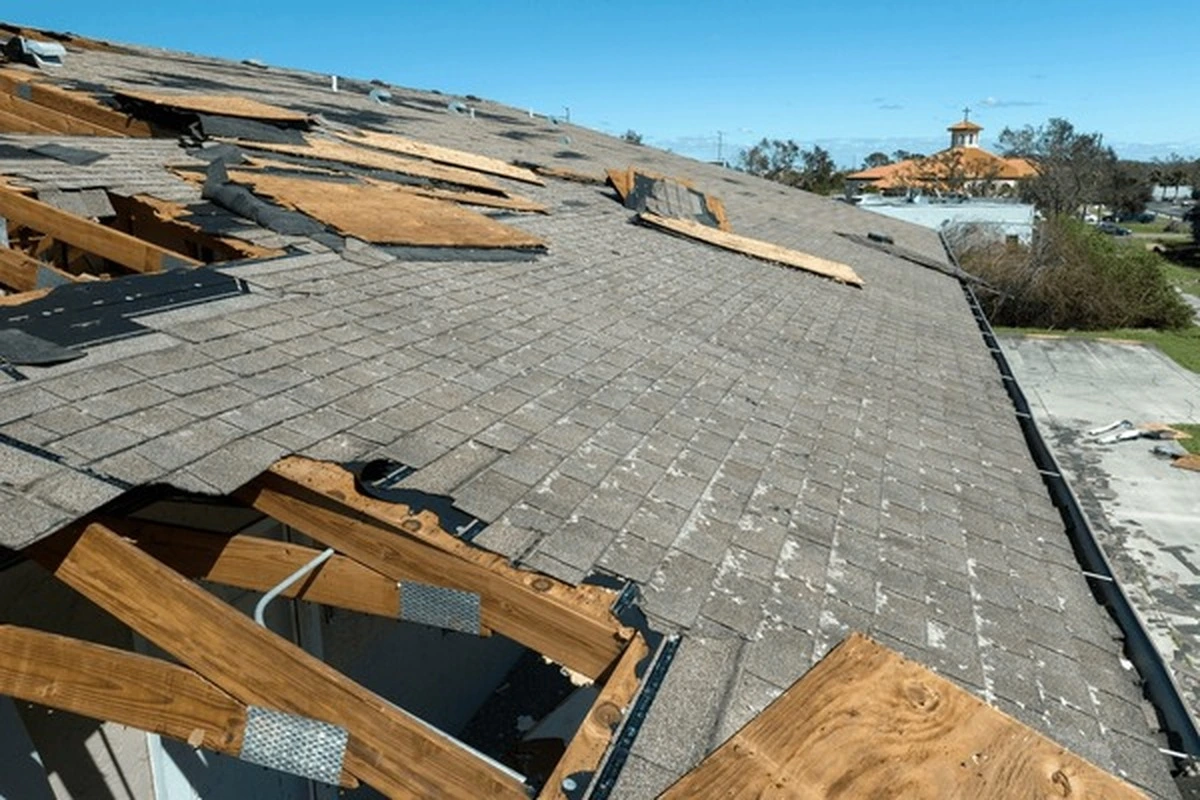
Emergency Roof Repair: Fast Solutions and Costs Guide
Emergency Roof Repair: Fast Solutions and Costs Guide
Emergency roof repair addresses urgent roofing damage requiring immediate professional intervention to prevent water intrusion, structural deterioration, and interior damage to your home. Common emergencies include severe storm damage with active leaks, fallen tree impacts, missing shingles exposing underlayment, and sudden failures allowing water to pour into living spaces situations demanding same-day or after-hours service to minimize property damage.
The average cost of emergency roof repair ranges from $379 to $1,755 nationally in 2025, with most homeowners paying between $300 and $1,500 depending on damage extent, repair complexity, and service timing. Emergency repairs typically cost 1.5 to 2 times more than scheduled repairs due to urgency premiums, after-hours labor rates, and rush material procurement, plus additional service fees of $100-$300 for immediate response.
Understanding when you need emergency roof repair, what temporary measures protect your home, how to find reliable 24/7 roofing contractors, and realistic cost expectations helps you respond effectively during roofing crises while avoiding unnecessary expenses or contractor scams.
Table of Contents
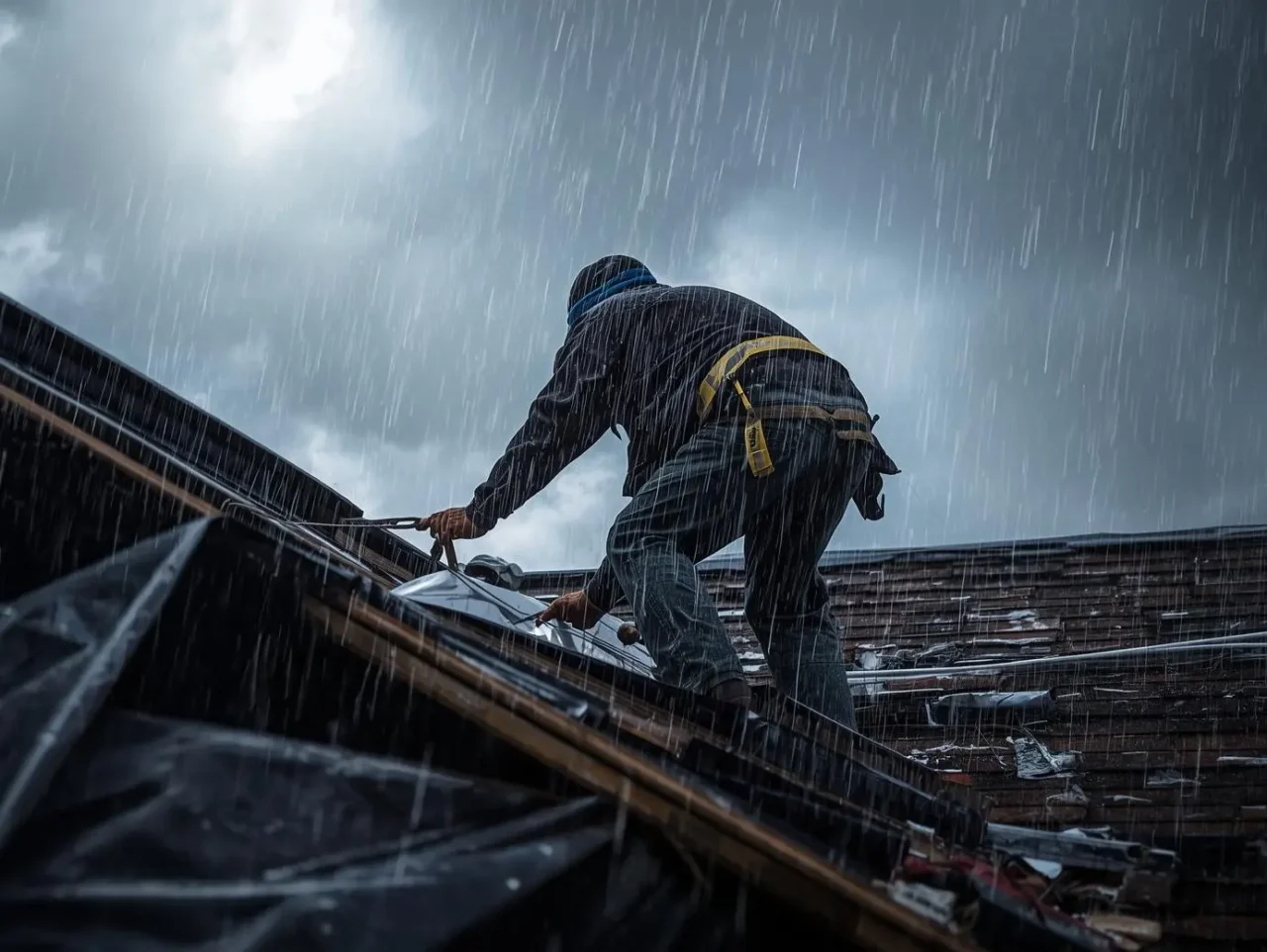
What qualifies as emergency roof repair?
Not all roof damage requires emergency response, so understanding the distinction between urgent repairs and issues that can wait for scheduled service helps you make appropriate decisions and manage costs effectively.
True roofing emergencies demanding immediate action:
- Active water infiltration: Water actively dripping or pouring into your home through ceilings, creating immediate risk of electrical hazards, ceiling collapse, mold growth, and furnishing damage
- Major structural compromise: Large holes from fallen trees or impacts, collapsed roof sections, or visible sagging indicating imminent failure
- Complete shingle blow-off: Extensive shingle loss (25% or more of a roof section) exposing bare underlayment or decking to weather
- Storm damage during ongoing weather: Damage occurring during hurricanes, severe storms, or high winds requiring immediate protection before conditions worsen
- Fire damage: Partial roof burn-through requiring immediate tarping and securing
- Ice dam flooding: Large ice accumulations forcing water under shingles and into attic spaces during winter storms
Roof issues that can wait for scheduled repairs:
- Small leaks causing minor attic moisture without active interior dripping
- Missing 3-5 shingles with intact underlayment beneath
- Damaged flashing discovered during dry weather
- Worn roof areas noticed during routine inspection
- Moss, algae, or cosmetic deterioration
- Minor hail damage not causing immediate leaks
According to This Old House emergency roof repair data, approximately 30% of homeowner-reported “emergencies” actually represent non-urgent repairs that contractors can address within 3-7 days at standard rates.
The key distinction: emergency roof repair applies when delaying service will cause significant additional property damage, safety hazards, or habitability issues.
Average emergency roof repair costs in 2025
Emergency roof repair pricing reflects both the actual repair work and premium charges for urgent, often after-hours service.
National cost ranges:
Based on 2025 industry data, homeowners pay:
- Minimum emergency repair: $300-$500 for simple temporary tarping or minor patching
- Typical emergency repair: $379-$1,755 for most leak repairs, shingle replacement, and flashing fixes
- Average emergency cost: $1,147 nationally for standard emergency repairs
- Major emergency repair: $1,500-$5,000+ for structural damage, extensive area coverage, or complex multi-point failures
Emergency premium pricing:
Emergency roof repair costs 50-100% more than identical repairs scheduled during business hours due to:
- After-hours labor rates: Evening, weekend, and holiday service commands $75-$150 per hour versus $45-$75 standard rates
- Emergency service fees: Additional $100-$300 flat charge for immediate response regardless of repair size
- Rush material procurement: Contractors charge 15-25% premiums for same-day material delivery or after-hours supplier fees
- Mobilization costs: Multiple trips (emergency assessment, temporary fix, permanent repair) increase overall project expense
Cost comparison: emergency vs. scheduled repairs:
| Repair Type | Scheduled Cost | Emergency Cost | Premium |
|---|---|---|---|
| Temporary tarp installation | $150-$300 | $200-$500 | 33-67% |
| Minor shingle replacement (5-10 shingles) | $200-$500 | $300-$800 | 50-60% |
| Flashing and leak repair | $250-$600 | $400-$1,000 | 60-67% |
| Structural framing repairs | $800-$2,000 | $1,200-$3,000+ | 50-100% |
These emergency roof repair premiums compensate contractors for disrupting scheduled work, responding outside normal hours, and prioritizing your crisis above other commitments.
Breakdown by repair type:
Specific emergency roof repair costs vary by the nature of the damage:
- Leak patching: $360-$1,550 depending on location and extent
- Missing shingle replacement: $700-$1,500 for localized areas (10-20 shingles)
- Damaged flashing repair: $400-$1,000 for chimney, valley, or skylight flashing
- Ice dam removal and repair: $500-$700 for dam removal plus $300-$800 for resulting leak fixes
- Hole patching (small to medium): $200-$1,000 depending on size and materials
- Vent damage repair: $75-$250 per vent boot or exhaust vent
- Ridge cap emergency repair: $200-$750 for damaged ridge sections
- Hail damage emergency response: $700-$4,000 depending on affected area size
According to Angi’s 2025 emergency repair data, most homeowners spend $950-$1,400 for typical emergency roof repair addressing storm damage with temporary protection followed by permanent fixes.
For comprehensive cost information, visit the National Roofing Contractors Association cost guides and local contractor pricing databases.
Review our complete roof repair cost breakdown for scheduled repair pricing comparisons.
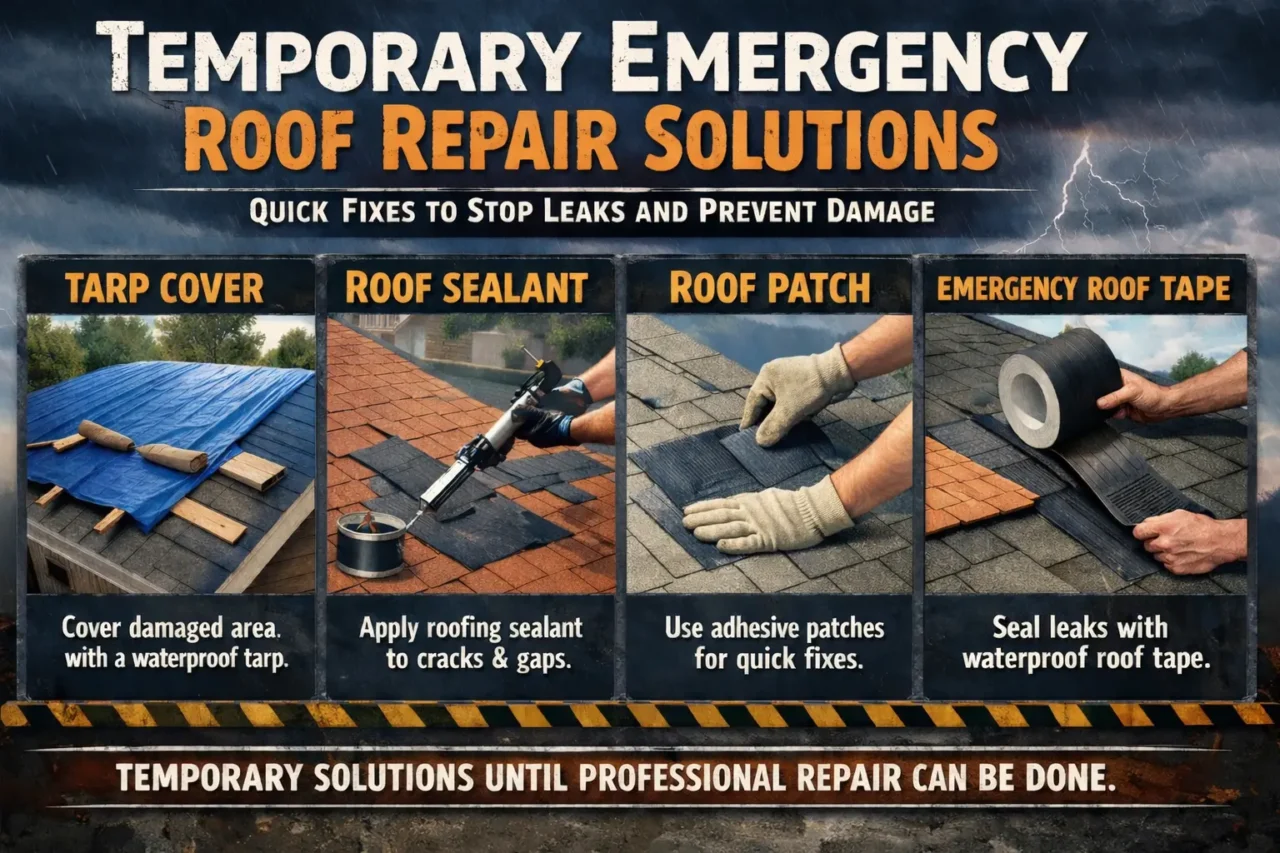
When emergency roof repair professionals cannot arrive immediately, or when damage occurs outside business hours, temporary measures prevent additional damage until permanent repairs are completed.
Emergency tarping: primary temporary solution
Roof tarping provides the most effective temporary protection for emergency situations:
Proper tarping technique:
- Safety first: Only attempt roof access in safe conditions; avoid working during storms, on steep pitches, or when injured
- Tarp sizing: Use tarps extending 3-4 feet beyond damaged area on all sides, reaching from ridge to eaves when possible
- Securing method: Sandwich tarp between 2×4 boards and secure boards with screws (not nails that can back out) into solid roof decking
- Avoid penetrations: Place boards parallel to roof slope, securing at ends and every 18-24 inches to prevent wind uplift without excessive holes
- Weight distribution: Use sandbags or weighted boards on flat portions; never rely solely on weights on pitched roofs
Professional tarping costs: $200-$500 for contractor-installed temporary protection that may last several weeks until permanent emergency roof repair occurs.
Interior water damage mitigation:
When leaks are actively occurring before emergency roof repair:
- Contain water: Place buckets, tarps, or plastic sheeting under leak points catching dripping water
- Puncture ceiling bulges: If water is pooling behind drywall creating bulges, carefully puncture the center with a screwdriver allowing controlled drainage into a bucket (prevents spontaneous collapse)
- Move furniture and valuables: Relocate items from leak zones, cover remaining furnishings with plastic sheeting
- Document damage: Photograph all damage thoroughly for insurance claims before cleanup
- Extract standing water: Use wet/dry vacuums removing pooled water from floors and carpets
- Improve ventilation: Open windows, run fans, and use dehumidifiers preventing mold growth
Quick leak patching for accessible damage:
Minor emergency roof repair for small, accessible leaks can use temporary sealants:
- Roof cement/tar: Apply thick coats around damaged areas, flashing gaps, or exposed nail heads
- Roofing tape: Self-adhesive waterproof tape temporarily seals small tears or gaps in underlayment
- Spray sealants: Aerosol roof sealers provide quick, temporary patches for pinhole leaks
- Caulk tubes: Silicone or polyurethane caulk fills small gaps in flashing or around penetrations
Important: These temporary measures are NOT permanent solutions—professional emergency roof repair must follow within days to weeks.
When NOT to attempt temporary repairs:
Avoid DIY emergency measures when:
- Roof pitch exceeds 6:12 (too steep for safe access without equipment)
- Weather conditions are dangerous (active storms, high winds, wet surfaces)
- Damage is extensive or structural
- Multiple leak points exist across large areas
- You lack experience working at heights
- Darkness or poor visibility exists
In these situations, focus on interior damage mitigation and call professional emergency roof repair services immediately.
Finding reliable 24/7 emergency roof repair services
Locating trustworthy emergency roof repair contractors during crisis situations requires quick decision-making, but avoiding scams and price gouging remains essential.
Pre-emergency preparation (before you need it):
Smart homeowners identify emergency roof repair providers before damage occurs:
- Research local contractors: Identify 2-3 reputable local roofing companies offering 24/7 emergency services
- Verify credentials: Confirm licenses, insurance (general liability $1M+, workers compensation), and Better Business Bureau ratings
- Save contact information: Store emergency numbers in your phone and with home documents
- Review emergency policies: Ask about after-hours availability, response times, and emergency service fees
- Check insurance relationships: Some insurers maintain preferred contractor lists for emergency situations
During an emergency: vetting contractors quickly:
When you need immediate emergency roof repair:
Green flags (good signs):
- Established local company with physical address and office
- Verifiable license and insurance certificates
- Clear pricing structure explaining emergency fees upfront
- Willingness to work with your insurance company
- References from recent emergency repairs
- Written estimates even for emergency work
- Professional appearance and branded vehicles/uniforms
Red flags (avoid these contractors):
- “Storm chasers” soliciting door-to-door after weather events
- Demand for full payment upfront before work begins
- Pressure tactics (“I can only offer this price today”)
- No physical business address, only cell phone contact
- Cannot provide license or insurance verification
- Extremely low bids (50%+ below others) suggesting inferior work
- Offer to “handle your insurance claim” and sign claim proceeds over to them
Questions to ask emergency contractors:
Before authorizing emergency roof repair:
- “What is your emergency service fee, and is it separate from repair costs?”
- “Can you provide a temporary fix today and detailed estimate for permanent repairs?”
- “Do you offer any warranty on emergency repairs?”
- “Will you document the damage with photos for my insurance claim?”
- “What is your typical response time for emergencies?”
- “Are you licensed and insured; may I see current certificates?”
- “Can you provide references from recent emergency repair customers?”
Insurance claim coordination:
Most emergency roof repair costs are insurance-covered when caused by sudden, accidental events:
- Contact your insurer immediately: Report damage within 24-48 hours of discovery
- Document everything: Photograph damage from multiple angles before any temporary repairs
- Save all receipts: Keep invoices for emergency repairs, tarping, water extraction, and temporary lodging if needed
- Understand coverage: Storm damage is typically covered; wear-and-tear is not
- Deductible applies: Expect to pay your deductible ($500-$2,500) before insurance coverage begins
- Prevent further damage: Insurance requires reasonable steps to prevent additional damage, making temporary emergency roof repair necessary
Review our guide to working with roofing contractors for detailed vetting strategies.
24/7 emergency roof repair service truck arriving at damage
Common emergency roof repair scenarios and solutions
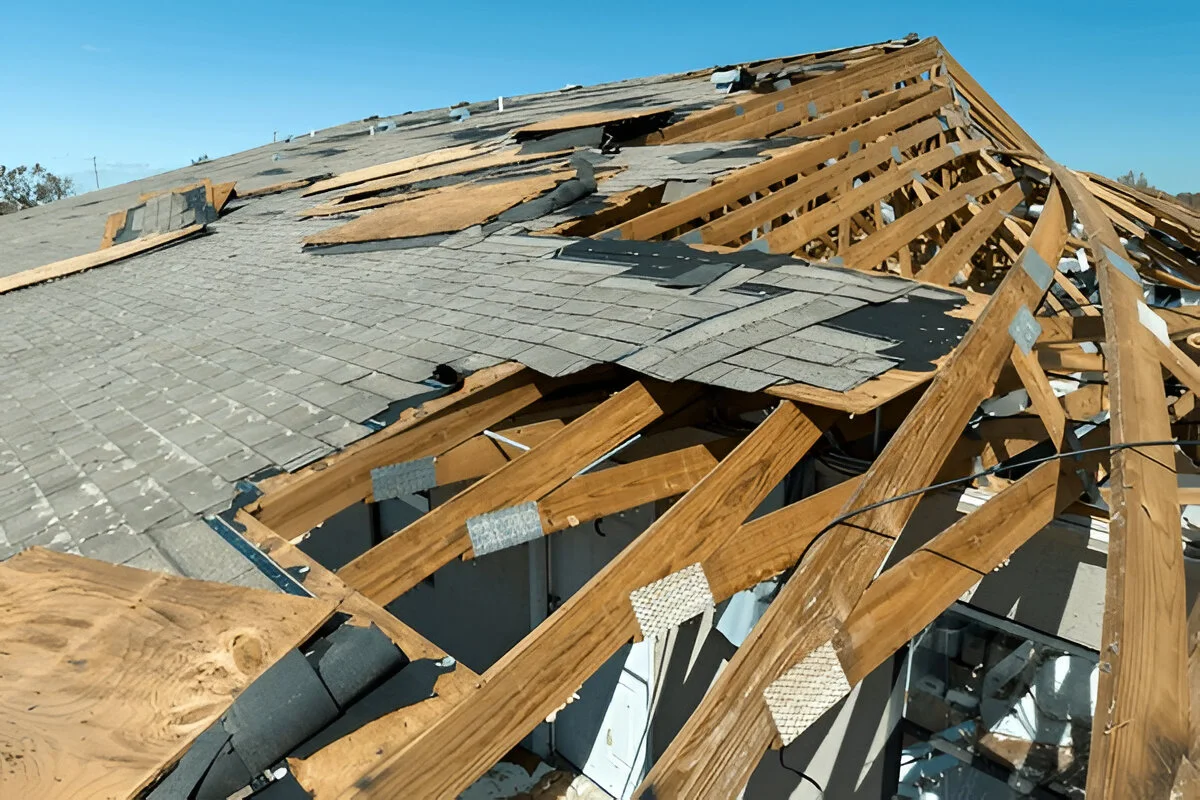
Different types of damage require specific emergency roof repair approaches and cost different amounts.
Storm damage with missing shingles:
High winds frequently blow off shingles, creating immediate leak risks:
Emergency response:
- Tarp exposed areas if shingle loss exceeds 10% of a roof section
- Replace missing shingles with matching materials ($300-$800 for 10-20 shingles)
- Inspect surrounding shingles for lifting or seal failure
- Document extent for insurance claims with photos
Typical emergency roof repair cost: $400-$1,200 including service fees.
Fallen tree or debris impact:
Large impacts create holes or structural damage requiring immediate attention:
Emergency response:
- Call professionals immediately—structural damage is dangerous
- Tarp from interior if roof access is unsafe
- Check for electrical hazards before entering damaged areas
- Secure perimeter preventing additional collapse
Typical emergency roof repair cost: $1,200-$5,000+ depending on structural damage extent and tree removal needs.
Ice dam formation and leaks:
Ice accumulation forces water under shingles in cold climates:
Emergency response:
- Remove snow from roof edges using roof rake (work from ground)
- Create drainage channels through ice dams using warm water (not hammers/chisels that damage shingles)
- Place fans in attic spaces melting dams from interior
- Improve attic insulation and ventilation preventing future dams
Typical emergency roof repair cost: $500-$700 for ice dam removal plus $300-$800 for resulting leak repairs.
Flashing failures causing active leaks:
Chimney, skylight, and valley flashing commonly fail during storms:
Emergency response:
- Apply temporary sealant around flashing gaps
- Install tarp covering flashing area if leaks persist
- Schedule permanent flashing replacement within days
Typical emergency roof repair cost: $400-$1,000 for flashing repair and sealing.
Hail damage with immediate leaks:
Severe hail creates multiple penetration points across large roof areas:
Emergency response:
- Document damage with photos before any repairs
- Tarp most severely damaged sections
- File insurance claim immediately (hail damage is covered)
- Expect adjuster inspection before permanent repairs
Typical emergency roof repair cost: $700-$4,000 depending on affected area; often leads to full insurance-funded replacement.
Flat roof membrane failures:
Punctures or seam separations in flat roof membranes cause immediate pooling leaks:
Emergency response:
- Patch small holes with compatible membrane material and adhesive
- Remove standing water with wet/dry vacuum or pump
- Apply emergency coating over damaged area
- Schedule professional membrane repair or replacement
Typical emergency roof repair cost: $350-$2,200 for flat roof emergency repairs.
Emergency roof repair vs. full replacement decision
Sometimes damage is extensive enough that emergency roof repair isn’t the most cost-effective solution.
Repair if:
- Roof is under 15 years old with remaining service life
- Damage is localized to specific area (less than 25% of total roof)
- Underlying structure and decking are sound
- Remaining sections show normal wear for age
- Emergency repair cost is under 30% of replacement cost
- No history of repeated leak problems in other areas
Replace if:
- Roof is over 20 years old approaching end of expected lifespan
- Damage affects 30%+ of roof area
- Multiple leak points exist across different sections
- Recurring emergency repairs have occurred over past 2-3 years
- Water stains, sagging, or structural issues are visible
- Insurance is covering replacement due to covered peril damage
- Emergency repair cost exceeds 40-50% of replacement cost
Cost comparison:
- Emergency roof repair: $300-$5,000 for most scenarios
- Full roof replacement: $5,900-$20,000+ for typical residential roofs
When emergency damage is severe and the roof is old, insurance adjusters often approve full replacement rather than temporary fixes, making replacement the better economic choice.
Preventing future roofing emergencies
While some emergency roof repair situations are unavoidable, regular maintenance dramatically reduces emergency frequency.
Annual inspection and maintenance:
Professional roof inspections cost $75-$300 but identify minor issues before they become emergencies:
- Schedule annual inspections in spring or fall
- Inspect after major storms for damage
- Address minor repairs promptly ($150-$700 range)
- Clean gutters preventing water backup
- Remove debris and overhanging branches
Off-season repair scheduling:
Planning repairs during contractor slow periods reduces costs 10-20% and prevents emergency escalation:
- Address known issues in fall before winter weather
- Replace aging roofs proactively before failure
- Schedule repairs during dry weather when quality work is possible
Warning signs requiring attention:
Call for scheduled (non-emergency) roof repair when you notice:
- Missing or damaged shingles
- Curled, cracked, or brittle shingles
- Granule loss creating bare spots
- Sagging roof deck or ridge line
- Interior water stains or attic moisture
- Damaged or rusted flashing
- Daylight visible through roof boards in attic
- Excessive moss or algae growth
Addressing these issues proactively costs $250-$1,500 for typical repairs—far less than $800-$3,000 emergency roof repair when problems escalate.
Explore our preventive roof maintenance guide for year-round care strategies.
Frequently asked questions about emergency roof repair
How much does emergency roof repair cost?
Emergency roof repair costs between $379 and $1,755 nationally in 2025, with most homeowners paying $300-$1,500 depending on damage severity and repair complexity. Emergency repairs cost 50-100% more than identical scheduled repairs due to after-hours labor rates, urgency premiums, and additional service fees of $100-$300 for immediate response.
What should I do immediately when I discover a roof leak?
First, protect your interior by placing buckets under active drips, moving furniture away from leak zones, and covering valuables with plastic sheeting. Second, attempt to locate the leak source from inside the attic if safely accessible. Third, contact your insurance company and emergency roof repair contractor immediately. If safe to do so, cover exterior damage with a tarp to prevent additional water intrusion until professionals arrive.
Does homeowners insurance cover emergency roof repair?
Yes, homeowners insurance typically covers emergency roof repair when damage results from sudden, accidental events like storms, hail, falling trees, or fire. However, policies exclude damage from gradual wear and tear, lack of maintenance, or aging. Most claims require you to pay your deductible ($500-$2,500) first, then insurance covers remaining costs up to policy limits.
Can I repair my roof myself in an emergency?
You can safely perform temporary measures like interior water collection, tarping from the ground using extension poles, or applying emergency sealants to accessible areas on low-pitch roofs. However, avoid climbing on roofs during storms, working on steep pitches without proper equipment, or attempting structural repairs. Professional emergency roof repair is essential for safety and ensuring permanent, warrantied fixes.
How quickly can emergency roofers respond?
Reputable emergency roof repair services typically respond within 1-4 hours for true emergencies during business hours, or 2-6 hours for after-hours calls. Response times increase during major storm events when contractors are overwhelmed with calls. Some companies offer priority service agreements to existing customers guaranteeing faster emergency response.
Is tarping a roof enough to prevent water damage?
Properly installed tarps effectively prevent water intrusion for 2-4 weeks in moderate weather, giving time to schedule permanent emergency roof repair. However, tarps are temporary solutions only—high winds can dislodge poorly secured tarps, and extended tarp coverage (months) degrades materials and risks additional damage. Schedule permanent repairs within 1-2 weeks of tarping when possible.
Should I get multiple estimates for emergency roof repair?
In true emergencies with active leaks, prioritize immediate damage control over comparison shopping—one reputable contractor providing quick temporary protection is better than waiting for multiple bids while water damages your home. However, for permanent repairs following temporary fixes, obtaining 2-3 estimates ensures fair pricing and identifies the best contractor for final work.
Taking swift action during roofing emergencies
Emergency roof repair requires quick decision-making to minimize property damage while avoiding contractor scams and unnecessary expenses. True roofing emergencies—characterized by active water infiltration, structural compromise, or extensive storm damage—demand immediate professional response to prevent escalating interior damage that can cost thousands beyond the roof repair itself.
Understanding realistic emergency roof repair costs ($379-$1,755 typical range with 50-100% premiums over scheduled repairs), implementing effective temporary protection measures like proper tarping, and identifying reputable 24/7 contractors before emergencies occur positions homeowners to respond confidently when roofing disasters strike.
🏠 Roofing Tips & Updates
Get free roofing advice, cost guides, and seasonal maintenance tips.
Roofing content specialist with 5+ years researching U.S. residential and commercial roofing. Has documented 200+ projects covering installation costs, material selection, contractor vetting, and DIY guides for homeowners across all climate zones.
How to Book a Professional Roof Inspection: Complete Guide
How to Book a Professional Roof Inspection: Complete Guide
Booking a professional roof inspection service protects your home investment and prevents costly emergency repairs. A thorough inspection identifies problems early, extends roof lifespan, and ensures your roofing system performs optimally through all weather conditions. Understanding the booking process helps you select qualified professionals, schedule efficiently, and maximize the value of your inspection.
This guide walks through every step: researching contractors, evaluating credentials, scheduling appointments, preparing your property, and understanding what inspectors examine. Whether you need a routine maintenance check, pre-purchase evaluation, or post-storm assessment, following these proven steps ensures you hire the right professional for comprehensive service.
Table of Contents
Why professional roof inspections matter
Before learning how to book a professional roof inspection service, understand why regular inspections are essential. Experts recommend scheduling inspections every 2-3 years for routine maintenance, even without visible problems. This proactive approach catches minor issues—loose shingles, failing flashing, deteriorating sealants—before they escalate into major damage requiring expensive repairs or full replacement.
Professional inspectors bring specialized knowledge and equipment that homeowners lack. They recognize subtle warning signs of underlying structural problems, ventilation issues, and water infiltration that aren’t obvious from ground level. Their trained eyes detect problems invisible to untrained observers, and comprehensive reports document roof condition for insurance claims, warranty coverage, or real estate transactions.
Timing matters significantly: schedule inspections after severe weather events, before listing your home for sale, after purchasing a property, when planning to re-roof, or if you notice interior water stains, missing shingles, or sagging areas. Strategic timing maximizes inspection value and prevents problems from worsening.
Step 1: Research qualified roofing inspection companies
The first step in how to book a professional roof inspection service is identifying reputable contractors with proper credentials and experience. Not all roofing companies provide equal quality, and choosing poorly can result in missed problems, incomplete reports, or even roof damage during inspection.
Essential qualifications to verify:
- Licensing: Confirm the company holds current state contractor licenses required in your jurisdiction
- Insurance: Verify both general liability insurance (protects your property) and workers’ compensation coverage (protects you from liability if inspectors are injured)
- Certifications: Look for certifications from manufacturers (GAF, CertainTeed, Owens Corning) or industry organizations indicating specialized training
- Experience: Prioritize companies with at least 5-10 years experience inspecting your specific roof type (asphalt shingle, metal, tile, flat membrane)
- Reputation: Check Better Business Bureau ratings, Google reviews, and local references
Where to find candidates:
Ask for recommendations from friends, family, neighbors, or your local home builders association—personal referrals often lead to reliable contractors. Online research through Google searches, Angie’s List, HomeAdvisor, or roofing manufacturer directories helps identify licensed professionals serving your area.
Compile a list of 3-5 qualified companies before moving to the next step. This comparison shopping ensures competitive pricing and helps you recognize if one company’s estimate differs dramatically from others.

- Reason for inspection (routine maintenance, storm damage, pre-purchase, insurance requirement)
- Specific concerns (leaks, missing shingles, age-related wear)
- Your preferred inspection timeframe
Questions to ask the roofing company:
- What does your inspection include (exterior only, or interior attic inspection as well)?
- Do you provide a written report with photos and documentation?
- How long does the inspection take?
- What are your fees (if any) and what do they cover?
- Are inspectors certified or specially trained?
- Do you use drones or other technology for documentation?
- Can you perform repairs if problems are identified, or are you inspection-only?
Taking notes during these conversations helps you compare offerings and identify which company provides the most comprehensive service for your budget. Beware of companies that pressure you to schedule immediately or insist on same-day repairs without proper documentation—reputable professionals provide detailed assessments before recommending solutions.
For tips on evaluating contractor quotes, visit our roofing estimate comparison guide.
Step 3: Schedule your inspection appointment
After selecting your preferred roofing company, the next step in how to book a professional roof inspection service is scheduling a convenient appointment time. Most inspections take 45 minutes to 2 hours depending on roof size, complexity, and accessibility.

Scheduling considerations:
- Weather conditions: Schedule for clear, dry weather when inspectors can safely access the roof and accurately assess conditions
- Your availability: While you don’t need to be home for the entire inspection, being present at the beginning and end allows you to point out concerns and ask questions about findings
- Seasonal timing: Spring and fall are ideal seasons—roofs are accessible, weather is moderate, and contractors typically have better availability than peak summer or winter
- Urgency level: Routine inspections can usually be scheduled within 1-2 weeks; emergency post-storm assessments may be available within 24-48 hours depending on demand
Information the company will need to finalize scheduling:
- Confirmed appointment date and time window (morning, afternoon, or specific hour)
- Your name and contact information (phone and email)
- Best number for day-of confirmation and updates
- Any access restrictions (locked gates, aggressive pets, alarm systems)
- Special requests (drone inspection, specific areas of concern to prioritize)
Professional companies send confirmation emails detailing the appointment date, time, inspector name, what to expect, and how to prepare. Review this information carefully and add the appointment to your calendar with reminders.
Step 4: Prepare your property for the inspection
Proper preparation ensures inspectors can conduct thorough examinations efficiently and safely. While professional roof inspection service providers handle most logistics, a few simple preparations maximize inspection effectiveness.
Exterior preparation:
- Clear access paths: Remove vehicles, equipment, or lawn furniture blocking access to all sides of the house
- Trim vegetation: Cut back tree branches or bushes touching or overhanging the roof—inspectors need clear sight lines and safe ladder placement
- Secure pets: Keep dogs or other animals inside or secured away from work areas
- Unlock gates: Ensure inspectors can access all sides of the property, including backyard and side yards
- Mark problem areas: Use flags or notes to indicate locations where you’ve noticed issues (water stains visible from ground, missing shingles, sagging sections)
Interior preparation (for attic inspections):
- Clear access to attic entry points (pull-down stairs, scuttle holes, or access doors)
- Remove stored items blocking pathways to attic access
- Turn on attic lights if available
- Note locations of interior water stains, mold, or ventilation concerns to show the inspector
Documentation to gather:
Collect any existing roof documentation: previous inspection reports, warranty information, contractor receipts from past repairs or installation, insurance claims related to roof damage, and age/specifications if you have original building records. This historical context helps inspectors understand your roof’s service history and identify patterns.

Storm Damage Roof Repair: Costs, DIY Tips & Contractors
Storm Damage Roof Repair: Costs, DIY Tips & Contractors
Table of Contents
Storm damage roof repair requires immediate action to prevent secondary water damage that can cost thousands more than the initial storm impact. Common storm damage includes missing or lifted shingles from wind ($500–$2,500 repair), hail dents and granule loss requiring partial replacement ($2,000–$8,000), and fallen tree limbs puncturing roof decking ($3,000–$15,000 for structural repairs). Most homeowners insurance policies cover sudden storm damage under dwelling coverage, with the insurance company paying for repairs minus your deductible—but claims must be filed promptly with thorough photo documentation and professional damage assessments to avoid denials.
This comprehensive guide covers identifying storm damage types, emergency temporary repairs, the insurance claim process, repair costs, contractor selection, and prevention strategies to protect your roof from future storms.
Types of Storm Damage to Roofs
1. Wind Damage
Common Issues:
- Lifted, creased, or missing shingles (winds >50 mph)
- Torn or damaged flashing at chimneys, vents, valleys
- Blown-off ridge caps exposing roof deck
- Damaged gutters and downspouts
- Lifted metal panels or loose fasteners (metal roofs)
Signs to Look For:
- Shingles in yard or stuck in gutters
- Exposed nail heads or underlayment
- Asymmetrical roof lines (sagging sections)
- Water stains on interior ceilings/walls
Repair Costs: $500–$2,500 for localized shingle replacement; $5,000–$12,000 for extensive damage.
2. Hail Damage
Common Issues:
- Dented or cracked shingles (bruise marks)
- Granule loss exposing asphalt substrate
- Cracked or broken tiles (clay/concrete roofs)
- Dented metal flashing, vents, gutters
- Punctured underlayment (severe hail)
Signs to Look For:
- Black spots or divots on shingles (impact marks)
- Shiny spots from granule loss
- Dented AC units, downspouts, gutters (confirms hail size)
- Loose granules clogging gutters
Repair Costs: $2,000–$8,000 for partial roof replacement; $8,000–$25,000 for full replacement.
Note: Hail damage often isn’t visible from ground level—professional inspection required.
3. Fallen Trees/Debris
Common Issues:
- Punctured roof deck requiring structural repairs
- Crushed trusses or rafters
- Destroyed shingles, underlayment, insulation
- Compromised roof integrity
Immediate Actions:
- Call emergency tree removal service (do not attempt DIY for large trees on roofs)
- Tarp exposed areas to prevent rain infiltration
- Contact insurance immediately (before moving debris if possible)
Repair Costs: $3,000–$15,000+ depending on structural damage extent.
4. Ice Dam & Snow Load Damage
Common Issues:
- Water backup under shingles from ice dams
- Sagging roof sections from excessive snow weight
- Damaged gutters pulled from fascia by ice
- Interior water damage from leaks
Repair Costs: $1,500–$5,000 for ice dam repairs; $5,000–$20,000 for structural repairs from snow overload.
Immediate Actions After Storm Damage
Step 1: Safety First
Do Not:
- Walk on damaged roof sections (collapse risk)
- Touch downed power lines near roof
- Enter home if structural damage is severe
Safe Assessment:
- Inspect from ground using binoculars
- Look for obvious damage: missing shingles, sagging sections, debris
- Check interior for water stains, leaks, ceiling damage
Step 2: Document All Damage
Photo/Video Evidence (Critical for Insurance):
- Photograph damaged areas from multiple angles
- Capture date/time stamps on photos
- Document interior water damage
- Photograph debris (fallen branches, hail size comparison)
- Take wide shots showing entire roof and close-ups of specific damage
Written Documentation:
- Note storm date, time, severity
- List all damaged areas
- Record weather conditions (wind speed, hail size if known)
Step 3: Prevent Further Damage (Emergency Repairs)
Temporary Protection:
- Tarping: Cover damaged sections with heavy-duty tarps secured over roof peak and weighted with sandbags (not nailed through good shingles)
- Interior buckets: Catch dripping water to minimize floor damage
- Turn off electricity in affected areas if water is leaking near fixtures
Professional Emergency Services:
- Many roofing contractors offer 24/7 emergency tarping services ($300–$800)
- Emergency response prevents secondary water damage that insurance may not cover
Important: Insurance covers “reasonable steps” to prevent further damage—keep receipts for emergency services.
Step 4: Contact Insurance Company
When to Call:
- Within 24–48 hours of discovering damage
- Some policies require notification within specific timeframes (check policy)
What to Report:
- Storm date and time
- Type of damage (wind, hail, fallen tree)
- Extent of damage (photos already taken)
- Emergency repairs performed
What Insurance Will Do:
- Assign claim number
- Schedule adjuster inspection (typically within 3–7 days)
- Provide claim filing instructions
The Insurance Claim Process
Understanding Coverage
What’s Typically Covered:
- Wind damage (windstorms, hurricanes, tornadoes)
- Hail damage (regardless of size)
- Lightning strikes and resulting fire
- Fallen trees/objects (if sudden/accidental)
- Weight of snow, ice, sleet
What’s NOT Covered:
- Normal wear and tear
- Poor maintenance or neglect
- Gradual deterioration
- Pre-existing damage
- Cosmetic damage (if roof remains functional)
Working with Insurance Adjusters
Adjuster Inspection:
- Be present during inspection to point out all damage
- Provide documentation (photos, videos)
- Walk adjuster through interior damage
- Ask questions about coverage decisions
Adjuster’s Report:
- Documents damage extent
- Estimates repair/replacement costs
- Determines coverage eligibility
- May not catch all damage (consider independent inspection)
Getting Contractor Estimates
Why Multiple Estimates Help:
- Compare against adjuster’s estimate
- Identify discrepancies (hidden damage adjuster missed)
- Strengthen negotiation if insurance lowballs
Request 2–3 Estimates Including:
- Detailed damage description
- Itemized repair costs
- Material specifications (match existing roof)
- Labor breakdown
- Timeline for completion
Negotiating Settlement
If Adjuster’s Estimate Is Too Low:
- Hire public adjuster (works for you, not insurance company)—typically 10–15% of settlement
- Provide contractor estimates showing higher costs
- Request supplement inspection if additional damage found during repairs
- Dispute through insurance company’s appeals process
Depreciation vs. Replacement Cost:
- Actual Cash Value (ACV): Pays depreciated value upfront; remainder after repairs complete
- Replacement Cost Value (RCV): Pays full replacement cost (better coverage but higher premiums)
Storm Damage Roof Repair Costs (2025)
Repair Cost Ranges
| Damage Type | Repair Cost | Replacement Cost |
|---|---|---|
| Minor wind damage (few shingles) | $500–$1,500 | N/A |
| Moderate wind damage (section replacement) | $1,500–$5,000 | $8,000–$15,000 |
| Hail damage (partial roof) | $2,000–$8,000 | $10,000–$25,000 |
| Fallen tree (structural damage) | $3,000–$15,000+ | $12,000–$35,000+ |
| Ice dam damage | $1,500–$5,000 | N/A |
| Emergency tarping | $300–$800 | N/A |
Insurance Deductibles
Typical Deductibles:
- Standard: $500–$2,500
- Percentage-based: 1–5% of home value (common in hurricane zones)
- Wind/hail separate deductibles: Often 1–5% for these specific perils
Example: $250,000 home with 2% wind deductible = $5,000 out-of-pocket before insurance pays.
Choosing Storm Damage Repair Contractors
Red Flags: Avoid Storm Chasers
Warning Signs:
- Door-to-door solicitation immediately after storm
- Out-of-state contractors with no local presence
- Pressure tactics (“Sign today or we leave town”)
- Offers to waive deductibles (insurance fraud)
- Requests for full payment upfront
- No physical address or temporary office setup
Why Storm Chasers Are Dangerous:
- Disappear after taking deposit
- Shoddy work with no warranty support
- May commit insurance fraud (falsifying damage reports)
What to Look For
Qualified Storm Damage Contractors:
- Local presence (5+ years in area)
- Proper licensing and insurance
- Experience with insurance claims
- References from recent storm repairs
- Written warranties on workmanship
- Detailed written estimates
Insurance Assistance:
- Reputable contractors help document damage
- Attend adjuster meetings with homeowner
- Provide detailed estimates for claims
- Do NOT promise to “handle everything” or waive deductibles
Preventing Future Storm Damage
Pre-Storm Preparation
Annual Roof Maintenance:
- Professional inspections (spring and fall)
- Replace cracked/damaged shingles before storms
- Seal flashing around penetrations
- Clean gutters to prevent water backup
Property Preparation:
- Trim overhanging tree branches (6+ feet from roof)
- Secure loose outdoor items (furniture, decorations)
- Inspect and reinforce roof-to-wall connections
- Consider impact-resistant shingles (Class 4 hail rating)
Roof Upgrades for Storm Resistance
Impact-Resistant Shingles:
- Class 4 (UL 2218) rating withstands 2-inch hail
- Insurance discounts: 10–30% in some states
- Cost premium: +10–20% over standard shingles
Hurricane Straps/Clips:
- Secure roof deck to walls (critical in wind zones)
- Cost: $2,000–$5,000 retrofit; included in new construction
- Wind resistance: 140–180 mph ratings
- Hail resistance: Excellent (depending on gauge)
- Lifespan: 50+ years
- Cost: $12,000–$30,000 for typical home
FAQ
Does homeowners insurance cover storm damage roof repair?
Yes, most policies cover sudden storm damage (wind, hail, fallen trees) under dwelling coverage, minus your deductible. Normal wear and tear or neglect are not covered.
How much does storm damage roof repair cost?
$500–$1,500 for minor repairs; $2,000–$8,000 for moderate damage; $10,000–$25,000+ for full replacement after severe storms. Insurance typically covers costs minus deductible.
How long do I have to file an insurance claim for roof damage?
File within 24–48 hours of discovering damage. Most policies require “prompt notification,” though specific deadlines vary (30 days to 1 year). Check your policy.
Can I choose my own roofing contractor for insurance repairs?
Yes. You are not required to use insurance company’s preferred contractors. Get multiple estimates and choose based on qualifications, not just price.
What should I do immediately after a storm damages my roof?
Document damage with photos/video, prevent further damage with emergency tarps, contact your insurance company within 24–48 hours, and get professional damage assessment.
Will insurance pay for a full roof replacement if only part is damaged?
Only if damage is extensive enough that partial repairs don’t make sense, or if matching materials are unavailable. Adjusters determine repair vs. replacement necessity.
How do I identify storm damage vs. normal wear?
Storm damage is sudden (dents, missing shingles, broken tiles). Normal wear is gradual (granule loss, cracking, curling over years). Professional inspection differentiates.
Conclusion
Storm damage roof repair demands immediate documentation, emergency protection, and prompt insurance notification to maximize coverage and prevent secondary water damage. Wind damage repairs cost $500–$5,000 for localized issues, while hail damage averages $2,000–$8,000 for partial replacement and $10,000–$25,000 for full roofs. Most homeowners insurance covers sudden storm damage under dwelling coverage minus deductibles, but claims require thorough photo evidence, professional damage assessments, and detailed contractor estimates. Avoid storm-chasing contractors offering immediate repairs and deductible waivers—work with licensed local professionals experienced in insurance coordination. Prevent future damage through annual roof inspections, tree trimming, impact-resistant shingles, and proper gutter maintenance.
🏠 Roofing Tips & Updates
Get free roofing advice, cost guides, and seasonal maintenance tips.
Roofing content specialist with 5+ years researching U.S. residential and commercial roofing. Has documented 200+ projects covering installation costs, material selection, contractor vetting, and DIY guides for homeowners across all climate zones.

Table of Contents
Repairing commercial roofs requires prompt action to prevent minor issues from escalating into costly structural damage. Common repairs include membrane patches ($500–$1,500), flashing replacements ($800–$2,500), and ponding water solutions ($1,000–$5,000), while major restoration projects can cost $15,000–$50,000 depending on building size and damage extent. Commercial roofs—whether TPO, EPDM, PVC, or built-up systems—demand specialized knowledge of flat roof drainage, seam integrity, and membrane compatibility that differs significantly from residential steep-slope repairs.
This comprehensive guide covers common commercial roof problems, repair methods by roof type, cost breakdowns, preventive maintenance strategies, and decision criteria for repair versus replacement.
Common Commercial Roof Problems
1. Membrane Punctures & Tears
Causes: Foot traffic, HVAC equipment vibration, falling debris, storm damage, UV degradation.
Signs: Visible holes, tears, or cracks in roofing membrane; interior water leaks; wet insulation.
Repair Cost: $500–$1,500 for small patches; $2,000–$8,000 for extensive damage.
2. Ponding Water (Standing Water)
Definition: Water remaining on roof >48 hours after rainfall.
Causes: Inadequate drainage slope, clogged drains/scuppers, roof sagging, settlement.
Risks: Membrane deterioration, increased leak potential, structural overload, shortened roof lifespan.
Repair Cost: $1,000–$5,000 for drain improvements; $5,000–$20,000 for slope correction.
3. Flashing Failures
Common Locations: Parapet walls, roof penetrations (HVAC units, vents, skylights), expansion joints, edge terminations.
Causes: Sealant degradation, metal corrosion, improper installation, thermal cycling.
Signs: Water stains on interior walls, rust on metal flashing, gaps between flashing and membrane.
Repair Cost: $800–$2,500 per location depending on complexity.
4. Seam Separation
Description: Heat-welded or adhesive seams pulling apart (common in TPO, EPDM, PVC roofs).
Causes: Inadequate installation, thermal expansion/contraction, wind uplift, age-related adhesive failure.
Signs: Visible gaps at seam lines, billowing membrane, water infiltration at seams.
Repair Cost: $600–$2,000 per seam depending on length and accessibility.
5. Blistering & Bubbling
Causes: Trapped moisture beneath membrane, poor adhesion, insufficient ventilation.
Signs: Raised bubbles or blisters on membrane surface, soft spots when walked on.
Repair Cost: $300–$800 per blister (cut, dry, patch); $5,000+ for widespread issues.
6. Clogged Drains & Gutters
Consequences: Ponding water, ice dam formation, overflow damage to walls and landscaping.
Causes: Leaf accumulation, debris buildup, bird nests, sediment from roofing materials.
Repair Cost: $200–$800 for drain cleaning/unclogging; $1,500–$4,000 for drain replacement.
Repair Methods by Commercial Roof Type
TPO (Thermoplastic Polyolefin) Roof Repairs
Common Issues: Seam failures, punctures, shrinkage.
Repair Techniques:
- Heat-Welding Seams: Re-weld separated seams with hot-air gun at 900°F
- Membrane Patches: Clean area, apply TPO patch, heat-weld edges (creates permanent bond)
- Flashing Repairs: Replace deteriorated flashings, heat-weld to membrane
Materials Needed: Matching TPO membrane patches, cleaner/primer, hot-air welder, pressure roller.
Cost: $500–$2,000 for typical repairs.
EPDM (Rubber) Roof Repairs
Common Issues: Seam failures (adhesive failure), punctures, shrinkage.
Repair Techniques:
- Adhesive Seam Repair: Clean surfaces, apply bonding adhesive, press firmly, seal edges with EPDM tape
- Patch Application: Cut patch 6 inches larger than damage, prime surfaces, apply with adhesive
- Large Area Repairs: Consider roof coating systems for extensive deterioration
Materials Needed: EPDM patches, primer, bonding adhesive, EPDM seam tape, rollers.
Cost: $400–$1,800 for repairs.
PVC Roof Repairs
Common Issues: Seam failures, chemical degradation (grease exposure), punctures.
Repair Techniques:
- Heat-Welding: Similar to TPO but requires higher temperatures and precise control
- Chemical Welding: Use solvent-based adhesives for areas where heat-welding isn’t feasible
- Flashing Integration: PVC flashings heat-welded for watertight seal
Materials Needed: PVC membrane patches, cleaner, hot-air welder or chemical adhesive.
Cost: $600–$2,500 for repairs.
Built-Up Roof (BUR) Repairs
Common Issues: Cracking, blistering, gravel displacement, felt layer separation.
Repair Techniques:
- Cut-and-Patch: Remove damaged section, install new felt layers with hot asphalt
- Blister Repair: Cut X-pattern, fold back flaps, dry interior, seal with roofing cement
- Surface Coating: Apply elastomeric coating for surface restoration and waterproofing
Materials Needed: Roofing felt, hot asphalt or cold adhesive, gravel, roofing cement.
Cost: $800–$3,000 for repairs.
Modified Bitumen Roof Repairs
Common Issues: Seam failures, surface cracking, granule loss.
Repair Techniques:
- Torch-Applied Patches: Heat new modified bitumen sheet, apply over damaged area
- Cold-Applied Systems: Use adhesive for areas where torch work is prohibited
- Full Surface Restoration: Coat entire roof with elastomeric membrane
Materials Needed: Modified bitumen sheets, torch or adhesive, primer, roller.
Cost: $500–$2,200 for repairs.
Commercial Roof Repair Costs (2025)
By Repair Type:
| Repair Type | Cost Range | Timeframe |
|---|---|---|
| Small Membrane Patch (<10 SF) | $500–$1,500 | 2–4 hours |
| Large Membrane Patch (>50 SF) | $2,000–$8,000 | 1–2 days |
| Seam Repair (per seam) | $600–$2,000 | 3–6 hours |
| Flashing Replacement (per location) | $800–$2,500 | 4–8 hours |
| Drain Cleaning/Repair | $200–$1,500 | 1–3 hours |
| Ponding Water Solution | $1,000–$5,000 | 1–3 days |
| Blister Repair (per blister) | $300–$800 | 2–4 hours |
| Roof Coating Application | $2–$5 per SF | 2–5 days |
| Emergency Tarping | $500–$2,000 | 2–6 hours |
>>> ROOFING COSTS CALCULATOR <<<
By Roof Size:
- Small building (5,000 SF): $1,500–$8,000 for typical repairs
- Medium building (15,000 SF): $3,000–$15,000
- Large building (50,000+ SF): $10,000–$50,000+ for major restoration
Repair vs. Replacement Decision Matrix
Repair When:
- Roof age <50% of expected lifespan (e.g., <10 years for TPO)
- Damage is localized (<25% of roof area)
- Repairs cost <30% of replacement cost
- Structure and insulation are sound
- No widespread membrane deterioration
Replace When:
- Roof age >20 years (most single-ply membranes)
- Widespread damage (>40% of roof area)
- Repairs cost >50% of replacement
- Multiple leak points (patchwork won’t solve systemic issues)
- Structural deck damage requires replacement anyway
- Energy efficiency upgrades justify investment
Example: If replacement costs $80,000 and repairs total $40,000 for a 15-year-old roof, replacement is better long-term investment.
Preventive Maintenance to Avoid Repairs
Monthly Inspections (In-House)
Visual Checks:
- Inspect for debris, standing water, visible damage
- Check drains and scuppers for blockages
- Look for membrane bubbles, tears, or seam separations
- Verify HVAC equipment is secure and leak-free
Documentation: Photograph issues with date/location stamps; track patterns over time.
Quarterly Professional Inspections
What Pros Check:
- Membrane integrity and seam quality
- Flashing condition (all penetrations and edges)
- Drainage system functionality
- Insulation moisture (infrared scans detect trapped water)
- Structural deck condition
Cost: $200–$500 per inspection (often included in maintenance contracts).
Seasonal Maintenance Tasks
Spring:
- Clean drains and gutters after winter debris
- Inspect for ice dam damage
- Check seam integrity after freeze-thaw cycles
Summer:
- Monitor for heat-related membrane expansion
- Inspect HVAC condensation drainage
- Apply reflective coatings if needed
Fall:
Winter:
- Monitor snow accumulation (weight limits)
- Clear ice from drains
- Inspect after storms for damage
Maintenance Contracts
Typical Services:
- 2–4 inspections per year
- Drain cleaning
- Minor repairs included (up to dollar limit)
- Priority emergency response
- Detailed reporting and documentation
Cost: $1,500–$5,000 annually depending on roof size and contract scope.
ROI: Preventive maintenance extends roof life 30–50%, saving tens of thousands in premature replacement costs.
Emergency Roof Repair Procedures
Immediate Actions When Leak Occurs:
- Contain Interior Damage: Place buckets, tarps, move equipment/inventory
- Document Damage: Photograph for insurance claims
- Contact Emergency Roofer: Available 24/7 for commercial facilities
- Temporary Tarping: Professional-grade tarps secured to prevent further water intrusion ($500–$2,000)
- Schedule Permanent Repair: ASAP to prevent mold, structural damage
Emergency Service Costs: +50–100% premium for after-hours, weekend, or immediate response.
How to Choose a Commercial Roofing Contractor
Verification Checklist:
- Licensed and insured (general liability + workers’ comp)
- Manufacturer-certified (for TPO, PVC, EPDM systems)
- Commercial roofing experience (5+ years minimum)
- References from similar-sized projects
- Warranty offerings (workmanship + materials)
Red Flags:
- No physical address or local presence
- Pressure tactics or “limited-time” offers
- Requires full payment upfront
- Lacks proper insurance documentation
- Can’t provide verifiable references
FAQ
How much does it cost to repair a commercial roof?
Typical repairs range from $500–$5,000 for localized issues, with major restorations costing $10,000–$50,000 depending on building size and damage extent.
Can commercial roofs be repaired or must they be replaced?
Most commercial roofs can be repaired if damage is localized and the roof is <15 years old. Replacement is better when repairs exceed 30–50% of replacement cost.
How long do commercial roof repairs last?
Properly executed repairs last 5–15 years depending on membrane type, repair quality, and maintenance. Coatings can extend life 10–20 years.
What is the most common commercial roof problem?
Ponding water due to inadequate drainage accounts for 40% of commercial roof issues, followed by flashing failures (30%) and membrane punctures (20%).
How often should commercial roofs be inspected?
Quarterly professional inspections (4× per year) plus monthly in-house visual checks. After major storms, inspect immediately.
Do commercial roof repairs require permits?
Minor repairs (<100 SF) typically don’t require permits. Major restorations, structural work, or >$5,000 projects often do—check local codes.
Can I repair a commercial roof myself?
Small temporary repairs (tarping, minor patches) are feasible for facility managers. Professional repairs are recommended for permanent solutions, seam work, and warranty compliance.
Conclusion
Repairing commercial roofs promptly prevents minor issues from becoming catastrophic failures that disrupt business operations and require expensive replacements. Common repairs—membrane patches ($500–$1,500), seam re-welding ($600–$2,000), and flashing replacements ($800–$2,500)—are cost-effective when addressed early through quarterly inspections and preventive maintenance. Choose repairs over replacement when roofs are <15 years old with localized damage, but replace when widespread deterioration affects >40% of the roof area. Partner with manufacturer-certified contractors, maintain detailed inspection records, and invest in preventive maintenance contracts that extend roof life 30–50% while avoiding emergency repair premiums.
🏠 Roofing Tips & Updates
Get free roofing advice, cost guides, and seasonal maintenance tips.
Roofing content specialist with 5+ years researching U.S. residential and commercial roofing. Has documented 200+ projects covering installation costs, material selection, contractor vetting, and DIY guides for homeowners across all climate zones.

Roof Replacement Cost Guide: 2026 Prices by Material & Size
Roof Replacement Cost Guide: 2026 Prices by Material & Size
Table of Contents
Roof replacement costs range from $5,500 to $28,000 for most homes, with the national average around $11,000–$16,000 for a standard asphalt shingle roof on a 2,000 square foot home. The final price depends on roofing material (asphalt shingles average $5.50–$8.50 per sq ft, metal $8–$16, tile $12–$25), roof size and complexity, tear-off requirements, labor rates, and structural repairs. Understanding these cost drivers helps homeowners budget accurately and compare contractor quotes effectively.
This comprehensive guide breaks down roof replacement costs by material, size, region, and project scope, with strategies to reduce expenses without compromising quality.
Average Roof Replacement Costs (2025)
National Averages:
- Typical Range: $5,500–$28,000
- Most Common: $9,500–$19,800
- National Average: $11,000–$16,000
- Per Square Foot: $4–$15 (varies by material)
By Roof Size:
- 1,000 sq ft: $4,500–$8,500
- 1,500 sq ft: $7,000–$12,000
- 2,000 sq ft: $9,500–$16,000
- 2,500 sq ft: $12,000–$20,000
- 3,000 sq ft: $14,500–$24,000
These ranges assume asphalt shingle roofs with standard complexity. Premium materials, steep pitches, and structural repairs increase costs significantly.
Roof Replacement Cost by Material
Material selection is the single largest cost factor, accounting for 40–60% of total project expense.

Asphalt Shingles (Most Popular)
Cost: $5.50–$8.50 per sq ft installed
Total for 2,000 SF: $11,000–$17,000
Types:
- 3-Tab: $5.50–$7.00 per sq ft (budget option, 15–20 year lifespan)
- Architectural: $6.50–$8.50 per sq ft (most popular, 25–30 years)
- Luxury: $8.50–$12.00 per sq ft (premium, 30–50 years)
Pros: Most affordable, wide availability, straightforward installation
Cons: Shorter lifespan than alternatives, less energy-efficient
Metal Roofing
Cost: $8–$16 per sq ft installed
Total for 2,000 SF: $16,000–$32,000
Types:
- Steel (exposed fastener): $8–$12 per sq ft
- Aluminum: $10–$14 per sq ft
- Standing seam steel: $12–$16 per sq ft
- Copper: $18–$30+ per sq ft
Pros: 40–70 year lifespan, energy-efficient, fire-resistant
Cons: Higher upfront cost, can be noisy during rain, specialized installation
Clay or Concrete Tile
Cost: $12–$25 per sq ft installed
Total for 2,000 SF: $24,000–$50,000
Pros: 50–100+ year lifespan, fire-resistant, distinctive aesthetics
Cons: Very heavy (may require structural reinforcement), fragile during installation, highest cost
Slate
Cost: $15–$30+ per sq ft installed
Total for 2,000 SF: $30,000–$60,000+
Pros: 75–100+ year lifespan, premium appearance, low maintenance
Cons: Extremely expensive, very heavy, requires specialized installers, difficult repairs
Wood Shakes/Shingles
Cost: $8–$14 per sq ft installed
Total for 2,000 SF: $16,000–$28,000
Pros: Natural aesthetics, good insulation, 20–40 year lifespan
Cons: Fire risk (unless treated), requires maintenance, rot susceptibility, banned in some areas
Material Comparison Table
| Material | Cost/SF Installed | Lifespan | Best For |
|---|---|---|---|
| Asphalt (3-Tab) | $5.50–$7.00 | 15–20 yrs | Budget-conscious, standard homes |
| Asphalt (Architectural) | $6.50–$8.50 | 25–30 yrs | Best value, most homes |
| Metal (Steel) | $8–$16 | 40–70 yrs | Long-term investment, energy efficiency |
| Tile | $12–$25 | 50–100 yrs | Premium homes, hot/dry climates |
| Slate | $15–$30+ | 75–100+ yrs | Historic homes, luxury properties |
Cost Breakdown: What You’re Paying For
Typical Cost Components (2,000 SF Asphalt Roof):
| Item | Percentage | Cost Range |
|---|---|---|
| Materials (shingles, underlayment, fasteners) | 40% | $4,400–$6,800 |
| Labor | 35% | $3,850–$5,950 |
| Tear-Off & Disposal | 15% | $1,650–$2,550 |
| Permits & Fees | 5% | $550–$850 |
| Miscellaneous (flashing, vents, repairs) | 5% | $550–$850 |
| TOTAL | 100% | $11,000–$17,000 |
Factors That Affect Roof Replacement Cost

1. Roof Size & Complexity
Roof Size: Measured in “squares” (100 sq ft each). Larger roofs cost more but have lower per-square-foot rates due to economies of scale.
Complexity Factors:
- Pitch: Steep roofs (>7:12) require additional safety equipment and slower work (+20–40% labor)
- Valleys: Each valley adds $100–$300 in materials and labor
- Dormers: Complex cuts and flashing increase time
- Chimneys/Skylights: Each penetration adds $150–$500 in flashing work
- Layers: Removing multiple old layers costs more
2. Geographic Location
Regional Labor Rate Variations (2025):
- High-Cost Areas (NYC, SF, LA): $75–$125 per hour
- Mid-Cost Areas (suburban metros): $50–$80 per hour
- Low-Cost Areas (rural regions): $40–$60 per hour
Climate Adjustments:
- Hurricane zones: Enhanced fastening (+10–15%)
- Heavy snow regions: Structural requirements (+5–10%)
- Hot climates: Cool-roof upgrades optional (+$0.50–$1.50/sq ft)
3. Tear-Off vs. Overlay
Tear-Off (Recommended): Remove existing roof to bare deck
- Cost: $1.50–$3.00 per sq ft
- Pros: Inspect deck, longer warranty, better performance
- Cons: Higher cost, more debris
Overlay: Install new shingles over old (if permitted)
- Cost: $0 (no tear-off expense)
- Pros: Saves $2,000–$5,000
- Cons: Hides damage, voids some warranties, not allowed if 2+ layers exist
4. Structural Repairs

Common Repairs & Costs:
- Decking replacement: $2–$5 per sq ft (rotted plywood/OSB)
- Rafter/truss repair: $1,000–$3,000 per section
- Fascia/soffit replacement: $6–$20 per linear foot
- Chimney flashing: $300–$800
- Skylight replacement: $500–$2,500 each
Discovery: Contractors typically identify structural issues after tear-off, leading to cost increases. Budget 10–15% contingency for unexpected repairs.
5. Additional Features
Optional Upgrades & Add-Ons:
- Ridge vent installation: $3–$8 per linear foot
- Synthetic underlayment: +$0.50–$1.50 per sq ft
- Ice-and-water shield (full coverage): +$1.00–$2.00 per sq ft
- Gutter replacement: $5–$15 per linear foot
- Skylight installation: $1,000–$3,500 each
How to Reduce Roof Replacement Costs
1. Choose Cost-Effective Materials
Architectural asphalt shingles offer best value: 25–30 year lifespan at moderate cost.
2. Time Your Project
Off-season (late fall, winter) discounts: 10–20% savings. Avoid peak spring/summer demand.
3. Get Multiple Quotes
Obtain 3–5 estimates. Typical variance: 20–40% between lowest and highest bids.
4. Bundle with Other Work
Coordinate gutter, siding, or window projects for volume discounts.
5. Negotiate Payment Terms
Cash discounts or financing options may reduce total cost 5–10%.
6. DIY Tear-Off
Save $1,500–$3,000 on labor by removing old shingles yourself (requires dumpster rental, disposal fees, physical labor).
7. Verify Insurance Coverage
Storm damage may be covered; file claims before paying out-of-pocket for hail/wind damage.
8. Tax Credits & Rebates
Energy-efficient roofing (metal, cool-roof shingles) may qualify for federal tax credits or utility rebates.
Roof Replacement Cost by Home Size
Typical Costs (Asphalt Shingles, Standard Complexity):
| Home Size | Roof Area | Cost Range |
|---|---|---|
| 1,000 SF (Small Ranch) | 1,200–1,500 SF | $6,600–$12,750 |
| 1,500 SF (Medium Home) | 1,800–2,200 SF | $9,900–$18,700 |
| 2,000 SF (Standard) | 2,400–2,800 SF | $13,200–$23,800 |
| 2,500 SF (Large) | 3,000–3,500 SF | $16,500–$29,750 |
| 3,000 SF (Very Large) | 3,600–4,200 SF | $19,800–$35,700 |
Note: Roof area typically exceeds home square footage by 20–40% due to pitch and overhangs.
FAQ
How much does a roof replacement cost?
Average roof replacement costs $11,000–$16,000 for a 2,000 sq ft home with asphalt shingles. Range spans $5,500–$28,000 depending on material, size, complexity, and location.
What is the cheapest roofing material?
3-tab asphalt shingles at $5.50–$7.00 per sq ft installed. Lifespan is only 15–20 years. Architectural shingles ($6.50–$8.50/sq ft) offer better long-term value.
How long does a roof replacement take?
1–3 days for typical asphalt shingle roofs (2,000 sq ft). Complex roofs, tile, or metal installations take 3–7 days. Weather delays extend timelines.
Can I replace my roof myself?
Yes, but not recommended unless you have roofing experience and safety equipment. DIY saves $3,000–$6,000 in labor but risks improper installation, injuries, and voided warranties.
Does homeowners insurance cover roof replacement?
Only for sudden damage (storms, fire, falling trees). Gradual wear and age-related deterioration aren’t covered. Storm damage claims require prompt documentation and professional estimates.
How often should I replace my roof?
Asphalt: 20–30 years; Metal: 40–70 years; Tile/Slate: 50–100+ years. Actual replacement timing depends on condition, maintenance, weather exposure, and warranty coverage.
What time of year is cheapest for roof replacement?
Late fall and winter (October–February) offer 10–20% discounts due to lower demand. Avoid extreme cold (<40°F) for asphalt installation.
Conclusion
Roof replacement costs average $11,000–$16,000 for standard asphalt shingle roofs, with material selection, roof size, complexity, and regional labor rates driving final pricing. Asphalt shingles deliver the best value for most homeowners, balancing 25–30 year lifespans with moderate costs, while metal, tile, and slate justify premium pricing through exceptional longevity and performance. Obtain multiple quotes, time projects during off-peak seasons, and budget 10–15% contingency for structural repairs discovered during tear-off. Prioritize quality installation over lowest bid—proper workmanship ensures your roof delivers its full designed lifespan and protects your home investment for decades.
🏠 Roofing Tips & Updates
Get free roofing advice, cost guides, and seasonal maintenance tips.
Roofing content specialist with 5+ years researching U.S. residential and commercial roofing. Has documented 200+ projects covering installation costs, material selection, contractor vetting, and DIY guides for homeowners across all climate zones.
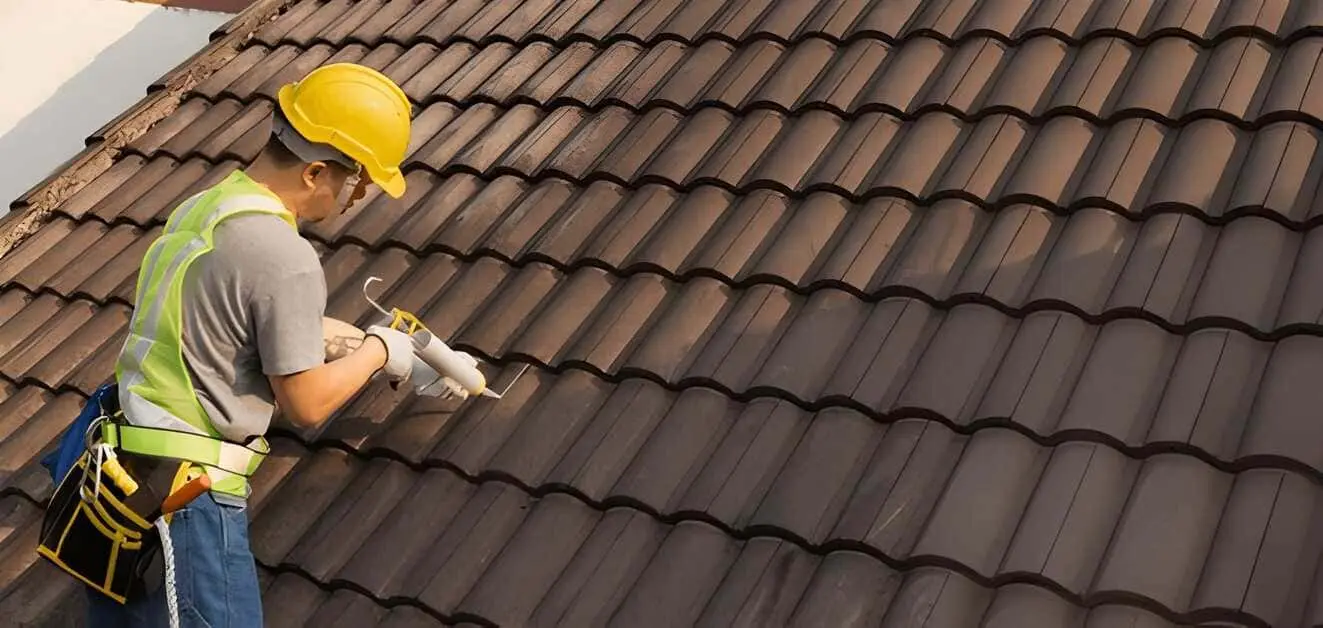
Roof Leak Repair Cost Guide: Average Prices & Factors (2026)
Roof Leak Repair Cost Guide: Average Prices & Factors (2026)
Table of Contents
Roof leak repair costs range from $150 for simple fixes to $8,000+ for extensive structural damage, with most homeowners paying $750–$1,500 for typical repairs. The final price depends on leak location, roofing material, extent of water damage, labor rates, and whether decking or structural components need replacement. Acting quickly when you notice leaks prevents minor $400 repairs from escalating into $5,000+ restoration projects involving rotted framing, mold remediation, and interior ceiling repairs.
This guide breaks down roof leak repair costs by damage severity, repair type, roofing material, and regional factors, helping you budget accurately and understand when professional help is necessary versus feasible DIY fixes.
Average Roof Leak Repair Costs (2025)
National Averages:
- Typical Range: $400–$1,500
- National Average: $970–$1,200
- Minor Repairs: $150–$500
- Moderate Repairs: $500–$1,500
- Major Repairs: $1,500–$8,000+
Cost Breakdown by Severity:
Minor Leaks ($150–$500):
- Single shingle replacement
- Nail pop repairs
- Small flashing adjustments
- Vent boot seal replacement
- Gutter cleaning causing minor backup
Moderate Leaks ($500–$1,500):
- Multiple shingle replacement
- Flashing repair (chimney, valley, skylight)
- Limited underlayment damage
- Small decking patch (<10 sq ft)
- Pipe boot replacement with surrounding shingles
Major Leaks ($1,500–$8,000+):
- Extensive water damage to decking
- Structural repairs (rafters, trusses)
- Large section replacement (>100 sq ft)
- Mold remediation
- Interior ceiling/drywall repair
Cost by Repair Type
Common Leak Repairs & Pricing
Cost by Roofing Material
Different materials require specialized repair techniques and replacement parts, affecting overall costs.
Key Insight: Premium materials (tile, slate) cost 3–5× more to repair than asphalt due to specialty labor and material sourcing.
Factors That Influence Repair Costs
1. Extent of Damage
Minor Surface Issues: Quick patch jobs cost $150–$500 and take 1–2 hours.
Structural Damage: Water that penetrates decking, insulation, or framing requires extensive work:
- Decking replacement: $5–$10 per sq ft
- Rafter/truss repair: $1,000–$3,000 per section
- Mold remediation: $500–$3,000 depending on spread
The Rule: Every week you delay repair, water damage worsens exponentially. A $300 shingle fix becomes a $3,000 decking replacement if ignored.
2. Roof Pitch and Accessibility
Low Pitch (≤4:12): Standard labor rates ($50–$75/hour)
Steep Pitch (>7:12): Requires extra safety equipment, slower work:
- Labor premium: +30–50%
- Safety gear rental: $100–$300
Multi-Story Homes: Staging/scaffolding adds $300–$800.
3. Location and Labor Rates
Regional Variations (2025):
- Urban/High-Cost Areas (NYC, SF, LA): $75–$125/hour
- Suburban/Mid-Cost Areas: $50–$80/hour
- Rural/Low-Cost Areas: $40–$60/hour
Seasonal Pricing:
- Peak season (spring/summer): Standard rates
- Off-season (fall/winter): 10–20% discounts possible
- Emergency/storm response: +50–100% surcharge
4. Emergency vs. Scheduled Repairs
Scheduled Repairs: Normal rates, multiple quotes possible
Emergency Repairs:
- After-hours/weekend: +50–100%
- Storm damage: +30–75%
- Temporary tarping: $200–$600 (separate charge)
Pro Tip: If leak isn’t active, wait for normal business hours and get 3 quotes to save 30–50%.
5. Underlying Water Damage
Leaks often cause hidden damage that increases costs:
Interior Damage Add-Ons:
- Drywall/ceiling repair: $200–$800
- Paint/texture matching: $150–$500
- Insulation replacement: $1.50–$3.00 per sq ft
- Mold remediation: $500–$3,000
Inspection Costs:
Labor Costs Breakdown
Hourly Rates: $45–$75 per hour (60% of total repair cost)
Minimum Service Charges: $150–$300 (even for 15-minute fixes)
Typical Labor Times:
- Simple shingle replacement: 1–2 hours
- Flashing repair: 2–4 hours
- Decking patch (small): 3–6 hours
- Extensive water damage: 8–20 hours over multiple days
Cost Example: $500 total repair = $300 labor (3 hours @ $100/hour) + $200 materials
DIY vs. Professional Repair Costs
DIY Feasible Repairs
When to DIY:
- Single shingle replacement (low pitch, ground-level)
- Minor flashing seal (accessible, no height)
- Gutter cleaning
- Simple vent boot replacement
DIY Costs:
- Materials: $50–$200
- Tools (if needed): $100–$300
- Time: 2–8 hours
DIY Risks:
- Missed underlying damage
- Improper sealing (future leaks)
- Safety hazards (falls)
- Warranty issues (homeowner work voids coverage)
Hire a Professional When
Mandatory Pro Repairs:
- Steep pitch or multi-story
- Structural damage suspected
- Flashing around chimneys/skylights
- Extensive shingle replacement (>20 shingles)
- Water damage inside home
- Warranty coverage required
Pro Benefits:
- Proper diagnosis (find ALL leaks)
- Quality repairs with warranty (1–10 years)
- Safety compliance
- Insurance claims assistance
How to Reduce Roof Leak Repair Costs
1. Act Immediately
Small leaks become big problems. A $300 repair delayed 6 months becomes $3,000+.
2. Regular Inspections
Annual inspections ($150–$300) catch issues early, preventing major repairs.
3. Get Multiple Quotes
Compare 3 estimates to ensure fair pricing (typical variance: 20–40%).
4. Bundle Repairs
If multiple issues exist, bundling saves on mobilization/setup fees.
- Clean gutters twice yearly ($90–$215 each time)
- Trim overhanging branches
- Inspect after major storms
- Ensure proper ventilation (prevents ice dams)
6. Insurance Claims
Storm/hail damage is often covered (minus deductible). Document damage immediately.
When to Replace vs. Repair
Repair Makes Sense When:
- Damage is localized
- Roof is <15 years old
- Repair cost <30% of replacement cost
- Rest of roof in good condition
Consider Replacement When:
- Roof >20 years old (asphalt)
- Widespread damage across multiple areas
- Multiple repair episodes within 2 years
- Repair cost >40% of replacement
- Interior water damage recurring
Break-Even Analysis:
If repairs exceed $4,000 and roof is >15 years old, replacement ($8,000–$15,000) often better long-term investment.
FAQ
How much does it cost to fix a roof leak?
Average roof leak repairs cost $400–$1,500. Minor fixes (single shingle) cost $150–$500; major repairs (water damage, decking) cost $1,500–$8,000.
Can I fix a roof leak myself?
Simple repairs (accessible shingle replacement, gutter cleaning) are DIY-feasible. Hire professionals for steep roofs, structural damage, flashing work, or interior water damage.
Does homeowners insurance cover roof leak repairs?
If caused by sudden storm damage (wind, hail), most policies cover repairs minus deductible. Gradual wear/neglect typically isn’t covered. Document damage immediately.
How long does roof leak repair take?
Simple repairs take 1–3 hours. Moderate repairs require 4–8 hours. Extensive water damage/structural work can take 2–5 days.
What’s the most common cause of roof leaks?
Damaged flashing (50% of leaks), followed by missing/cracked shingles (30%), and clogged gutters (10%). Regular inspections catch these early.
How do I know if my roof leak is serious?
Interior water stains, sagging ceilings, visible mold, or multiple leak points indicate serious damage. Call a professional immediately for inspection.
Can a roof leak cause mold?
Yes. Trapped moisture in attics, insulation, or walls promotes mold growth within 24–48 hours. Addressing leaks quickly prevents $500–$3,000 remediation costs.
Conclusion
Roof leak repair costs vary widely based on damage extent, roofing material, and labor rates, but most homeowners pay $400–$1,500 for typical fixes. Acting quickly when leaks appear prevents minor repairs from escalating into expensive structural restoration projects. While simple shingle replacements are DIY-feasible, most leak repairs benefit from professional diagnosis and execution to ensure all damage is addressed and warranties remain valid. Regular inspections, prompt repairs, and preventive maintenance are the most cost-effective strategies for protecting your roof investment.
🏠 Roofing Tips & Updates
Get free roofing advice, cost guides, and seasonal maintenance tips.
Roofing content specialist with 5+ years researching U.S. residential and commercial roofing. Has documented 200+ projects covering installation costs, material selection, contractor vetting, and DIY guides for homeowners across all climate zones.

How to Choose the Best Roofer Near You: Expert Tips for Homeowners in 2025
How to Choose the Best Roofer Near You: Expert Tips for Homeowners in 2025
Table of Contents
When it comes to protecting your home, your roof is one of the most critical components. Whether you’re facing a repair, replacement, or a new installation, choosing the right roofer can save you time, money, and stress. With countless options available, how do you find the best roofing contractor near you? This guide provides expert advice on what to look for, questions to ask, and red flags to avoid when hiring a roofer in 2025.
Why Hiring the Right Roofer Matters
The National Association of Home Builders (NAHB) recommends verifying three things before hiring any roofing contractor: a current state license, general liability insurance, and workers’ compensation coverage for all employees on-site.
A professional roofer ensures the job is done correctly, safely, and in compliance with local building codes. Poor workmanship can lead to leaks, reduced durability, and premature roof failure. The right roofer also offers warranties, quality materials, and excellent customer service that give you confidence in your investment.
Steps to Finding the Best Roofer Near You
1. Start with Local Recommendations and Online Research
Begin by asking neighbors, friends, and family if they have reliable roofers to recommend. Online reviews on platforms like Google, Yelp, and the Better Business Bureau also provide valuable insights into customer satisfaction and professional reputation.
Make a shortlist of candidates who specialize in the type of roofing you need—be it asphalt shingles, metal roofing, tile, or eco-friendly options.
2. Verify Licensing, Insurance, and Credentials
Always verify that roofing contractors hold valid licenses to work in your area. Check if they have liability insurance and workers’ compensation coverage. This protects you from any accidents or damage during the project.
Look for certifications from roofing manufacturers. These “certified installers” often have access to better materials and extended warranties.
3. Request Detailed Written Estimates
Ask for detailed, written estimates from at least three contractors. A good estimate should include:
- Material costs with brand and quality specified.
- Labor charges and completion timeline.
- Permits and disposal fees.
- Warranty information on both labor and materials.
Avoid the lowest bid if it doesn’t come with clear explanations or seems too good to be true.
4. Meet the Contractors In-Person
Schedule in-person meetings to discuss your project. This gives you a chance to assess professionalism, communication skills, and preparedness. Ask to see photos of their past work and request references you can contact.
5. Understand the Contract Thoroughly
Before signing, carefully read the entire contract. It should cover the scope of work, payment schedule, start and completion dates, and cleanup responsibilities. Make sure any verbal promises are included in writing.
Key Questions to Ask Your Roofer
- Are you licensed and insured? Can you provide proof?
- How long have you been in business?
- What type of roofing materials do you recommend for my home and why?
- Can you provide a written estimate and contract?
- What kind of warranty do you offer?
- Will you acquire all necessary permits?
- Who will supervise the project on-site?
- How do you handle unexpected issues or changes during the project?
Warning Signs of a Roofer to Avoid
- Lack of local address or poor online reviews.
- No proof of licensing or insurance.
- Pressure tactics to sign a contract immediately.
- Requests for large upfront payments before work begins.
- No written estimate or contract details.
- Unwillingness to provide references or portfolio.
- Excessive delays in responding to inquiries.
Additional Tips for a Successful Roofing Project
- Prepare your home for the project by covering landscaping and securing pets.
- Stay involved by checking progress regularly.
- Keep communication open with the contractor to address questions promptly.
- Always confirm that debris and leftover materials are cleaned up after completion.
Conclusion
Choosing the best roofer near you involves careful research, verification, and clear communication. Don’t rush the process—your roof deserves expert care to protect your home and family for years to come. Use this guide as your roadmap to hire trusted roofing professionals with confidence.
🏠 Roofing Tips & Updates
Get free roofing advice, cost guides, and seasonal maintenance tips.
Roofing content specialist with 5+ years researching U.S. residential and commercial roofing. Has documented 200+ projects covering installation costs, material selection, contractor vetting, and DIY guides for homeowners across all climate zones.
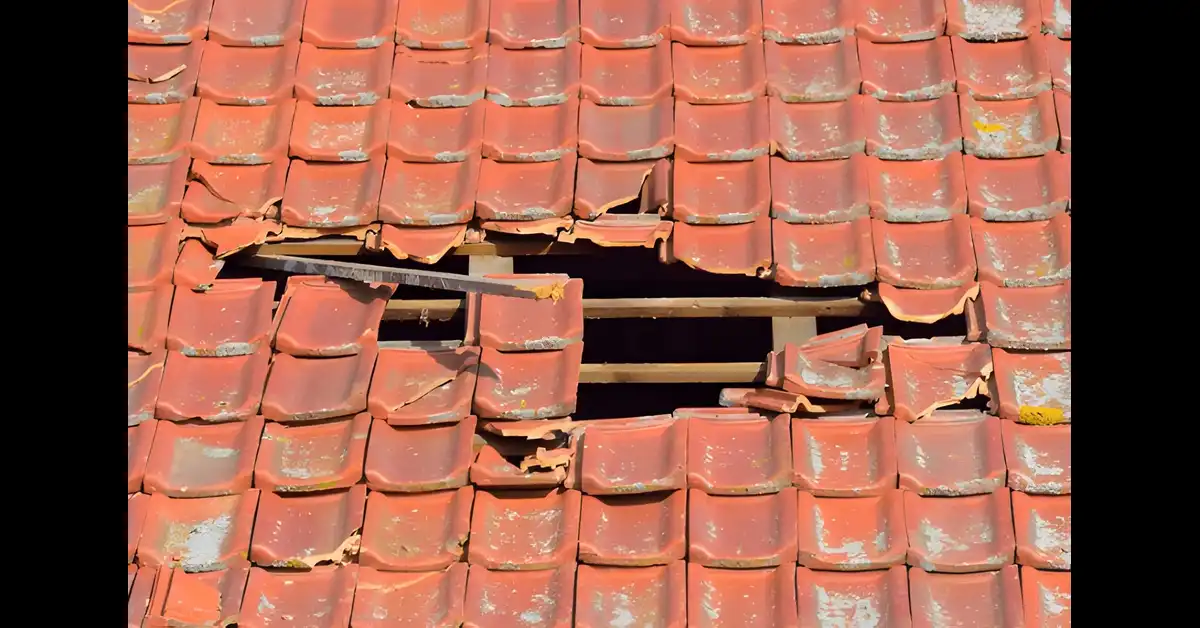
How to Spot and Repair Roof Damage Early Before It’s Costly
How to Spot and Repair Roof Damage Early Before It’s Costly
Table of Contents
Your roof is your home’s first line of defense against the elements. Over time, weather, debris, and wear can lead to damage that threatens your home’s safety and value. Catching roof damage early is vital to avoiding expensive repairs or complete replacement. This in-depth guide helps you identify early signs of damage, understand repair options, and maintain your roof for lasting protection.
Why Early Detection is Essential
The Insurance Information Institute reports that wind and hail account for 40% of all homeowner insurance claims in the U.S., with roofing damage representing the largest share of those losses.
Roof damage often starts small—like a missing shingle or slow leak—but can quickly escalate with moisture intrusion, causing rot, mold, and structural issues. Addressing problems immediately minimizes repair costs and prolongs your roof’s lifespan, keeping your home secure and energy-efficient.
Common Warning Signs of Roof Damage
Visible Indicators
- Shingles that are cracked, curled or missing: Wind and storms can loosen shingles. Missing or lifted shingles expose your roof to water damage.
- Granules accumulating in gutters: Loss of granules means your shingles are aging and deteriorating.
- Damaged or rusted flashing: Flashing seals roof penetrations; damage here leads to leaks.
- Sagging or buckling roof deck: This may indicate underlying decking or support problems.
Interior Signs
- Water stains or spots on ceilings and walls: These usually indicate active roof leaks.
- Mold or mildew odors: Persistent moisture from leaks encourages fungal growth.
- Peeling paint or wallpaper: Sign of water infiltration affecting drywall or plaster.
When to DIY or Call Professionals
Repairs You Can Do Yourself
- Small leaks can be sealed with roofing cement or repair tapes.
- Replacing single damaged or missing shingles.
- Clearing gutters and downspouts to improve drainage.
Call a Professional When…
- Damage is extensive or affects decking and supports.
- You need flashing or large-scale repairs.
- Your roof has steep slopes or other safety concerns.
Roofing professionals have the tools and expertise to ensure safe and durable repairs, protecting your home from further damage.
Best Materials for Roof Repairs
- Roofing Cement and Sealants: Effective for minor leaks and cracks, for use where shingles meet flashing or around vents.
- Metal Flashing: Superior protection for joints, chimneys, and valleys.
- Replacement Shingles or Tiles: Match existing material for seamless repairs.
- Roofing Tarps: Temporary cover for emergency water protection.
Maintaining Your Roof to Prevent Damage
- Schedule biannual inspections, ideally in spring and fall.
- Clean leaves and debris to avoid clogged gutters.
- Trim trees to prevent damage from branches.
- Address small issues immediately to avoid costly repairs.
Conclusion
Timely recognition and repair of roof damage protect your home, extend its life, and save money. Follow this guide to keep your roof in optimal shape and consult experts as needed for complex repairs.
🏠 Roofing Tips & Updates
Get free roofing advice, cost guides, and seasonal maintenance tips.
Roofing content specialist with 5+ years researching U.S. residential and commercial roofing. Has documented 200+ projects covering installation costs, material selection, contractor vetting, and DIY guides for homeowners across all climate zones.