Preloader Close
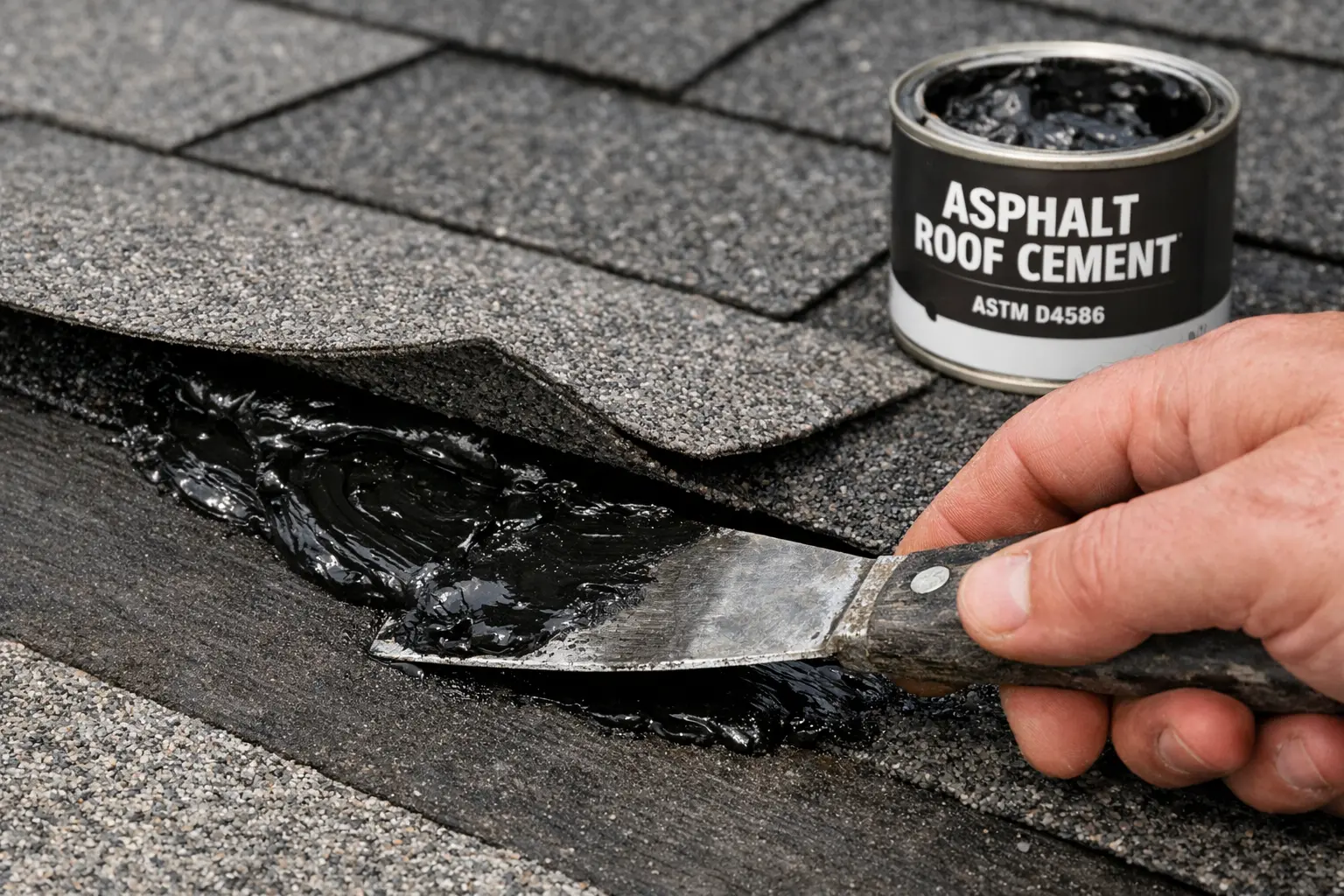
Adhesive for roof shingles falls into three main categories: factory-applied self-sealing strips (standard on most asphalt shingles), asphalt roof cement for repairs and hand-sealing, and specialty caulks or polyurethane sealants for small fixes and flashing. Understanding the best way to adhere shingles to a roof whether you’re installing new shingles, repairing lifted tabs, or hand-sealing for high winds requires knowing which adhesive type matches your roofing materials, temperature conditions, and performance needs.
This guide explains what each adhesive type does, when to use asphalt roof cement vs caulk, how to apply adhesive correctly, common mistakes that cause premature failure, and standards like ASTM D4586 that define quality roofing adhesives.
Table of Contents
What is adhesive for roof shingles (and why it matters)
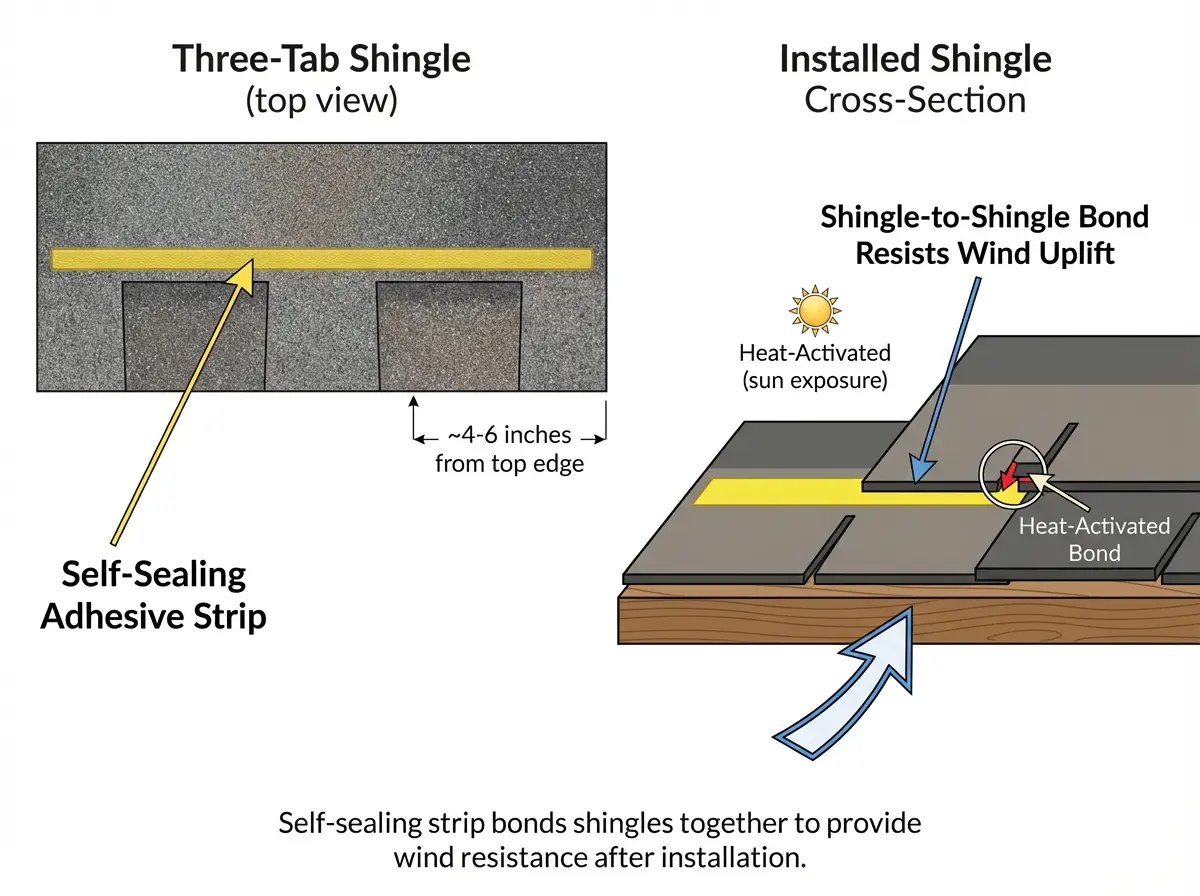
Adhesive for roof shingles serves two critical jobs: bonding shingles to each other (shingle-to-shingle seal) and bonding shingles or flashing to roof decks or substrates. Most modern asphalt shingles rely on a factory-applied self-sealing adhesive strip activated by heat from the sun, which is the primary defense against wind uplift.
IBHS wind testing demonstrates that the most important factor affecting high-wind performance for self-sealing asphalt shingles is the strength of the seal between shingles, and that seal depends on the temperature-activated adhesive strip applied during manufacturing. When that factory seal isn’t enough steep slopes, cold climates, or repair situations you’ll need the right supplemental adhesive for roof shingles to maintain wind resistance and prevent leaks.
Types of adhesive for roof shingles
Different applications require different adhesives, and using the wrong type can accelerate weathering or cause bond failure.
Factory self-sealing adhesive strips
Self-sealing asphalt shingles contain a temperature-activated adhesive strip applied during manufacturing, which adheres the lower-edge bottom surface of the exposed top shingle to the top surface of the shingle below. This strip typically activates when ambient temperatures exceed 60–80°F and forms a strong bond within days to weeks of installation.
The seal strength directly impacts wind ratings shingles tested under ASTM D3161 or D7158 achieve Class D (90 mph), Class F (110 mph), or Class H (150 mph) ratings based on how well the adhesive holds during sustained wind exposure.
Asphalt roof cement (plastic cement)
Asphalt roof cement often called plastic roof cement is a trowel-grade adhesive for roof shingles used for hand-sealing, repairs, and flashing applications. ASTM D4586 is the standard specification for asbestos-free asphalt roof cement and covers two types and two classes:
- Type I: Made from asphalts characterized as self-healing, adhesive, and ductile.
- Type II: Made from asphalt with high softening point and relatively low ductility.
- Class I: For application to essentially dry surfaces.
- Class II: For application to damp, wet, or underwater surfaces.
Asphalt roof cement meeting ASTM D4586 is the go-to adhesive for roof shingles when you need to bed patches, seal lifted tabs, or bond flashing.
Roofing caulk and polyurethane sealants
For small punctures, gaps around penetrations, or minor shingle edge repairs, roof-grade polyurethane or butyl sealants offer flexibility and adhesion to asphalt substrates. These products are typically applied with a caulk gun and cure faster than trowel-grade asphalt cement, but they must be labeled for roofing use and compatible with asphalt shingles.
Avoid general-purpose silicone or acrylic sealants that do not bond chemically to asphalt and can cause accelerated weathering.
Best way to adhere shingles to a roof: installation vs repair
The best adhesive strategy depends on whether you’re installing new shingles or repairing existing ones.
New shingle installation (factory sealant strips)
For standard new installations, the factory self-sealing strip is the primary adhesive for roof shingles, and proper nailing is what holds shingles until the strip activates. Nails should be placed just below the sealant strip to ensure the next course of shingles covers and protects nail heads.
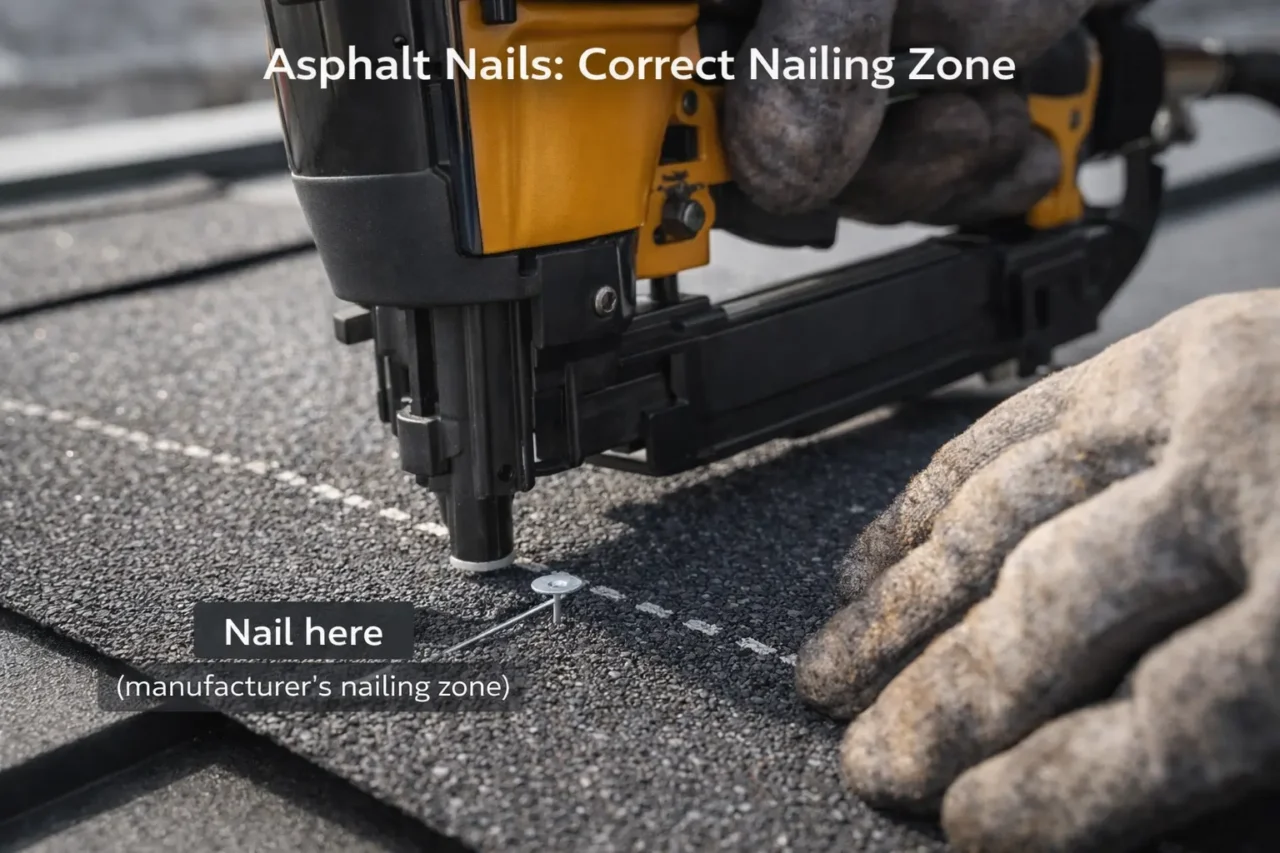
In high-wind zones (110+ mph wind regions) or on steep slopes (greater than 12:12 or 45 degrees), manufacturers and ARMA recommend hand-sealing shingles with asphalt roof cement in addition to the factory strip. Despite these recommendations, hand-sealing is not common practice, which can lead to premature failures in these conditions.
Repairing lifted or damaged shingles
When repairing lifted tabs, cracked shingles, or torn edges, the best way to adhere shingles to a roof is with polymer-modified asphalt roof cement or roof-grade polyurethane sealant compatible with asphalt.
Steps for a reliable repair:
- Clean the area of loose granules and debris.
- Lift shingle tabs gently with a flat tool.
- Force the sealant under tabs or apply trowel-grade roof cement to bed a patch shingle.
- Press firmly and weight or nail as needed.
- Allow proper curing time before exposure to water.
How to apply adhesive for roof shingles (step-by-step)
Correct application technique makes the difference between a repair that lasts years and one that fails in the next storm.
Surface preparation
Clean the repair area of loose granules, dirt, moss, and old sealant residue so the new adhesive bonds properly. Even asphalt roof cement rated for damp surfaces (ASTM D4586 Class II) performs better on clean, dry substrates.
Temperature and timing
Apply when shingles are dry and ambient temperature is within the product’s recommended range typically above 40°F for many asphalt-based cements. Cold temperatures slow curing and reduce bond strength, while excessive heat can make the adhesive too fluid to stay in place.
Follow manufacturer curing times before exposing the repair to water; most asphalt roof cements need 24–72 hours to develop full bond strength.
Application technique
For lifted shingle tabs, apply a small bead of adhesive under the tab and press firmly. For torn shingles, use trowel-grade roof cement to bed a patch shingle or dress seams, applying an 1/8 to 1/4 inch thickness. Feather the edges smooth to avoid visible lumps and reduce water pooling.
Avoid over-application
Excess adhesive that squeezes out from under shingles can attract dirt, become visible, and look unsightly. Use only as much adhesive as needed to achieve a bond more is not better.
ASTM D4586: the standard for asphalt roof cement quality
ASTM D4586 is the specification that defines composition, workability, and performance requirements for asbestos-free asphalt roof cement.
Composition limits
Asphalt roof cement complying with ASTM D4586 must meet strict limits for water content (max 3.0%), nonvolatile content (min 70%), and bitumen (asphalt) content. It consists of an asphalt base, volatile petroleum solvents, and mineral and/or other stabilizers, mixed to a smooth, uniform consistency suitable for trowel application.
Physical requirements
The standard requires the cement to be uniform, workable, and pliable, and specifies behavior at given temperatures to ensure it performs across a range of climates. Products that meet ASTM D4586 Type 1 are labeled as such, giving contractors and homeowners confidence in quality.
Why ASTM D4586 matters for adhesive selection
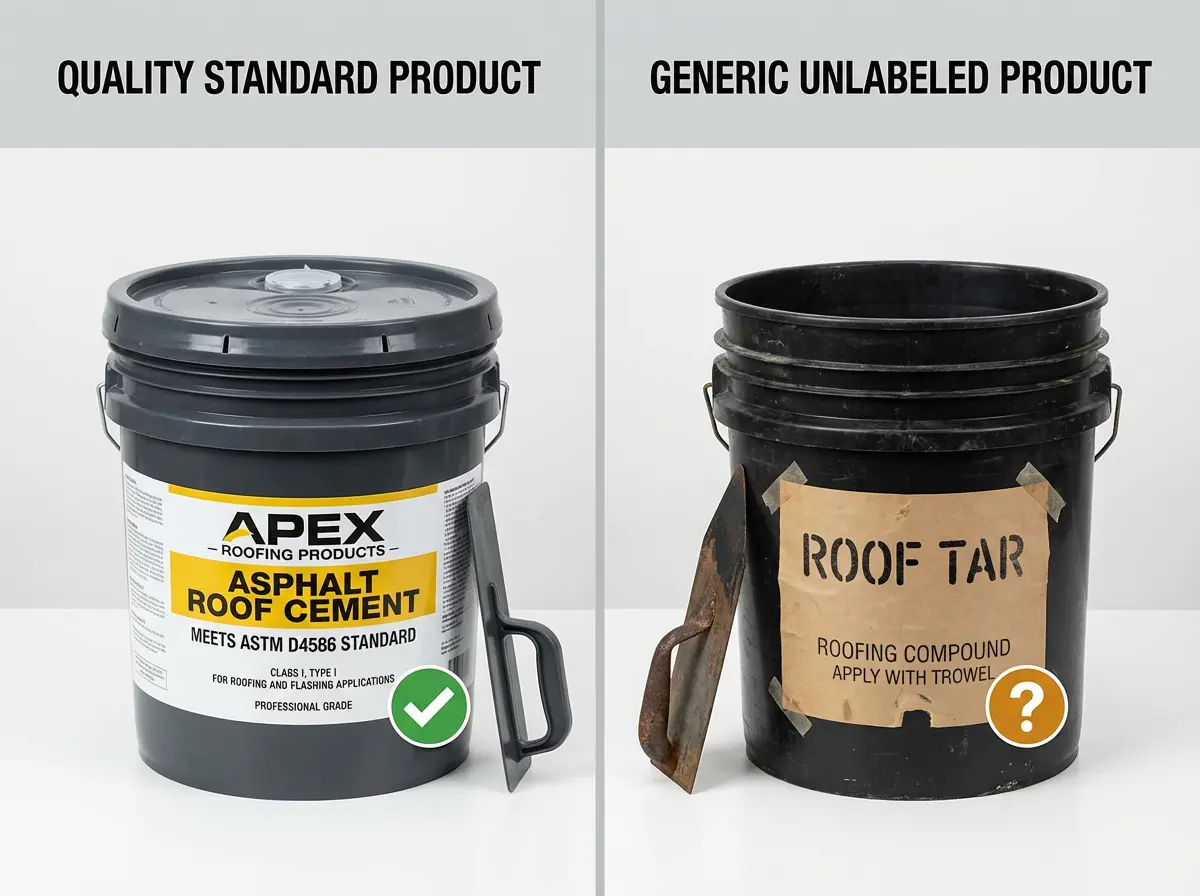
When choosing adhesive for roof shingles, look for products labeled ASTM D4586 Type I or Type II so you know you’re getting a tested, standardized formulation. Generic “tar” or unlabeled products may not meet these standards and can fail prematurely.
Hand-sealing shingles in high-wind and cold-weather conditions
Even though factory sealant strips are standard, certain conditions require supplemental hand-sealing with adhesive for roof shingles.
When hand-sealing is recommended
ARMA and shingle manufacturers typically recommend hand-sealing for:
- Slopes greater than 12:12 (45 degrees).
- Very cold weather installations where factory strips may not activate before winter storms.
- High-wind zones (110+ mph design wind speeds).
Despite these recommendations, hand-sealing of self-sealing asphalt shingles is not common practice for winter or steep-slope installations, which increases blow-off risk.
How to hand-seal shingles
Apply a small dab (quarter-size) of asphalt roof cement under each shingle tab at the locations where the factory sealant strip would normally bond. Press the tab down firmly and allow the cement to cure before exposing the roof to wind or rain.
Hand-sealing adds labor time and material cost but dramatically improves wind resistance and is the best way to adhere shingles to a roof in challenging conditions.
Common mistakes when using adhesive for roof shingles
These errors cause repairs to fail and adhesive bonds to break prematurely.
Using the wrong adhesive type
General-purpose silicone, acrylic caulks, or household sealants do not bond chemically to asphalt and can cause accelerated weathering. Always use roofing-specific asphalt-compatible sealants that explicitly state compatibility with asphalt shingles.
Applying in cold or wet conditions
Applying asphalt roof cement below the manufacturer’s minimum temperature (often 40°F) or to wet surfaces reduces bond strength and extends cure time. If you must work in marginal conditions, choose an ASTM D4586 Class II product rated for damp or wet surfaces.
Skipping surface preparation
Loose granules, dirt, moss, and old sealant prevent proper adhesion. Even a few seconds spent cleaning the repair area significantly improves bond durability.
Over-relying on adhesive instead of nails
Adhesive for roof shingles supplements proper nailing it doesn’t replace it. Factory sealant strips and hand-sealing cement work with correctly placed nails to resist wind uplift; adhesive alone cannot hold shingles under sustained wind loads.
Adhesive for metal roofing vs asphalt shingles
While this guide focuses on adhesive for asphalt shingles, it’s worth noting that metal roofing uses different adhesive systems.
Metal roofs typically rely on butyl tape sealants at panel seams and silicone or polyurethane caulks at penetrations and trim, not asphalt-based cements. If you’re working on a mixed roof (metal flashing over asphalt shingles), verify that your adhesive is compatible with both substrates or use a product specifically designed for dissimilar materials.
How long does adhesive for roof shingles last?
Adhesive lifespan depends on product type, application quality, and exposure conditions.
Factory sealant strips
Properly activated factory sealant strips last the life of the shingle (20–50 years) when installation and climate conditions are favorable. Shingles installed in very cold climates or on north-facing slopes may experience slower or incomplete seal activation, reducing wind resistance.
Asphalt roof cement repairs
Trowel-grade asphalt roof cement repairs can last 5–15 years depending on exposure, UV degradation, and thermal cycling. Polymer-modified cements generally outlast unmodified formulations.
Caulk and sealant repairs
Roof-grade polyurethane and butyl sealants typically last 10–20 years when properly applied, but may require reapplication sooner in harsh climates with extreme temperature swings.
FAQ: adhesive for roof shingles
What is the best adhesive for roof shingles?
For new installations, factory self-sealing strips are standard; for repairs and hand-sealing, asphalt roof cement meeting ASTM D4586 is the best adhesive for roof shingles.
Can I use regular caulk on roof shingles?
No general-purpose silicone or acrylic caulks do not bond chemically to asphalt and can cause accelerated weathering; use roof-grade polyurethane or asphalt-compatible sealants.
What is ASTM D4586?
ASTM D4586 is the standard specification for asbestos-free asphalt roof cement, covering composition, workability, and performance requirements.
When should I hand-seal shingles?
Hand-sealing is recommended for slopes greater than 12:12, cold-weather installations, and high-wind zones (110+ mph).
How do self-sealing shingles work?
Self-sealing shingles contain a temperature-activated adhesive strip that bonds the shingle above to the shingle below when heated by the sun.
What temperature do I need to apply asphalt roof cement?
Most asphalt roof cements require ambient temperatures above 40°F for proper application and curing.
How long does asphalt roof cement take to cure?
Asphalt roof cement typically needs 24–72 hours to develop full bond strength before exposure to water.
Can I apply adhesive to wet shingles?
ASTM D4586 Class II asphalt roof cement is rated for damp, wet, or underwater surfaces, but performance is best on dry, clean substrates.
How do I remove old roof cement from shingles?
Old, hardened asphalt cement can be softened with mineral spirits or a specialized remover, then scraped carefully to avoid damaging shingles.
Does adhesive replace nails on roof shingles?
No adhesive for roof shingles supplements proper nailing; it does not replace it.
🏠 Roofing Tips & Updates
Get free roofing advice, cost guides, and seasonal maintenance tips.
For more on this topic, see Minimum Roof Pitch for Shingles: 2026 Install Guide.

Roofing content specialist with 5+ years researching U.S. residential and commercial roofing. Has documented 200+ projects covering installation costs, material selection, contractor vetting, and DIY guides for homeowners across all climate zones.
Leave A Comment