

Denver Gutter Installation: Complete Guide (Costs, Permits & Contractors)
Denver gutter installation is one of the most climate-sensitive home improvement decisions a Front Range homeowner can make. While gutters are often treated as an afterthought , a box to check during a roofing project , in Denver they are a first-line defense against three specific threats that destroy homes slowly and expensively: ice dams, foundation water intrusion, and fascia rot from standing snowmelt. Get the gutters wrong and the damage compounds quietly for years before it shows up on a home inspection report.
The cost of Denver gutter installation ranges from $4 to $12 per linear foot installed, putting a complete system for a typical single-story home between $800 and $2,400. But raw price tells only part of the story. A $5-per-foot sectional vinyl installation will likely need full replacement within five to eight years in Colorado’s climate, while a $9-per-foot seamless aluminum system installed correctly can last 30 to 40 years. Choosing the wrong material or the wrong contractor in Denver does not just cost more upfront , it costs far more over the life of the home.
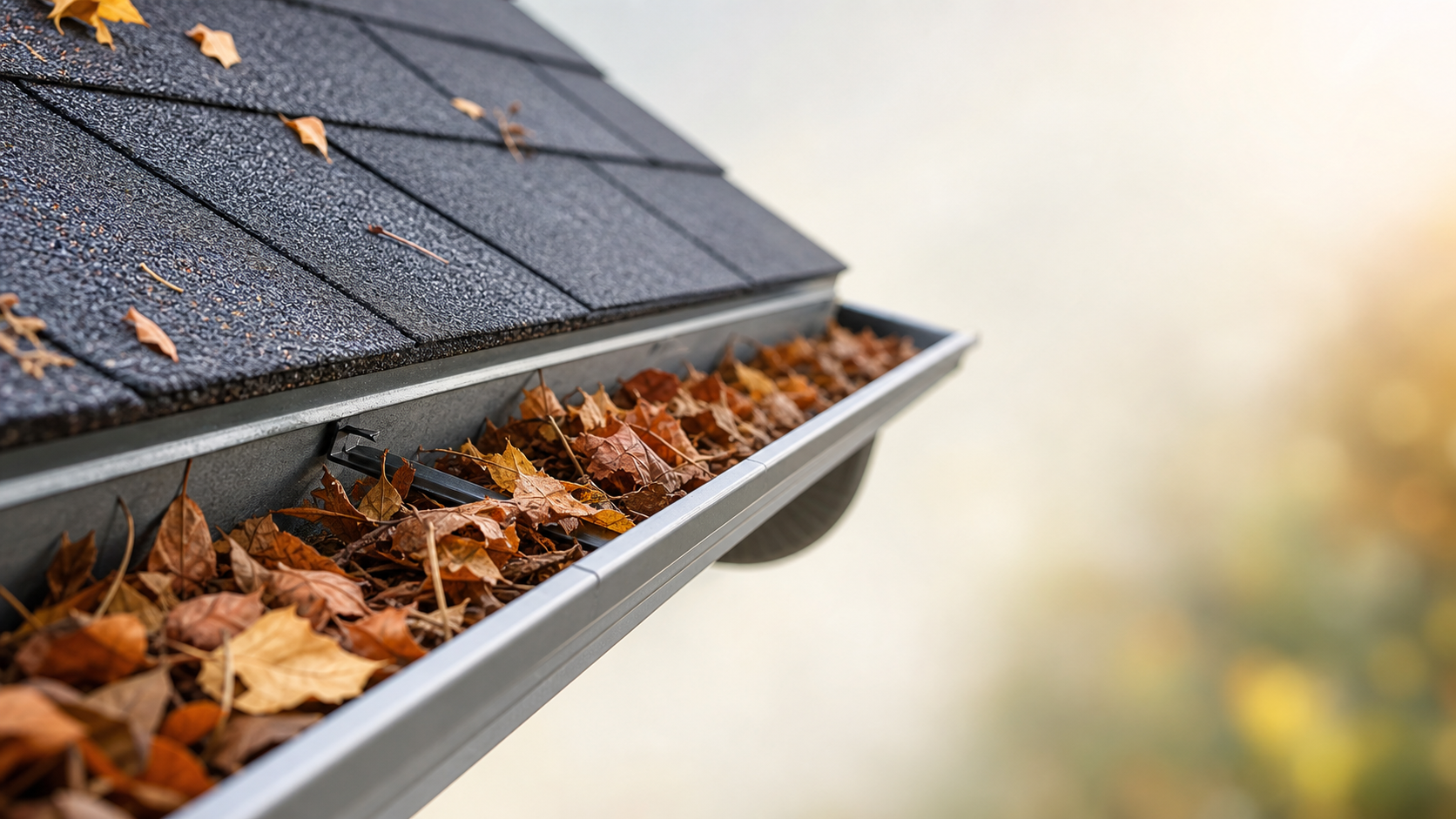
Denver presents a unique combination of challenges that no other major U.S. metro quite matches. The city sits at 5,280 feet, where ultraviolet radiation degrades vinyl and low-grade coatings faster than at sea level. The Front Range receives more than 400 hail events annually , more than almost anywhere in the country , meaning gutters take a direct beating every spring. Temperatures routinely swing 40 to 50 degrees Fahrenheit in a single day during shoulder seasons, expanding and contracting every seam in a sectional gutter system until it fails. And then there is the cottonwood problem: Denver’s mature urban tree canopy drops dense, compacting seed masses that turn neglected gutters into small dams within days.
This guide is written specifically for Denver and the surrounding metro , Aurora, Lakewood, Arvada, Westminster, Englewood, Castle Rock, and the mountain foothill communities where elevation adds its own complications. It covers every decision point in sequence: which gutter material actually holds up to Colorado conditions, what size you need for Denver’s rain and snow patterns, whether you need a permit, how to vet a contractor after a hailstorm when every storm chaser in three states has descended on your neighborhood, and what to expect on installation day. By the end, you will have everything needed to make a confident decision and avoid the mistakes that send Denver homeowners back to square one within a decade. Colorado homeowners should also review the Colorado roofing COP requirements — most Front Range municipalities require a Certificate of Occupancy for roofing work over $10,000.
Denver Gutter Installation Cost in 2026
Gutter pricing in Denver runs somewhat higher than national averages due to labor costs along the Front Range and Colorado’s specialized climate requirements. Here is a realistic breakdown:
| Gutter Type | Material (per lin. ft.) | Installed (per lin. ft.) | Best For |
|---|---|---|---|
| Aluminum K-style (seamless) | $1.50 – $3.00 | $4 – $8 | Most Denver homes |
| Steel K-style (seamless) | $2.50 – $4.00 | $6 – $10 | Hail-prone areas, heavy snow |
| Copper K-style | $15 – $25 | $20 – $40 | Historic homes, premium curb appeal |
| Vinyl (sectional) | $0.75 – $1.50 | $3 – $6 | Budget only , not ideal for Denver winters |
| Half-round aluminum | $2.00 – $4.00 | $5 – $10 | Craftsman and Tudor-style homes |
| Oversized 6-inch K-style | $2.50 – $5.00 | $6 – $12 | Steep roofs, high runoff |
For a typical Denver ranch-style home with 150 linear feet of gutter, expect to pay $900 to $1,500 for aluminum seamless gutters fully installed. Add gutter guards and the total rises to $1,800 to $3,500 depending on the guard type. See our complete guide to gutter guards for a full comparison of guard systems.

Why Denver’s Climate Makes Gutter Choice Critical
Denver averages 300 days of sunshine per year, but those statistics hide the extremes that make Denver gutter installation far more demanding than in most U.S. cities. Here is what every gutter system in Denver has to survive:
Freeze-Thaw Cycles
Denver temperatures routinely swing 40 to 50 degrees Fahrenheit in a single day during late fall and early spring. Water in gutters freezes overnight, expands, and thaws the next afternoon. Sectional vinyl gutters crack and separate at their seams within two to three winters. Seamless aluminum or steel gutters eliminate virtually all seam failures because they are formed in one continuous piece from fascia corner to downspout.
Spring Hailstorms
The Denver metro sits in one of the most hail-active corridors in the United States. Colorado averages more than 400 hail events per year, many dropping golf ball-sized stones that dent standard 0.027-inch aluminum gutters. In hail-prone areas like Castle Rock, Parker, and Aurora, upgrade to 0.032-inch heavy-gauge aluminum or 26-gauge steel for noticeably better dent resistance , roughly $1 to $2 more per linear foot.
Heavy March Snowfall
Denver’s heaviest snowstorms typically hit in March and April, when wet, heavy snow accumulates fast. Snow load on gutters can exceed 20 pounds per linear foot during a major storm. Undersized 4-inch K-style gutters can pull away from the fascia under this weight. Most Denver contractors now recommend 5-inch or 6-inch K-style as the standard, not an upgrade.
Ice Dams
Ice dams form when heat escaping through an under-insulated roof melts snow, which refreezes at the cold eaves. Gutters get caught in this cycle and can be torn completely off the house. The real fix is attic insulation and ventilation , but heat cables installed along the eave and inside the gutter can prevent ice dam buildup in problem spots. Ask your installer whether heat cable installation is part of their offering.
Best Gutter Materials for Denver Gutter Installation
Seamless Aluminum , Recommended for Most Homes
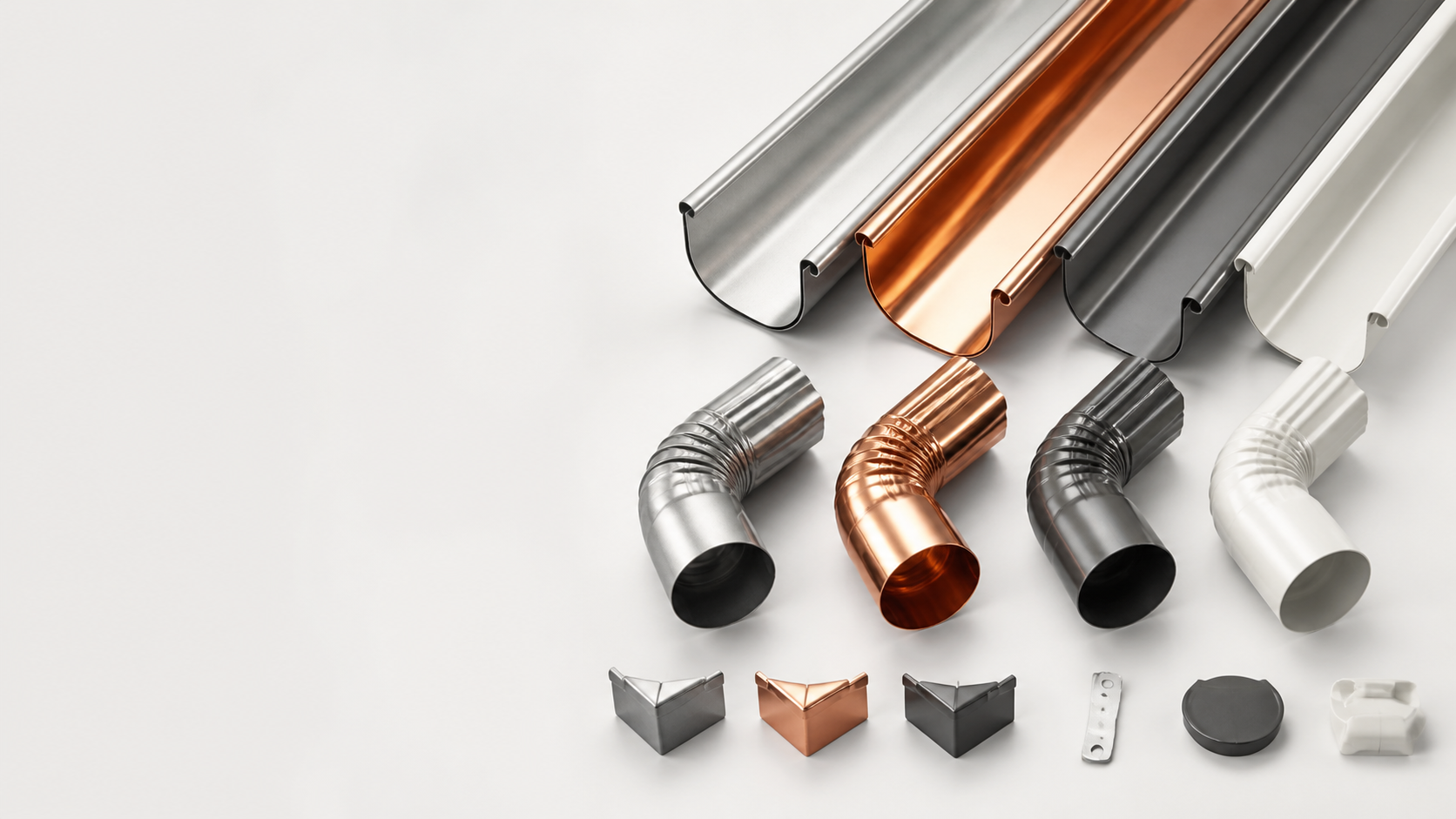
Seamless aluminum gutters are the right call for the vast majority of Denver homes. They are rust-proof, lightweight, available in 25 to 30 colors, and formed on-site to the exact length of your roofline. Specify 0.032-inch gauge for hail resistance. Standard 0.027-inch works fine for areas with less hail exposure. Properly installed hangers at 24-inch spacing handle Denver’s temperature swings without sagging. For most homes on the Front Range, seamless aluminum is the starting point for any quality Denver gutter installation.
Steel , Best for Hail-Heavy Areas
Galvanized or Galvalume steel gutters are heavier and more hail-resistant than aluminum. The downside: they can rust at cut edges if the galvanizing is scratched. Steel makes sense in communities along the I-25 corridor south of Denver where golf-ball hail is a regular occurrence.
Copper , Premium Choice for Historic Homes
Copper gutters last 50 to 100 years, develop a beautiful patina, and never rust. They are the premium choice for historic Denver bungalows in neighborhoods like Highlands, Congress Park, and Potter-Logansdale. Expect $20 to $40 per linear foot installed. Copper must be joined with soldered seams to perform correctly , not snap-together connectors.
Vinyl , Not Recommended for Denver
Vinyl gutters are cheap and widely available at home improvement stores. They are also poorly suited for Denver’s temperature extremes. Vinyl becomes brittle in sustained cold and cracks under the weight of ice or wet snow. Sectional aluminum is a better choice even at a slightly higher cost.
Do You Need a Permit for Gutter Installation in Denver?
For a standard Denver gutter installation on a residential property, Denver does not require a building permit in most cases. Gutter work is considered routine maintenance under the Denver Building and Fire Code when it does not involve structural changes to the fascia or eave.
Exceptions where a permit may be required include adding underground drainage connections to the city storm system, installing French drains, working on a historic property in a Denver landmark district, or connecting to a shared drainage easement. If unsure, call Denver Community Planning and Development at 311 before starting work.
How to Choose a Denver Gutter Contractor
The Denver gutter installation market ranges from highly professional companies with decades of local experience to one-person operations that appear after every hailstorm and disappear before winter. Knowing how to tell them apart before you sign anything is one of the most important steps in any Denver gutter installation project. Here is what to look for:
- Verify Colorado contractor registration through the DORA database before signing anything.
- Look for on-site roll-forming equipment. Seamless gutters are formed on-site from a portable machine on the truck. If a company brings pre-cut sectional gutters and calls them seamless, walk away.
- Ask about hanger spacing. Proper installation uses hangers every 24 inches. Spacing at 36 inches causes sagging within two to three years under Colorado snow loads.
- Get three written bids. Three bids reveal the market rate and flag suspicious outliers in both directions.
- Watch for storm-chaser red flags. If a contractor approaches you unsolicited after a hailstorm and pressures for an immediate signature, be very cautious.
For broader guidance on vetting exterior contractors, see our guide on how to choose the best contractor near you.
DIY vs. Professional Gutter Installation in Denver
When planning a Denver gutter installation, the first decision is whether to DIY or hire a professional. Sectional aluminum gutters can be installed by a competent DIYer over a weekend. Seamless gutters cannot , the roll-forming machine costs $15,000 to $30,000 and is not available for rental. For most Denver homeowners, the math favors professional seamless Denver gutter installation.
| DIY Sectional | Professional Seamless | |
|---|---|---|
| Total cost (150 lin. ft.) | $200 – $400 | $900 – $1,800 |
| Seam failures | Likely within 3-5 yrs in Denver | Very rare |
| Hail performance | Poor | Good (custom gauge) |
| Lifespan in Denver | 5 – 15 years | 20 – 40 years |
Gutter Maintenance Tips for Denver Homeowners
A successful Denver gutter installation is only the beginning of protecting your home. Proper maintenance keeps your system working through Colorado’s demanding climate for 20 to 40 years. Here is what to do each season:
- Spring (April-May): Clean out cottonwood seeds, which compact into felt-like mats that block water completely. Check downspout extensions and inspect hangers for any sag caused by winter snow load.
- Summer (June-August): After each major thunderstorm, walk your perimeter and check for overflow marks on the foundation or siding. These are early signs of blockage or undersized gutters.
- Fall (October): Full cleaning after leaf drop, before the first hard freeze. Check all downspout straps and end caps. Best time to schedule re-pitching of sagging sections.
- Winter (December-February): Never chip ice with sharp tools. Use calcium chloride ice melt in a tube sock laid along the gutter, or have heat cables professionally installed in problem spots.
According to the National Roofing Contractors Association, gutter and drainage maintenance is the single most cost-effective step homeowners can take to prevent water intrusion and foundation damage.
Ready to Start Your New Shingle Roof?
Get a free estimate from a certified roofing contractor. We’ll help you choose the right brand and roofing materials for your home, climate, and budget: with a no-obligation 2026 installed price.
Free inspection · No obligation · Licensed & insured
Frequently Asked Questions: Denver Gutter Installation
How often should I clean gutters in Denver?
Twice per year is standard , once in late May after cottonwood seed season, and once in October after leaf fall. Homes under large cottonwood or elm trees may need cleaning three to four times per year. Clogged gutters in Denver’s winter lead directly to ice dams and water intrusion behind fascia boards.
What gutter size is best for Denver homes?
Five-inch K-style handles most Denver homes adequately. Six-inch is worth the upgrade on steep roofs (6:12 pitch or greater), homes over 2,500 square feet, or anywhere runoff concentrates. Undersized gutters overflow during Denver’s short but intense summer thunderstorms, which can drop an inch of rain in under an hour.
Does homeowner’s insurance cover gutter damage from hail?
Yes, in most cases. Hail damage to gutters is covered under the dwelling portion of a standard homeowner’s policy, subject to your deductible. After a significant hail event, have a professional inspect your gutters before filing a claim , minor denting without functional damage may not meet the covered-loss threshold.
How long does gutter installation take?
A full replacement on a typical single-story Denver home , 120 to 180 linear feet , takes a crew of two to three installers approximately four to eight hours. Two-story homes with complex rooflines may take a full day. Most reputable Denver gutter companies can schedule within one to two weeks outside of the post-hailstorm rush in late spring.
What is the best time of year to install gutters in Denver?
Late summer through early fall , August through October , is ideal. Denver’s weather is dry and mild, contractors are past the hailstorm rush, and you will have new gutters before the first heavy snowfall. Winter installation is possible but requires dry, above-freezing conditions for proper sealant curing.
Ready to plan your project? Our seamless gutter installation guide covers the full process and what to expect on installation day.

Roofing content specialist with 5+ years researching U.S. residential and commercial roofing. Has documented 200+ projects covering installation costs, material selection, contractor vetting, and DIY guides for homeowners across all climate zones.
Leave A Comment