Preloader Close
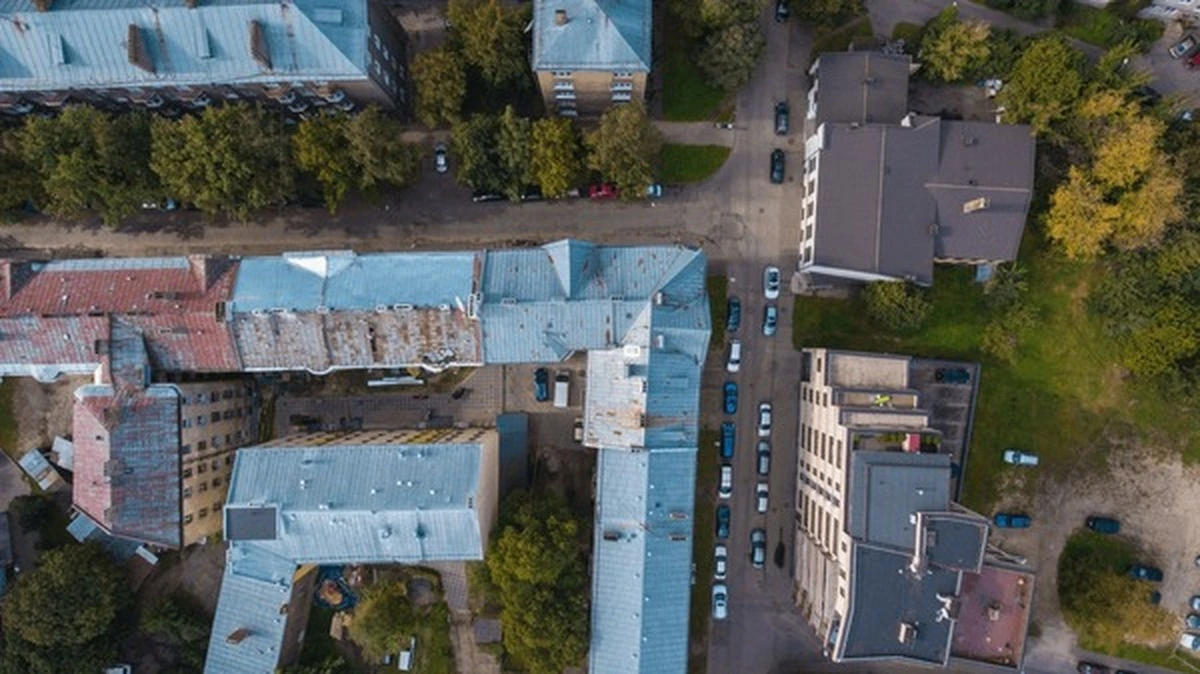
A roofing satellite estimator is a digital tool that uses satellite or aerial imagery to measure roofs remotely and generate accurate takeoffs without climbing a ladder. Instead of walking the roof with a tape measure or wheel, contractors can type in an address, receive a measurement report, and build an estimate from their office or truck.
This shift from manual to remote measurement has transformed how roofing businesses quote jobs, plan materials, and manage risk. A good roofing satellite estimator improves safety, speeds up estimating, and helps win more bids by giving consistent, professional data to support every quote.
Table of Contents
What is a roofing satellite estimator?
A roofing satellite estimator is software that calculates roof dimensions area, pitch, perimeter, ridges, hips, and valleys—using overhead imagery instead of on‑site manual measurements. The images may come from satellites, airplanes, or even drones, but the goal is the same: create a precise roof model and measurement report from above.

Unlike traditional tape‑measure methods, a roofing satellite estimator can also produce scaled diagrams, 3D models, and detailed breakdowns by roof plane. These reports are commonly used for replacement quotes, insurance claims, real estate due diligence, and large‑scale asset management across many properties.
Common use cases include:
- Roofing contractors preparing replacement or repair estimates.
- Insurance adjusters verifying claim scopes and quantities.
- Property managers budgeting long‑term capital projects across portfolios.
How roofing satellite estimators work
Most roofing satellite estimator platforms follow a similar workflow:
- Address input
The user enters a street address or drops a pin on a map. The platform locates the property and pulls the most recent available imagery. - Imagery and modeling
The system uses high‑resolution orthographic (straight‑down) and sometimes oblique (angled) images. Software and/or trained technicians trace roof edges, define planes, and assign pitch to each section. - Measurement calculation
From the traced outline, the tool calculates:- Total roof area (in squares or square feet/meters)
- Lengths of ridges, hips, valleys, rakes, and eaves
- Individual plane areas and pitches
- Perimeter measurements and overhang data
- Report generation
A finished report usually includes:- Color‑coded roof diagrams
- Dimension labels for all critical lines
- Total area summary and plane‑by‑plane breakdown
- Optional material suggestions or waste factors
Turnaround times range from near‑instant (for pre‑measured or auto‑processed jobs) to a few hours or up to one business day when manual verification is involved.
Why contractors switch to satellite measurement
A roofing satellite estimator offers several practical advantages over traditional methods:
- Safety
No ladder, no roof‑walking, less risk. Crews spend less time at height, especially on steep, tall, or fragile roofs. - Speed
One person can request and receive measurements for multiple properties in an afternoon, instead of driving to each address and measuring manually. - Consistency and accuracy
Good systems typically fall within a few percent of manual measurement on standard residential roofs, which is more than sufficient for estimating and material ordering when combined with sensible waste factors. - Professional presentation
Clean diagrams and standardized reports impress homeowners, adjusters, and commercial clients. This supports higher close rates and builds trust. - Remote capability
Contractors can bid roofs in other towns—or even other states—without a site visit. This is especially valuable for storm response work and multi‑property portfolios. - Material optimization
Accurate measurements minimize over‑ordering and under‑ordering, reducing both waste and emergency supply runs.
Leading roofing satellite estimator platforms
There are many tools on the market; they differ in imagery quality, features, integrations, and pricing. Here is a high‑level view of common categories you’ll see:

Enterprise aerial services
These platforms maintain large, frequently updated image libraries and specialize in detailed roof reports. Typical features include:
- Multiple report levels (quick squares, full diagrams, premium detail).
- Options for residential and commercial roofs.
- Integrations with CRM and estimating software.
- Per‑report pricing, with volume discounts or subscription options.
They’re well suited for established contractors, insurance carriers, and restoration firms that handle high volumes and need consistency across teams.
3D modeling and homeowner‑friendly apps
Some tools focus on 3D models and visual sales presentations:
- Capture through smartphone photos or existing imagery.
- Produce interactive 3D models and color simulations.
- Help sales reps show “before and after” visuals at the kitchen table.
These are a good fit for residential contractors focused heavily on in‑home sales and design options.
All‑in‑one roofing platforms
Other systems combine a roofing satellite estimator with:
- Estimating and proposals.
- Simple CRM or job tracking.
- Material ordering workflows.
They’re ideal for small to mid‑sized roofing companies that want a single environment for measurements, estimates, and job management rather than multiple disconnected tools.
DIY / free map tools
Free options (for example, using basic map or earth viewers with a measuring tool) can:
- Provide rough area and length estimates.
- Help homeowners sanity‑check quotes.
However, they lack dedicated roof‑specific features, pitch calculations, and formal reports. For professional use, most contractors rely on dedicated roofing satellite estimator platforms rather than generic map tools.
Accuracy and limitations
A good roofing satellite estimator is highly accurate in many scenarios, but it is not perfect. Understanding where it shines and where it struggles helps you use it correctly.

Typical accuracy range
- For standard residential, uncomplicated roofs: often within about 2–5% of carefully done manual measurements.
- Pitch measurements are usually within a small margin when imagery includes oblique angles or is combined with known dimensions.
Factors that affect accuracy:
- Image resolution and clarity.
- Age of imagery (new additions or changes might not be visible yet).
- Roof complexity: lots of facets, dormers, and intersecting planes add difficulty.
- Obstructions: trees, heavy shade, snow, tarps, solar panels, or debris.
Challenging cases:
- Dense tree cover hiding large portions of the roof.
- Very new homes or recent additions where images haven’t been updated.
- Flat or low‑slope commercial roofs where small slope changes and drainage details matter.
In these situations, many contractors combine a roofing satellite estimator with limited on‑site verification: confirming edge conditions, unusual details, or drainage elements before finalizing high‑value or high‑risk projects.
Cost and ROI of a roofing satellite estimator
Costs vary depending on how often you use the tool and how detailed the reports are.
Common pricing models
- Per‑report:
You pay a fixed fee each time you order a report. This is flexible and ideal for small or growing companies that only need occasional measurements. - Subscription:
You pay a monthly or annual fee that includes a certain number of reports or unlimited usage. This model suits high‑volume contractors who estimate many roofs every week. - Hybrid:
A base subscription plus reduced per‑report fees, often with added features like integrations, user seats, and support.
ROI considerations
When you evaluate the value of a roofing satellite estimator, consider:
- Hours saved per estimate (travel + measuring + office time).
- Labor rate of the person who normally measures roofs.
- Additional quotes you can send each week with the same staff.
- Reduced waste from more precise measurements.
- Reduced risk of injury and related costs.
Many contractors find that after only a handful of projects per month, the time savings and extra closed jobs cover the cost of the tool.
Choosing the right roofing satellite estimator
The best roofing satellite estimator for your business depends on how you operate.
Key questions to ask:
- How many estimates do you produce per week/month?
- Are your projects mostly residential, commercial, or a mix?
- Do you need advanced 3D presentations for homeowners, or just accurate numbers and diagrams?
- What other software systems do you already use (CRM, accounting, project management)?
- Do you prefer per‑job flexibility or a flat monthly cost?
General guidance:
- Small residential contractor, low volume: A per‑report service with clear diagrams and simple exports.
- High‑volume storm or insurance work: A platform with strong reporting, batch ordering, and integrations.
- Design‑driven sales: A solution that offers 3D models and visualization tools.
- Tech‑focused companies: Platforms with open APIs and deep software integrations.
Most vendors offer demos or free trials. Testing two or three options on the same property and comparing reports is a practical way to choose.
Best practices for using roofing satellite estimators
To get the most from any roofing satellite estimator:
- Verify property details carefully.
Double‑check the address and visually confirm that the selected footprint matches the right building. - Review imagery age and quality.
If the property has recently changed (new addition, solar panels, new garage), note that and adjust expectations or supplement with site photos. - Combine with good field documentation.
Use on‑site photos and notes for things the estimator can’t see clearly from above, such as hidden rot, ventilation details, or unusual flashing. - Standardize internal processes.
Train your team on how to interpret reports, apply consistent waste factors, and attach measurements to estimates and contracts. - Use reports as sales tools.
Show homeowners the roof diagrams during your proposal presentation to explain scope, justify pricing, and differentiate your professionalism. - Track results.
Periodically compare ordered material quantities to what you actually used, fine‑tuning waste factors and identifying any recurring discrepancies.
Can homeowners use roofing satellite estimators?
Homeowners can benefit from roofing satellite estimator technology too, even if they don’t buy professional software directly.
Options for homeowners:
- Ask prospective contractors whether they use satellite or aerial measurement and request a copy of the diagram with their quote.
- Use basic online map tools for rough measurements to understand ballpark roof size.
- Use consumer‑friendly apps, where available, that create simple models from photos or maps.
Benefits for homeowners:
- Get more confidence that multiple contractors are quoting similar roof sizes.
- Better understand roof complexity when comparing prices.
- Use precise square footage to budget for future work.
However, for actual construction decisions, homeowners should rely on professional‑grade measurements, especially when warranties, insurance, and significant spending are involved.
FAQ about roofing satellite estimators
How accurate is a roofing satellite estimator compared to manual measurement?
On typical residential roofs, reputable systems often come within a few percent of careful manual measurements, which is usually sufficient for estimating and material ordering when paired with reasonable waste allowances.
Do I still need to visit the property if I use a roofing satellite estimator?
For simple jobs, some contractors can quote remotely. For complex roofs, structural concerns, or high‑value projects, most still perform at least one site visit to check conditions, access, and hidden details.
Can a roofing satellite estimator measure commercial roofs?
Yes, many tools can handle large flat or low‑slope roofs, but accuracy can be affected by parapet walls, rooftop equipment, and drainage features that may not be fully visible. Often, a hybrid of remote measurement and on‑site verification works best for commercial work.
What’s the main downside of relying solely on satellite measurement?
You may miss issues that only appear on close inspection, such as soft decking, hidden leaks, or failing flashings. Satellite data tells you “how big” the roof is and how it’s shaped, but not everything about its condition.
Is a roofing satellite estimator worth it for small contractors?
Yes, as long as it’s used strategically. Even a low‑volume contractor can benefit by saving time on travel and measurement, especially if they choose a flexible per‑report model instead of a big subscription.
Using a roofing satellite estimator is now standard practice for many modern roofing companies because it improves safety, accelerates estimating, and adds professionalism to every proposal. When combined with field expertise and on‑site verification where needed, it becomes a powerful tool for delivering accurate, efficient roofing services at scale.
🏠 Roofing Tips & Updates
Get free roofing advice, cost guides, and seasonal maintenance tips.

Roofing content specialist with 5+ years researching U.S. residential and commercial roofing. Has documented 200+ projects covering installation costs, material selection, contractor vetting, and DIY guides for homeowners across all climate zones.
Leave A Comment