Preloader Close
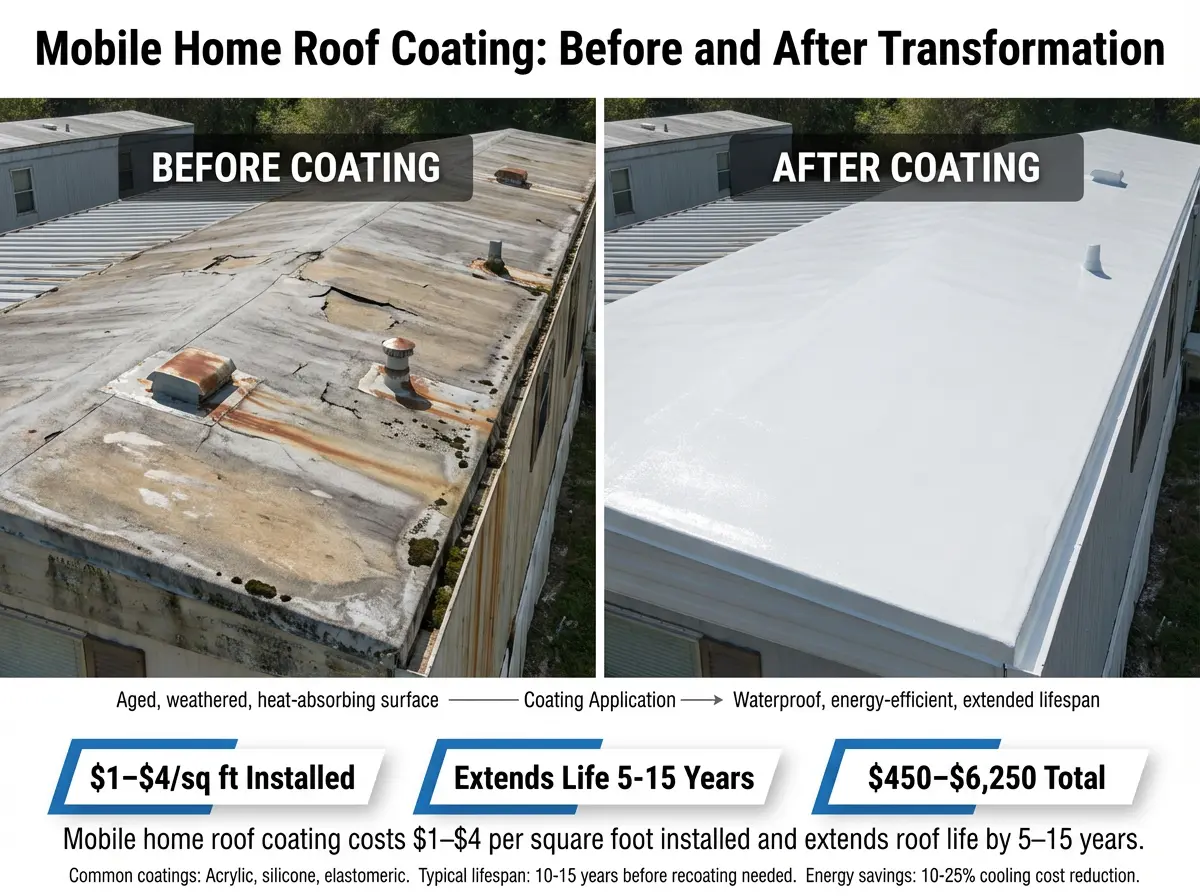
Mobile home roof coating is a liquid-applied protective layer typically elastomeric, acrylic, or silicone-based that seals, waterproofs, and reflects UV rays to extend the life of existing mobile home roofing systems by 5–15 years without full replacement. These coatings provide a barrier against moisture, UV degradation, and thermal cycling, and are made from various materials including acrylic, silicone, and elastomeric compounds that create seamless, flexible membranes over metal, TPO, EPDM, or built-up roofs.
Table of Contents
This complete guide covers mobile home roof coating types, cost breakdowns (materials and installation), step-by-step DIY application instructions, coverage rates, when coating makes sense vs replacement, and how to choose the right coating for your climate and roof type.
What is mobile home roof coating?
Mobile home roof coating is a liquid roofing product applied directly over an existing roof surface to create a protective, waterproof barrier that extends roof life and improves energy efficiency. Roof coatings are installed on existing roofs and have four primary purposes: protecting roof membranes from ultraviolet degradation and weathering, enhancing a roof system’s fire resistance, providing a watertight layer on an existing roof, and enhancing the reflectivity of the roof surface.
Unlike replacement systems that tear off old roofing, mobile home roof coating bonds to and reinforces the existing roof, filling minor cracks and seams while creating a reflective surface that reduces heat absorption and cooling costs.
Types of mobile home roof coating
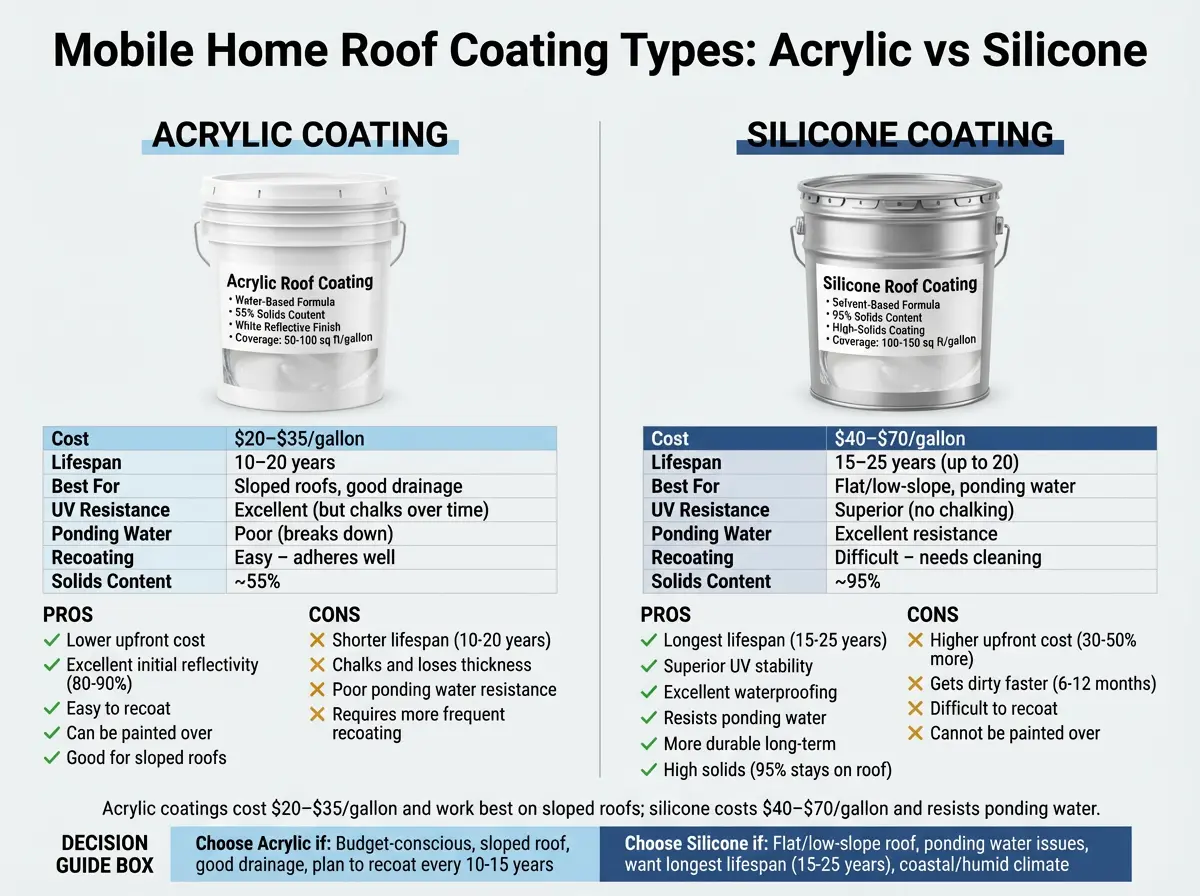
The most common types of roof coating systems are acrylic, polyurethane foam, and silicone, with acrylic and silicone being the two elastomeric roof coating systems most frequently used on mobile homes.
Elastomeric roof coatings (overview)
Elastomeric roof coatings use polymer binders (e.g., acrylic, silicone, polyurethane) that form flexible, elastic films, giving them the ability to stretch and recover. Unlike built-up roofing which relies on multiple layers of bitumen and reinforcement to create a thick membrane, elastomeric coatings form a thin, seamless surface that can accommodate normal roof movement.
There are four kinds of elastomeric coatings: butyl, acrylic, polyurethane, and silicone.
Acrylic roof coatings
Acrylic roof coatings are the oldest and cheapest elastomeric option, easy to install with satisfactory UV protection, but acrylic coatings tend to weather off quickly over time. Acrylic elastomeric roof coatings are highly reflective, making them excellent for areas where UV protection is a key requirement, and they’re durable and work well in hot, sunny climates.
Pros:
- Cost-effective ($20–$35 per gallon).
- Environmentally friendly and easy to keep clean.
- Excellent reflectivity properties reduce cooling costs.
Cons:
- Performs poorly against ponding water; ideally should only be used on sloped roofs.
- Acrylic is likely to swell and blister if exposed to standing water, causing water intrusion underneath the coating.
Best for: Positively sloped mobile home roofs (greater than 1/12 pitch) with proper drainage and no ponding water areas.
Silicone roof coatings
Silicone systems are generally considered a better elastomeric coating than acrylic coating systems because they can withstand ponding water and cold temperatures. These systems offer excellent durability especially in areas prone to heavy rain or snow.
Pros:
- Resistant to standing water and ponding (unlike acrylic).
- Performs well in cold temperatures and heavy precipitation.
- Excellent long-term durability.
Cons:
- More expensive than acrylic ($40–$70 per gallon).
- Highly resistant to adhering to other roofing products, making it hard to repair or remove.
- Can be messy to apply.
Best for: Flat or low-slope mobile home roofs with ponding water issues, and cold-climate applications.
Elastomeric hybrid roof coatings
Elastomeric hybrid systems use silicone as a base coat in areas prone to ponding, then apply acrylic as a top coat on positively sloped areas to combine the benefits of both systems. Generally, positively sloped roofs with inclines greater than 1/12 are excellent candidates for acrylic top coats, with silicone still utilized in areas of high-water traffic and possible ponding.
Cost: $25–$50 per gallon for elastomeric coatings (hybrid formulations).
Mobile home roof coating cost (2026 pricing)
Understanding mobile home roof coating cost helps you budget for the project and compare DIY vs professional installation.
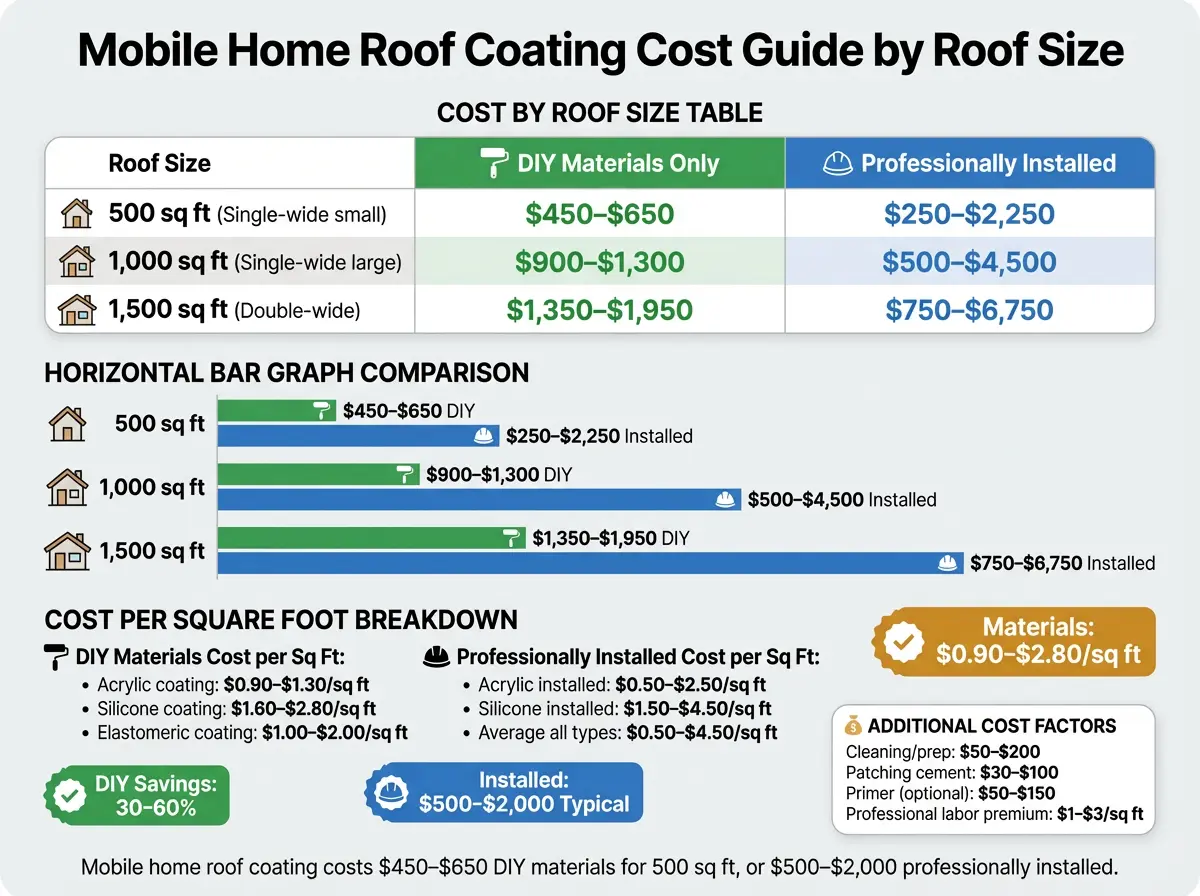
Cost per square foot
Sealing a mobile home roof typically costs between $1,950 and $6,250, or about $1 to $4 per square foot. This price includes materials, labor, and necessary surface preparation.
Cost breakdown by roof size
| Roof size | Material cost (DIY) | Installed cost (professional) |
|---|---|---|
| 500 sq ft | $450–$650 | $500–$2,000 |
| 1,000 sq ft | $900–$1,300 | $1,000–$4,000 |
| 1,500 sq ft | $1,350–$1,950 | $1,500–$6,000 |
Material cost by coating type
| Coating type | Cost per gallon | Coverage per gallon | Cost per 100 sq ft |
|---|---|---|---|
| Acrylic | $20–$35 | ~30–40 sq ft/gallon | $50–$117 |
| Silicone | $40–$70 | ~30–40 sq ft/gallon | $100–$233 |
| Elastomeric | $25–$50 | ~30–40 sq ft/gallon | $63–$167 |
Note: Coverage rates assume proper application thickness (typically 20–30 wet mils); actual coverage varies by product and surface condition.
Factors affecting mobile home roof coating cost
- Roof size: Larger roofs require more sealant and additional labor, increasing total expense.
- Coating type: Silicone costs nearly 2× acrylic per gallon.
- Roof condition: Roofs needing extensive repairs or cleaning before coating cost more.
- Local labor rates: Professional installation labor varies by region.
- Number of coats: Most systems require 2–3 coats for full protection.
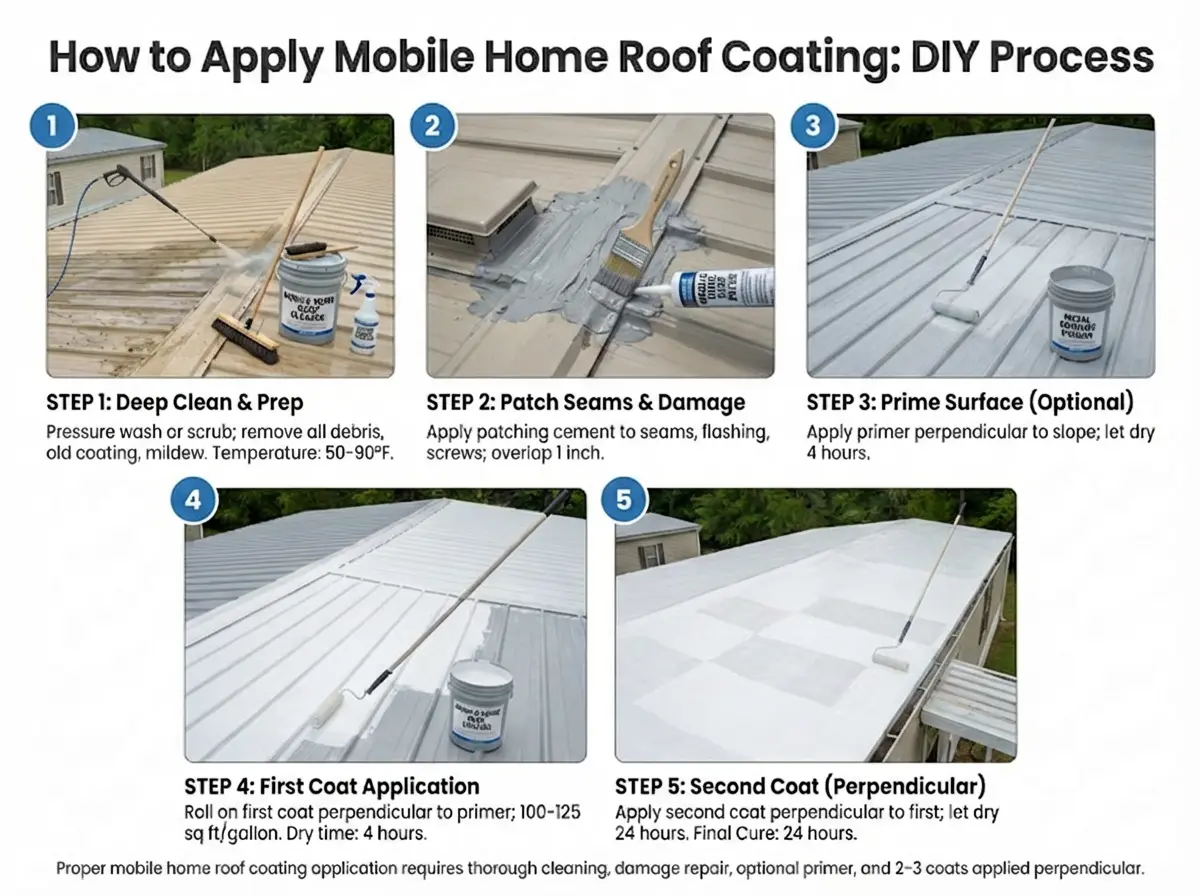
How to apply mobile home roof coating: step-by-step DIY guide
Applying mobile home roof coating yourself can save 50–70% on labor costs, but proper surface preparation is critical for coating adhesion and performance.
Materials and tools needed
Before you begin, collect all the items you’ll need:
- Mobile home roof coating (Kool Seal or another approved coating).
- Patching cement for seams, screws, and damage.
- Diluted chlorine bleach solution for cleaning.
- Strong detergent if there’s heavy grime.
- Wire brush, putty knife, coarse sandpaper for removing old coating and debris.
- Stiff-bristle paintbrush, paint roller, broom for application.
- Garden hose for rinsing.
- Roof-coating brush or spray gun.
- Water-based metal primer (if coating metal roof).
Step 1: Inspect the roof
Walk the entire roof surface and look for damage, loose seams, missing screws, rust spots, cracks, tears, or areas of heavy wear. Make note of areas that need repair before coating.
Step 2: Clean the roof surface thoroughly
Remove all loose debris (leaves, branches, dirt) with a broom or leaf blower. Scrub the roof with a diluted chlorine bleach solution using a stiff-bristle brush to remove mold, mildew, algae, and dirt. For heavy grime, use strong detergent.
Use a wire brush or coarse sandpaper to remove loose or peeling old coating, rust, and oxidation. Be sure the entire surface is clean and free of all moisture before proceeding.
Step 3: Repair any damage
Use patching cement to fill cracks, cover screws, seal seams, and repair holes or tears. Apply patching cement with a thick brush so that you cover all the seams and edges of your roof, and wait for it to dry completely (typically 24 hours) before coating.
Step 4: Rinse and check for puddling
Rinse the roof thoroughly with a garden hose and let it dry. While the roof is wet, check for areas where water puddles these need special attention during coating.
Step 5: Apply primer coat (optional but recommended)
If coating a metal roof, use a water-based metal primer. Apply PERMABOND™ primer coat (or equivalent) using a one-inch nap roller, paint brush, or airless sprayer machine with minimum tip size of .021. Apply perpendicular to the slope of the roof in a checkerboard application process for best results.
Wet mils of 12–16 results in a dry thickness of 4–7 mils. Let the primer dry for 4 hours before continuing with the project.
Step 6: Coat roof seams, j-rail, and flashing first
Before coating the main roof surface, carefully coat all seams, j-rails, flashing, and edges using a brush for precision. This ensures these critical areas receive extra protection.
Step 7: Apply the first coat of mobile home roof coating
Stir the mobile home roof coating thoroughly. Using a paint roller, roof brush, or spray gun, spread the coating evenly across the roof. Start on one side and work in small sections so you don’t miss any spots.
It’s important that you equally coat every part of your roof and pay attention to the amount of coating that you’re applying you don’t want to apply a layer that’s too thick or too thin, as both will do you no good. Follow the manufacturer’s instructions for thickness or coverage rate (usually aiming for 15–25 wet mils per coat).
Step 8: Allow proper drying time
Let the first coat dry completely (typically 4–24 hours depending on temperature and humidity) before applying the second coat. Do not rush this step applying a second coat over wet coating can cause bubbling and poor adhesion.
Step 9: Apply second and third coats
Most mobile home roof coating systems require 2–3 coats for full protection and warranty compliance. Repeat the application process, ensuring even coverage and proper drying time between coats.
Apply each coat perpendicular to the previous coat direction (checkerboard pattern) for best coverage.
Mobile home roof coating coverage rates
Understanding coverage rates helps you calculate how many gallons you need for your project.
Typical coverage per gallon
- Acrylic coating: ~30–40 sq ft per gallon at recommended thickness.
- Silicone coating: ~30–40 sq ft per gallon at recommended thickness.
- Elastomeric coating: ~30–40 sq ft per gallon at recommended thickness.
Coverage example calculation
For a 1,000 sq ft mobile home roof with 2 coats:
- Total coverage needed: 1,000 sq ft × 2 coats = 2,000 sq ft
- Gallons required: 2,000 ÷ 35 (average coverage) = ~57 gallons
- At $30/gallon (acrylic): $1,710 material cost
Note: Always buy 10–20% extra to account for waste, overlaps, and touch-ups.
When mobile home roof coating makes sense (vs replacement)
Mobile home roof coating is a cost-effective alternative to full replacement, but it’s not always the right choice.
Coating makes sense when:
- Your roof is structurally sound with no major leaks or damage.
- The roof is less than 20 years old and has reasonable remaining life.
- You want to extend roof life by 5–15 years at 30–50% the cost of replacement.
- Your budget is $500–$6,000 vs $4,000–$20,000 for replacement.
- You want to improve energy efficiency with reflective coating.
Replacement is usually better when:
- Multiple large leaks exist across the roof.
- The roof deck or structure is damaged, sagging, or rotted.
- The existing roof has already been coated 2–3 times (coating builds up and becomes less effective).
- The roof is over 25 years old and near end of life.
Choosing the right mobile home roof coating for your climate
Climate dictates which mobile home roof coating performs best.
Hot, sunny climates (Southwest, Florida)
Best choice: Acrylic roof coatings with high solar reflectance.
Why: Excellent UV protection, superior reflectivity reduces cooling costs, and lower cost than silicone.
Requirement: Roof must have positive slope (greater than 1/12) and no ponding water.
Cold, wet climates (Northeast, Pacific Northwest)
Best choice: Silicone roof coatings.
Why: Withstands ponding water, performs in cold temperatures, and excels in heavy rain or snow.
Trade-off: Higher cost but superior durability in harsh weather.
Flat or low-slope roofs with ponding issues
Best choice: Silicone or elastomeric hybrid systems.
Why: Acrylic will blister and fail in standing water; silicone resists moisture intrusion.
Strategy: Use silicone in ponding areas, acrylic on sloped sections (hybrid approach).
Mobile home roof coating benefits
Applying a quality mobile home roof coating delivers multiple advantages beyond just stopping leaks.
Extends roof lifespan
A properly applied coating system adds 5–15 years to your roof’s life by sealing cracks, protecting from UV damage, and preventing moisture infiltration.
Reduces cooling costs
Reflective white coatings can reduce roof surface temperature by 50°F or more, cutting air conditioning loads by 10–30% in hot climates.
Waterproofs and seals
Mobile home roof coating creates a seamless, watertight barrier that prevents leaks at seams, screws, and cracks.
Low-cost alternative to replacement
At $1–$4 per square foot installed, coating costs 30–50% less than full roof replacement ($3–$8/sf).
Quick installation with minimal disruption
Most mobile home roof coating projects can be completed in 2–4 days, compared to 5–10 days for full replacement.
Common mobile home roof coating mistakes (and how to avoid them)
Even careful DIYers make errors that compromise coating performance.
Mistake #1: Inadequate surface preparation
Applying coating over dirt, rust, loose old coating, or moisture is the #1 cause of coating failure. Always clean thoroughly and allow the roof to dry completely before coating.
Mistake #2: Wrong coating type for roof slope
Using acrylic on flat roofs with ponding water causes blistering and delamination. Match coating type to your roof’s drainage characteristics.
Mistake #3: Insufficient coating thickness
Applying coats too thin (trying to stretch material too far) results in inadequate protection and premature failure. Follow manufacturer specifications for wet mil thickness.
Mistake #4: Not repairing damage before coating
Coating over cracks, holes, or separated seams without patching cement first allows leaks to continue under the coating. Always repair damage first.
Mistake #5: Skipping primer on metal roofs
Metal roofs need primer for coating adhesion; skipping this step can cause coating to peel within months.
DIY vs professional mobile home roof coating
Deciding whether to DIY or hire professionals depends on your skills, time, and budget.
DIY mobile home roof coating
Pros:
- Save 50–70% on labor costs.
- Control project timeline and quality.
- Good learning experience for homeowners.
Cons:
- Physically demanding work in hot sun.
- Risk of improper application voiding warranty.
- Requires tools and safety equipment.
- Takes 2–4 full days for most mobile homes.
Best for: Small to medium roofs (under 1,200 sq ft), homeowners with roofing experience, and those on tight budgets.
Professional installation
Pros:
- Guaranteed proper application and warranty coverage.
- Faster completion (1–2 days).
- Includes surface prep, repairs, and cleanup.
- No safety risk or tool investment.
Cons:
Best for: Large or complex roofs, homeowners without roofing experience, and those prioritizing warranty protection.
Mobile home roof coating maintenance and recoating
Even the best mobile home roof coating eventually needs maintenance and recoating.
How long does coating last?
- Acrylic coatings: 5–10 years before recoating needed.
- Silicone coatings: 10–15 years with proper maintenance.
- Elastomeric coatings: 7–12 years depending on climate.
Maintenance schedule
- Annual inspection: Check for cracks, blistering, or coating wear.
- Every 2–3 years: Clean roof surface to remove dirt and algae.
- Every 5–10 years: Apply a maintenance coat to refresh protection.
When to recoat vs replace
If the coating is intact but faded, a single maintenance coat can add 5+ years. If the coating is cracked, blistering, or peeling extensively, full recoating (2–3 coats) or replacement may be needed.
FAQ: mobile home roof coating
How much does mobile home roof coating cost?
Mobile home roof coating costs $1–$4 per square foot installed ($1,950–$6,250 for typical mobile home), or $450–$1,950 for DIY materials only.
What type of coating is best for mobile home roofs?
Acrylic coatings work best for sloped roofs in sunny climates ($20–$35/gallon); silicone is best for flat roofs with ponding water or cold climates ($40–$70/gallon).
Can I apply mobile home roof coating myself?
Yes DIY mobile home roof coating is possible with proper surface preparation, patching, and 2–3 coats applied at correct thickness, saving 50–70% on labor.
How long does mobile home roof coating last?
Acrylic coatings last 5–10 years, silicone lasts 10–15 years, and elastomeric coatings last 7–12 years before recoating is needed.
How many gallons of coating do I need?
Coverage is typically 30–40 sq ft per gallon; a 1,000 sq ft roof with 2 coats needs ~57 gallons.
What is the difference between acrylic and silicone roof coatings?
Acrylic is cheaper, more reflective, and easier to clean but fails in ponding water; silicone costs more but withstands standing water and cold temperatures.
Do I need primer for mobile home roof coating?
Metal roofs require water-based primer for coating adhesion; TPO and EPDM roofs may not need primer but check manufacturer instructions.
Can roof coating stop leaks?
Mobile home roof coating can seal minor cracks, seams, and small holes, but it cannot fix major structural damage or large leaks repair these first.
How do I prepare my mobile home roof for coating?
Clean thoroughly with bleach solution, remove loose debris and old coating, repair damage with patching cement, rinse, and allow to dry completely.
Is mobile home roof coating better than replacement?
Coating costs 30–50% less than replacement and works well for roofs under 20 years old with no major damage; replacement is better for severely damaged or old roofs.
🏠 Roofing Tips & Updates
Get free roofing advice, cost guides, and seasonal maintenance tips.

Roofing content specialist with 5+ years researching U.S. residential and commercial roofing. Has documented 200+ projects covering installation costs, material selection, contractor vetting, and DIY guides for homeowners across all climate zones.
Leave A Comment