Preloader Close
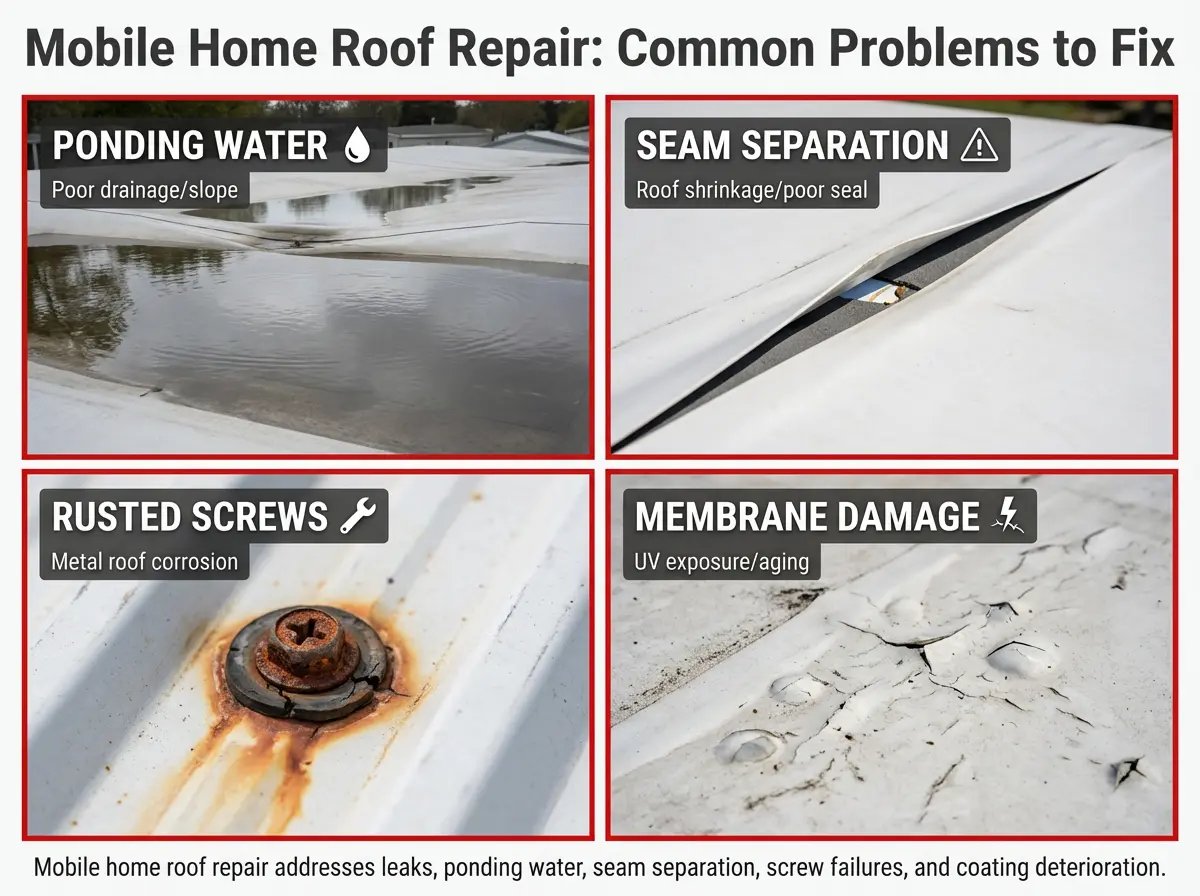
Mobile home roof repair tackles unique challenges specific to manufactured homes, including flat or low-slope roofs prone to ponding water, metal roof screw failures, rubber membrane seam separation, and coating deterioration. Understanding mobile home roofing materials TPO, EPDM rubber, metal panels, and reflective coatings plus repair techniques for leaks, holes, and aging systems helps homeowners choose between DIY fixes, professional repairs, or full roof replacement.
This guide covers the most common mobile home roof problems, step-by-step repair methods, when to repair vs replace, mobile home roofing material options, cost breakdowns, and how to extend your roof’s lifespan.
Table of Contents
What makes mobile home roof repair different from traditional roofs
Mobile homes have unique roofing needs that require specific attention because they typically feature flat or low-slope roofs, lightweight construction, narrower roof spans, and factory-installed roofing systems designed for portability rather than permanence. Unlike traditional site-built homes with pitched roofs and asphalt shingles, mobile home roofing systems often use single-ply membranes (TPO, EPDM), metal panels, or specialized coatings applied directly over the roof structure.
These differences mean mobile home roof repair techniques, materials, and costs differ significantly from traditional residential roofing, and using the wrong approach can void warranties or create new problems.
Mobile home roof repair vs traditional roof repair: key differences
Mobile home roof repair requires different techniques, materials, and expectations than traditional site-built home roofing because of fundamental structural differences. Mobile homes typically use engineered wood trusses spaced wider apart (often 24–36 inches on center vs 16–24 inches for traditional homes), thinner roof decking (often 1/2-inch OSB or even metal panels), and lighter-weight framing designed to meet DOT transportation weight limits rather than permanent foundation standards. This lighter construction means mobile home roofs cannot support the weight of multiple roof layers you cannot simply install asphalt shingles over an existing rubber membrane the way you might overlay shingles on a traditional home, and walking on mobile home roofs requires more caution to avoid damaging thin decking or denting metal panels.
The flat or low-slope design common in mobile home roofing also creates drainage challenges that don’t exist with traditional pitched roofs, making ponding water and membrane-based waterproofing systems the norm rather than the exception. Traditional roofing contractors may not understand these nuances using standard residential repair methods on a mobile home can void warranties, create new leaks, or even damage the roof structure, so it’s essential to hire roofers with specific mobile home roofing experience or carefully research mobile-home-appropriate repair techniques before attempting DIY work. Understanding these differences helps you avoid costly mistakes and ensures your mobile home roof repair delivers long-lasting results rather than temporary fixes that fail within months.
Common mobile home roof problems (and what causes them)
Understanding the root causes of mobile home roof issues helps you catch problems early and choose the right repair strategy.
Problem #1: Roof leaks
Leaks are one of the most common issues with mobile home roofs and can be caused by damaged shingles, cracks in the roof, worn sealant around roof penetrations (vents, skylights), seam separation in rubber or TPO membranes, or screw/fastener failures in metal roofs. On metal roofs, leaks primarily occur at roofing screws used to attach panels to the frame, as screw design, installation method, and angle significantly impact roof performance over time.
Problem #2: Ponding water and poor drainage
Flat or low-slope mobile home roofs are susceptible to ponding water standing water that remains on the roof surface for more than 48 hours after rainfall. Ponding water accelerates roof membrane deterioration, increases leak risk, and adds weight that can stress the roof structure.
Problem #3: Seam separation and membrane tears
Single-ply roofing membranes like TPO and EPDM rely on heat-welded or adhesive seams to create watertight barriers. Over time, seams may separate due to thermal expansion/contraction, improper installation, or UV degradation, allowing water to infiltrate under the membrane. Punctures and tears from foot traffic, falling branches, or hail create immediate leak points.
Problem #4: Metal roof screw and fastener issues
Metal roofing screws and fasteners are the most common leak source on mobile home metal roofs because rubber washers degrade over time, creating openings for moisture. Defective screws with misaligned threads or breakage, missing sealants at screw holes and panel seams, overlapping seams where liquid can pool, and misplaced screws (such as strays used for wood framing) all contribute to leaks.
Problem #5: Coating deterioration and blistering
Reflective roof coatings (elastomeric, acrylic, silicone) extend mobile home roof life but eventually crack, peel, or blister from UV exposure, temperature cycling, and moisture trapped under the coating. Blistering occurs when moisture or air gets trapped between roofing layers, creating bubble-like raised areas that weaken the roof surface.
Problem #6: Flashing problems
Flashing around vents, chimneys, skylights, and roof edges prevents water intrusion at vulnerable transitions. Poorly installed, missing, or degraded flashing is a major cause of mobile home roof leaks, especially around penetrations.
Mobile home roofing materials: options for repair and replacement
Choosing the right mobile home roofing material depends on your budget, climate, roof slope, and whether you’re repairing or replacing.
TPO (Thermoplastic Olefin) roofing
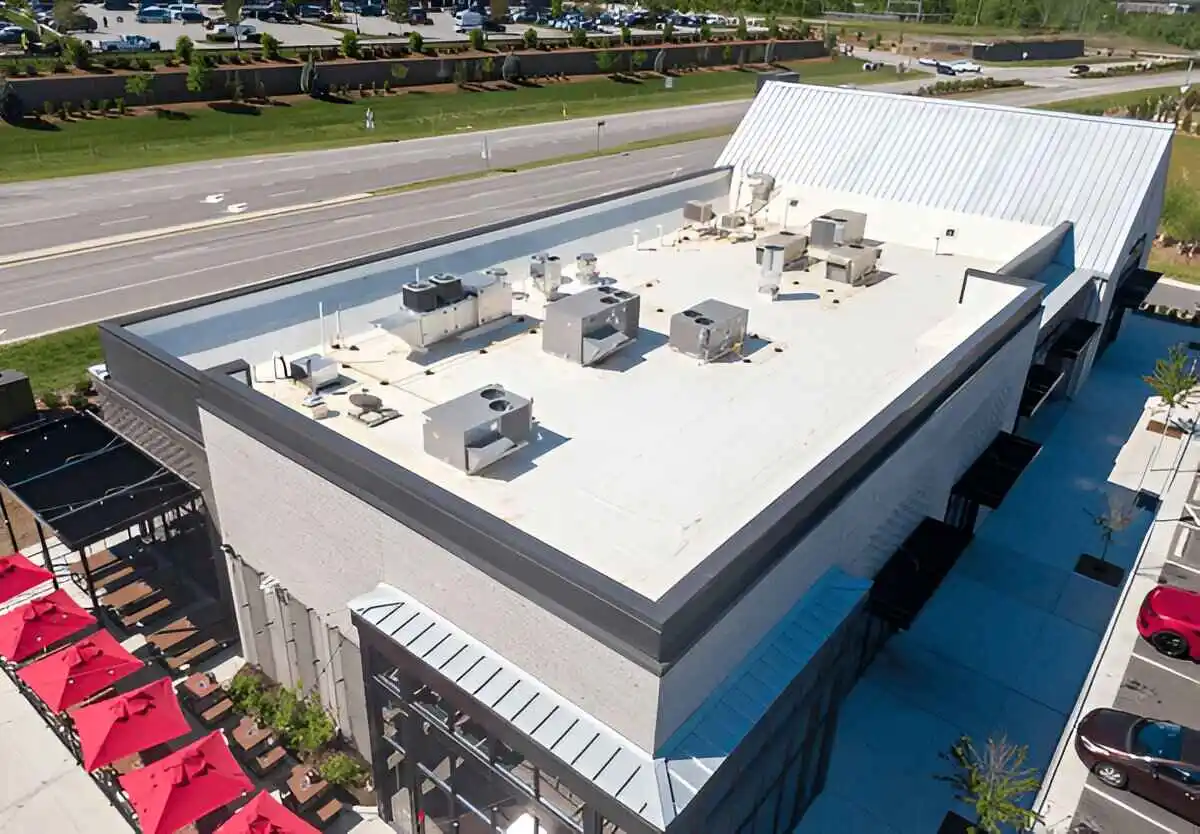
TPO is a white, single-ply roofing membrane made for flat and low-slope roofs, heat-welded at the seams to create a watertight, durable surface that’s great for mobile homes. TPO roofing reflects the sun’s UV rays, reducing heat absorption and cooling costs; is highly resistant to tears, punctures, and UV damage; and is environmentally friendly (often made from recyclable materials).
Cons: Color may fade over time, and seams may be prone to leaks if not installed properly.
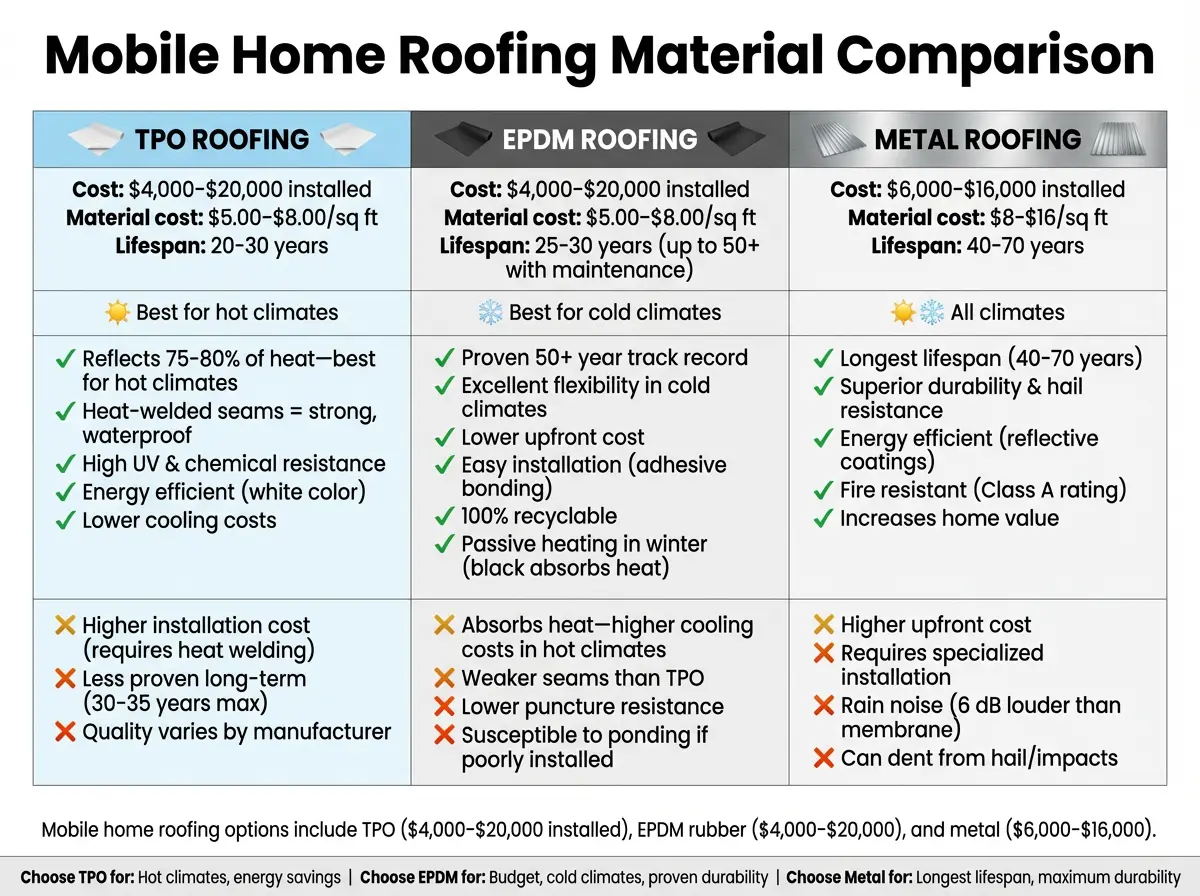
Cost: $2,000–$12,000 for materials, $4,000–$20,000 installed (typical mobile home).
EPDM (rubber roofing)
EPDM (Ethylene Propylene Diene Monomer) is a durable synthetic rubber membrane popular for mobile home roofs because of its flexibility, weather resistance, and ease of installation. EPDM is available in black or white, with white reflecting more heat.
Cost: $2,000–$12,000 for materials, $4,000–$20,000 installed.
Metal roofing (steel, aluminum)

Metal roofs typically corrugated steel or aluminum panels are common on older mobile homes and offer long lifespan (40+ years) and fire resistance. However, metal roofs require regular maintenance to address screw/fastener issues and prevent rust.
Cost: $5–$16 per square foot installed (varies widely by gauge and profile).
Roof coatings and sealants
Roof coating systems (elastomeric, acrylic, silicone) are applied over existing mobile home roofs to seal minor cracks, reflect heat, and extend roof life by 5–15 years. Reflective systems and properly installed materials can help reduce heat buildup and ease the load on air conditioning.
Cost: $250–$5,400 for materials, $500–$9,000 installed.
How to repair a mobile home roof: step-by-step DIY methods
Many common mobile home roof repair jobs can be handled by homeowners with basic tools and materials.
Repairing a leaky mobile home roof (general method)
To repair a leaky mobile home roof, follow these steps: locate the leak (check inside for water stains, then trace outside to the source), clear debris from the repair area, remove damaged shingles or membrane sections if needed, install underlayment or patch material, and cut new shingles or membrane to match existing materials.
Repairing a hole in a metal mobile home roof
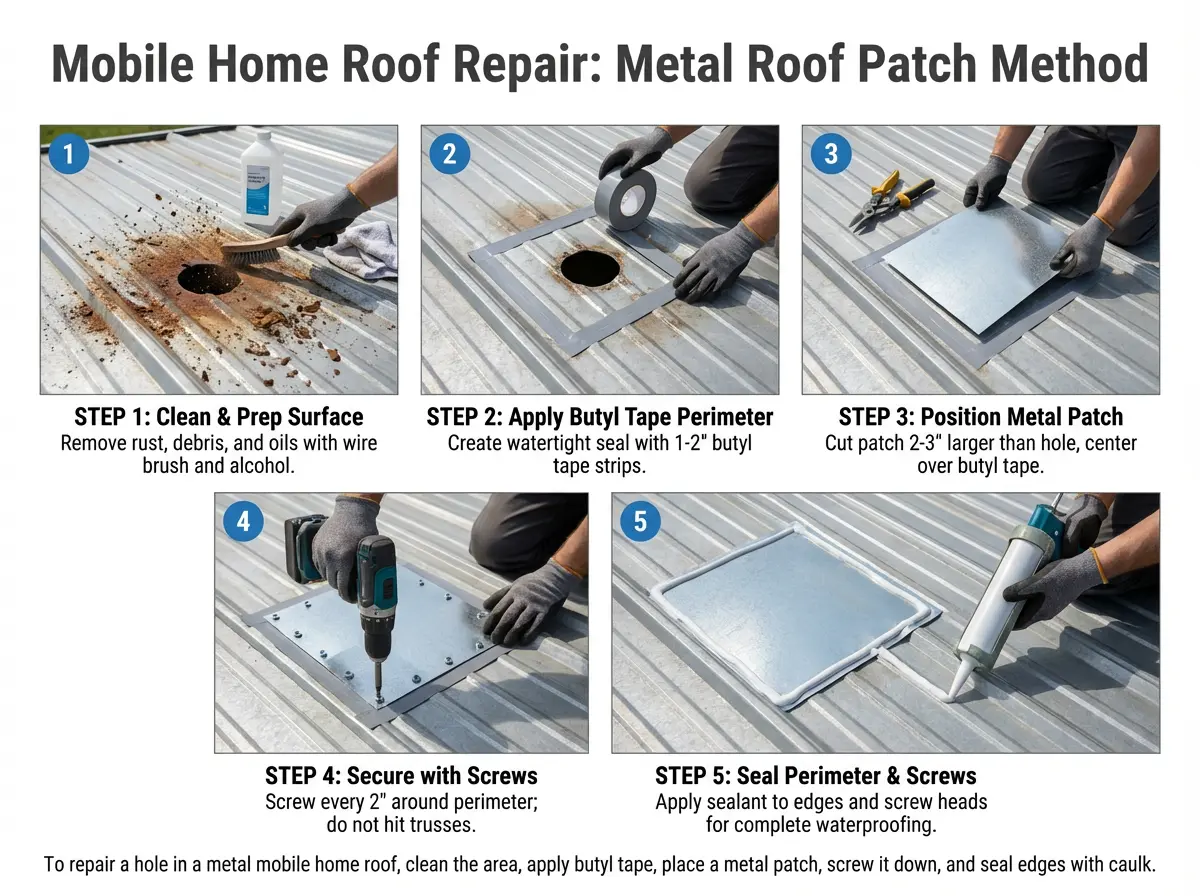
For holes created by falling tree limbs, large hail, or rust-through, this patch method is straightforward and effective. Clean the area around the hole thoroughly, apply butyl tape around the perimeter of the hole, cut a metal patch slightly larger than the hole, place the metal patch on butyl tape, screw along the perimeter into the tape and roofing, apply caulk along the edges of the patch, and apply liquid sealants or roof cement for additional waterproofing.
Fixing metal roof screw and fastener leaks
Metal roof repairs typically use liquid sealants and roof cement. To address screw leaks: inspect all visible screws for missing or cracked rubber washers, remove screws with failed washers and replace with new roofing screws with fresh neoprene washers, apply sealant around screw heads, and check overlapping seams and apply sealant tape or caulk where panels meet.
Most mobile home repair professionals recommend using neoprene or polyurethane flashing sealant to seal seams and vents.
Repairing TPO or EPDM membrane seams
For seam separation on rubber or TPO roofs: clean both sides of the separated seam with membrane cleaner, apply TPO or EPDM seam primer (match to your membrane type), apply seam tape or adhesive per manufacturer instructions, press firmly with a roller to ensure full contact, and allow proper cure time before exposing to water.
Seams in TPO roofing systems may be prone to leaks if not installed properly, so regular maintenance is required to check for seam deterioration.
Temporary flat roof leak fixes
To temporarily fix a leaking flat mobile home roof: apply bitumen primer to the damaged area, apply bitumen-based waterproof sealant or paint over the primer, and for larger cracks, use self-adhesive heat-applied bitumen flashing tape or fit a torched-on layer of roofing felt. These temporary fixes prevent further damage while you plan a permanent repair or replacement.
When to repair vs replace a mobile home roof
Deciding between mobile home roof repair and full replacement depends on age, damage extent, and cost-benefit analysis.
Repair makes sense when:
- Leaks or damage are localized (small areas, single penetrations).
- The roof is less than 15 years old and otherwise in good condition.
- Repair cost is less than 30% of replacement cost.
- You’re addressing routine maintenance (screw replacement, coating refresh).
Replacement is usually better when:
- Multiple leaks exist across the roof surface.
- The roof is over 20 years old (near end of design life).
- Membrane or coating has widespread cracking, blistering, or delamination.
- Repair costs approach 40–50% of replacement cost.
- You’re selling soon and need a warranty to transfer to buyers.
Mobile home roof replacement cost (2026 pricing)
Understanding mobile home roof replacement cost helps you budget for the project and compare contractor bids.
Cost per square foot
Mobile home roof replacement costs $3 to $8 per square foot on average, depending on the type and material.
| Cost factor | Price per square foot |
|---|---|
| Remove old roof | $1.00–$2.00 |
| Roof materials | $2.00–$4.50 |
| Installation labor | $1.00–$3.50 |
| Total cost | $4.00–$10.00 |
Total project cost by roof type
For a typical single-wide mobile home (600–800 square feet of roof area):
| Roofing material | Material cost | Installed cost |
|---|---|---|
| TPO roofing membrane | $2,000–$12,000 | $4,000–$20,000 |
| Rubber roofing (EPDM) | $2,000–$12,000 | $4,000–$20,000 |
| Metal roofing | $3,000–$9,600 | $6,000–$16,000 |
| Roof coating & sealing | $250–$5,400 | $500–$9,000 |
A mobile home roof-over (installing new roof material over the existing roof) costs $1,000 to $4,500 on average, saving money by avoiding tear-off but potentially decreasing the roof’s lifespan.
Mobile home roof coating: a cost-effective repair option
Roof coating systems are popular for mobile home roof repair because they’re affordable and extend roof life without full replacement.
How roof coatings work
Elastomeric, acrylic, or silicone coatings are rolled or sprayed over an existing mobile home roof to seal cracks, reflect UV rays, reduce heat absorption, and waterproof the surface. Coatings can be applied over metal, rubber (EPDM), TPO, or built-up roofs.
Benefits of roof coatings
- Lower cost: $500–$9,000 installed vs $4,000–$20,000 for full replacement.
- Energy savings: Reflective coatings reduce cooling costs by lowering roof surface temperature.
- Extends roof life: Adds 5–15 years to an aging roof.
- Minimal disruption: Can be completed in 1–3 days with no tear-off.
Limitations of roof coatings
Coatings work best on structurally sound roofs with minor surface damage; they cannot fix deep cracks, structural issues, or widespread rot. Proper surface preparation (cleaning, priming) is critical for coating adhesion.
Mobile home roof maintenance: preventing future repairs
Proactive maintenance reduces mobile home roof repair frequency and extends roof life.
Annual inspection checklist
- Inspect seams for separation or lifting (TPO, EPDM roofs).
- Check all roofing screws and fasteners for rust, loose washers, or missing sealant (metal roofs).
- Look for ponding water areas after rain; address drainage issues immediately.
- Examine flashing around vents, skylights, and edges for cracks or gaps.
- Clear debris (leaves, branches) from the roof surface and gutters.
Routine maintenance tasks
- Reseal vents and penetrations every 3–5 years with compatible sealant.
- Refresh roof coatings every 5–10 years (if using a coating system).
- Replace deteriorated rubber washers on metal roofing screws before leaks develop.
- Trim overhanging tree branches to prevent physical damage and debris accumulation.
Preventive mobile home roof repair: catching problems before they become emergencies
The most cost-effective mobile home roof repair is the one you prevent through regular inspection and proactive maintenance, because catching small issues early a single loose screw, a tiny seam separation, a small blister in the coating costs pennies to fix, while ignoring them leads to interior water damage, insulation replacement, and ceiling repairs that can cost thousands. Set a recurring calendar reminder to inspect your mobile home roof every spring and fall, focusing on the most vulnerable areas: all seams in TPO or EPDM membranes (especially where field sheets meet perimeter edges), every roofing screw on metal roofs (look for rust stains, missing washers, or screws that have backed out), flashing around vents and skylights (check for cracks or gaps), and any areas where ponding water collects after rain (mark these spots and monitor whether pooling is getting worse).
During each inspection, bring a notepad and camera to document conditions so you can track changes over time a small crack that grows from 2 inches to 8 inches between inspections signals the need for immediate mobile home roof repair before it becomes a full breach. Keep a basic mobile home roof repair kit on hand: a tube of mobile-home-compatible roof sealant (polyurethane or butyl-based), spare roofing screws with neoprene washers (match the size and thread pattern of your existing screws), a roll of TPO or EPDM seam tape (matched to your membrane type), and basic tools (caulk gun, drill, utility knife). With this kit and a twice-yearly inspection routine, you can address 80% of common mobile home roof problems before they cause interior damage, extending your roof’s lifespan by years and avoiding emergency repair calls that cost 3–5 times more than preventive maintenance.
DIY vs professional mobile home roof repair
Some mobile home roof repair jobs are DIY-friendly, while others require professional expertise.
Good DIY candidates
- Small isolated leaks and patches (under 2 square feet).
- Screw/fastener replacement and re-sealing.
- Minor seam repairs with tape or adhesive.
- Applying roof coatings (if you have spray equipment or patience for rolling).
Hire professionals for
- Full roof replacement or roof-overs.
- TPO heat welding (requires specialized tools and training).
- Structural repairs or deck replacement.
- Complex flashing work around HVAC units or dormers.
- Repairs that affect warranties.
FAQ: mobile home roof repair
What are the most common mobile home roof problems?
The most common issues include leaks from damaged membranes or screw failures, ponding water on flat roofs, seam separation in TPO/EPDM systems, coating deterioration, and flashing problems around penetrations.
How much does mobile home roof repair cost?
Small repairs (patching, sealing) cost $200–$1,500; coating systems cost $500–$9,000; full replacement costs $4,000–$20,000 depending on material and size.
Can I repair a mobile home roof myself?
Yes small leaks, metal roof patches, screw replacement, and seam repairs are DIY-friendly, but full replacement or TPO heat welding requires professional skills.
How long does a mobile home roof last?
TPO and EPDM roofs last 15–30 years; metal roofs last 30–50 years; roof coatings add 5–15 years to existing roofs.
What is the best roofing material for mobile homes?
TPO is popular for energy efficiency and durability; EPDM is cost-effective and flexible; metal is longest-lasting but requires maintenance.
How do I fix a leaking metal mobile home roof?
Locate the leak, clean the area, replace screws with failed washers, apply sealant around screw heads and seams, or patch holes with metal and butyl tape.
What causes ponding water on mobile home roofs?
Ponding water results from inadequate roof slope, clogged drains, sagging roof deck, or poor initial design.
Should I repair or replace my mobile home roof?
Repair if damage is localized and the roof is under 15 years old; replace if multiple leaks exist, the roof is over 20 years old, or repairs cost more than 40% of replacement.
What is a mobile home roof-over?
A roof-over installs new roofing material over the existing roof, costing $1,000–$4,500 and avoiding tear-off, but it may reduce roof lifespan.
How often should I inspect my mobile home roof?
Inspect at least once per year and after major storms to catch leaks, seam separation, and fastener issues early.
🏠 Roofing Tips & Updates
Get free roofing advice, cost guides, and seasonal maintenance tips.
Roofing content specialist with 5+ years researching U.S. residential and commercial roofing. Has documented 200+ projects covering installation costs, material selection, contractor vetting, and DIY guides for homeowners across all climate zones.
Leave A Comment