Preloader Close
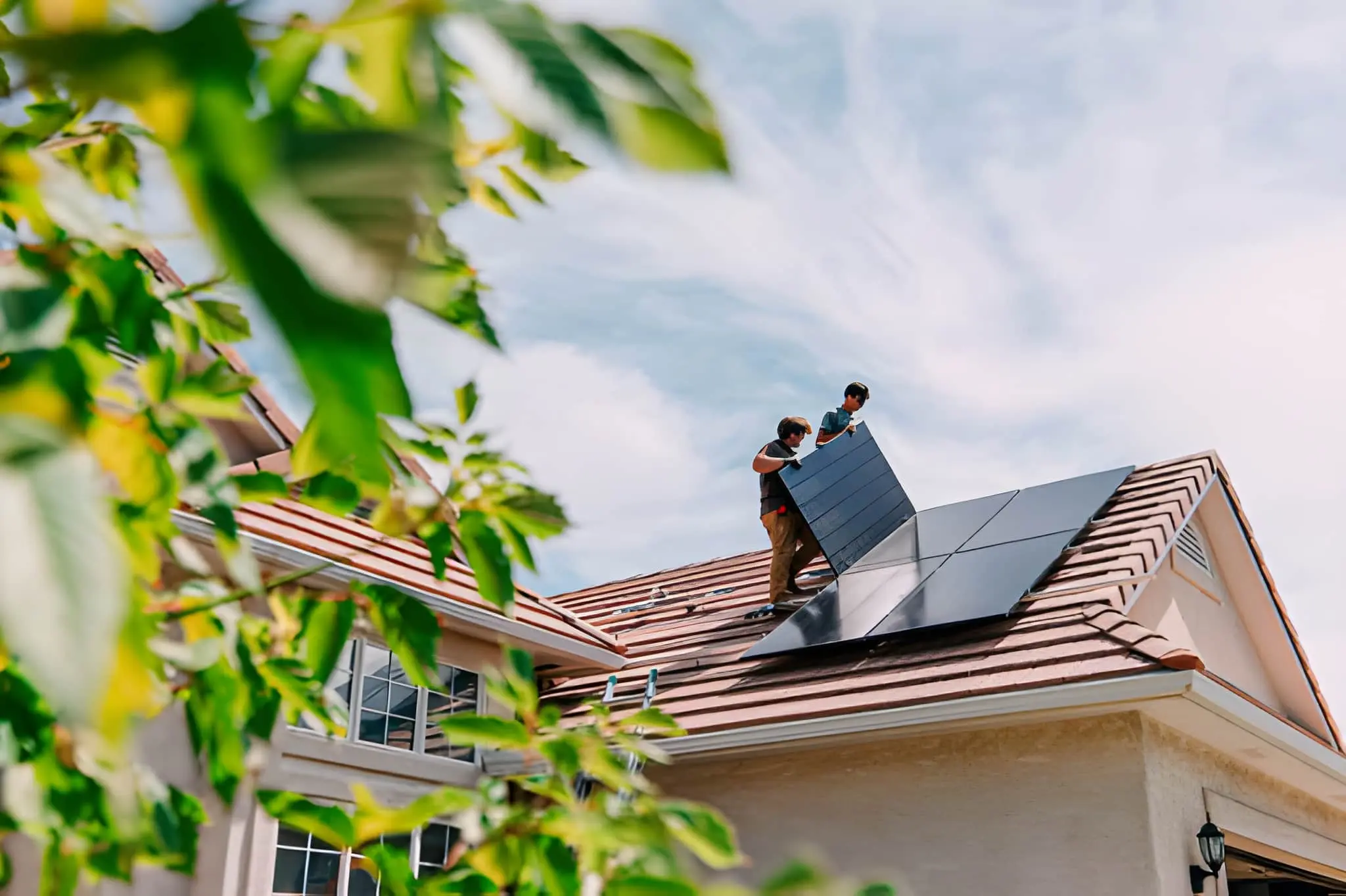
Solar shingles vs solar panels differ primarily in cost, efficiency, and aesthetics: traditional solar panels cost $2.50–$4.50 per watt installed with 18–22% efficiency, while solar shingles cost $4.50–$8.00 per watt at 14–18% efficiency making panels the better financial choice for most homeowners, while shingles win when you need a new roof or demand seamless visual integration (EcoWatch, 2026). A standard 6–8 kW solar panel system costs $15,000–$25,000 before tax credits, compared to $25,000–$45,000+ for an equivalent solar shingle system (HomeGuide, 2026).
Table of Contents
Solar roofing represents one of the fastest-growing segments of the home improvement industry, with the U.S. residential solar market expected to grow 14% annually through 2028, and homeowners now choosing between two distinct technologies: traditional rack-mounted solar panels and integrated solar shingles that replace conventional roofing entirely. According to the National Renewable Energy Laboratory (NREL), the average U.S. home with solar saves $1,100–$1,500 per year on electricity bills, making the upfront cost difference between panels and shingles a critical decision point for maximizing long-term return on investment (NREL, 2025).
This comprehensive guide covers solar shingles vs solar panels costs, efficiency, installation, lifespan, aesthetics, ROI, and the key decision factors that determine which technology is right for your specific situation.
What Are Solar Shingles vs Solar Panels?
Understanding the fundamental difference between solar shingles and solar panels helps clarify why they serve different homeowner needs despite both generating electricity from sunlight.
What Are Solar Shingles?
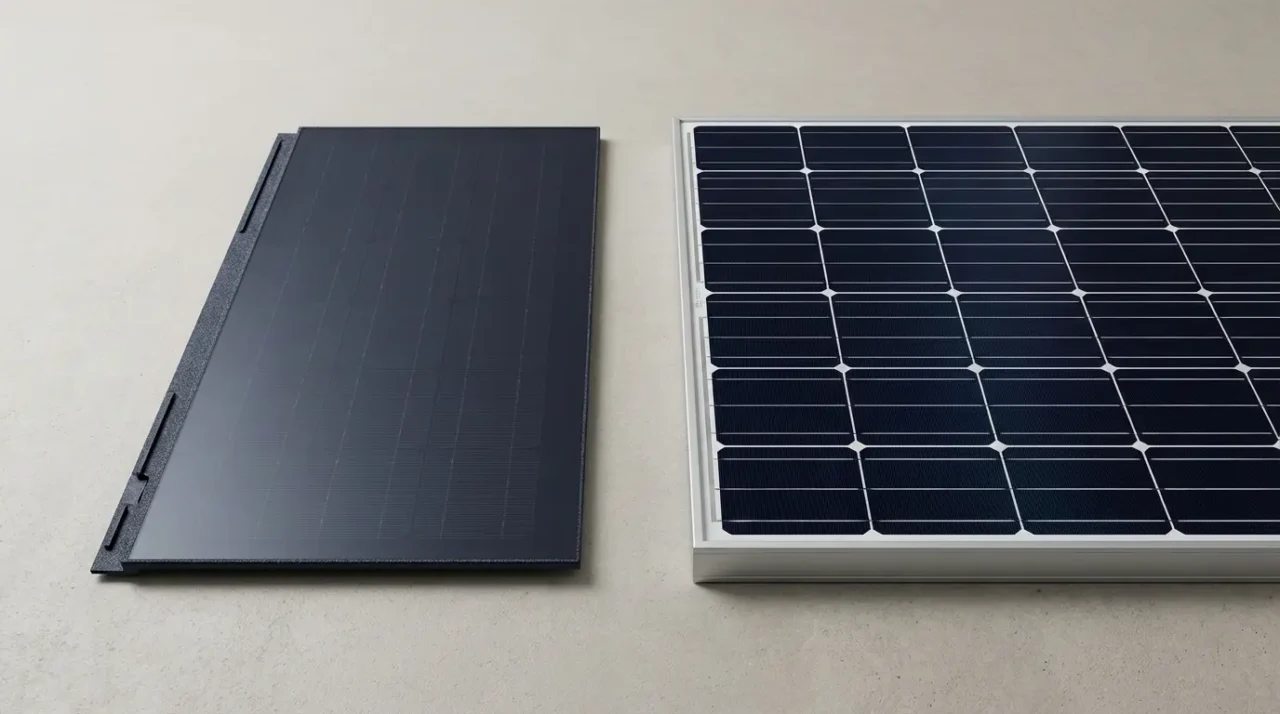
Solar shingles (also called photovoltaic shingles or solar roof tiles) are roofing products that simultaneously generate electricity and function as weatherproof roof covering, replacing conventional asphalt shingles, tiles, or other roofing materials entirely. Each shingle contains embedded thin-film or monocrystalline solar cells encapsulated in tempered glass or polymer, designed to look like premium architectural roofing rather than a solar installation. Leading manufacturers include Tesla (Solar Roof), GAF Energy (Timberline Solar), Certainteed (Apollo), and SunRoof, with panels measuring approximately 15×40 inches at roughly 5–7 watts per shingle.
“Solar shingles represent a convergence of building-integrated photovoltaics (BIPV) and traditional roofing, creating a product that appeals to homeowners who prioritize aesthetics without sacrificing energy generation.” GAF Energy Technical Installation Guide, 2025
What Are Solar Panels?
Conventional solar panels are framed photovoltaic (PV) modules containing 60–120 silicon cells, mounted on aluminum racking systems installed above an existing roof surface. Panels do not replace your roof they attach through lag bolts and flashing into rafters, sitting 3–6 inches above roof surface on adjustable rails. Standard residential panels measure approximately 65×40 inches and generate 350–430 watts per panel, with complete residential systems typically comprising 10–25 panels depending on home size and energy consumption.
Solar Shingles vs Solar Panels: Cost Breakdown (2026)
Cost is the most important factor for most homeowners choosing between solar shingles and solar panels.
Cost Per Watt Comparison
| Cost Metric | Solar Panels | Solar Shingles |
|---|---|---|
| Cost per watt (installed) | $2.50–$4.50/W | $4.50–$8.00/W |
| Typical 6 kW system cost | $15,000–$27,000 | $27,000–$48,000 |
| Typical 8 kW system cost | $20,000–$36,000 | $36,000–$64,000 |
| Full roof replacement cost | $18,000–$30,000 | $42,000–$80,000 |
| Cost after 30% federal tax credit | $10,500–$21,000 | $18,900–$56,000 |
EcoWatch’s 2026 analysis places individual solar shingles at $3.50–$8.00 per watt, compared to approximately $3.33 per watt average for conventional solar panels nationally. HomeGuide national data shows full solar shingle roofs often reach $42,000–$80,000 (approximately $21–$40 per square foot installed) before tax credits when the entire roof is upgraded.
Why Solar Shingles Cost More Per Watt
Solar shingles carry higher per-watt costs for five fundamental reasons:
- Dual-purpose design: You’re paying for both a premium roofing system and solar energy generation in a single product two systems bundled into one price point.
- Specialized labor: Installation requires crews certified as both licensed roofers and solar electricians simultaneously, a rare skill combination that commands premium labor rates.
- Limited market competition: Only a handful of manufacturers (Tesla, GAF Energy, CertainTeed) produce residential solar shingles, reducing competitive price pressure versus hundreds of panel brands.
- Longer installation time: Solar shingle installations typically require 5–10 days compared to 1–3 days for rack-mounted panels, significantly increasing labor costs.
- Low installation volume: Solar shingle installations remain relatively uncommon, meaning installers cannot achieve the economies of scale driving panel prices down year over year.
The Real Cost Comparison: When Shingles Close the Gap
The cost comparison changes substantially when you factor in a needed roof replacement. Consider this scenario:
Home needing new roof + solar:
- Option A: New asphalt roof ($8,000–$15,000) + solar panels ($15,000–$25,000) = $23,000–$40,000 total
- Option B: Solar shingle system replacing both = $25,000–$45,000 total
When you already budget for a high-end roof replacement, the net cost difference narrows to as little as $2,000–$10,000 a much more competitive comparison than the raw cost-per-watt figures suggest.
Efficiency and Energy Output
Module Efficiency Comparison
| Efficiency Metric | Solar Panels | Solar Shingles |
|---|---|---|
| Typical module efficiency | 18–22% | 14–18% |
| Premium/top-tier efficiency | Up to 22.8% (SunPower) | Up to 20% (Tesla) |
| Budget efficiency range | 15–18% | 12–15% |
| Watts per square foot | 15–20W/sf | 10–14W/sf |
Traditional solar panels generate 15–20 watts per square foot, compared to solar shingles generating approximately 10–14 watts per square foot — a meaningful efficiency gap that requires more roof area to produce equivalent energy output. However, roofs can often accommodate more shingles than rack-mounted panels (which require specific rafter alignment and mounting hardware), partially offsetting the efficiency disadvantage.
Energy Production Over System Lifetime
A standard 6 kW system in a region receiving 5 peak sun hours per day produces approximately 9,000 kWh per year. Over 25 years:
- Solar panels (6 kW at 80% performance after 25 years): ~216,000 kWh lifetime production
- Solar shingles (equivalent system): ~185,000–200,000 kWh (accounting for lower efficiency and typical degradation)
At the national average electricity rate of $0.16/kWh (U.S. Energy Information Administration, 2025), the production difference represents approximately $2,500–$5,000 in additional lifetime value for panels.
Degradation Rate
Both technologies degrade in output over time:
- Solar panels: Degrade at approximately 0.5–0.7% per year (NREL industry benchmark)
- Solar shingles: Similar degradation rates of 0.5–0.8% per year reported by manufacturers
- Result: Both retain 80–85% of original capacity at 25 years under typical conditions
Lifespan and Durability
Lifespan Comparison Table
| Component | Solar Panels | Solar Shingles | Standard Asphalt Roof |
|---|---|---|---|
| Expected lifespan | 25–35 years | 25–30 years | 15–20 years |
| Power output warranty | 25 years (80% output) | 25 years (most brands) | N/A |
| Product warranty | 10–25 years | 10–30 years | 15–30 years |
| Weatherproofing warranty | N/A (separate roof) | Included | Included |
Research on solar roof longevity shows solar shingles are designed to last 25–30 years comparable to quality solar panels and significantly better than standard asphalt roofing at 15–20 years. This dual-lifespan advantage means a solar shingle investment effectively replaces both the roof and the solar system in a single long-lived installation.
Weather and Impact Resistance
Solar Shingles:
- Most brands achieve Class A fire ratings (highest available)
- Wind resistance ratings of up to 130 mph on certified products
- Hail resistance typically rated Class 3–4 (withstands 1.5–2 inch hailstones)
- Low-profile flush-mount design reduces wind uplift vulnerability compared to raised panels
- Tempered glass surface is impact-resistant but can crack under extreme hail
Solar Panels:
- Standard modules typically rated Class C fire unless complemented by fire-rated underlayment
- Wind resistance varies by mounting: properly installed systems withstand 130+ mph
- Hail resistance: most premium panels rated for 1-inch hailstones at 52 mph (IEC 61215 testing)
- Raised profile exposes more surface area to wind loading at roof edges
“Properly installed solar roofing products, whether rack-mounted panels or integrated shingles, are engineered to withstand the same environmental loads as the highest-quality conventional roofing materials.” International Building Code Commentary, ICC 2024
Installation Guide: Solar Shingles vs Solar Panels
Installing Solar Shingles (Complete Process)
Solar shingle installation most often occurs during a planned roof replacement and requires both roofing and electrical expertise.
Pre-Installation Requirements:
- Roof must be fully removed down to structural deck
- Deck inspected, repaired, and confirmed structurally sound
- Building permits obtained (typically combined roofing/electrical permit)
- Utility interconnection application filed (process takes 2–12 weeks depending on region)
Step-by-Step Solar Shingle Installation:
- Site assessment and system design: Installer evaluates roof orientation, pitch, shading patterns, and home electricity consumption to determine optimal shingle layout and system size. South-facing roof sections at 15–40 degree pitch receive priority for active solar shingles.
- Roof deck preparation: Old roofing is completely removed. Deck is inspected for rot or damage, with damaged sections replaced. Install ice and water shield at eaves and valleys, high-perm synthetic underlayment across field areas.
- Electrical rough-in: Electricians install conduit runs, junction boxes, and grounding equipment through the attic before shingles are placed. This step is critical attempting electrical work after shingle installation is extremely difficult.
- Non-active roofing installation: Standard (non-solar) shingles matching the solar shingle aesthetic are installed in non-optimal sections (north-facing, shaded, or low-pitch areas) before active solar sections begin.
- Solar shingle installation: Starting at the eave, each active solar shingle is positioned, fastened with appropriate roofing fasteners, and electrically connected to adjacent shingles using manufacturer-specified wiring harnesses. Each row must be carefully waterproofed at all connections.
- String wiring and inverter connection: Completed shingle strings are routed to inverters (typically string inverters or microinverters depending on brand), then connected to the main electrical panel via code-required disconnects.
- Inspection and commissioning: Local building authority inspects roofing installation; electrical inspector approves wiring; utility company verifies metering before permission to operate (PTO) is issued.
Total installation time: 5–10 days depending on roof size and complexity.
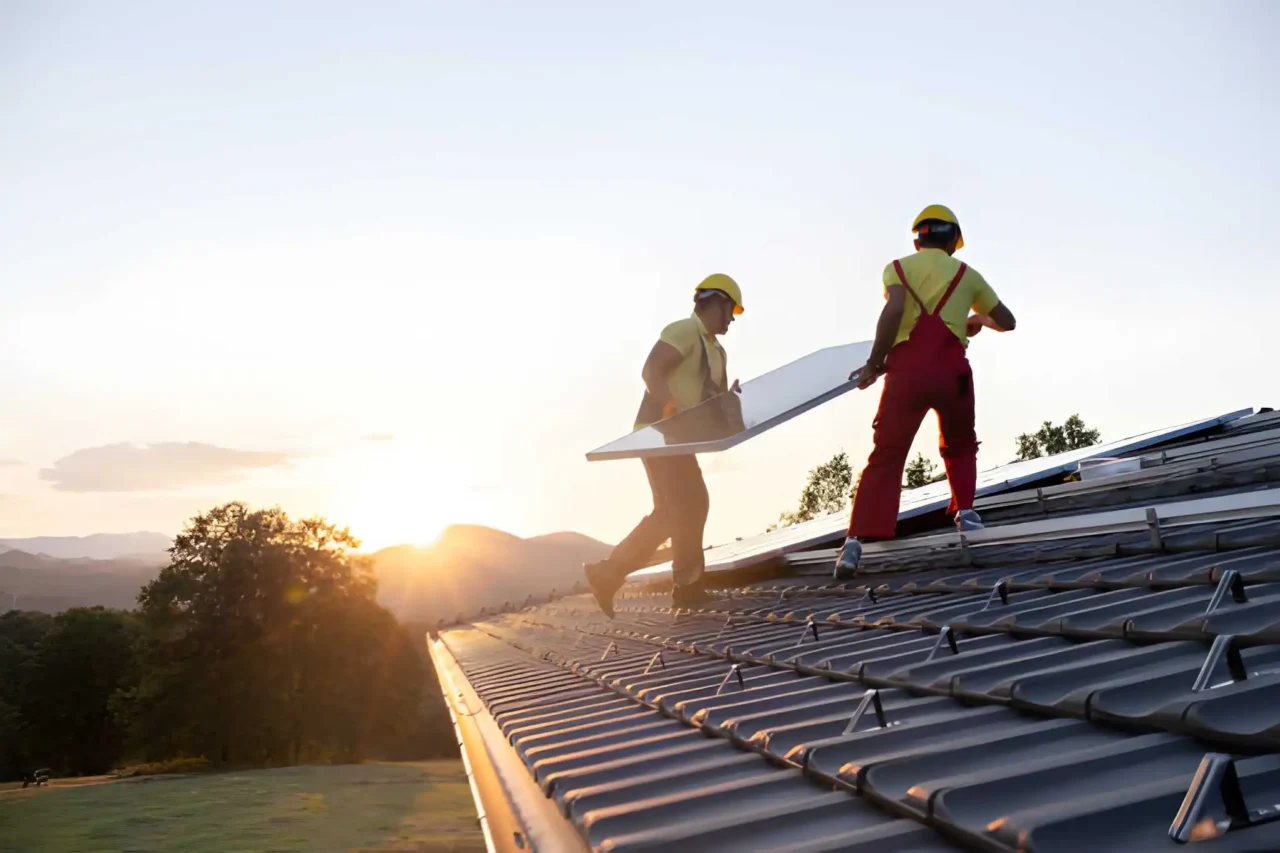
Installing Solar Panels (Complete Process)
Rack-mounted panel installation is faster and can be completed on most existing roofs in good condition.
Pre-Installation Requirements:
- Existing roof must have minimum 5–10 years of useful life remaining
- Rafters/trusses must be structurally sound to accept lag bolt loads
- Roof pitch between 10–40 degrees preferred for optimal production
- Shading analysis completed (trees, chimneys, neighboring structures)
Step-by-Step Solar Panel Installation:
- Layout and rafter location: Installers use rafter finders and stud sensors to locate structural members. Attachment points are marked at rafter locations to ensure all fasteners engage structural framing never just sheathing.
- Flashing and mount installation: Purpose-designed roof mounts (L-feet, Quickmount, or similar) are installed through roof surface, under existing shingles, and bolted through sheathing into rafters. Waterproof flashing slides under shingles above each mount to prevent leaks.
- Rail installation: Aluminum mounting rails attach horizontally across L-feet or mounts, leveled with shims and secured. Rail spacing matches panel dimensions (typically 36–48 inches between rails).
- Panel mounting and wiring: Panels are lifted onto rails, clamped with end clamps and mid-clamps, and wired in series strings. Grounding conductors bond all metal components to prevent electrical hazards.
- Inverter and electrical rough-in: String inverters (outside or in garage) or microinverters (under each panel) are installed and wired through conduit to main electrical panel, with required disconnects and metering equipment.
- Inspection and utility interconnection: Similar process to shingles building, electrical, and utility inspections required before activation.
Total installation time: 1–3 days for most residential systems.
Aesthetics, Home Value, and HOA Considerations
Visual Appearance and Curb Appeal
Aesthetics represent solar shingles’ strongest competitive advantage over conventional panels.
Solar Shingles:
- Sit flush with roof surface, creating clean integrated appearance with no visible hardware
- Designed to mimic premium architectural asphalt (GAF Timberline Solar), slate (CertainTeed), or custom tile (Tesla)
- Invisible from street level on many installations, appearing simply as a premium roof
- Ideal for luxury neighborhoods, historic districts, and design-conscious homeowners
Solar Panels:
- Raised 3–6 inches above roof on visible aluminum rails
- Clearly identifiable as a solar installation
- Modern homeowners increasingly view visible panels as aspirational rather than unattractive
- Available in all-black designs that minimize visual contrast against dark roofs
According to Palmetto Solar, solar shingles are often described as “indistinguishable from a premium roof” and provide significant aesthetic advantages in neighborhoods where visible panel systems would create friction with neighbors or HOAs.
Impact on Home Value
Multiple studies indicate solar installations increase home resale value:
- Zillow Research: Homes with solar installations sell for approximately 4.1% more than comparable non-solar homes
- Lawrence Berkeley National Laboratory: Premium of $4,020 per kW installed for solar panels
- Solar shingles: Limited data suggests comparable or slightly higher premium due to dual roof/energy function appealing to buyers
HOA and Design Restrictions
Solar panels face restrictions in some HOA communities and historic districts. Solar shingles often provide a compliant alternative:
- Many HOA rules prohibit visible panels or require them to be “not visible from street”
- Solar shingles typically satisfy most aesthetic covenant requirements
- Some states (California, Florida, Arizona) have solar rights laws limiting HOA panel restrictions check local statutes before assuming shingles are required
ROI and Payback Period Comparison
Payback Period Analysis
| Factor | Solar Panels | Solar Shingles |
|---|---|---|
| Typical system cost (6 kW) | $15,000–$25,000 | $27,000–$45,000 |
| After 30% federal tax credit | $10,500–$17,500 | $18,900–$31,500 |
| Annual electricity savings | $1,100–$1,500 | $1,000–$1,400 |
| Simple payback period | 7–10 years | 12–18 years |
| 25-year net savings | $15,000–$27,500 | $2,500–$18,500 |
Solar panels consistently deliver faster payback than shingles due to lower upfront costs and higher efficiency. A1SolarStore analysis puts typical panel payback at 7–10 years versus 12–16+ years for shingles when installed separately from a roof replacement.
When Shingles Improve ROI
The payback calculation changes substantially when combined with needed roof replacement:
Scenario: Homeowner needs new roof + solar in California (high electricity rates at $0.28/kWh):
- Panels + premium asphalt roof: $16,000 + $18,000 = $34,000 total → payback 12 years
- Solar shingle system: $40,000 → payback 13–14 years
In high-electricity-rate markets, the gap narrows significantly particularly when shingle systems eliminate what would otherwise be a significant roof replacement cost.
Federal Tax Credit and State Incentives
The 30% federal Investment Tax Credit (ITC) applies to both solar panels and solar shingles when the primary purpose is energy generation (not just roofing). Key considerations:
- Solar panels: Full system qualifies at 30% ITC through 2032
- Solar shingles: IRS guidelines allow 30% credit on the solar-generating portion of costs; the purely structural roofing portion may not qualify
- State incentives: Net metering, SREC markets, and state tax credits vary widely solar panels typically qualify for all available incentives; shingle eligibility varies by program
Which Is Better: Solar Shingles or Solar Panels?
The answer depends entirely on your situation, priorities, and roof condition.
Choose Solar Panels When:
- Your existing roof has 10+ years of life remaining no need to replace it yet
- You want maximum energy output per dollar and fastest payback period
- You may move within 10 years and want the most cost-efficient system
- You want access to the widest selection of installers, brands, and financing
- Local HOA rules permit visible solar panels or you don’t have HOA restrictions
- You want a modular system you can expand, reconfigure, or repair independently
Choose Solar Shingles When:
- Your roof needs replacement within 5 years combining projects reduces overall cost
- You are building a new home and can integrate solar in design from the start
- HOA covenants or historic district rules prohibit conventional panel visibility
- Aesthetics are paramount you want an upscale, integrated look
- You’re investing in a luxury property where premium materials align with home value positioning
- You plan to stay in the home 20+ years allowing full ROI realization on higher upfront cost
Solar Shingles Brands Comparison (2026)
| Brand | Product | Cost (per W) | Efficiency | Warranty | Best For |
|---|---|---|---|---|---|
| Tesla | Solar Roof V3 | $5.00–$8.00/W | 20%+ | 25 years power, 30 years weatherization | Full roof replacement |
| GAF Energy | Timberline Solar | $4.50–$6.50/W | 17–19% | 25 years power, 25 years weatherization | Mainstream residential |
| CertainTeed | Apollo II | $5.00–$7.00/W | 17–18% | 25 years power | New construction |
| SunRoof | Various | $4.00–$6.50/W | 15–18% | 20–25 years | Budget-focused solar shingles |
Tesla Solar Roof Note: Multiple independent analyses, including SolarReviews, find Tesla’s Solar Roof costs significantly more than conventional solar their 2025 review found Tesla Solar Roof costs more per watt than ever compared to traditional panels, making it primarily a premium aesthetic choice rather than financial optimization.

Frequently Asked Questions
Are solar shingles worth it in 2026?
Solar shingles are worth it in 2026 for specific situations: if you need a new roof, live in a high-electricity-cost region, have HOA restrictions on visible panels, or prioritize aesthetics over ROI. For pure financial returns, traditional solar panels at $2.50–$4.50/W outperform shingles at $4.50–$8.00/W with faster 7–10 year payback versus 12–18 years for shingles. The 30% federal tax credit applies to both, improving economics for either choice.
How much do solar shingles cost in 2026?
Solar shingles cost $4.50–$8.00 per watt installed in 2026, with full roof replacement projects typically ranging $25,000–$80,000 depending on home size, brand, and region. After the 30% federal tax credit, costs reduce to $17,500–$56,000. A mid-range GAF Timberline Solar installation on a 2,000 square foot home typically runs $30,000–$45,000 before incentives.
What is the efficiency of solar shingles vs solar panels?
Solar shingles typically achieve 14–18% conversion efficiency, while conventional solar panels reach 18–22%. Premium panels from SunPower and LG achieve up to 22.8% efficiency approximately 30–40% more energy per square foot than average solar shingles. This means larger roof area is required with shingles to produce equivalent energy output.
Do solar shingles last as long as solar panels?
Yes quality solar shingles last 25–30 years, comparable to conventional solar panels at 25–35 years. Both technologies typically carry 25-year power output warranties guaranteeing at least 80% of original output. Solar shingles have the added advantage of simultaneously replacing your roof, which would otherwise need replacement every 15–20 years (asphalt) or 30–50 years (metal/tile).
Can solar shingles power a whole house?
Yes, solar shingles can power an entire home if sufficient south-facing, unshaded roof area is available. A typical 2,000–3,000 sq ft home requires 6–10 kW of solar capacity. Solar shingles need 30–40% more roof area than panels to produce equivalent output due to lower efficiency, but most whole-roof shingle systems like Tesla Solar Roof are designed to cover 100% of home electricity needs.
Do solar shingles qualify for the federal tax credit?
Yes solar shingles qualify for the 30% federal Investment Tax Credit (ITC) on the solar-generating portion of installation costs through 2032. The purely structural roofing portion (non-solar materials like underlayment, flashing, and non-active shingles) may not qualify. Consult a tax professional, as IRS treatment of solar roofing products continues to evolve.
Can I install solar shingles on an existing roof?
Solar shingles require removal of existing roofing down to the deck and function as a complete roof replacement they cannot simply be added on top of existing shingles. This requirement makes solar shingles most practical when your roof already needs replacement. If your existing roof is sound, conventional rack-mounted solar panels are the more cost-effective choice.
How do solar shingles perform in cold climates?
Solar shingles perform well in cold climates photovoltaic cells actually produce slightly more electricity in cold temperatures than hot temperatures due to improved electron flow. Snow accumulation temporarily reduces output but slides off the smooth surface relatively quickly. Most products maintain Class A fire ratings and are tested for freeze-thaw cycles. Northern states like Massachusetts and Minnesota see competitive solar ROI due to net metering policies despite shorter sun hours.
What is the maintenance difference between solar shingles and panels?
Solar panels require periodic cleaning (1–2 times per year in dusty climates) and occasional inspection of mounting hardware, but can be serviced independently from the roof. Solar shingles combine maintenance needs electrical issues require electricians who understand both roofing and PV systems, while physical damage means replacing shingles that happen to also be electrical components. Both systems have minimal moving parts and should require little maintenance for 20+ years under normal conditions.
How do I choose between solar shingles and solar panels?
Choose based on your specific situation: if your roof needs replacement soon, shingles offer competitive combined value; if your roof is in good condition, panels deliver better ROI. If aesthetics and HOA compliance are priorities, shingles excel; if maximum energy output per dollar is the goal, panels win. Both qualify for the 30% federal tax credit and both significantly increase home value and reduce electricity bills for decades.
🏠 Roofing Tips & Updates
Get free roofing advice, cost guides, and seasonal maintenance tips.

Roofing content specialist with 5+ years researching U.S. residential and commercial roofing. Has documented 200+ projects covering installation costs, material selection, contractor vetting, and DIY guides for homeowners across all climate zones.
Leave A Comment