The national average roof repair cost is about $1,175 in 2026, with most homeowners paying $400–$2,000. A small repair may cost $150, while extensive damage can reach $8,000 or more. These national benchmarks cover varied homes; the problem-specific budgets below assume an accessible, single-story asphalt-shingle roof unless stated otherwise.
Use this guide to price leaks, shingles and flashing, understand minimum charges, compare written estimates, and decide whether another repair makes sense. Rinuom Roofing publishes independent homeowner guides and calculators; we do not perform roofing work or take contractor commissions.
Roof repair cost at a glance
These national planning bands include labor and materials for scheduled work. Time estimates describe elapsed roof work for a small crew, excluding scheduling, rain delays and separate interior restoration. They are planning assumptions, not measured averages.
| Repair level | Planning range | Example | Time on roof |
|---|---|---|---|
| Minor | $150–$1,000 | A few shingles or a vent boot | About 1–4 hours |
| Moderate | $1,000–$3,000 | A larger patch or several related defects | About half a day to 1 day |
| Major | $3,000–$8,000+ | A damaged slope with wet decking | About 1–3 days or longer |
Understand the minimum first. Published minimum job charges run about $150–$300, sometimes higher. A minimum is usually a floor for the job, not another fee added to its full price. Ask whether travel, inspection and setup are included. A separately disclosed diagnostic or after-hours charge may be additional.
How we built these numbers: Checked October 21, 2026, against Angi, HomeGuide and Fixr cost guides, with GAF technical guidance and insurance references. Angi reports a $1,174 average and $395–$1,967 range; we round those for budgeting. Fixr’s $1,150 average supports the scale. Published scopes differ, so the tables distinguish small patches, section repairs and restoration. These are researched benchmarks and labeled estimates, not our own survey.
Prices by roof problem
Use one matching row as a starting budget. Do not add a leak price to a boot price when both describe the same repair. These installed ranges include an ordinary service visit; larger damage, special access and interior work need separate pricing.
| Problem | Typical cost | What’s included | DIY possible? |
|---|---|---|---|
| A few missing or damaged shingles | $150–$700 | Remove, replace, fasten and seal; sound decking | Only with safe access and skills |
| Larger shingle patch, about 100 square feet | $350–$1,000 | Local tear-off and reroofing; no decking | Usually hire |
| Roof leak, locate and fix | $350–$1,550 | Basic diagnosis and localized exterior repair | Diagnosis is difficult |
| Vent or skylight flashing repair | $200–$600 | Localized flashing work; not skylight replacement | Usually hire |
| Chimney flashing repair | $200–$1,000 | Localized repairs; no masonry rebuild | Hire |
| Chimney flashing replacement | $1,000–$1,500+ | Ordinary accessible chimney; metal and shingle integration | Hire |
| Valley repair | $300–$1,500 | Localized valley and adjacent roofing work | Hire |
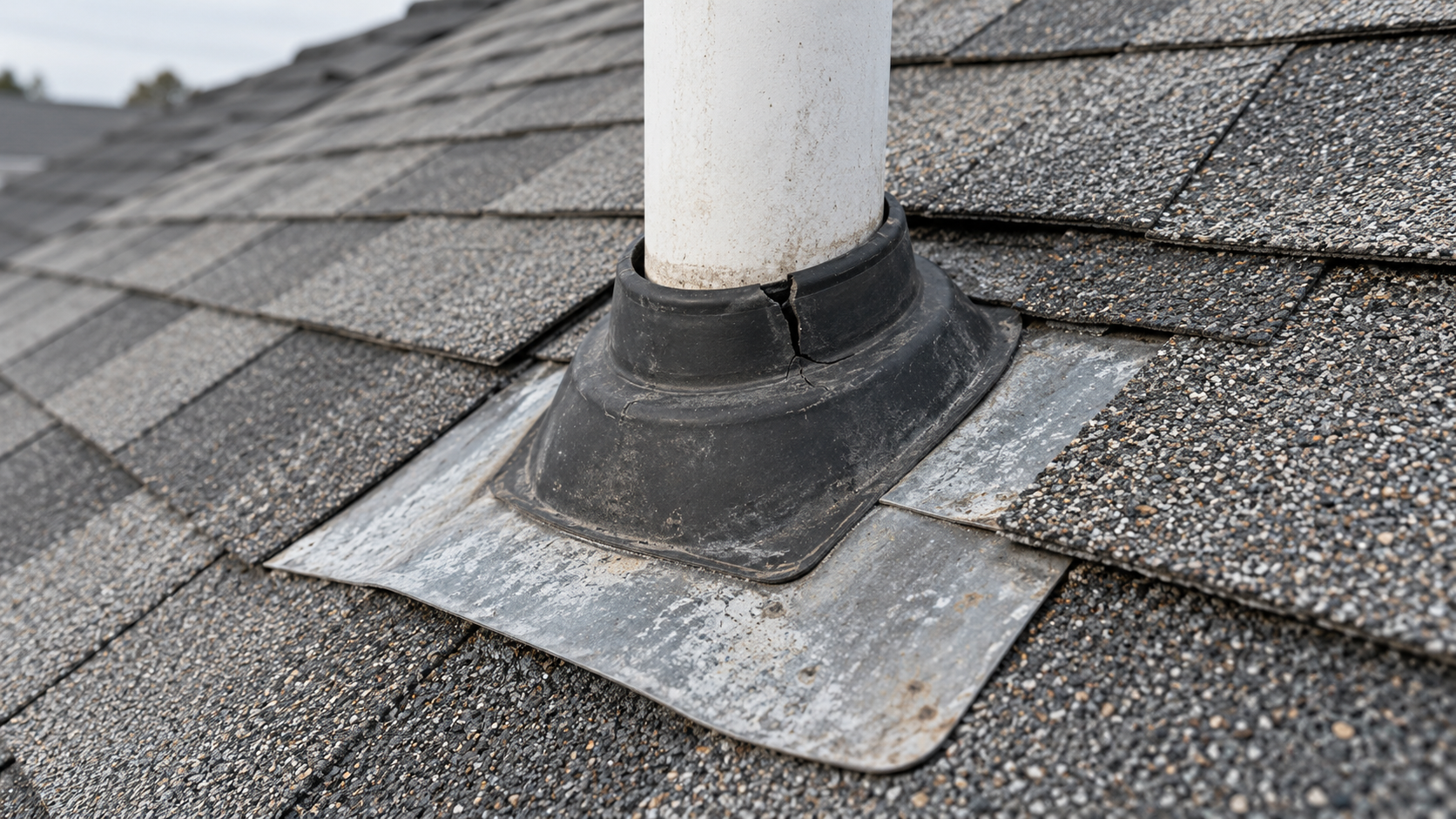
| Pipe boot replacement | $250–$600 | Boot, flashing and limited surrounding shingle work | Skilled homeowners only |
| Ridge cap repair | $200–$750 | Limited damaged cap replacement | Usually hire |
| Decking, per 4-by-8-foot sheet | $65–$160 additional | Sheathing and installation on an already-open roof | Hire |
| Fascia or soffit repair | $500–$2,600+ | Limited trim replacement; length must be specified | Only with safe access |
| Emergency tarp | $300–$1,000 planning allowance | Small accessible area; after-hours fee varies | Avoid during storms |
| Localized hail or storm damage | $700–$4,000 | Repairable exterior damage; no major framing work | Professional assessment |
The decking allowance converts published $2–$5-per-square-foot sheathing pricing to 32 square feet, rounded. It excludes opening and rebuilding the roof covering. Confirm the actual per-sheet charge in your roof decking cost estimate.
Roof leak repair cost
Allow $350–$1,550 to locate and fix a localized leak without major water damage. Water may travel along framing before appearing indoors, so the ceiling stain is not necessarily below the entry point. Ask what diagnosis includes and whether another visit costs extra. A quote that promises only to “seal above the stain” without identifying the entry path deserves questions. Wet insulation, damaged drywall and structural rot fall outside this leak allowance.
Shingle repair cost
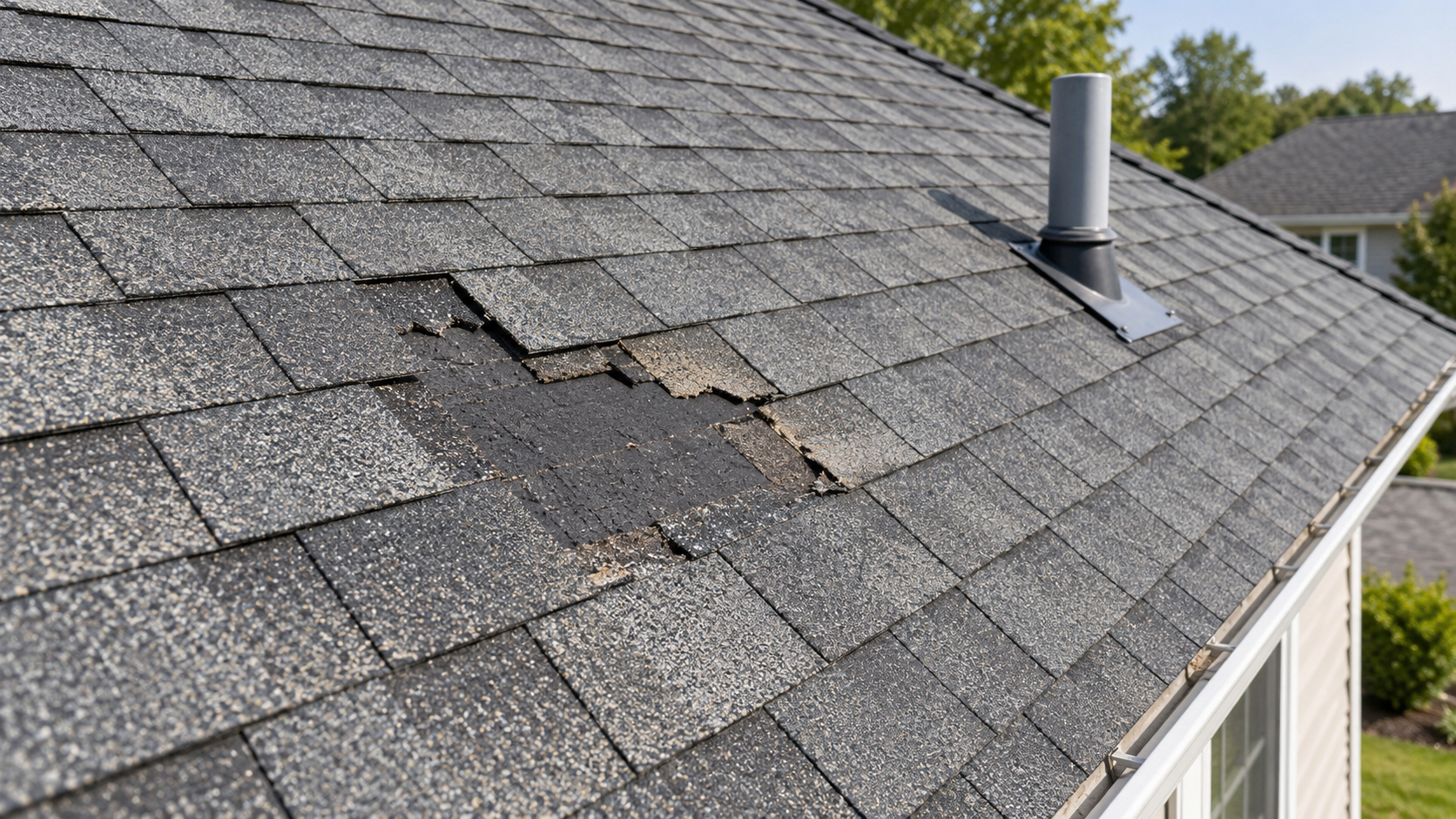
Replacing a few shingles costs $150–$700; a roughly 100-square-foot patch costs $350–$1,000. Small jobs can cost more per square foot because setup takes nearly as long as the repair. Asphalt shingle roof repair also becomes harder when surrounding shingles are brittle or the original product is discontinued. Ask how many shingles or square feet are included. A quote that covers new shingles without checking exposed underlayment may leave the actual water barrier unresolved.
Flashing repair cost, including chimneys
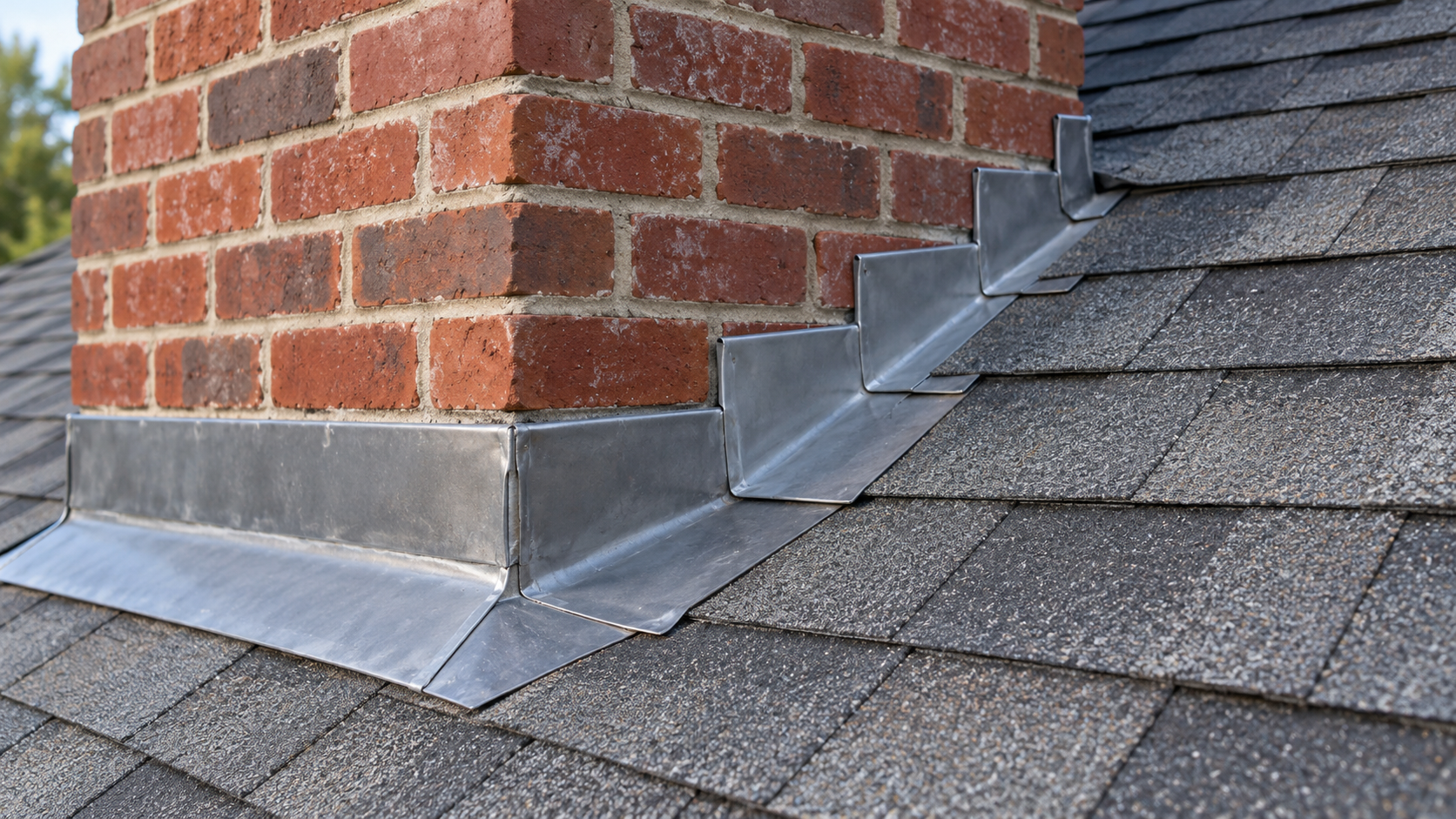
Roof flashing repair cost is $200–$600 for localized vent or skylight work. Chimney flashing repair costs $200–$1,000; ordinary complete replacement is $1,000–$1,500+, with complex masonry or copper details potentially higher. These are different scopes. Ask whether the roofer will repair metal, replace it or merely apply sealant. A thick coating over failed joints is a red flag if sold as full replacement. Our detailed flashing repair guide explains the parts to identify.
Hail and storm damage repair
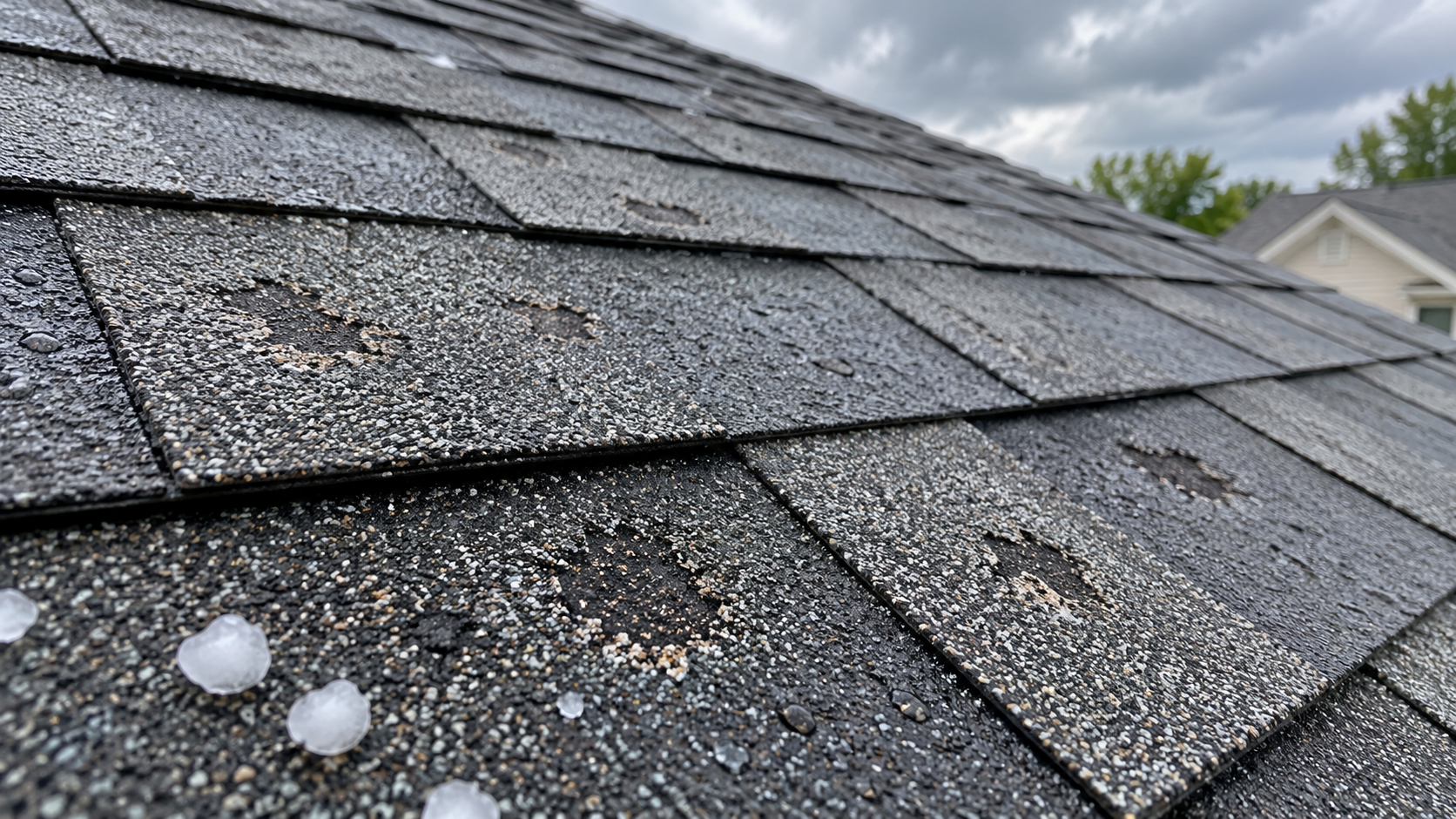
Budget $700–$4,000 for localized hail damage roof repair or similar repairable storm damage. Damage spread across several slopes can move the job into the major band or require replacement. Dents in gutters alone do not establish shingle failure. Ask for photographs and a description of the affected roof covering. Be cautious if a quote assumes insurance approval before the insurer has assessed coverage. See our storm damage repair guide for documentation steps.
Roof repair cost by roof material
These national installed budgets concern localized repairable damage, not whole-roof replacement. The asphalt rows use a 100-square-foot patch for comparison; other rows describe a small repair job and cannot be compared as equal areas. Problem-specific scopes above take priority.
| Material | Repair budget | Why it differs |
|---|---|---|
| 3-tab asphalt | $350–$500 per 100 square feet | Basic shingles are inexpensive, where matching stock exists. |
| Architectural asphalt | $400–$850 per 100 square feet | Thicker products and matching can add cost. |
| Metal | $500–$2,000 per job | Panel connections and profiles need compatible repairs. |
| Clay or concrete tile | $500–$2,500 per job | Careful handling limits breakage of neighboring tiles. |
| Slate | $700–$3,000 per job | Specialist work and matching stone increase cost. |
| Wood shake | $350–$1,500 per job | Individual shakes require careful removal and fitting. |
| Flat: TPO, EPDM or modified bitumen | $300–$1,100 per job | Patch methods must match the membrane; wet insulation adds work. |
A TPO patch and an EPDM patch use different methods. Ask the contractor to identify the membrane before specifying products. For manufactured housing, use the separate mobile home roof repair guide.
What changes the price
- Pitch: Steep slopes require more setup and slower movement. Ask which access equipment is included.
- Height and access: Extra stories, narrow side yards or a roof above an addition can require a lift or scaffolding.
- Damage extent: One defective boot and several wet roof sections are different scopes, even if both cause one stain.
- Material availability: Discontinued shingles or custom metal profiles can require sourcing time and a larger matching patch.
- Emergency timing: After-hours attendance and temporary weatherproofing may be separate from permanent repairs.
- Region: Local labor, travel and disposal costs matter. Compare equivalent nearby quotes rather than applying an unsupported national percentage.
- Permits: Small like-for-like repairs often need none, but structural work or larger reroofing areas may trigger local requirements. Confirm with the building department.
- Hidden rot: Opening the roof may expose weak decking. Require photos, a unit price and approval before the scope expands.
Worked examples with the math
These are illustrative 2026 budgets, not contractor quotes. Assume dry weather, a single-story accessible asphalt roof and sound framing. Labor means total worker-hours, so two people working four hours equal eight worker-hours. The $75–$100 hourly assumptions sit within published roofing labor ranges.
Calculation: labor + materials and ordinary disposal + minimum-charge adjustment = total. The adjustment is only the amount needed to reach an assumed $250 job minimum. Do not add the full minimum again. Taxes, permits, special equipment and interior work are excluded.
| Scenario | Low calculation | High calculation | Total budget |
|---|---|---|---|
| Five blown-off architectural shingles | 2 hours × $75 + $50 materials + $50 minimum adjustment = $250 | 3 hours × $100 + $100 materials + $0 adjustment = $400 | $250–$400 |
| Leak at a plumbing boot; replace boot | 3 hours × $75 + $75 materials + $0 adjustment = $300 | 4 hours × $100 + $150 materials + $0 adjustment = $550 | $300–$550 |
| Ordinary chimney flashing replacement | 10 hours × $75 + $250 materials + $0 adjustment = $1,000 | 12 hours × $100 + $300 materials + $0 adjustment = $1,500 | $1,000–$1,500 |
| Hail damage: 300-square-foot slope and three decking sheets | 16 hours × $75 + $900 materials + $0 adjustment = $2,100 | 24 hours × $100 + $1,200 materials + $0 adjustment = $3,600 | $2,100–$3,600 |
The hail example includes decking labor and materials inside the totals; do not add three installed-sheet charges again. A larger slope, tear-off difficulties or damaged rafters would change the budget. Each example is a narrower scenario within the broader problem range.
Is your roof repair estimate fair?
A good written estimate defines the repair before naming the price. Look for location, measured quantity, material brand and line where applicable, labor, tear-off, disposal and cleanup. It should distinguish temporary sealing from permanent replacement and explain what happens if the suspected leak source proves wrong.
Ask for the workmanship warranty in writing, including exclusions and who handles a callback. Require a per-sheet decking price, specification and approval process for hidden damage. Compare three quotes with the same scope and request before-and-after photos. Use our guide to vetting a roofing contractor when checking credentials and references.
- A single “fix leak” line with no location or method.
- A large upfront deposit for a small repair without a clear reason.
- A storm visitor who cannot provide verifiable local references.
- Pressure to replace a roof under 10–12 years old without documenting widespread defects.
- No agreed decking price or change-order process.
- No written workmanship coverage or a promise that conflicts with the contract.
The cheapest bid may leave out diagnosis, flashing replacement or disposal. Ask each bidder to explain differences before treating the totals as comparable. A higher quote should identify extra work, access needs or materials rather than rely on a vague quality claim.
Repair or replace?
Judge remaining useful life, not age alone. Check the material, installation history, brittleness and distribution of defects. A young roof can have installation failures; an older roof may still justify one isolated repair. Several leaks during a year warrant a whole-roof assessment, especially if they come from unrelated areas.
| Repair if… | Consider replacement if… |
|---|---|
| Damage is localized and surrounding roofing remains sound. | Damage affects several slopes or repeated patches keep failing. |
| The cause can be corrected without disturbing brittle surrounding material. | Opening one section repeatedly breaks neighboring shingles. |
| The repair buys useful years at a modest share of replacement cost. | A substantial repair still leaves a worn roof needing replacement soon. |
Use roughly 30% of replacement cost as a comparison trigger, not a replacement rule. A $3,000 repair against a $10,000 replacement reaches that trigger. Remaining roof life and what each price includes matter more than the percentage. Likewise, a damage-area percentage alone cannot establish repairability.
Compare the cost of a new roof, including tear-off and any decking replacement. Insurance scope and resale plans may affect timing, but neither makes unnecessary replacement worthwhile. Give a buyer repair records and warranty details rather than assuming a new roof returns its full cost.
Does insurance cover roof repairs?
Homeowners insurance may cover sudden damage from a covered storm, hail or falling tree. Wear, deterioration and neglected maintenance are generally excluded. Coverage depends on the cause, policy terms and state; roof age may affect settlement. Check replacement-cost versus actual-cash-value terms and any separate wind or hail deductible.
For illustration, a covered $3,600 repair minus a $2,000 deductible leaves $1,600 potentially payable before depreciation, limits or other policy adjustments. A percentage deductible is based on the policy’s stated basis, which may be the dwelling coverage amount, not the repair bill.
Photograph damage safely before work, retain receipts and ask the insurer about required documentation. Take reasonable steps to limit further damage without delaying needed temporary protection. Confirm reporting deadlines in your policy rather than assuming a universal filing window.
DIY versus hiring a pro
A capable homeowner with safe access, suitable equipment and roofing knowledge may replace a few shingles on a gently sloped single-story roof or address a compatible vent-boot detail. Low slope does not mean safe: fall protection and sound footing still matter. Never climb during rain, wind or icy conditions.
Leave steep or high roofs, chimney and wall flashing, tile, slate and soft decking to professionals. Tarping also involves fall and wind hazards; ground-level documentation and protecting possessions indoors are safer immediate steps. Sealant alone will not correct every failed flashing detail.
For material budgeting, one retailer-listed repair collar was $34.48 when checked; compatibility and local stock vary. Published standard tarp-only examples run $15–$25 for 10-by-20 feet, excluding anchors and safety equipment. These are not complete DIY job prices. Follow product instructions and our guide to roof cement and shingle adhesive.
How to save without cutting corners
- Bundle nearby defects: Ask for one scoped visit covering the boot, loose caps and small shingle patch.
- Use a flexible appointment: Scheduled work may avoid emergency attendance charges when the roof is safely protected.
- Correct the cause: Investigate moisture or ventilation problems before paying repeatedly for surface patches. See roof vent installation costs.
- Keep matching leftovers: Label spare shingles by product and color, and store them as the manufacturer directs.
- Inspect without climbing: Check visible changes from the ground after storms and arrange professional assessment when needed.
- Check existing coverage: Review installation warranties before authorizing work that could affect a valid claim.
FAQ
How much does it cost to fix a roof leak?
A localized leak typically costs $350–$1,550 to find and fix, excluding major water damage. A boot replacement is a narrower $250–$600 scope, not an extra charge to add automatically. Ask whether diagnosis, exterior repairs and a return visit are included; ceiling repairs should be identified separately.
How much does it cost to replace a few shingles?
Replacing a few asphalt shingles typically costs $150–$700 on an accessible roof with sound decking. The minimum job charge can dominate the bill. Brittle surrounding shingles, unavailable matching stock or damaged underlayment can enlarge the scope, so request a quantity and photographs rather than a vague patch description.
Is roof repair cheaper than replacement?
An isolated repair usually costs less upfront than full replacement. The better long-term choice depends on remaining roof life and how widespread the defects are. Compare complete written scopes; a repair that leaves several failing sections may only postpone replacement, while one corrected flashing detail may solve the problem.
How much is chimney flashing repair?
Chimney flashing repair costs $200–$1,000 for localized work, while ordinary complete replacement is $1,000–$1,500 or more. Custom metal, difficult access and masonry defects can exceed that replacement budget. Confirm whether the quote includes step flashing, counterflashing and integration with surrounding shingles rather than just a sealant application.
Why do roofers charge a minimum fee?
A minimum fee covers the cost of taking on a small job, including travel, setup and administration. Published minimums run about $150–$300, sometimes higher. The minimum generally sets a floor rather than being added to a fully priced repair. Ask separately about diagnostic fees and after-hours attendance.
Can I get a roof repair estimate online?
You can get a planning estimate online, but hidden damage needs inspection. A roof repair cost estimator should state quantities, labor assumptions, minimum charges and exclusions. Use our free roofing calculators for measurements and budgeting, then have the repair scope confirmed before treating a figure as a firm price.
Does homeowners insurance pay for roof leaks?
Insurance may pay when a leak results from a covered sudden event, but generally excludes wear and neglected maintenance. Your deductible and settlement terms affect reimbursement. Document the cause and damage, preserve receipts, and read the roof provisions in your policy; a leak alone does not establish coverage.
How long does a roof repair last?
There is no reliable lifespan for every repair because the cause, materials and surrounding roof condition differ. A properly integrated replacement detail should provide more durable protection than temporary sealing. Ask what the repair corrects and obtain written workmanship terms, including exclusions and the process for reporting a recurring leak.
Related guides
- Roof decking and per-sheet replacement pricing
- Mobile home roof replacement cost
- Understanding flashing repairs
- Hail damage costs and repair scope
- Budgeting for a new roof
- Roof measurements and free calculators

Rinuom Danuom is the editor of Roof-Installation.com, an independent roofing guide for US homeowners. Rinuom researches roofing costs, materials and installation methods using published US cost data, manufacturer specifications and building-code references, and maintains the site’s free roofing calculators. Roof-Installation.com does not install roofs or take contractor commissions. Spotted an error? Email [email protected].