Preloader Close
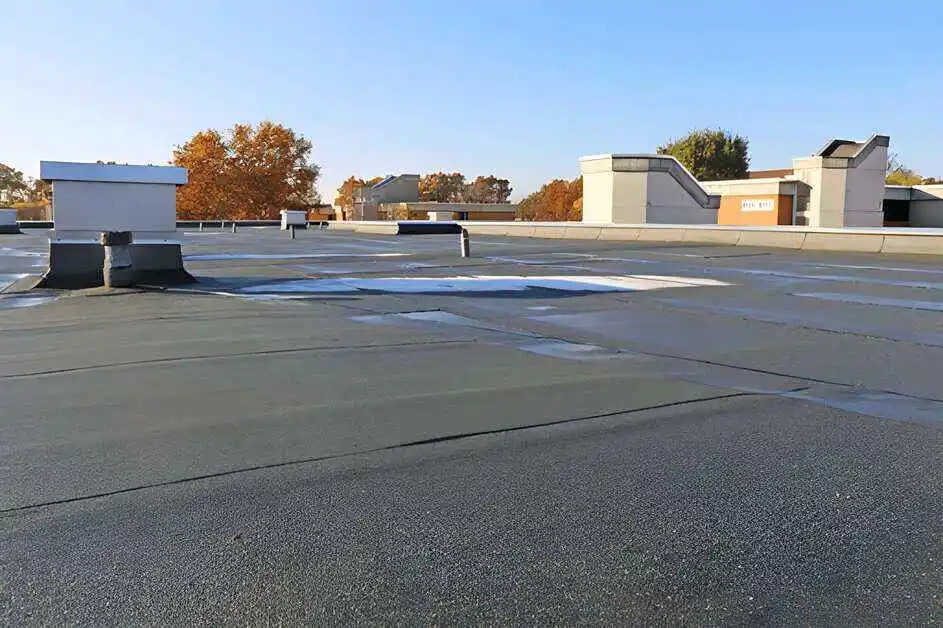
Table of Contents
Flat roof installation requires specialized knowledge of membrane systems, drainage design, and waterproofing techniques that differ significantly from pitched roofing. Despite their name, flat roofs aren’t completely flat—they feature subtle slopes (typically ¼ inch per foot) to direct water toward drains and prevent pooling. This guide covers the three primary membrane systems (TPO, EPDM, PVC), installation methods, critical drainage and insulation considerations, costs, and common mistakes that lead to premature failure.
Whether you’re planning a modern low-slope home addition, garage, or commercial building, understanding proper flat roof installation ensures decades of leak-free performance.
Why Flat Roofs Need Different Installation Methods
The National Roofing Contractors Association (NRCA) recommends a minimum slope of 1/4 inch per foot for all flat roofing systems to ensure adequate drainage and prevent membrane damage from standing water.
Key Differences from Pitched Roofs:
- Membrane systems replace shingles (continuous waterproofing vs. overlapping layers)
- Drainage must be engineered (water doesn’t naturally run off)
- Substrate preparation is critical (seams and penetrations are vulnerable)
- Insulation placement affects condensation control
- Parapet walls and edge details require specialized flashing
Common Applications: Modern homes, additions, porches, garages, commercial buildings, rooftop decks.
Lifespan: 20–30+ years with proper installation and maintenance.
Flat Roof Membrane Types
TPO (Thermoplastic Polyolefin)
Description: Single-ply white or gray membrane, heat-welded at seams.
Cost: $5.50–$8.50 per sq ft installed
Lifespan: 20–30 years
Best For: Energy efficiency (reflective), commercial buildings, budget-conscious projects
Pros:
- Excellent UV and heat resistance
- Energy Star rated (reflective white surface reduces cooling costs)
- Heat-welded seams create permanent bonds
- Resistant to punctures and tears
- Affordable compared to PVC
Cons:
- Seam quality depends on installer skill
- Less chemical resistance than PVC
- Can shrink over time in extreme temperatures
Installation Method: Mechanically attached or fully adhered with hot-air welding at seams.
EPDM (Rubber Membrane)
Description: Black or white synthetic rubber membrane, adhered or mechanically fastened.
Cost: $4.50–$7.50 per sq ft installed
Lifespan: 25–30+ years
Best For: Budget projects, DIY-friendly, proven performance
Pros:
- Most affordable membrane option
- Extremely durable and weather-resistant
- Easy to repair (patches adhere well)
- Black absorbs heat (can reduce snow/ice in cold climates)
- DIY-friendly with adhesive systems
Cons:
- Black surface absorbs heat (higher cooling costs in hot climates)
- Seams require adhesive or tape (weaker than heat-welded)
- Can puncture more easily than TPO/PVC
- UV exposure degrades material over decades
Installation Method: Fully adhered with bonding adhesive or mechanically fastened with plates and screws.
PVC (Polyvinyl Chloride)
Description: Single-ply membrane, heat-welded seams, highly chemical resistant.
Cost: $6.50–$10.00 per sq ft installed
Lifespan: 20–30 years
Best For: Commercial kitchens, pools, high chemical exposure, premium residential
Pros:
- Superior chemical and grease resistance
- Heat-welded seams (strongest bond)
- Excellent fire resistance
- Energy Star rated (reflective)
- Long track record (50+ years in commercial use)
Cons:
- Highest cost
- Seams require skilled installation
- Less flexible in cold weather than EPDM
Installation Method: Mechanically attached or fully adhered with hot-air welding.
Comparison Table
| Membrane | Cost/SF | Lifespan | Energy Efficiency | Best For | Installation Difficulty |
|---|---|---|---|---|---|
| TPO | $5.50–$8.50 | 20–30 yrs | Excellent (reflective) | Commercial, residential, budget | Moderate (heat welding) |
| EPDM | $4.50–$7.50 | 25–30+ yrs | Poor (black absorbs heat) | Budget, DIY, proven performance | Easy (adhesive) |
| PVC | $6.50–$10.00 | 20–30 yrs | Excellent (reflective) | Chemical exposure, premium | Difficult (heat welding) |
Critical Design Considerations
Drainage (Non-Negotiable)
The Rule: Flat roofs MUST have a minimum slope of ¼ inch per foot toward drains or scuppers. “Flat” means low-slope, not zero-slope.
Drainage Methods:
- Interior drains: Most common, drains penetrate roof and connect to building plumbing
- Scuppers: Openings in parapet walls that channel water to downspouts
- Gutters: Edge-mounted systems (less common on commercial flat roofs)
Critical: Ponding water (standing >48 hours after rain) voids most warranties and accelerates membrane deterioration. Proper slope design is essential.
Insulation Placement
Options:
- Above-deck insulation: Rigid foam boards installed on top of structural deck, below membrane (most common)
- Below-deck insulation: Spray foam or batts installed below structural deck (less effective)
Why Above-Deck is Preferred: Keeps structural deck warm, prevents condensation, improves R-value, protects deck from thermal cycling.
Common Materials: Polyisocyanurate (polyiso), extruded polystyrene (XPS), expanded polystyrene (EPS).
Step-by-Step Flat Roof Installation
Step 1: Structural Assessment
Verify:
- Load capacity (roof must support membrane, insulation, drainage water, snow, foot traffic)
- Structural deck is solid, level, and free of rot
- Framing incorporates drainage slope (typically built into joists or tapered insulation)
Pro Tip: Consult structural engineer for additions or rooftop decks.
Step 2: Deck Preparation
Install Structural Deck:
- Use ⅝-inch plywood or OSB
- Run panels perpendicular to joists
- Leave ⅛-inch gaps for expansion
- Secure with appropriate fasteners at manufacturer-specified spacing
Surface Prep:
- Ensure deck is clean, dry, and smooth
- Remove all debris, dust, and protruding fasteners
- Repair any damage or soft spots.
Step 3: Install Vapor Barrier (If Required)
Purpose: Prevents moisture from interior spaces from migrating into insulation and causing condensation.
When Needed: Heated buildings in cold climates, buildings with high interior humidity.
Material: Self-adhering membrane or sheet goods installed directly on deck.
Step 4: Install Insulation
Method:
- Lay rigid insulation boards in staggered pattern (offset seams)
- Use two layers if thickness exceeds 2 inches (prevents thermal bridging)
- Create tapered insulation system if deck doesn’t have built-in slope
- Mechanically fasten or adhere per manufacturer specs
Critical: Insulation must stay dry during installation. Cover if rain threatens.
Step 5: Install Coverboard (Optional but Recommended)
Purpose: Protects insulation from foot traffic and membrane installation damage.
Materials: ¼-inch gypsum board, high-density polyiso, or fiberboard.
Step 6: Install Edge Flashing and Parapet Details
Before Membrane:
- Install metal edge flashing (drip edge equivalent)
- Flash parapet walls (vertical transitions)
- Install termination bars at edges
- Prepare drain openings with flashing collars
Critical: Edge details are primary leak sources. Follow manufacturer specs exactly.
Step 7: Install Membrane
TPO/PVC (Heat-Welded):
- Roll out membrane, cut to size with extra for edges
- Allow membrane to relax (avoid installing in extreme temperatures)
- Mechanically fasten or fully adhere base layer
- Overlap seams 3–6 inches
- Heat-weld seams with hot-air gun (600–700°F)
- Test seam strength (should not separate)
EPDM (Adhered):
- Roll out membrane, allow to relax 30+ minutes
- Fold back half of membrane
- Apply bonding adhesive to deck and membrane back
- Carefully roll membrane into adhesive (no air bubbles)
- Repeat for other half
- Seal seams with EPDM tape or liquid adhesive.
Pro Tip: Work in sections. “You only get one shot” when adhering membrane—repositioning damages bond.
Step 8: Install Flashing at Penetrations
Vent Pipes, Skylights, HVAC Units:
- Install flashing boots or prefab flashings
- Seal with membrane patches and compatible sealants
- Ensure watertight transitions
Parapet Walls:
- Extend membrane up wall (typically 8–12 inches)
- Install termination bar
- Apply counterflashing or metal cap.
Step 9: Seal and Test
Final Steps:
- Walk roof to check for loose areas, bubbles, or damage
- Perform flood test (fill low areas with water, inspect for leaks 24 hours later)
- Install walkway pads if roof has equipment or regular foot traffic
Inspection: Schedule final building inspection per local code.
Flat Roof Installation Costs
Material + Labor (2025):
- EPDM: $4.50–$7.50 per sq ft
- TPO: $5.50–$8.50 per sq ft
- PVC: $6.50–$10.00 per sq ft
Additional Costs:
- Tear-off (if replacing): $1.00–$2.50 per sq ft
- Insulation: $1.50–$3.50 per sq ft
- Tapered insulation system: +$2.00–$4.00 per sq ft
- Parapet flashings/edge details: $8–$15 per linear foot
- Drains (interior): $200–$500 each installed
Example: 1,000 sq ft flat roof with TPO, insulation, one drain = $7,000–$10,000 installed.
Common Flat Roof Installation Mistakes
- Inadequate drainage slope → Ponding water voids warranty, accelerates failure
- Poor seam quality → Most leaks occur at seams; heat-welded must be continuous and tested
- Skipping vapor barrier → Condensation rots deck from below
- Improper flashing → Parapets, penetrations, edges are leak-prone without proper details
- Installing in wrong weather → Rain during installation traps moisture; extreme temps affect adhesive/welding
- Ignoring substrate prep → Debris, moisture, or uneven deck causes membrane failure
- DIY without experience → Flat roofs are unforgiving; hire licensed professionals for best results.
DIY vs. Professional Installation
Hire a Professional When:
- Any commercial application
- Residential roofs >500 sq ft
- Complex drainage design needed
- Multiple penetrations (HVAC, skylights, vents)
- Warranty coverage required
- You lack membrane installation experience
DIY May Be Feasible When:
- Small shed or garage (<200 sq ft)
- Simple rectangular shape, no penetrations
- EPDM membrane with adhesive (most DIY-friendly)
- You’re comfortable working on roofs safely
- You follow manufacturer instructions exactly
Reality Check: Even experienced DIYers often hire pros for flat roofs. Mistakes are costly and difficult to repair.
Find Certified Flat Roof Installers
FAQ
How long does flat roof installation take?
1–5 days for residential projects (500–2,000 sq ft), depending on complexity, weather, and crew size. Commercial projects vary widely.
Can I install a flat roof myself?
EPDM systems are most DIY-friendly, but flat roofs demand precision. Hire professionals for roofs >200 sq ft or complex designs to avoid costly leaks.
What’s the best membrane for flat roofs?
TPO offers best value for most applications (energy efficiency, cost, durability). EPDM is budget-friendly. PVC excels in chemical-exposure environments.
Do flat roofs always leak?
No. Properly installed flat roofs with correct drainage slope and quality seams last 20–30+ years leak-free. Poor installation causes leaks, not the design itself.
How much slope does a flat roof need?
Minimum ¼ inch per foot toward drains. “Flat” is a misnomer; all low-slope roofs require drainage pitch to prevent ponding water.
What insulation is best for flat roofs?
Polyiso (polyisocyanurate) offers best R-value per inch. XPS (extruded polystyrene) resists moisture better. Use above-deck placement for optimal performance.
Can I walk on a flat roof?
Yes, but install walkway pads to protect membrane. Avoid sharp objects and excessive weight. Regular foot traffic requires durable coverboard.
Conclusion
Flat roof installation demands attention to drainage design, membrane selection, proper insulation placement, and precise seam work. TPO, EPDM, and PVC membranes each offer advantages depending on budget, climate, and application. While EPDM adhesive systems are approachable for small DIY projects, most flat roofs benefit from professional installation to ensure watertight seams, proper drainage slope, and long-term performance.
🏠 Roofing Tips & Updates
Get free roofing advice, cost guides, and seasonal maintenance tips.

Roofing content specialist with 5+ years researching U.S. residential and commercial roofing. Has documented 200+ projects covering installation costs, material selection, contractor vetting, and DIY guides for homeowners across all climate zones.
Leave A Comment