Emergency Roof Repair: Complete Guide to Fast Solutions and Costs
Emergency roof repair addresses urgent roofing damage requiring immediate professional intervention to prevent water intrusion, structural deterioration, and interior damage to your home. Common emergencies include severe storm damage with active leaks, fallen tree impacts, missing shingles exposing underlayment, and sudden failures allowing water to pour into living spaces situations demanding same-day or after-hours service to minimize property damage.
The average cost of emergency roof repair ranges from $379 to $1,755 nationally in 2025, with most homeowners paying between $300 and $1,500 depending on damage extent, repair complexity, and service timing. Emergency repairs typically cost 1.5 to 2 times more than scheduled repairs due to urgency premiums, after-hours labor rates, and rush material procurement, plus additional service fees of $100-$300 for immediate response.
Understanding when you need emergency roof repair, what temporary measures protect your home, how to find reliable 24/7 roofing contractors, and realistic cost expectations helps you respond effectively during roofing crises while avoiding unnecessary expenses or contractor scams.
Table of Contents
What qualifies as emergency roof repair?
Not all roof damage requires emergency response, so understanding the distinction between urgent repairs and issues that can wait for scheduled service helps you make appropriate decisions and manage costs effectively.
True roofing emergencies demanding immediate action:
- Active water infiltration: Water actively dripping or pouring into your home through ceilings, creating immediate risk of electrical hazards, ceiling collapse, mold growth, and furnishing damage
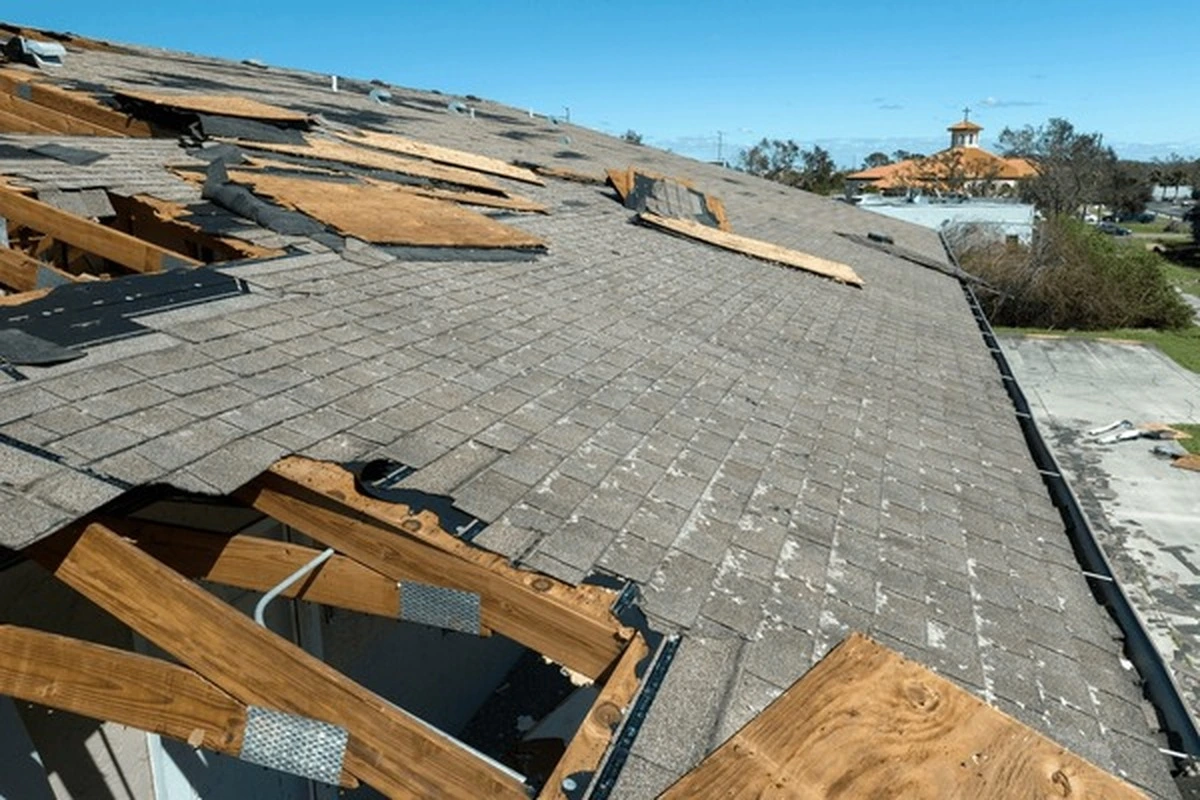
- Major structural compromise: Large holes from fallen trees or impacts, collapsed roof sections, or visible sagging indicating imminent failure
- Complete shingle blow-off: Extensive shingle loss (25% or more of a roof section) exposing bare underlayment or decking to weather
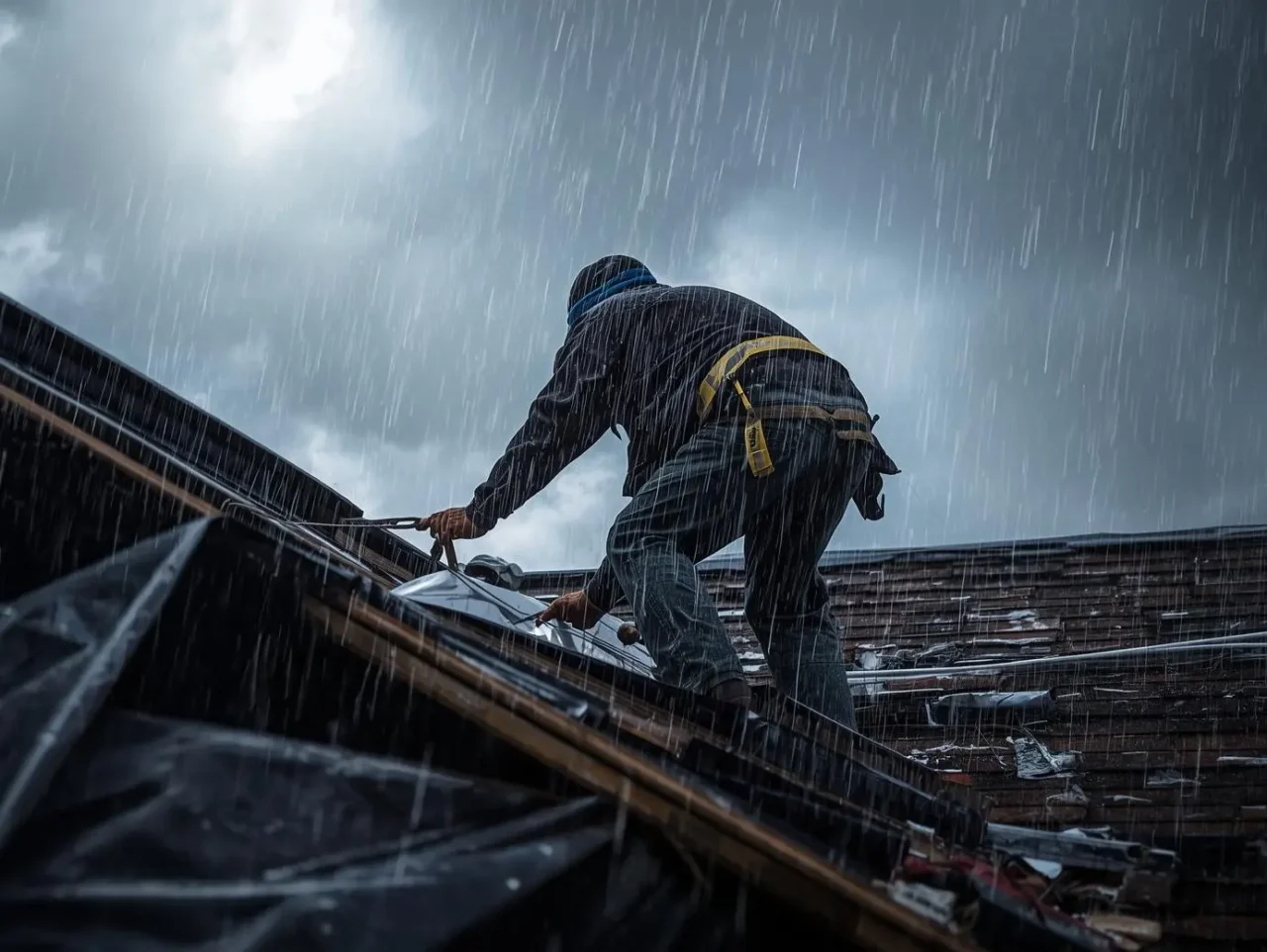
- Storm damage during ongoing weather: Damage occurring during hurricanes, severe storms, or high winds requiring immediate protection before conditions worsen
- Fire damage: Partial roof burn-through requiring immediate tarping and securing
- Ice dam flooding: Large ice accumulations forcing water under shingles and into attic spaces during winter storms
Roof issues that can wait for scheduled repairs:
- Small leaks causing minor attic moisture without active interior dripping
- Missing 3-5 shingles with intact underlayment beneath
- Damaged flashing discovered during dry weather
- Worn roof areas noticed during routine inspection
- Moss, algae, or cosmetic deterioration
- Minor hail damage not causing immediate leaks
According to This Old House emergency roof repair data, approximately 30% of homeowner-reported “emergencies” actually represent non-urgent repairs that contractors can address within 3-7 days at standard rates.
The key distinction: emergency roof repair applies when delaying service will cause significant additional property damage, safety hazards, or habitability issues.
Average emergency roof repair costs in 2025
Emergency roof repair pricing reflects both the actual repair work and premium charges for urgent, often after-hours service.
National cost ranges:
Based on 2025 industry data, homeowners pay:
- Minimum emergency repair: $300-$500 for simple temporary tarping or minor patching
- Typical emergency repair: $379-$1,755 for most leak repairs, shingle replacement, and flashing fixes
- Average emergency cost: $1,147 nationally for standard emergency repairs
- Major emergency repair: $1,500-$5,000+ for structural damage, extensive area coverage, or complex multi-point failures
Emergency premium pricing:
Emergency roof repair costs 50-100% more than identical repairs scheduled during business hours due to:
- After-hours labor rates: Evening, weekend, and holiday service commands $75-$150 per hour versus $45-$75 standard rates
- Emergency service fees: Additional $100-$300 flat charge for immediate response regardless of repair size
- Rush material procurement: Contractors charge 15-25% premiums for same-day material delivery or after-hours supplier fees
- Mobilization costs: Multiple trips (emergency assessment, temporary fix, permanent repair) increase overall project expense
Cost comparison: emergency vs. scheduled repairs:
| Repair Type | Scheduled Cost | Emergency Cost | Premium |
|---|---|---|---|
| Temporary tarp installation | $150-$300 | $200-$500 | 33-67% |
| Minor shingle replacement (5-10 shingles) | $200-$500 | $300-$800 | 50-60% |
| Flashing and leak repair | $250-$600 | $400-$1,000 | 60-67% |
| Structural framing repairs | $800-$2,000 | $1,200-$3,000+ | 50-100% |
These emergency roof repair premiums compensate contractors for disrupting scheduled work, responding outside normal hours, and prioritizing your crisis above other commitments.
Breakdown by repair type:
Specific emergency roof repair costs vary by the nature of the damage:
- Leak patching: $360-$1,550 depending on location and extent
- Missing shingle replacement: $700-$1,500 for localized areas (10-20 shingles)
- Damaged flashing repair: $400-$1,000 for chimney, valley, or skylight flashing
- Ice dam removal and repair: $500-$700 for dam removal plus $300-$800 for resulting leak fixes
- Hole patching (small to medium): $200-$1,000 depending on size and materials
- Vent damage repair: $75-$250 per vent boot or exhaust vent
- Ridge cap emergency repair: $200-$750 for damaged ridge sections
- Hail damage emergency response: $700-$4,000 depending on affected area size
According to Angi’s 2025 emergency repair data, most homeowners spend $950-$1,400 for typical emergency roof repair addressing storm damage with temporary protection followed by permanent fixes.
For comprehensive cost information, visit the National Roofing Contractors Association cost guides and local contractor pricing databases.
Review our complete roof repair cost breakdown for scheduled repair pricing comparisons.
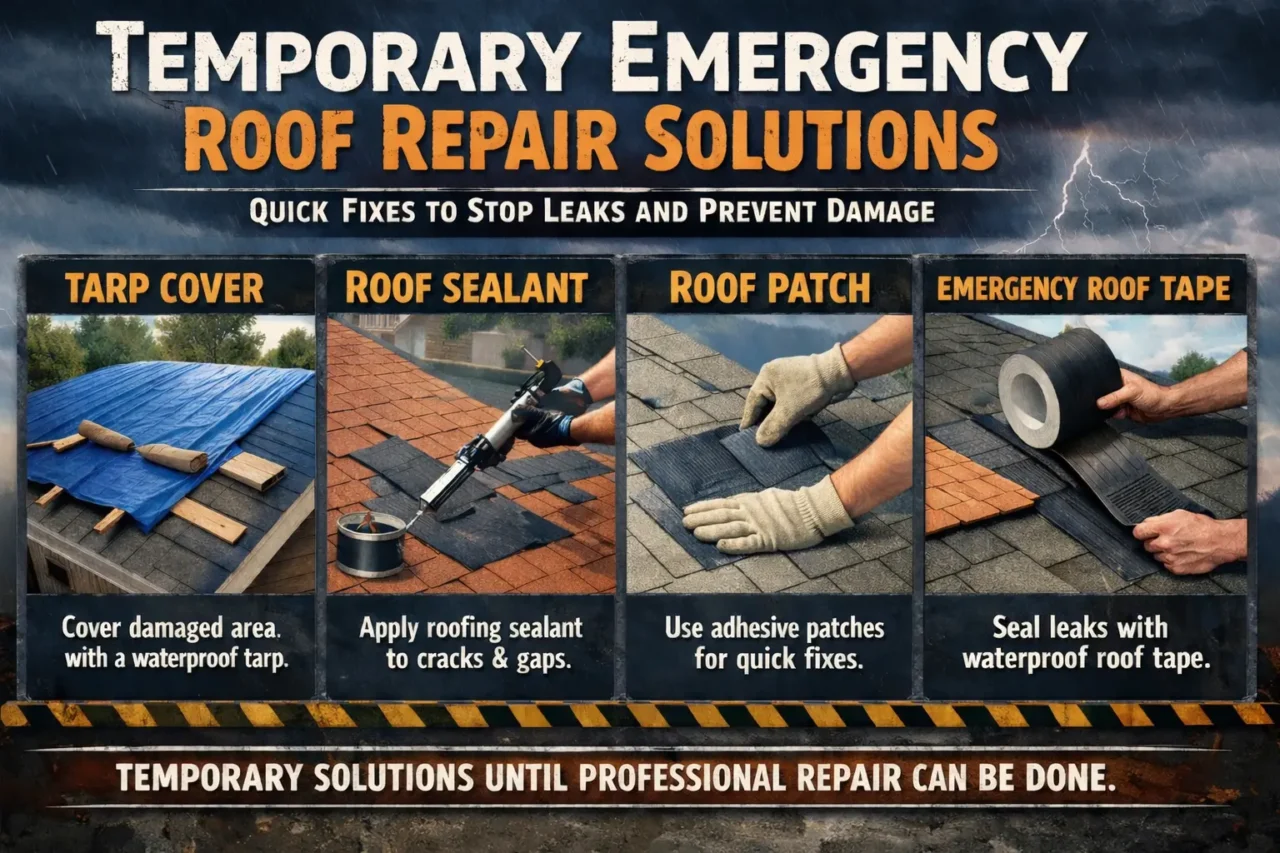
When emergency roof repair professionals cannot arrive immediately, or when damage occurs outside business hours, temporary measures prevent additional damage until permanent repairs are completed.
Emergency tarping: primary temporary solution
Roof tarping provides the most effective temporary protection for emergency situations:
Proper tarping technique:
- Safety first: Only attempt roof access in safe conditions; avoid working during storms, on steep pitches, or when injured
- Tarp sizing: Use tarps extending 3-4 feet beyond damaged area on all sides, reaching from ridge to eaves when possible
- Securing method: Sandwich tarp between 2×4 boards and secure boards with screws (not nails that can back out) into solid roof decking
- Avoid penetrations: Place boards parallel to roof slope, securing at ends and every 18-24 inches to prevent wind uplift without excessive holes
- Weight distribution: Use sandbags or weighted boards on flat portions; never rely solely on weights on pitched roofs
Professional tarping costs: $200-$500 for contractor-installed temporary protection that may last several weeks until permanent emergency roof repair occurs.
Interior water damage mitigation:
When leaks are actively occurring before emergency roof repair:
- Contain water: Place buckets, tarps, or plastic sheeting under leak points catching dripping water
- Puncture ceiling bulges: If water is pooling behind drywall creating bulges, carefully puncture the center with a screwdriver allowing controlled drainage into a bucket (prevents spontaneous collapse)
- Move furniture and valuables: Relocate items from leak zones, cover remaining furnishings with plastic sheeting
- Document damage: Photograph all damage thoroughly for insurance claims before cleanup
- Extract standing water: Use wet/dry vacuums removing pooled water from floors and carpets
- Improve ventilation: Open windows, run fans, and use dehumidifiers preventing mold growth
Quick leak patching for accessible damage:
Minor emergency roof repair for small, accessible leaks can use temporary sealants:
- Roof cement/tar: Apply thick coats around damaged areas, flashing gaps, or exposed nail heads
- Roofing tape: Self-adhesive waterproof tape temporarily seals small tears or gaps in underlayment
- Spray sealants: Aerosol roof sealers provide quick, temporary patches for pinhole leaks
- Caulk tubes: Silicone or polyurethane caulk fills small gaps in flashing or around penetrations
Important: These temporary measures are NOT permanent solutions—professional emergency roof repair must follow within days to weeks.
When NOT to attempt temporary repairs:
Avoid DIY emergency measures when:
- Roof pitch exceeds 6:12 (too steep for safe access without equipment)
- Weather conditions are dangerous (active storms, high winds, wet surfaces)
- Damage is extensive or structural
- Multiple leak points exist across large areas
- You lack experience working at heights
- Darkness or poor visibility exists
In these situations, focus on interior damage mitigation and call professional emergency roof repair services immediately.
Finding reliable 24/7 emergency roof repair services
Locating trustworthy emergency roof repair contractors during crisis situations requires quick decision-making, but avoiding scams and price gouging remains essential.
Pre-emergency preparation (before you need it):
Smart homeowners identify emergency roof repair providers before damage occurs:
- Research local contractors: Identify 2-3 reputable local roofing companies offering 24/7 emergency services
- Verify credentials: Confirm licenses, insurance (general liability $1M+, workers compensation), and Better Business Bureau ratings
- Save contact information: Store emergency numbers in your phone and with home documents
- Review emergency policies: Ask about after-hours availability, response times, and emergency service fees
- Check insurance relationships: Some insurers maintain preferred contractor lists for emergency situations
During an emergency: vetting contractors quickly:
When you need immediate emergency roof repair:
Green flags (good signs):
- Established local company with physical address and office
- Verifiable license and insurance certificates
- Clear pricing structure explaining emergency fees upfront
- Willingness to work with your insurance company
- References from recent emergency repairs
- Written estimates even for emergency work
- Professional appearance and branded vehicles/uniforms
Red flags (avoid these contractors):
- “Storm chasers” soliciting door-to-door after weather events
- Demand for full payment upfront before work begins
- Pressure tactics (“I can only offer this price today”)
- No physical business address, only cell phone contact
- Cannot provide license or insurance verification
- Extremely low bids (50%+ below others) suggesting inferior work
- Offer to “handle your insurance claim” and sign claim proceeds over to them
Questions to ask emergency contractors:
Before authorizing emergency roof repair:
- “What is your emergency service fee, and is it separate from repair costs?”
- “Can you provide a temporary fix today and detailed estimate for permanent repairs?”
- “Do you offer any warranty on emergency repairs?”
- “Will you document the damage with photos for my insurance claim?”
- “What is your typical response time for emergencies?”
- “Are you licensed and insured; may I see current certificates?”
- “Can you provide references from recent emergency repair customers?”
Insurance claim coordination:
Most emergency roof repair costs are insurance-covered when caused by sudden, accidental events:
- Contact your insurer immediately: Report damage within 24-48 hours of discovery
- Document everything: Photograph damage from multiple angles before any temporary repairs
- Save all receipts: Keep invoices for emergency repairs, tarping, water extraction, and temporary lodging if needed
- Understand coverage: Storm damage is typically covered; wear-and-tear is not
- Deductible applies: Expect to pay your deductible ($500-$2,500) before insurance coverage begins
- Prevent further damage: Insurance requires reasonable steps to prevent additional damage, making temporary emergency roof repair necessary
Review our guide to working with roofing contractors for detailed vetting strategies.
24/7 emergency roof repair service truck arriving at damage
Common emergency roof repair scenarios and solutions
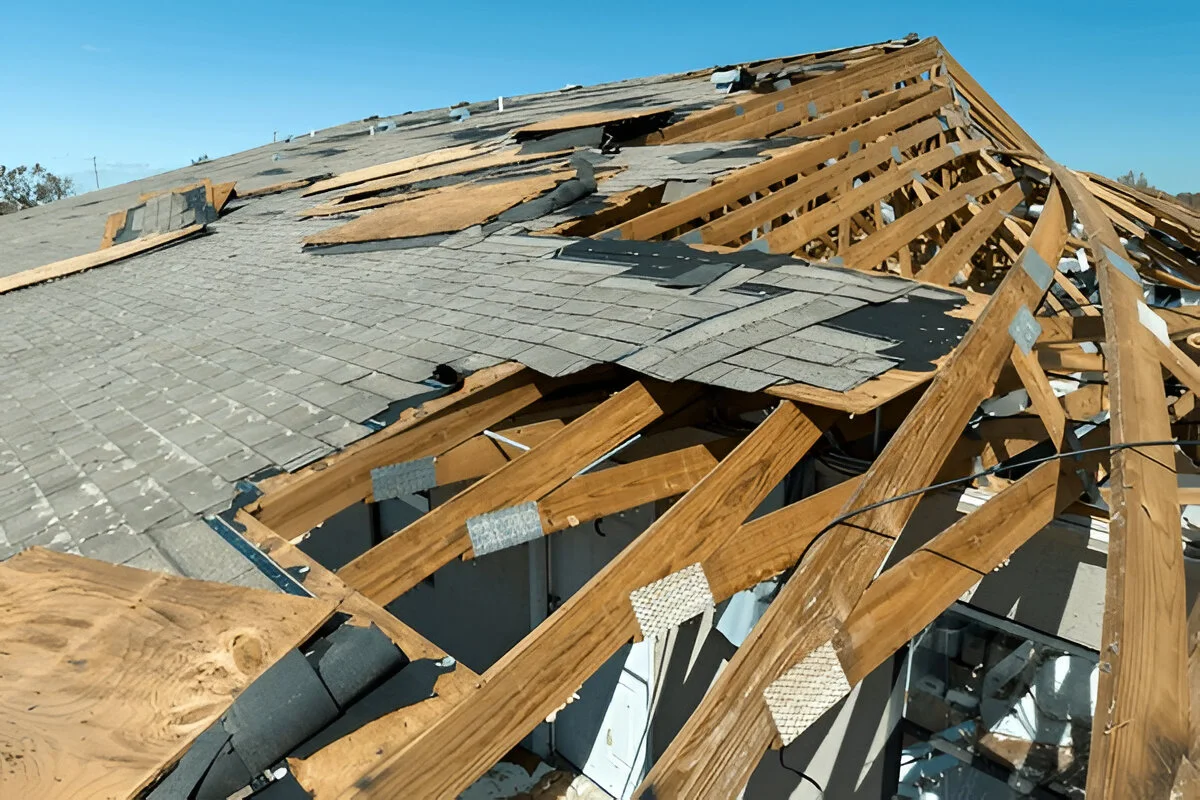
Different types of damage require specific emergency roof repair approaches and cost different amounts.
Storm damage with missing shingles:
High winds frequently blow off shingles, creating immediate leak risks:
Emergency response:
- Tarp exposed areas if shingle loss exceeds 10% of a roof section
- Replace missing shingles with matching materials ($300-$800 for 10-20 shingles)
- Inspect surrounding shingles for lifting or seal failure
- Document extent for insurance claims with photos
Typical emergency roof repair cost: $400-$1,200 including service fees.
Fallen tree or debris impact:
Large impacts create holes or structural damage requiring immediate attention:
Emergency response:
- Call professionals immediately—structural damage is dangerous
- Tarp from interior if roof access is unsafe
- Check for electrical hazards before entering damaged areas
- Secure perimeter preventing additional collapse
Typical emergency roof repair cost: $1,200-$5,000+ depending on structural damage extent and tree removal needs.
Ice dam formation and leaks:
Ice accumulation forces water under shingles in cold climates:
Emergency response:
- Remove snow from roof edges using roof rake (work from ground)
- Create drainage channels through ice dams using warm water (not hammers/chisels that damage shingles)
- Place fans in attic spaces melting dams from interior
- Improve attic insulation and ventilation preventing future dams
Typical emergency roof repair cost: $500-$700 for ice dam removal plus $300-$800 for resulting leak repairs.
Flashing failures causing active leaks:
Chimney, skylight, and valley flashing commonly fail during storms:
Emergency response:
- Apply temporary sealant around flashing gaps
- Install tarp covering flashing area if leaks persist
- Schedule permanent flashing replacement within days
Typical emergency roof repair cost: $400-$1,000 for flashing repair and sealing.
Hail damage with immediate leaks:
Severe hail creates multiple penetration points across large roof areas:
Emergency response:
- Document damage with photos before any repairs
- Tarp most severely damaged sections
- File insurance claim immediately (hail damage is covered)
- Expect adjuster inspection before permanent repairs
Typical emergency roof repair cost: $700-$4,000 depending on affected area; often leads to full insurance-funded replacement.
Flat roof membrane failures:
Punctures or seam separations in flat roof membranes cause immediate pooling leaks:
Emergency response:
- Patch small holes with compatible membrane material and adhesive
- Remove standing water with wet/dry vacuum or pump
- Apply emergency coating over damaged area
- Schedule professional membrane repair or replacement
Typical emergency roof repair cost: $350-$2,200 for flat roof emergency repairs.
Emergency roof repair vs. full replacement decision
Sometimes damage is extensive enough that emergency roof repair isn’t the most cost-effective solution.
Repair if:
- Roof is under 15 years old with remaining service life
- Damage is localized to specific area (less than 25% of total roof)
- Underlying structure and decking are sound
- Remaining sections show normal wear for age
- Emergency repair cost is under 30% of replacement cost
- No history of repeated leak problems in other areas
Replace if:
- Roof is over 20 years old approaching end of expected lifespan
- Damage affects 30%+ of roof area
- Multiple leak points exist across different sections
- Recurring emergency repairs have occurred over past 2-3 years
- Water stains, sagging, or structural issues are visible
- Insurance is covering replacement due to covered peril damage
- Emergency repair cost exceeds 40-50% of replacement cost
Cost comparison:
- Emergency roof repair: $300-$5,000 for most scenarios
- Full roof replacement: $5,900-$20,000+ for typical residential roofs
When emergency damage is severe and the roof is old, insurance adjusters often approve full replacement rather than temporary fixes, making replacement the better economic choice.
Preventing future roofing emergencies
While some emergency roof repair situations are unavoidable, regular maintenance dramatically reduces emergency frequency.
Annual inspection and maintenance:
Professional roof inspections cost $75-$300 but identify minor issues before they become emergencies:
- Schedule annual inspections in spring or fall
- Inspect after major storms for damage
- Address minor repairs promptly ($150-$700 range)
- Clean gutters preventing water backup
- Remove debris and overhanging branches
Off-season repair scheduling:
Planning repairs during contractor slow periods reduces costs 10-20% and prevents emergency escalation:
- Address known issues in fall before winter weather
- Replace aging roofs proactively before failure
- Schedule repairs during dry weather when quality work is possible
Warning signs requiring attention:
Call for scheduled (non-emergency) roof repair when you notice:
- Missing or damaged shingles
- Curled, cracked, or brittle shingles
- Granule loss creating bare spots
- Sagging roof deck or ridge line
- Interior water stains or attic moisture
- Damaged or rusted flashing
- Daylight visible through roof boards in attic
- Excessive moss or algae growth
Addressing these issues proactively costs $250-$1,500 for typical repairs—far less than $800-$3,000 emergency roof repair when problems escalate.
Explore our preventive roof maintenance guide for year-round care strategies.
Frequently asked questions about emergency roof repair
How much does emergency roof repair cost?
Emergency roof repair costs between $379 and $1,755 nationally in 2025, with most homeowners paying $300-$1,500 depending on damage severity and repair complexity. Emergency repairs cost 50-100% more than identical scheduled repairs due to after-hours labor rates, urgency premiums, and additional service fees of $100-$300 for immediate response.
What should I do immediately when I discover a roof leak?
First, protect your interior by placing buckets under active drips, moving furniture away from leak zones, and covering valuables with plastic sheeting. Second, attempt to locate the leak source from inside the attic if safely accessible. Third, contact your insurance company and emergency roof repair contractor immediately. If safe to do so, cover exterior damage with a tarp to prevent additional water intrusion until professionals arrive.
Does homeowners insurance cover emergency roof repair?
Yes, homeowners insurance typically covers emergency roof repair when damage results from sudden, accidental events like storms, hail, falling trees, or fire. However, policies exclude damage from gradual wear and tear, lack of maintenance, or aging. Most claims require you to pay your deductible ($500-$2,500) first, then insurance covers remaining costs up to policy limits.
Can I repair my roof myself in an emergency?
You can safely perform temporary measures like interior water collection, tarping from the ground using extension poles, or applying emergency sealants to accessible areas on low-pitch roofs. However, avoid climbing on roofs during storms, working on steep pitches without proper equipment, or attempting structural repairs. Professional emergency roof repair is essential for safety and ensuring permanent, warrantied fixes.
How quickly can emergency roofers respond?
Reputable emergency roof repair services typically respond within 1-4 hours for true emergencies during business hours, or 2-6 hours for after-hours calls. Response times increase during major storm events when contractors are overwhelmed with calls. Some companies offer priority service agreements to existing customers guaranteeing faster emergency response.
Is tarping a roof enough to prevent water damage?
Properly installed tarps effectively prevent water intrusion for 2-4 weeks in moderate weather, giving time to schedule permanent emergency roof repair. However, tarps are temporary solutions only—high winds can dislodge poorly secured tarps, and extended tarp coverage (months) degrades materials and risks additional damage. Schedule permanent repairs within 1-2 weeks of tarping when possible.
Should I get multiple estimates for emergency roof repair?
In true emergencies with active leaks, prioritize immediate damage control over comparison shopping—one reputable contractor providing quick temporary protection is better than waiting for multiple bids while water damages your home. However, for permanent repairs following temporary fixes, obtaining 2-3 estimates ensures fair pricing and identifies the best contractor for final work.
Taking swift action during roofing emergencies
Emergency roof repair requires quick decision-making to minimize property damage while avoiding contractor scams and unnecessary expenses. True roofing emergencies—characterized by active water infiltration, structural compromise, or extensive storm damage—demand immediate professional response to prevent escalating interior damage that can cost thousands beyond the roof repair itself.
Understanding realistic emergency roof repair costs ($379-$1,755 typical range with 50-100% premiums over scheduled repairs), implementing effective temporary protection measures like proper tarping, and identifying reputable 24/7 contractors before emergencies occur positions homeowners to respond confidently when roofing disasters strike.