

Preloader Close
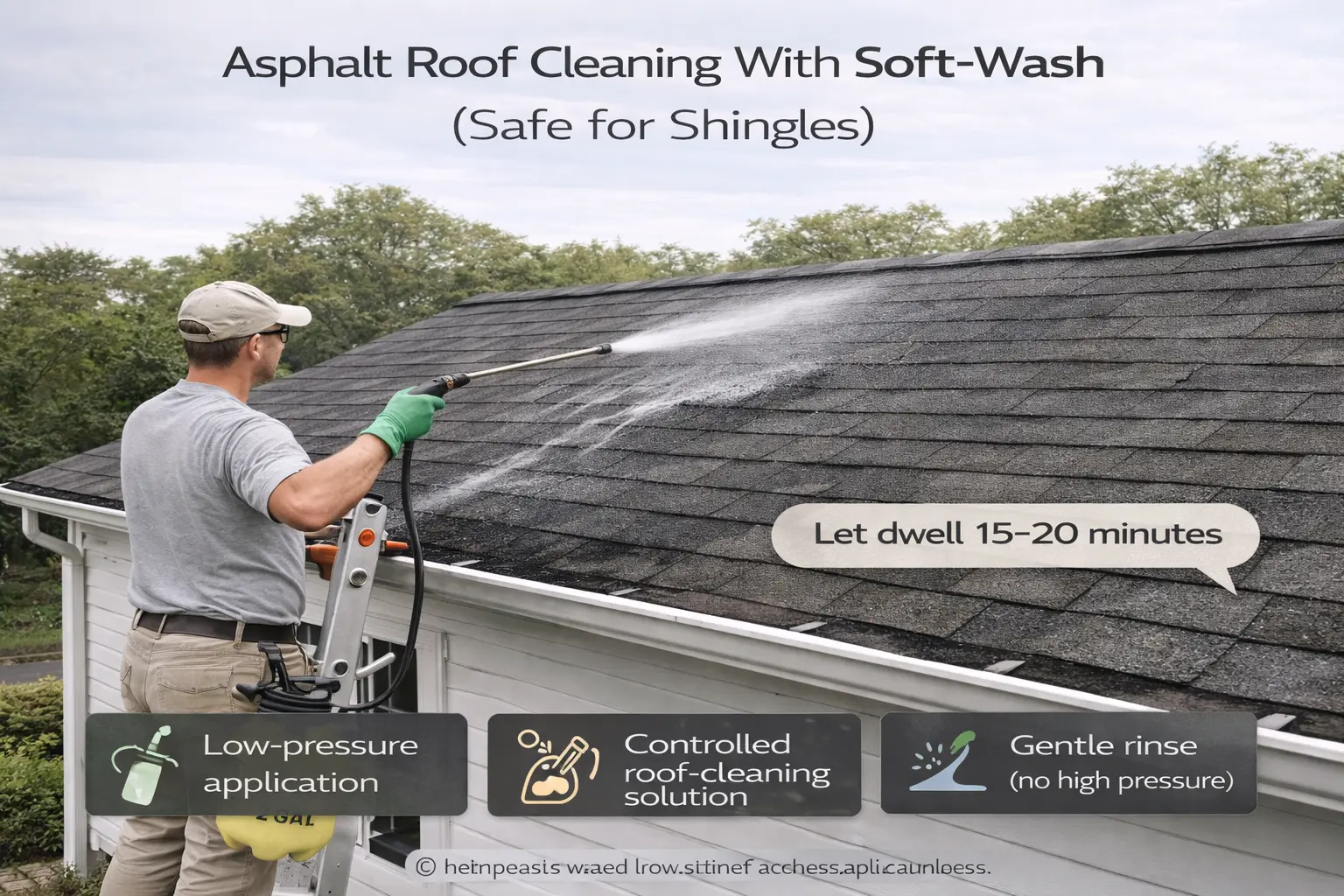
Asphalt roof cleaning is the safest way to restore curb appeal and slow premature shingle aging when you remove algae streaks, moss, and debris using a low-pressure “soft wash” approach instead of high-pressure blasting. When homeowners ask for how to clean roof without damaging shingles, the key is to use gentle tools, the right cleaning solution, and a top-to-bottom rinse that avoids lifting shingle tabs or stripping protective granules.
This full guide walks through asphalt roof cleaning step-by-step, explains what causes stains on asphalt shingles, outlines the safest tools and solutions (including vinegar-and-water and bleach-based options used sparingly), clarifies exactly what not to do (especially pressure washing), and shares prevention tactics to reduce future algae/moss growth. You’ll also get a practical cost/timing overview, maintenance schedule, and internal-linking-ready notes for roofing materials and shingle types content.
Table of Contents
Safety first (don’t skip this)
Asphalt roof cleaning is inherently risky because roofs become slippery when wet and many cleaning solutions are irritating to skin and eyes, so safety protocols are part of doing the job “without damaging shingles” and without hurting yourself. Lowe’s recommends cleaning roof shingles only in calm, mild weather because heat can dry cleaning solution too fast and wind makes roof work unsafe.
Choose the right day
For asphalt roof cleaning, pick a mild, calm day so your solution has time to work and you’re not dealing with wind gusts or rapid evaporation. Avoid extreme temperatures, storms, and conditions that would make the roof slick or unpredictable.
Secure the area below
Lowe’s advises using drop cloths to cover anything you don’t want cleaner to drip onto, including patios, furniture, and especially plants and gardens around the house. If you’re practicing how to clean roof without damaging shingles, protecting landscaping is part of the plan because runoff and overspray are common.
Wear proper protective gear
Lowe’s recommends a safety harness, hard hat, non-slip shoes, plus a mask, gloves, and protective eyewear when using harsh or strong cleaners. This is particularly important during asphalt roof cleaning because even “household” solutions can irritate skin and eyes.
Consider working from a ladder
Lowe’s notes the roof surface can get slippery when wet and suggests working from a step ladder instead of walking over the roof when possible. This reduces foot traffic on shingles, which also supports how to clean roof without damaging shingles by minimizing scuffing and granule disturbance.
What stains asphalt shingles (and why it matters)
Good asphalt roof cleaning starts by identifying what you’re seeing on the roof because the wrong approach can damage shingles or simply waste time.
Algae (black streaks)
One of the most common reasons people search for asphalt roof cleaning is black streaking that runs down roof slopes, often mistaken for dirt or soot. Many cleaning approaches aim to treat algae and rinse it off rather than physically scrubbing it away.
Moss and green growth
Moss tends to grow in shaded, damp roof zones and can hold moisture against shingles, which is why homeowners look for how to clean roof without damaging shingles when moss appears. Moss removal usually requires dwell time with a cleaner and gentle rinse rather than brute force.
Debris and grime
Leaves, twigs, and roof “dust” collect especially around valleys, behind chimneys, and near tree cover, and removing them is a core step in asphalt roof cleaning. Clearing debris also improves drainage and reduces water retention.
Rust, chimney stains, and unknown marks
Not every stain is algae—some marks come from metal runoff (rust), chimney flashing issues, or localized leaks, which can change how you approach asphalt roof cleaning. If you’re unsure, test a small area first and avoid harsh methods.
Asphalt roof cleaning: tools and materials checklist
Using the right tools is central to how to clean roof without damaging shingles because the wrong equipment (especially pressure washers) can compromise shingle integrity.
Cleaning and application tools
For a safe asphalt roof cleaning setup, gather:
- Spray bottle or pump sprayer for applying the solution from the top down.
- Garden hose for gentle rinsing until solution and grime are removed.
- Soft bristle brush for light agitation only where necessary.
- A broom to gently sweep loose debris (not aggressive scraping).
Safety and protection materials
For asphalt roof cleaning and overspray control:
- Drop cloths to protect patios, decks, and nearby surfaces.
- Plant covers (or plastic sheeting) and a plan to rinse plants afterward.
- Gloves, eye protection, mask, and non-slip footwear.
- Safety harness and ladder safety equipment for roof-edge work.
Optional but helpful
If you’re serious about how to clean roof without damaging shingles, consider:
- Gutter guards or temporary gutter covers (to manage debris during cleaning).
- A hose-end sprayer that applies cleaner at low pressure (still avoid strong blasting).
How to clean roof without damaging shingles (step-by-step method)
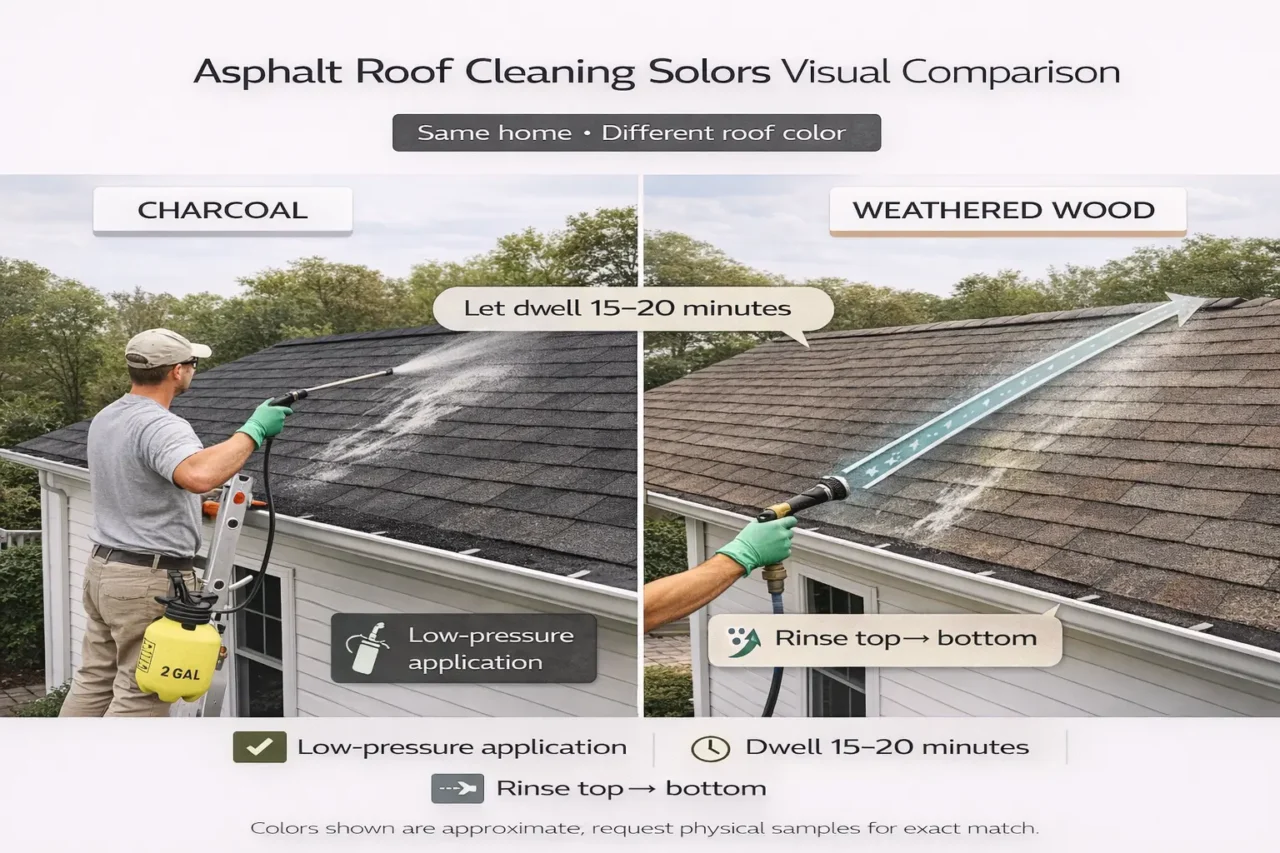
This section is the core “how-to” for asphalt roof cleaning, designed to minimize shingle wear.
Step 1: Inspect before you clean
Before asphalt roof cleaning, inspect shingles for cracks, missing tabs, lifted edges, or exposed nail heads, because water and solution can enter vulnerable areas. If shingles are already failing, cleaning won’t fix the underlying issue and could worsen leaks.
Step 2: Check gutters and downspouts
Lowe’s recommends checking gutters and downspouts before applying solution so rinse water and runoff can flow through easily. This is part of how to clean roof without damaging shingles because backups can cause water to pool and push under edges.
Step 3: Gently remove loose debris
Start asphalt roof cleaning by gently sweeping away leaves and dry debris so your cleaner hits the roof surface instead of sitting on organic material. This also reduces the chance of streaky rinsing and clogged gutters.
Step 4: Choose your cleaning solution (safe options)
Lowe’s suggests mixing vinegar with equal parts water to deal with moss and algae, and notes bleach can also treat buildup but should be used sparingly because it can damage shingles. For asphalt roof cleaning, this gives you two common pathways: a milder vinegar mix for lighter growth or carefully-used bleach-based products for heavier staining.
Option A: Vinegar + water (milder approach)
Vinegar-and-water is often used for asphalt roof cleaning when you want a gentler cleaner and you’re dealing with lighter moss or algae. It’s also a practical entry point for homeowners learning how to clean roof without damaging shingles because it reduces the risk of chemical overkill.
Option B: Bleach-based cleaning (use sparingly)
Lowe’s acknowledges bleach is effective for buildup but advises using it sparingly because it can damage shingles. If you choose bleach for asphalt roof cleaning, take extra care to protect plants and avoid over-concentration and over-dwell.
Option C: Commercial roof cleaners
Lowe’s says commercial cleaners that specifically treat algae and moss are a good option and you should follow manufacturer instructions for proper application. This is often the best route for how to clean roof without damaging shingles because the product is formulated for roofs and the dwell/rinse guidance is clearer.
Step 5: Apply solution top-to-bottom (even coverage)
Add your solution to a spray bottle or sprayer and apply it starting at the top and working downwards, concentrating on areas with heavier grime or algae and moss buildup. For asphalt roof cleaning, this top-down approach aligns with how water naturally runs and reduces the chance of forcing liquid under shingles.
Step 6: Let it dwell (don’t rush it)
Lowe’s advises leaving the cleaning solution on for at least 15–20 minutes for an effective clean, though you should always follow the instructions for the specific cleaning agent you use. Dwell time is crucial for how to clean roof without damaging shingles because it reduces the need for scrubbing.
Step 7: Light agitation only if needed
If some areas still look stubborn, Lowe’s recommends using a soft bristle brush to gently scrub those areas. Keep agitation minimal during asphalt roof cleaning to avoid granule loss.
Step 8: Rinse thoroughly and gently
Fill your spray bottle with water or use a garden hose and keep rinsing the roof until you are sure no cleaning solution or grime is left behind. For asphalt roof cleaning, gentle rinsing is a major part of how to clean roof without damaging shingles because it avoids shingle lift and granule stripping.
Step 9: Reapply instead of increasing force
Lowe’s notes that if the initial clean hasn’t removed grime, dirt, and moss, you should reapply solution on tough spots. Reapplication is the safe alternative to “trying harder,” and it supports how to clean roof without damaging shingles by keeping pressure low.
Step 10: Rinse plants and cleanup
Lowe’s recommends rinsing plants that may have accidentally come in contact with the cleaning solution after you’re done. Clean up drop cloths, flush gutters, and verify runoff paths are clear to finish asphalt roof cleaning properly.
The pressure washer question (and why the answer is “avoid it”)
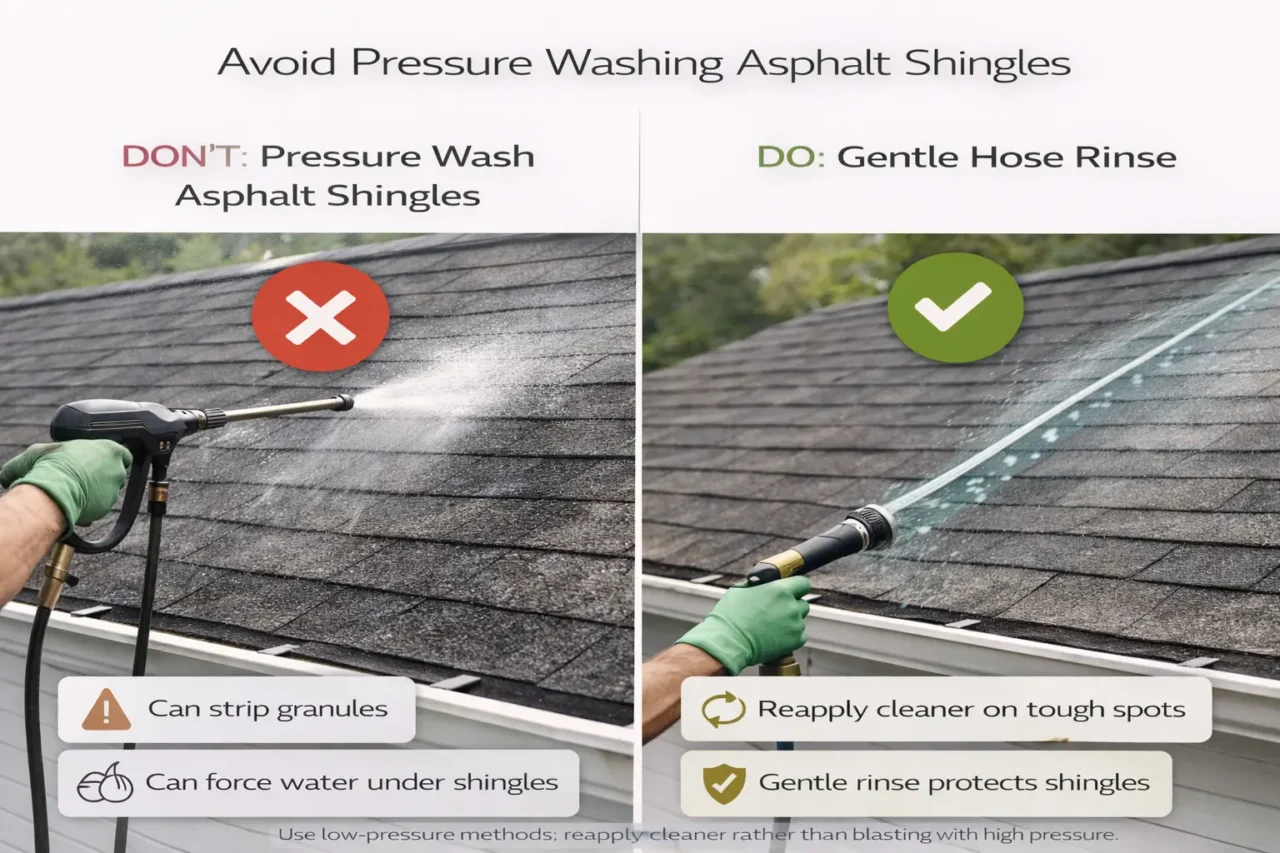
Many homeowners assume a pressure washer is the best way to do asphalt roof cleaning, but that’s a common mistake. Lowe’s explicitly says to avoid using a pressure washer on roof shingles because it will damage your shingles.
What pressure washing can do to asphalt shingles
During asphalt roof cleaning, a pressure washer can:
- Remove protective granules (reducing shingle life).
- Lift shingle edges and force water where it shouldn’t go.
- Turn a cosmetic problem into a performance problem.
If a contractor suggests pressure washing
If a contractor proposes high-pressure cleaning as the main method, ask about their shingle-safe process and what pressure range they use, because safe how to clean roof without damaging shingles guidance emphasizes low pressure and chemistry-driven cleaning. You can also ask for written confirmation that their method won’t void any warranty (if applicable).
Asphalt roof cleaning solutions: what to use and what to avoid
Choosing chemicals is a major part of asphalt roof cleaning because certain products can harm shingles or surrounding property.
Safer choices (common homeowner options)
- Vinegar mixed with equal parts water for moss and algae.
- Commercial algae/moss cleaners that specify shingle compatibility, used per instructions.
- Bleach-based options used sparingly (with strong precautions and careful dilution).
Avoid abrasive cleaners and aggressive methods
Lowe’s says never use abrasive cleaners or methods and recommends testing a cleaner on a hidden area first if you’re unsure. This guidance is central to how to clean roof without damaging shingles because abrasives can accelerate wear.
Avoid “mystery mixes”
If a DIY forum suggests strong acids or caustic degreasers for asphalt roof cleaning, skip them unless a manufacturer explicitly states compatibility, because unknown chemical reactions can weaken shingles or strip granules. When in doubt, stick to known approaches and follow label directions.
Cleaning moss on asphalt shingles (without tearing them up)
Moss often requires a slightly different mindset for asphalt roof cleaning because it can form thick mats.
Use products meant for mold/mildew stains
Lowe’s recommends purchasing a mold and mildew stain remover meant for outdoor use and ensuring it’s compatible with your shingles. This is one of the safest paths for how to clean roof without damaging shingles when moss is heavy.
Let dwell time do the work
For asphalt roof cleaning of moss, dwell time is crucial, and Lowe’s suggests leaving solution on for at least 15–20 minutes (or per the label). This reduces the need to scrape, which is where shingle damage often happens.
Gentle rinse and repeat
Rinse gently and repeat applications if needed instead of trying to pry moss off in one go. Repeating is slower but aligns with how to clean roof without damaging shingles guidance.
Asphalt roof cleaning for algae streaks (black lines)
Algae streaks are often cosmetic, but they’re the number-one reason people consider asphalt roof cleaning.
Treat, dwell, rinse
The safest approach is still chemical treatment plus gentle rinse rather than mechanical scrubbing. Apply the solution top-to-bottom, allow it to work, then rinse until residue is gone.
Don’t chase perfection with force
If stains linger after the first pass, reapply cleaner instead of escalating to high pressure. That’s the practical version of how to clean roof without damaging shingles.
Special situations (steep roofs, old shingles, and repairs)
Not every roof is a good DIY candidate for asphalt roof cleaning.
Steep pitch roofs
Steep roofs increase fall risk, and Lowe’s emphasizes that roof cleaning “should only be undertaken by those experienced with the essential safety protocols for roof work.” If you have a steep roof, hiring a pro is often the safest way to follow how to clean roof without damaging shingles.
Older or brittle shingles
Older asphalt shingles can become brittle and more prone to granule loss, so asphalt roof cleaning should be extra gentle. If your roof is near the end of its life, consider whether cleaning is worth it versus replacement.
Existing leaks or flashing issues
If you suspect leaks, address repair first; cleaning won’t solve water entry. During asphalt roof cleaning, water exposure can make pre-existing problems worse.
DIY vs professional asphalt roof cleaning
Choosing between DIY and hiring out affects cost, risk, and results for asphalt roof cleaning.
DIY makes sense when
DIY asphalt roof cleaning is most reasonable when:
- The roof is low and easy to reach from a ladder.
- Staining is light-to-moderate moss/algae.
- You can protect landscaping and control runoff.
Hire a pro when
Hiring a professional is often best when:
- The roof is steep/high or you can’t work safely from a ladder.
- Growth is heavy and widespread, requiring multiple treatments.
- You want insured work and standardized processes aligned with shingle-safe cleaning.
Cost of asphalt roof cleaning (what homeowners should expect)
Costs vary by roof size, pitch, and the severity of staining, but asphalt roof cleaning is usually far cheaper than premature roof replacement if done safely. DIY costs are mainly sprayers, cleaners, protective gear, and plant protection materials, while professional costs include labor, insurance, and specialized equipment used at safe pressures.
A practical way to budget is by roof size: a larger roof surface requires more solution, more dwell time, and more rinsing. If you’re comparing quotes, ask whether their approach avoids pressure washing and relies on a soft-wash method consistent with how to clean roof without damaging shingles guidance.
Prevention: keep the roof cleaner longer
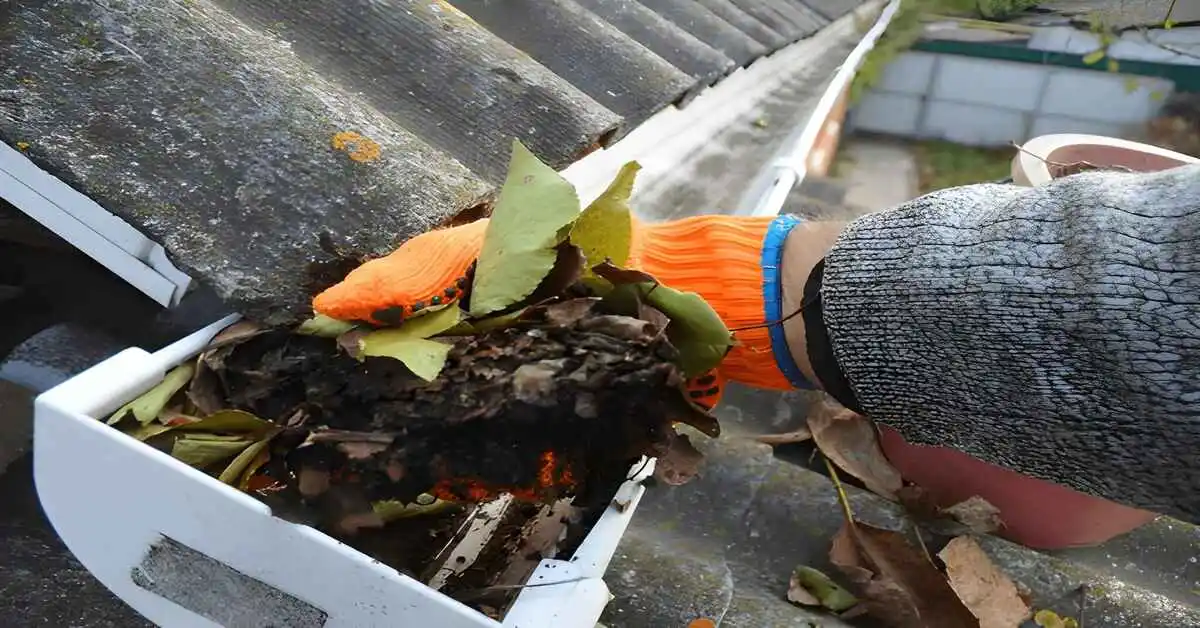
Preventive steps reduce how often you need asphalt roof cleaning and help preserve shingle appearance.
Routine inspections
Lowe’s recommends routine inspections at least twice a year to make repairs and to take to cleaning at least once a year. Inspections help you catch algae and moss early, which reduces the intensity needed for asphalt roof cleaning.
Trim overhanging trees
Lowe’s suggests trimming trees that are too close to your roof to prevent moisture from affecting shingles. Less shade and less debris can slow algae and moss growth, reducing the need for frequent asphalt roof cleaning.
Clean gutters frequently
Lowe’s says cleaning gutters frequently prevents stagnant water and debris from accumulating over your roof. Better drainage supports roof longevity and reduces the recurrence of conditions that lead to asphalt roof cleaning.
Consider algae/moss treatment
Lowe’s suggests applying moss or algae treatment to deal with these build-ups. Preventive treatments can help extend the time between major asphalt roof cleaning sessions.
Seasonal asphalt roof cleaning schedule (practical)
A simple schedule makes asphalt roof cleaning more manageable and less risky.
Spring
Spring is a common time for asphalt roof cleaning because winter moisture can trigger moss and algae growth; mild weather also helps solutions work properly. Inspect, clear debris, and spot-treat early growth.
Summer
If you do asphalt roof cleaning in summer, avoid extreme heat because Lowe’s notes high heat can dry your cleaning solution before it works effectively. Early morning or mild days are better.
Fall
Fall cleaning focuses on debris removal and gutter clearing to prevent winter moisture traps. A light asphalt roof cleaning pass can reduce organic buildup before rainy months.
Winter
Winter is typically not ideal for DIY asphalt roof cleaning due to slippery surfaces and cold conditions, and safety should dominate decisions. Use winter mainly for inspections from the ground and planning.
Shingle roof details that matter during cleaning
Understanding basic “shingle roof details” helps you execute how to clean roof without damaging shingles with fewer mistakes.
Shingle tabs and overlaps
Asphalt shingles are layered so water runs over overlaps; spraying upward or forcing water under tabs undermines that system. That’s why asphalt roof cleaning guidance emphasizes top-to-bottom application and rinse.
Granules (the protective surface)
Granules protect shingles from UV and weathering, so preserving them is a main objective in how to clean roof without damaging shingles. Abrasive methods and pressure washing threaten granules, which is why they’re discouraged.
Flashing and penetrations
Around chimneys, vents, and skylights, be extra cautious during asphalt roof cleaning because these are leak-prone details. Avoid aggressive brushing near flashing edges.
Mistakes that shorten shingle life (avoid these)
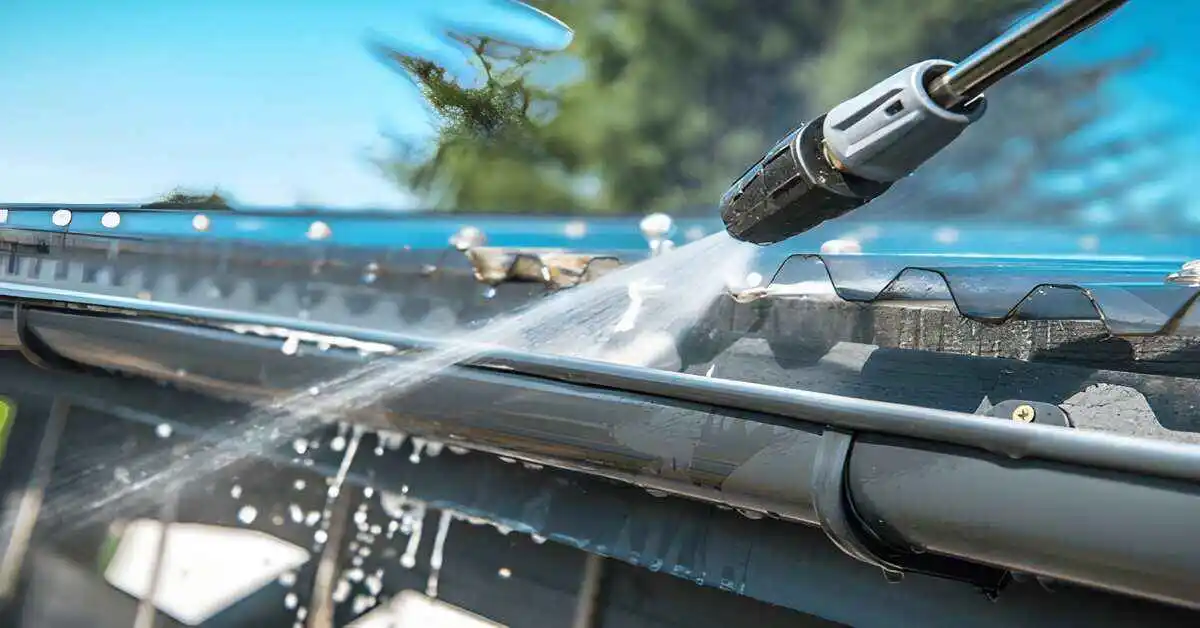
If you want asphalt roof cleaning to extend roof life instead of shortening it, avoid these errors.
Mistake 1: Pressure washing
Lowe’s says a pressure washer will damage your shingles, making this the most important “don’t” in how to clean roof without damaging shingles. Even moderate pressure can be too aggressive.
Mistake 2: Using abrasive cleaners
Lowe’s says never use abrasive cleaners or methods and to test in a hidden area first if uncertain. Abrasives can scuff shingles and strip granules, creating premature wear.
Mistake 3: Overusing bleach
Lowe’s notes bleach can be effective but should be used sparingly because it can damage shingles. Overuse can also increase risk to plants and finishes around your home.
Mistake 4: Cleaning in bad weather
Lowe’s warns that wind and extreme heat are unsafe and reduce effectiveness. Weather timing is part of doing asphalt roof cleaning correctly.
Read More
- Roofing materials (asphalt shingles vs metal vs tile; when cleaning is appropriate).
- Shingle types (3-tab vs architectural; why surface texture affects staining).
FAQ (asphalt roof cleaning)
Can I pressure wash an asphalt shingle roof?
No—Lowe’s says to avoid pressure washing because a pressure washer will damage your shingles.
What’s the safest “how to clean roof without damaging shingles” method?
Use a sprayer to apply a roof-safe cleaner from top to bottom, allow at least 15–20 minutes dwell time (or follow the product label), then rinse gently with a garden hose and reapply on stubborn areas rather than increasing force.
Is vinegar safe for asphalt roof cleaning?
Lowe’s recommends mixing vinegar with equal parts water to deal with moss and algae, making it a common gentler option for asphalt roof cleaning.
Should I scrub roof shingles?
Lowe’s says shingles are delicate and warns against abrasive methods; if needed, use a soft bristle brush and scrub gently only on heavy buildup areas.
How often should I clean my roof shingles?
Lowe’s suggests inspections at least twice a year and cleaning at least once a year, plus considering algae/moss treatments and trimming trees near the roof.
🏠 Roofing Tips & Updates
Get free roofing advice, cost guides, and seasonal maintenance tips.

Roofing content specialist with 5+ years researching U.S. residential and commercial roofing. Has documented 200+ projects covering installation costs, material selection, contractor vetting, and DIY guides for homeowners across all climate zones.
Leave A Comment