
Preloader Close
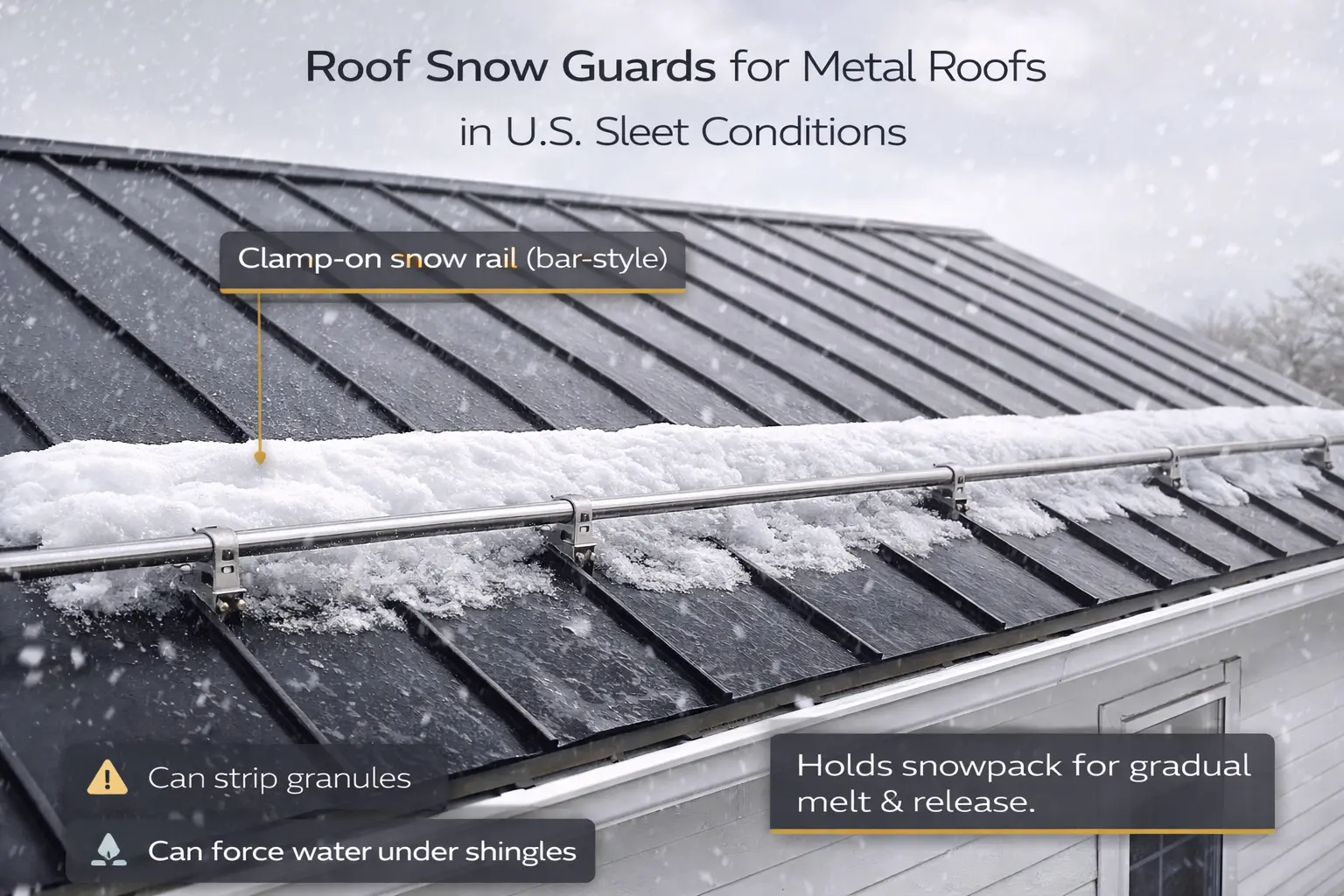
Roof snow guards are snow-retention devices installed on sloped roofs most importantly on slick metal roofs to keep snow and ice from sliding off in one sudden sheet and instead melt and release in a more predictable way. In the U.S., roof snow guards for metal roofs matter most during active winter weather (including sleet and freeze‑thaw cycles) because a thin glaze of ice can turn a roof into a launch ramp for heavy, compacted snowpack.
This article explains roof snow guards from a U.S. homeowner perspective: what roof snow guards do, why metal roofs shed snow so aggressively, the main types (pad vs bar/rail/fence), how engineered systems differ from non‑engineered ones, placement rules of thumb, installation methods (clamp vs penetrations), cost expectations, and a practical checklist for dealing with sleet events happening right now.
Table of Contents
What roof snow guards are (and what they are not)
Roof snow guards are components added to a roof to restrain sliding snow and ice by increasing friction and physically retaining the snowpack so it evacuates through thaw and evaporation rather than a sudden “roof avalanche.” Roof snow guards are not “decorations,” and they are not a substitute for good roof design, attic insulation, ventilation, and drainage planning especially in U.S. snow/ice regions.
On metal roofing, roof snow guards are often treated as a safety accessory in the same class as walk pads, fall-protection anchors, and ice management because metal’s smooth surface sheds snow far more readily than asphalt shingles. If your home has entrances, sidewalks, decks, HVAC units, or parking areas under the eaves, roof snow guards are typically the first line of defense against impact damage and injury.
Why metal roofs need snow guards (especially in sleet)
Metal roofs are popular in the USA for durability and low maintenance, but their smooth finish and continuous panels can allow snowpack to densify and migrate toward the eaves, then release suddenly when temperatures rise or a warm rain/sleet layer lubricates the interface. Sleet is especially problematic because it forms a hard, dense layer that can “glue” snow together into a single slab; when that slab breaks loose, the load can be heavy and fast-moving.
S‑5! explains the basic concept: a snow guard immobilizes the snow on the roof at its densest point, increasing friction so the snow evacuates in a predictable and controlled fashion through thaw and evaporation rather than a dangerous rooftop avalanche. Sheffield Metals also describes the core function similarly: snow guards keep snow on the roof so it doesn’t slide off and harm people or property, and bar-style systems hold snow at the eaves so it melts and sheds gradually.
U.S. winter storm context: why “right now” matters
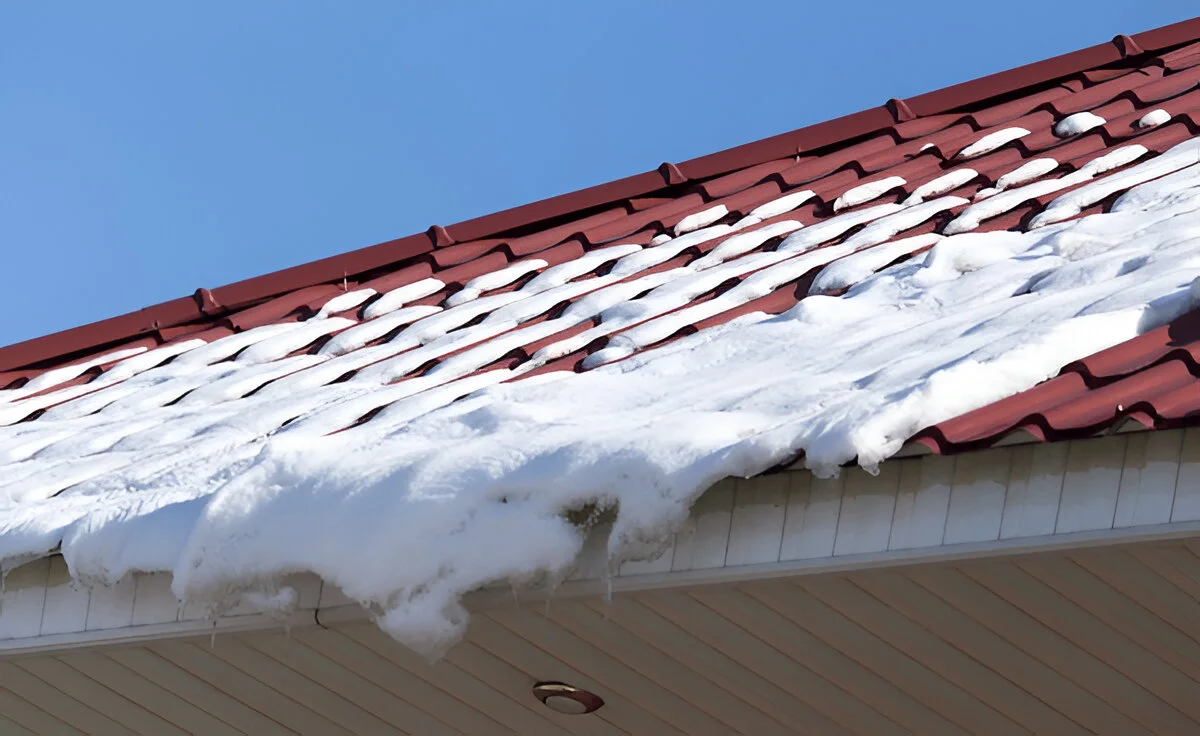
During ongoing sleet or mixed precipitation events in the USA, homeowners often see cycles like: snow accumulation → sleet crust → warming sun → sudden slide. Roof snow guards are designed for exactly this problem controlling release and reducing the chance that snow/ice dumps at once onto a walkway, stoop, driveway, or lower roof area.
A key planning point in the U.S. is that snow retention is not “one size fits all” and often isn’t enforced by inspectors the way people assume; S‑5! notes there aren’t “snow guard police” and that architects and installers can potentially face liability for faulty systems that cause damage. That’s why engineered, tested systems and documented layouts matter more than simply buying hardware.
How roof snow guards work (the physics in plain English)
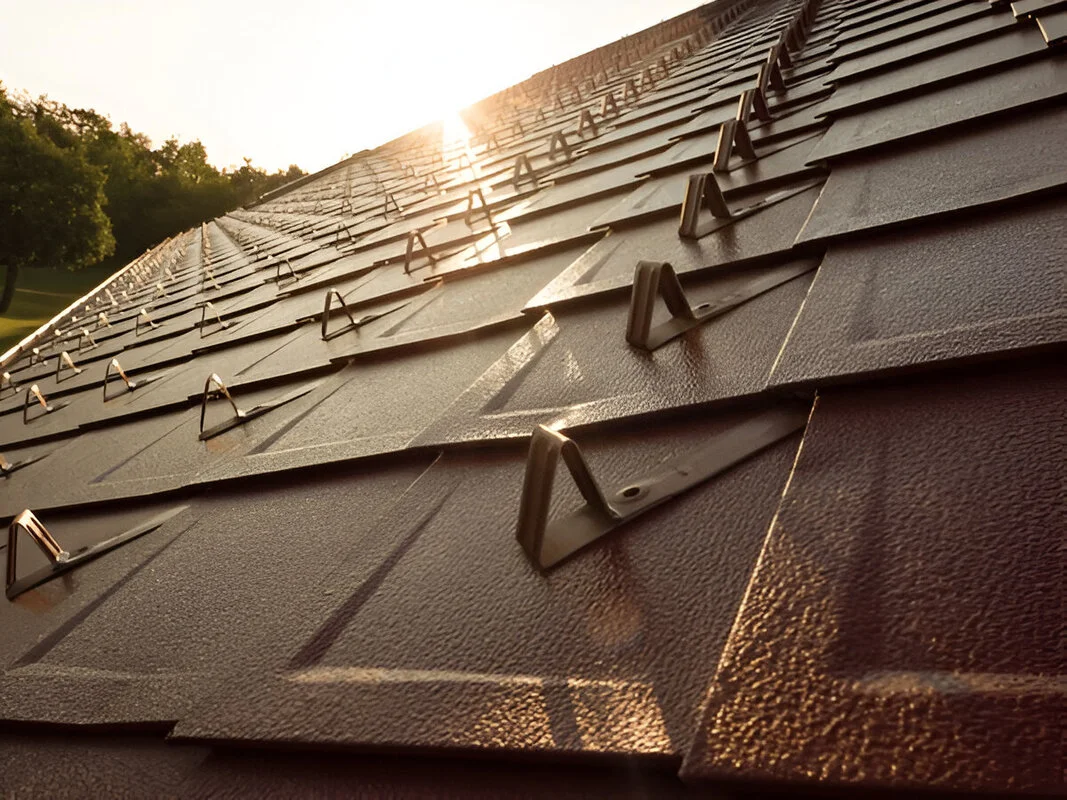
Roof snow guards work in two complementary ways:
- They increase friction between the roof surface and the snowpack, resisting the tendency of snow to slide as gravity compresses snow near the roof surface and toward the lower end (the eaves).
- They transfer the force (vector load) of the snowpack into structural components such as seam clamps, brackets, and cross-members so the roof system, not the panel skin alone, resists the slide.
S‑5! describes how a snow guard system often includes a beam-like cross-member spanning from clamp to clamp (or bracket to bracket), restraining the snowpack and transferring sliding forces into the clamp/bracket and then into the primary roof components. Sheffield Metals similarly highlights bar-style snow guards as horizontal bars that catch snow and hold it, allowing slow melt and preventing a sudden fall.
Roof snow guards for metal roofs: main types
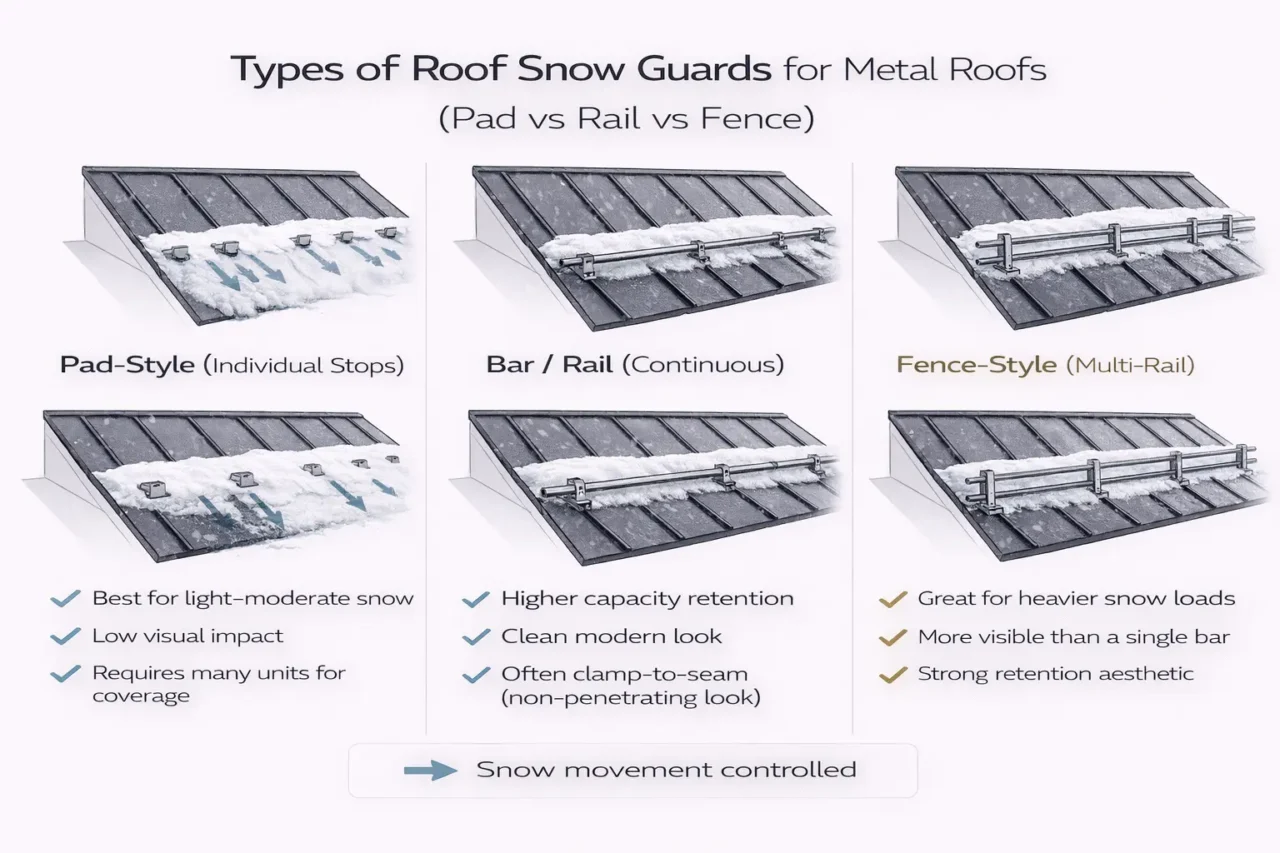
There are multiple kinds of roof snow guards for metal roofs, but most systems fall into three families.
Bar-style snow guards (snow rails)
Bar-style roof snow guards use one or more horizontal bars that span across the roof to catch and hold snow. Sheffield Metals notes heavier snow loads may require an extra bar, and some bar-style systems can attach via clamps that do not require penetrations important for standing seam roofs.
Fence-style snow guards (snow fences)
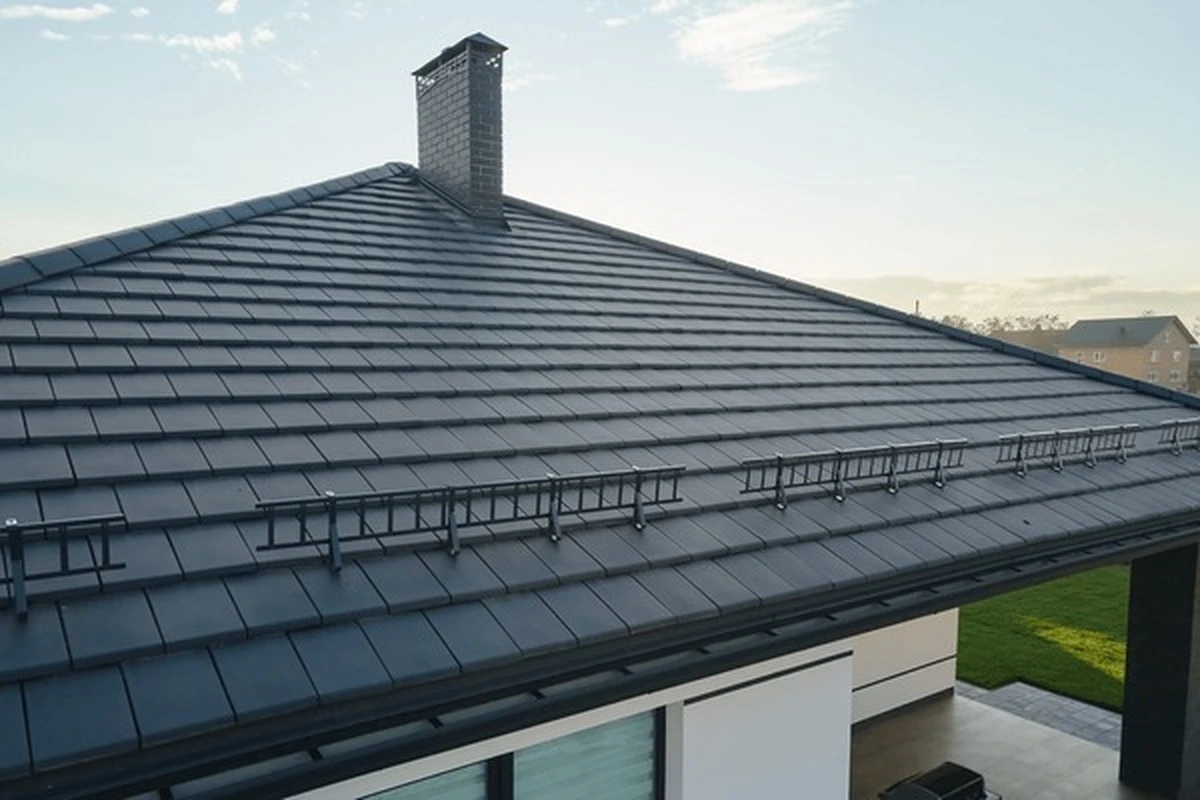
Fence-style roof snow guards resemble a “fence” with vertical members and can be more noticeable visually than a horizontal bar. They’re typically chosen where high capacity is needed and aesthetics are secondary to maximum retention.
Pad-style snow guards (snow stops)
Pad-style roof snow guards use multiple “brakes” distributed across the roof, sometimes attached using adhesives, to stop sliding snow. Sheffield Metals notes they can be attractive for minimal aesthetic change, but may not offer the same effectiveness as full horizontal systems because they don’t provide continuous catch like a rail.
Engineered vs non‑engineered roof snow guards (this affects ranking and safety)
A big SEO and homeowner education opportunity is explaining engineered vs non-engineered snow retention.
What “engineered” means
Sheffield Metals explains engineered snow retention systems are tested to meet project-specific considerations like roof slope, panel type, and local snowfall accumulation, and they are backed by hard data, testing, and verified warranties. S‑5! emphasizes that basic engineering principles and load testing must be followed and points to MCA guidance that bridges the gap in a market without universal standards.
Why “non-engineered” is risky
Sheffield Metals describes non-engineered systems as based on loose figures or non-specific calculations, not supported by hard testing data and not having specific installation instructions. S‑5! adds that snow guard placement is not “random is better” and can be dangerous without calculations because snow densification and load behavior require deliberate design.
For U.S. homeowners, the takeaway is simple: roof snow guards are a load-bearing safety system, so you want products with test data and layouts driven by your roof and climate rather than generic “one row above the door.”
Roof snow guard components (what you’re actually buying)
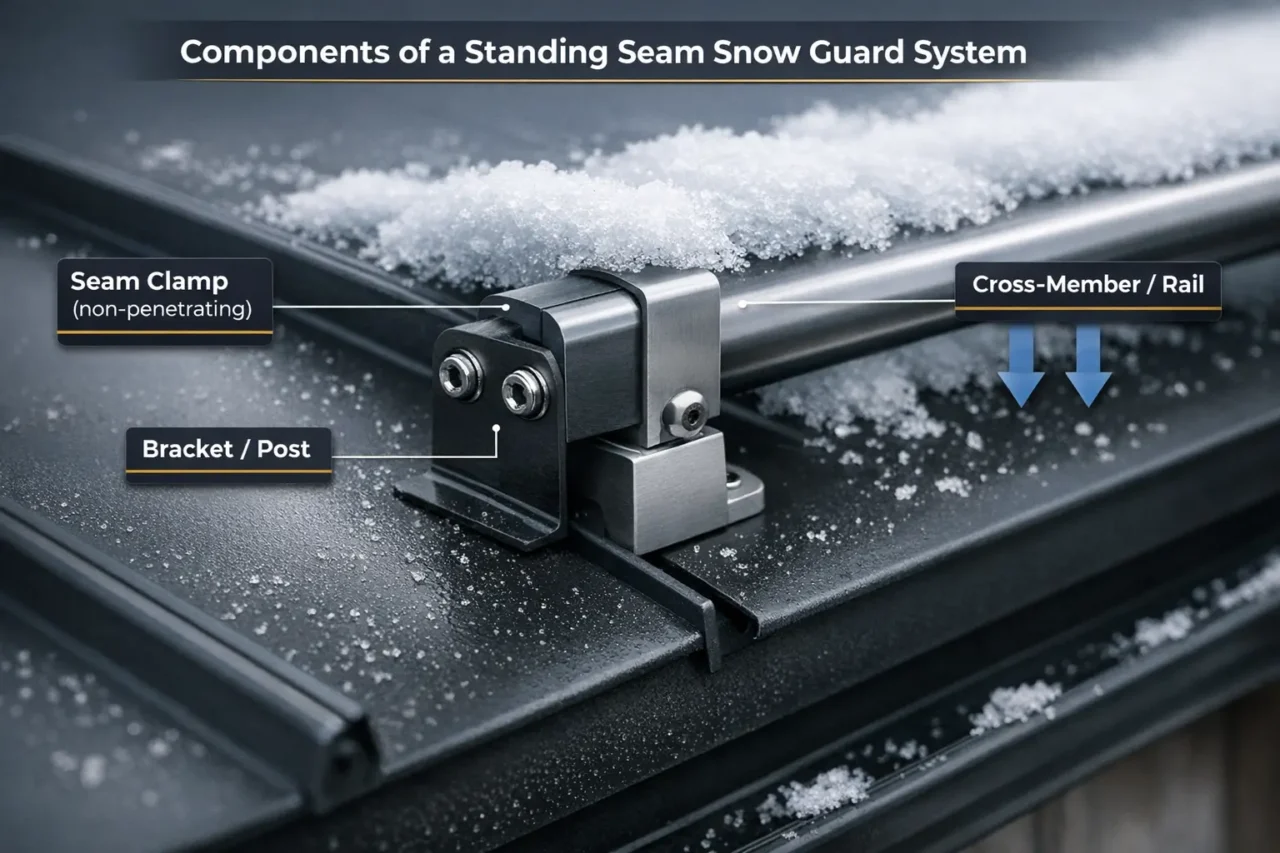
To understand quotes and product pages for roof snow guards for metal roofs, it helps to know the components that make up a system.
Seam clamps (standing seam)
For standing seam roofs, many systems use seam clamps to attach to the seam rather than puncturing the panel. Sheffield Metals notes S‑5! systems attach to seams via clamps, avoiding penetrations that could lead to leaking or rust.
Brackets and cross-members
S‑5! explains a system often has a beam-like cross-member that spans clamp-to-clamp and restrains snowpack; brackets and clamps anchor the system and transfer the vector load into primary roof components. This is why bar/rail systems tend to scale better for heavier snow loads than isolated pads.
Fasteners and compatible metals
Material compatibility matters: snow guards can be made from steel, aluminum, copper, polycarbonate, etc., and mixing dissimilar metals can create corrosion risk on metal roofs. Sheffield Metals specifically lists this as a selection factor and suggests matching materials to the roofing system for durability.
Placement and layout: where roof snow guards should go
Placement is where many DIY and low-quality installs fail, and it’s central to ranking because users search “where to place snow guards on metal roof.”
Protect the whole eave line (not just a doorway)
S‑5! warns it’s unwise to only position snow guards above doorways and notes the entire eave line should generally be protected rather than focusing on an isolated area because snow behavior can be unpredictable across a large roof. This point is especially relevant in the USA, where a single storm can drop uneven loads depending on wind direction and microclimates.
Snow accumulates and densifies near eaves
S‑5! notes that on stand-alone and unobstructed sloped metal roofs, snow often accumulates, densifies, and migrates with greater concentration near the eaves. That’s why many retention strategies emphasize eave-line protection and rows placed upslope not right at the edge.
Use project-specific design where possible
Both S‑5! and Sheffield Metals emphasize job-specific design based on roof slope, dimensions, panel type, and snow loads; S‑5! also mentions tools/calculators and even P.E.-stamped reports for code compliance. If you want Google-ranking helpfulness, this is where you explain that an engineered layout is not guesswork.
Installation methods for metal roof snow guards (USA focus)
The best installation method depends on whether you have standing seam or exposed-fastener panels.
Clamp-on (no penetrations) for standing seam
Sheffield Metals highlights clamp-based attachment to seams as a major advantage because it avoids penetrations that could lead to leaks or rust. S‑5! also emphasizes durability and reliability via integrated structural components rather than random placements or weak attachment.
Mechanically fastened (penetrations) in some systems
Some systems use mechanically fastened units, and S‑5! acknowledges mechanically fastened unitized snow guards as structural components in some designs. Penetrating the panel raises the importance of correct sealing and compatibility, so U.S. homeowners should insist on manufacturer instructions and experienced installers.
Adhesive-mounted pads (select applications)
Sheffield Metals notes pad-style snow guards may be attached using adhesives. Adhesive solutions tend to be more sensitive to surface prep and temperature at installation, which is important in U.S. winter regions where installs may happen during shoulder seasons.
“Sleet happening right now”: what homeowners should do today
If you’re in an active U.S. sleet event, here’s a practical checklist consistent with how snow retention is meant to work.
Immediate safety actions
- Keep people away from eave lines, entrances, and decks where a slide could fall.
- Move vehicles away from areas under roof edges if possible.
- Don’t attempt roof work during active sleet; roof surfaces are extremely slick and unpredictable.
What not to do
- Don’t try to “knock” snow off from below; it can release as a slab.
- Don’t install roof snow guards mid-storm; most systems require dry surfaces and proper torque/adhesion conditions.
What to plan once conditions improve
- Document problem areas with photos: where snow slides occurred and what was damaged.
- Get an engineered system recommendation using your roof dimensions, panel profile, and local snow conditions.
Cost of roof snow guards in the USA (what drives price)
Prices vary widely in the U.S. because cost depends on roof size, number of rows, roof pitch, access difficulty, and whether you choose pad-style or continuous rail/fence systems. In general, higher-capacity rail/fence systems can cost more in materials and labor but may be the right choice in heavier snow load areas because they provide continuous restraint and distribute loads into structural components.
To compare bids fairly, ask whether the contractor is proposing an engineered retention system or a non-engineered “rule of thumb” layout. The value is in the design and tested capacity, not just the hardware.
Roof snow guards and building codes (USA reality)
A key point for U.S. homeowners is that snow guard systems don’t always have consistent enforcement via inspection, and the market includes many products with varying engineering support. S‑5! notes the lack of “snow guard police” and points out the liability problem for faulty systems, which is why MCA guidance and engineering-based selection matters.
If you live in a heavy snow region (Rockies, Upper Midwest, New England), consider asking for documentation such as tested load data, layout calculations, and where applicable, an engineered report to support the design. This aligns with Sheffield Metals’ emphasis on engineered systems backed by testing and warranties.
Maintenance and inspection
Roof snow guards are not “install and forget,” especially in U.S. freeze-thaw conditions. After major storms, inspect from the ground for bent rails, missing pads, loose clamps, and any panel deformation, then schedule repairs in safe weather.
When you have a standing seam system with clamps, ensuring clamps remain properly installed and undamaged matters because they are the load transfer point into the roof system. If you see repeated snow retention failures, that’s a sign the system may be under-designed for your roof slope and local snow behavior.
Best practices checklist (for ranking and for real life)
Use this as a quick “best practices” section in your article to match high-intent searches.
- Choose engineered roof snow guards for metal roofs when possible, using tested data and project-specific design inputs.
- Prefer clamp-on systems for standing seam roofs to avoid penetrations that can lead to leaks or rust.
- Protect the whole eave line rather than isolated spots to avoid unpredictable load concentrations.
- Account for roof slope, panel type, snow loads, and what’s below the eaves (doors, walkways, vehicles).
- Use compatible materials to reduce corrosion risk.
FAQ: roof snow guards for metal roofs (USA)
Do roof snow guards prevent roof avalanches?
Yes roof snow guards are intended to keep snowpack retained so it evacuates gradually and predictably through thaw and evaporation rather than in a sudden rooftop avalanche.
Are roof snow guards necessary on standing seam metal roofs?
They’re often recommended because standing seam metal roofs shed snow easily, and clamp-on snow retention systems can attach to seams without penetrations that could lead to leaks or rust.
What’s the best type: pads or rails?
Pad-style can be aesthetically subtle, but Sheffield Metals notes pad-style may not offer the same effectiveness as systems with a full horizontal bar for retention. Rail/bar systems are commonly used when higher capacity and more predictable retention is required.
Should I only install roof snow guards above doorways?
S‑5! warns against placing snow guards only above doorways and suggests protecting the entire eave line because it’s difficult to predict how snow will behave on a short section of guards across a large roof.
🏠 Roofing Tips & Updates
Get free roofing advice, cost guides, and seasonal maintenance tips.

Roofing content specialist with 5+ years researching U.S. residential and commercial roofing. Has documented 200+ projects covering installation costs, material selection, contractor vetting, and DIY guides for homeowners across all climate zones.
Leave A Comment