Gable Roof Shape: Types, Pros & Design Guide
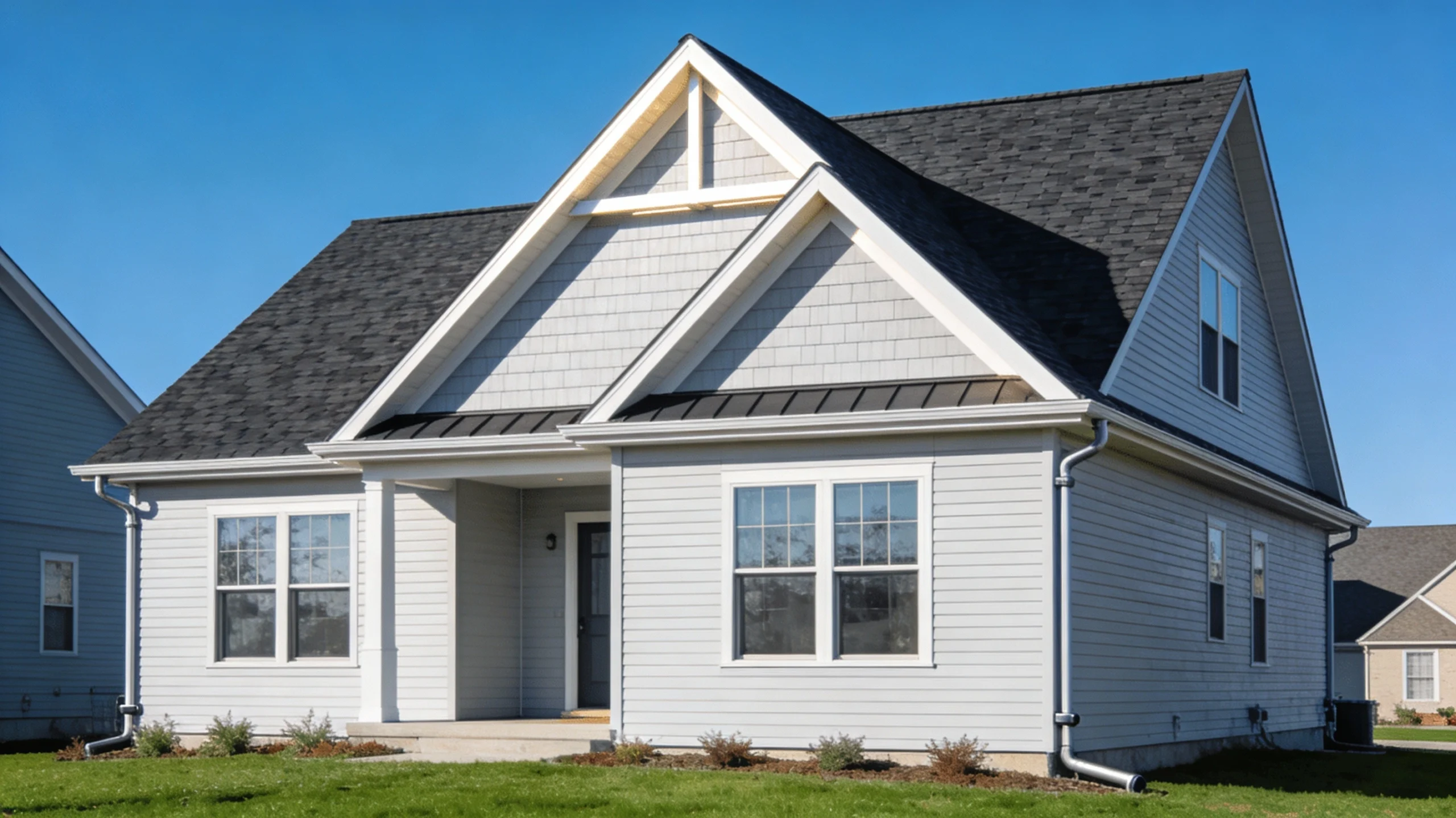
The gable roof shape ranks as the most common roof design in cold and temperate climates, featuring two sloping sides that meet at a central ridge to form distinctive triangular end walls. This classic inverted “V” configuration efficiently sheds water, snow, and debris while providing excellent attic ventilation and increased interior space making gable roofs the preferred choice for residential construction from Cape Cod cottages to modern farmhouses. Understanding different types of roof styles helps homeowners select optimal designs balancing aesthetics, climate performance, cost, and architectural compatibility for new construction or replacement projects.
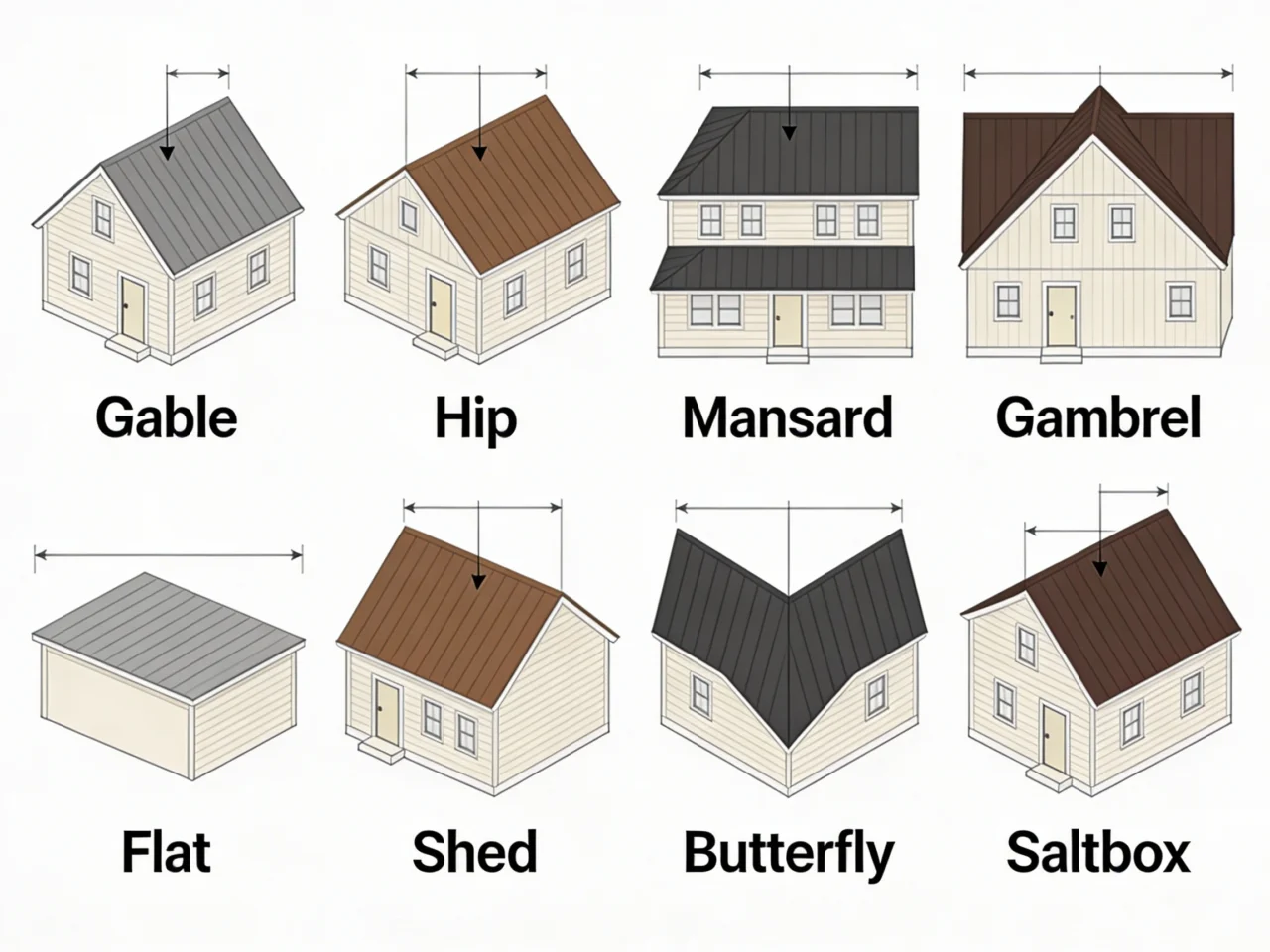
Beyond the standard gable roof shape, residential and commercial buildings employ eight major roof styles each offering distinct advantages: hip roofs providing superior wind resistance, gambrel roofs maximizing attic space, mansard roofs enabling full-story additions, shed roofs delivering contemporary aesthetics, flat roofs accommodating rooftop access, butterfly roofs creating dramatic modern statements, bonnet roofs offering extended porches, and saltbox roofs solving asymmetrical design challenges. This comprehensive guide explores each roof type’s characteristics, benefits, drawbacks, and ideal applications helping you understand which style best suits your home’s architecture, local climate, and functional requirements.
The gable roof shape dominates North American residential roofing due to simplicity, cost-effectiveness, and proven performance across diverse weather conditions while variations like cross-gable, Dutch gable, and box gable designs add architectural interest and functional benefits.
Table of Contents
What is a gable roof shape?
The gable roof shape consists of two sloping roof sections whose upper edges meet to form a horizontal ridge, creating triangular wall sections called gables at each end.
Basic gable roof definition and characteristics
Structural composition:
A gable roof features two flat or pitched sides that join at the top in an inverted “V” shape, forming the roof ridge running horizontally along the peak. The triangular portion of the vertical wall extending from the ridge peak down to the eaves at each open end constitutes the gable the defining architectural element giving this roof style its name.
Key identifying features:
- Two sloping roof planes meeting at central ridge line
- Triangular gable ends on opposing walls (typically front/back or side walls)
- Simple symmetrical design with matching pitch on both sides
- Ridge board running length of roof at highest point
- Rafters or trusses supporting pitched sides
Pitch variations:
The pitch or slope angle of gable roof shapes varies greatly depending on climate requirements, architectural style, and homeowner preference. Steeper pitches (8:12 to 12:12) excel in heavy snowfall regions by efficiently shedding snow, while moderate pitches (4:12 to 6:12) provide balanced performance for most climates, and lower pitches (3:12 to 4:12) suit areas with minimal precipitation.
Why gable roofs are so popular
Cost-effectiveness:
Simple gable roof shapes rank among the most economical roof designs due to straightforward construction requiring fewer materials, less complex framing, and reduced labor hours compared to hip, mansard, or other elaborate roof styles.
Weather performance:
Gable roofs excel in cold climates and rainy regions by allowing snow, rain, and leaves to slide off efficiently rather than accumulating like on flat roofs. The steep pitch prevents moisture retention that causes leaks and structural damage, making gable designs ideal for areas with significant precipitation.
Interior space benefits:
Steeply sloped gable roofs increase usable attic space dramatically, allowing for vaulted ceilings, bonus rooms, or additional storage that flat or low-pitch roofs cannot accommodate.
Natural ventilation:
The triangular gable ends provide ideal locations for gable vents facilitating natural airflow, regulating attic temperature and humidity levels, improving energy efficiency, and preventing moisture buildup that leads to mold and structural deterioration.
Architectural versatility:
Gable roofs complement virtually every architectural style from traditional Colonial and Cape Cod to contemporary farmhouse and craftsman designs, offering timeless aesthetic appeal.
Gable roof advantages and disadvantages
Advantages:
- Simple construction lowering build costs 15-30% compared to complex designs
- Excellent water and snow shedding preventing accumulation and leaks
- Enhanced attic ventilation through gable vents reducing cooling costs
- Increased interior space allowing vaulted ceilings and bonus rooms
- Easy maintenance and repair due to accessible roof planes
- Wide range of roofing material compatibility (asphalt, metal, tile, wood shake)
Disadvantages:
- Vulnerable to wind damage in high-wind regions—gable ends can catch wind like sails, potentially causing roof failure during hurricanes or tornadoes
- Less structurally stable than hip roofs lacking four-sided support
- Requires proper bracing in high-wind zones to prevent gable end collapse
- Not recommended for coastal hurricane zones or tornado alley without reinforcement
- Fewer overhangs on gable ends may provide less wall protection from rain
Types of gable roof styles
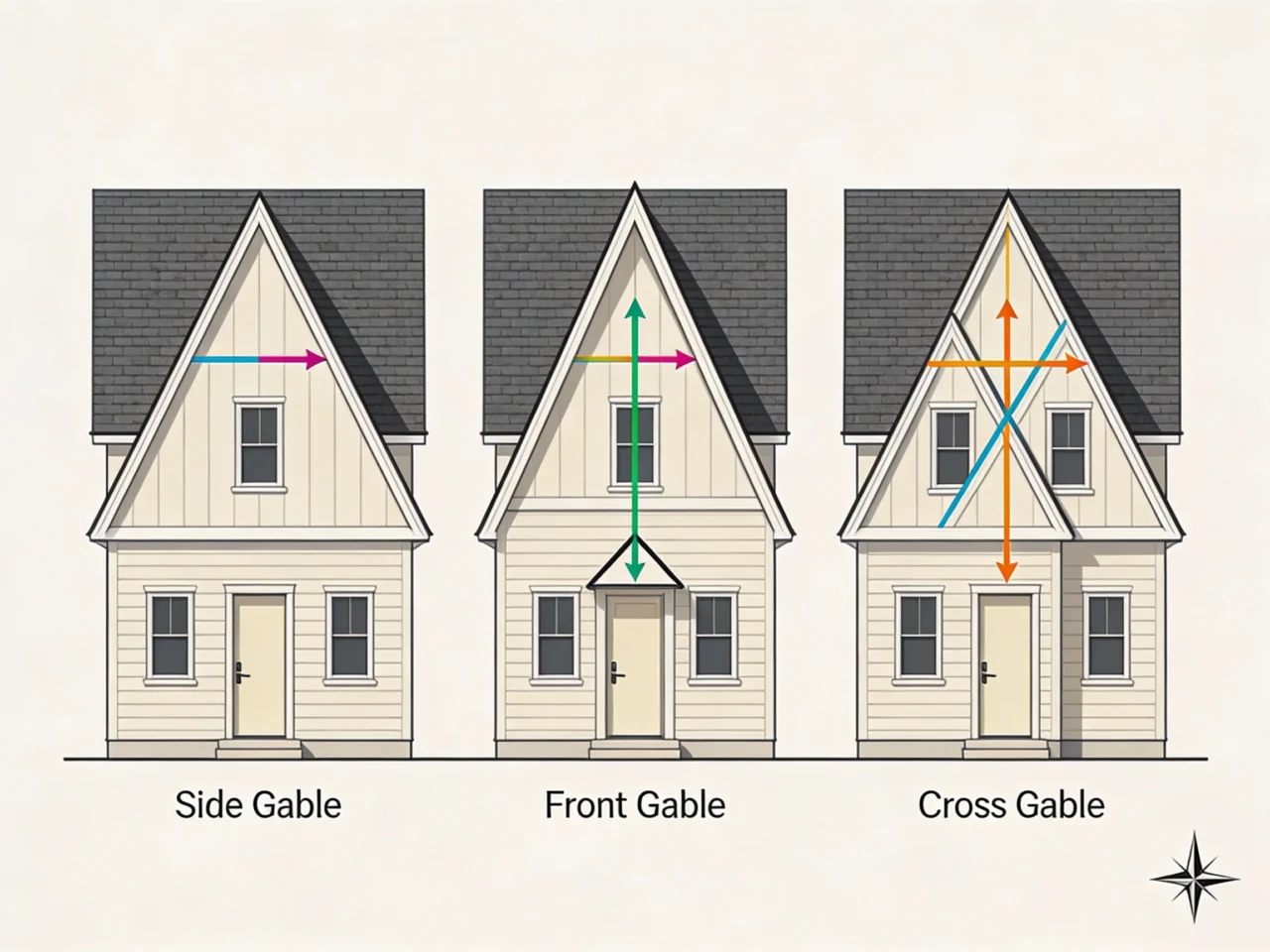
The standard gable roof shape has multiple variations offering different aesthetic and functional benefits.
Standard or side gable roof
Definition:
The traditional gable roof shape where the triangular gable ends face the front and back of the house, while the sloping sides face the street. This side-gabled orientation represents the most basic and common gable configuration seen on ranch homes, cottages, and bungalows.
Characteristics:
- Two equal-pitch roof slopes meeting at central ridge
- Ridge runs parallel to street or longest dimension of building
- Gable ends positioned on shortest walls (typically front and rear)
- Simple rectangular footprint
- Most economical gable design to construct
Best applications:
- Simple rectangular homes without complex layouts
- Traditional Cape Cod and Colonial architectural styles
- Budget-conscious new construction
- Homes in moderate climates without extreme weather
Front gable roof
Definition:
Front gable roofs orient the triangular gable end toward the street, creating prominent triangular facade as the home’s most visible architectural element.
Characteristics:
- Gable end faces front of property (curb appeal focal point)
- Ridge runs perpendicular to street
- Often features prominent front porch beneath gable overhang
- Creates dramatic vertical emphasis on home’s facade
- Common on Victorian, Gothic Revival, and craftsman bungalow styles
Aesthetic impact:
Front gable orientation creates strong vertical lines and architectural presence, making homes appear taller and more imposing while providing sheltered entry areas beneath the front gable overhang.
Cross gable roof
Definition:
Cross gable roofs consist of two or more gable roof sections intersecting at perpendicular or varying angles, creating multiple ridges and valleys.
Characteristics:
- Two gable rooflines meeting at 90-degree angle forming “T” or “L” shape
- Creates complex roofline with multiple ridges and valleys
- Accommodates complex floor plans with wings, additions, and varied room layouts
- Often used to define separate architectural elements (garage, porch, main house)
Benefits:
- Adds architectural interest and visual complexity to home exterior
- Accommodates T-shaped, L-shaped, or irregular floor plans
- Creates distinct zones highlighting different home areas
- Provides additional attic space and ventilation options
Design applications:
Cross gable roofs suit homes with attached garages, covered porches, dormers, or additions requiring separate roof sections—common on larger suburban homes with complex layouts.
Dutch gable roof (gablet roof)
Definition:
Dutch gable roofs combine gable and hip roof elements, featuring a small gable (gablet) positioned at the top of a hip roof end, creating a unique hybrid design.
Characteristics:
- Hip roof at lower portion with small gable section at peak
- Combines hip roof wind resistance with gable ventilation benefits
- Gablet section often features decorative window or vent
- Creates distinctive European-inspired aesthetic
Advantages:
- Balances traditional gable appearance with hip roof stability
- Provides ventilation opportunities through gablet vents
- Adds architectural elegance and curb appeal
- Performs better in high winds than standard gable roofs
Style compatibility:
Dutch gable roofs complement craftsman, Tudor, and European cottage architectural styles adding sophistication and old-world charm.
Box gable roof
Definition:
Box gable roofs feature gable ends that extend beyond the building’s exterior walls, creating triangular overhangs that resemble boxes.
Characteristics:
- Gable end extends outward past wall plane
- Creates covered overhang protecting walls and foundation
- Adds visual depth and shadow lines to facade
- Provides additional interior space at gable ends
Functional benefits:
- Enhanced protection for walls and foundation from precipitation
- Additional overhang sheltering windows and doors
- Elegant architectural detail adding character
- Can accommodate larger gable vents for improved ventilation
Gambrel roof (barn roof)
Definition:
Gambrel roofs modify the standard gable roof shape by incorporating two different slopes on each side a shallow slope near the ridge transitioning to a steeper slope near the eaves.
Characteristics:
- Each roof side features two distinct pitch angles
- Upper slope relatively shallow (flat appearance from distance)
- Lower slope much steeper (approaching vertical in some designs)
- Creates classic barn or Dutch Colonial appearance
Space maximization:
Gambrel roofs dramatically increase usable attic space compared to standard gable roofs by pushing the steep lower slope outward, creating nearly full-height second story with minimal “dead” space under eaves.
Common applications:
- Barns and agricultural buildings (classic American barn profile)
- Dutch Colonial residential architecture
- Homes requiring maximum second-floor living space
- Garages and outbuildings where vertical storage important
8 different types of roof styles beyond gable
Understanding various roof types helps homeowners select designs optimized for specific architectural needs, climate conditions, and aesthetic preferences.
Hip roof
Definition:
Hip roofs feature four sloping sides that all meet at the top ridge (or at a single point on square buildings), eliminating vertical gable ends entirely.
Characteristics:
- All four sides slope downward toward walls
- No vertical gable ends (distinguishing feature from gable roofs)
- Hips (external angles) where adjacent roof planes meet
- Can form pyramid shape on square buildings
- Requires more complex framing than gable roofs
Advantages over gable roofs:
- Superior wind resistance—four-sided support prevents wind catching vertical surfaces
- More structurally stable with self-bracing properties
- Performs excellently in hurricane-prone coastal regions
- Overhangs on all four sides provide complete perimeter protection
Disadvantages:
- Higher construction costs (20-30% more than comparable gable)
- Reduced attic space due to sloping on all sides
- More complex framing requiring skilled carpentry
- Less ventilation area without vertical gable ends for vents
Mansard roof
Definition:
Mansard roofs feature four sides each with two distinct slopes—the lower slope nearly vertical, the upper slope barely visible from ground level.
Characteristics:
- Four-sided design with dual pitch on each side
- Lower slope extremely steep (almost vertical walls)
- Upper slope low-pitch or nearly flat
- French Second Empire architectural signature
- Creates full usable story within roof structure
Space advantages:
Mansard roofs transform roof space into full-height living areas with dormers providing light and ventilation, effectively adding an entire floor without increasing building footprint.
Aesthetic considerations:
Distinctive French Renaissance appearance suits Victorian and Second Empire homes but appears out of place on contemporary or traditional American architecture.
Flat roof
Definition:
Flat roofs have minimal pitch (typically 1:12 to 2:12) creating nearly horizontal roof surfaces, common on commercial buildings and modern residential architecture.
Characteristics:
- Slight pitch for water drainage (not truly flat)
- Simple construction with minimal framing
- Accessible surface for rooftop equipment, gardens, or patios
- Requires specialized waterproofing membranes
- Common on commercial and contemporary designs
Advantages:
- Lowest construction cost of any roof type
- Usable rooftop space for HVAC equipment, solar panels, or recreation
- Modern architectural aesthetic
- Simplest maintenance access
Disadvantages:
- Poor water and snow shedding leads to ponding
- Higher maintenance requirements and leak potential
- Shorter lifespan than pitched roofs (15-25 years typical)
- Not suitable for snowy climates
- Limited insulation space reducing energy efficiency
Shed roof (skillion roof)
Definition:
Shed roofs feature single sloping plane with no ridge line—essentially half of a gable roof extending from high wall to low wall.
Characteristics:
- Single continuous slope (no ridge or valley)
- High wall on one side, low wall on opposite
- Simple framing (easiest pitched roof to construct)
- Contemporary modern aesthetic
- Often used on additions, porches, and outbuildings
Modern applications:
Shed roofs dominate contemporary and mid-century modern architecture, often combined at different angles creating dynamic rooflines with multiple shed roof sections.
Benefits:
- Extremely cost-effective construction
- Excellent water shedding in one direction
- Accommodates clerestory windows on high wall
- Easy solar panel installation on south-facing slope
- Creates dramatic high ceilings on interior
Butterfly roof (V-shaped roof)
Definition:
Butterfly roofs invert the traditional gable shape, sloping downward from both sides toward a central valley, resembling butterfly wings.
Characteristics:
- Two roof planes sloping inward forming central valley
- Inverted “V” shape (opposite of gable)
- High exterior walls on both sides
- Low center line where planes meet
- Mid-century modern architectural signature
Distinctive features:
- Creates dramatic upward-sweeping roofline
- Allows extensive vertical windows on both sides
- Collects rainwater at center valley for harvesting
- Maximizes natural light and views
Drawbacks:
- Complex waterproofing at central valley
- Higher leak potential than conventional designs
- Expensive construction requiring skilled contractors
- Snow and debris accumulation in center valley
Bonnet roof
Definition:
Bonnet roofs resemble hip roofs but feature double slopes on all four sides with the lower slope shallower than the upper, creating covered porches around the building perimeter.
Characteristics:
- Four-sided design with dual pitch
- Steep upper slopes, gentle lower slopes
- Lower slopes create wraparound covered porch areas
- French vernacular and Southern plantation style
- Inverted mansard configuration
Applications:
Bonnet roofs suit Southern U.S. architecture where extended porches provide shade and outdoor living space, common on French Colonial and Louisiana plantation homes.
Saltbox roof
Definition:
Saltbox roofs feature asymmetrical gable design with one long slope (rear) and one short slope (front), creating distinctive Colonial New England profile.
Characteristics:
- Two slopes of unequal length meeting at ridge
- Long rear slope extending to first floor or ground level
- Short front slope resembling standard gable
- Accommodates two-story front, single-story rear
- Colonial American architectural signature
Historical context:
Saltbox design originated in Colonial New England as tax-avoidance strategy and practical addition method—extending rear roof accommodated rear lean-to additions without full two-story construction.
Dome roof
Definition:
Dome roofs feature curved hemispherical or polygonal shapes creating iconic circular structures used on special-purpose buildings.
Characteristics:
- Curved three-dimensional shape
- No ridges, valleys, or distinct roof planes
- Circular or polygonal footprint
- Exceptional structural strength
- Monumental architectural statement
Applications:
Dome roofs suit religious buildings (churches, mosques, temples), government structures (capitol buildings), and specialized residential construction (geodesic domes, observatories).
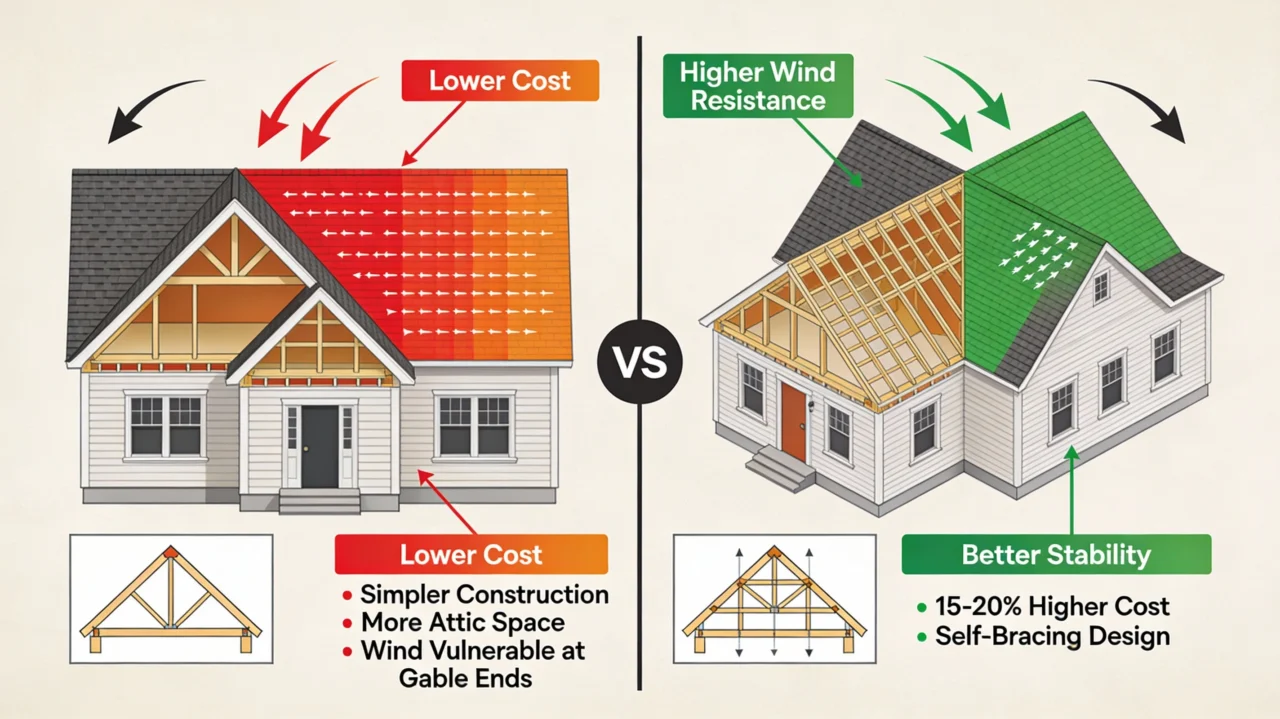
Gable roof vs hip roof: key differences
Comparing gable roof shape against hip roof design helps homeowners understand trade-offs between cost, performance, and aesthetics.
Structural differences
Gable roof structure:
- Two sloping sides meeting at central ridge
- Vertical triangular gable ends on two sides
- Ridge beam running length of building
- Simpler framing with fewer components
- Less structural bracing (potentially vulnerable)
Hip roof structure:
- Four sloping sides meeting at ridge or single peak
- No vertical gable ends
- Hip rafters forming external angles
- Self-bracing design providing structural stability
- More complex framing requiring additional lumber
Cost comparison
Gable roof costs:
- Lower material requirements (15-30% less lumber)
- Simpler labor reducing installation time
- Fewer complex cuts and angles
- Total cost: $5-$12 per square foot installed (average)
Hip roof costs:
- Higher material usage (more rafters, ridge boards, hip rafters)
- Complex framing requiring skilled carpenters
- Longer installation time
- Total cost: $7-$15 per square foot installed (20-30% premium over gable)
Performance in different climates
Gable roofs excel in:
- Heavy snowfall regions—steep pitch sheds snow efficiently
- Rainy climates—excellent water runoff
- Cold climates—attic ventilation prevents ice dams
- Moderate weather zones—balanced performance
Gable roofs struggle in:
- Hurricane-prone coastal areas—gable ends catch wind
- Tornado alley—structural vulnerability to extreme winds
- High-wind regions without proper bracing
Hip roofs excel in:
- Coastal hurricane zones—four-sided support resists wind
- High-wind regions—aerodynamic shape deflects wind
- Areas requiring maximum structural stability
Hip roofs limitations:
Aesthetic considerations
Gable roof aesthetics:
- Classic American residential appearance
- Strong vertical lines and triangular emphasis
- Versatile styling from traditional to contemporary
- Prominent architectural features (gable ends)
Hip roof aesthetics:
- Elegant, refined appearance
- Low-profile design appearing less imposing
- Symmetrical uniform appearance from all angles
- Sophisticated European influence
Choosing the right roof type for your home
Selecting optimal roof style requires balancing climate performance, architectural compatibility, budget constraints, and personal preferences.
Climate and weather considerations
Snow-heavy regions:
Steep-pitch gable, gambrel, or saltbox roofs shed snow effectively preventing dangerous accumulation and structural stress. Pitch should exceed 6:12 in areas with regular heavy snowfall.
High-wind and hurricane zones:
Hip roofs provide superior wind resistance for coastal and tornado-prone areas, though properly braced gable roofs with hurricane straps can perform adequately. Avoid standard gable designs in extreme wind zones without structural reinforcement.
Hot humid climates:
Gable roofs with prominent gable vents provide superior attic ventilation reducing cooling costs and preventing moisture damage in humid Southeast and Gulf Coast regions.
Rainy climates:
All pitched roof types (gable, hip, shed) perform well in rainy regions—avoid flat roofs where water pooling causes leaks and deterioration.
Architectural style compatibility
Traditional Colonial/Cape Cod:
Side gable or front gable roofs with moderate pitch (6:12 to 8:12)
Victorian/Gothic Revival:
Steep front gables, cross gables, or mansard roofs
Craftsman/Bungalow:
Low-pitch gable or hip roofs with wide overhangs
Ranch/Mid-century Modern:
Low-pitch gable, hip, or shed roofs with clean lines
Contemporary/Modern:
Shed, butterfly, or flat roofs with dramatic angles
Mediterranean/Spanish:
Low-pitch hip or mansard roofs with tile covering
Farmhouse:
Gable, gambrel, or saltbox roofs
Budget and complexity
Most economical roof types:
- Standard gable (simplest, lowest cost)
- Shed roof (minimal framing)
- Side gable (straightforward construction)
Moderate cost roof types:
- Hip roof (20-30% more than gable)
- Cross gable (depends on complexity)
- Gambrel (moderate framing complexity)
Expensive roof types:
- Mansard (complex dual-pitch framing)
- Butterfly (intricate waterproofing)
- Dutch gable (hybrid design)
- Dome (specialized construction)
Interior space requirements
Maximum attic space:
- Gambrel roof (nearly full second-story height)
- Steep-pitch gable (vaulted ceilings, bonus rooms)
- Mansard roof (full usable story)
Moderate attic space:
Minimal attic space:
- Hip roof (slopes on all sides reduce volume)
- Low-pitch roofs (limited headroom)
- Flat roof (no attic—ceiling against roof deck)
Frequently asked questions about gable roof shape and roof types
What is a gable roof shape?
A gable roof shape consists of two sloping sides that meet at a central horizontal ridge, forming triangular gable ends on opposing walls where the roof structure creates an inverted “V” silhouette. This classic design represents the most common roof type in North America due to simple construction, excellent weather protection, and versatile aesthetic compatibility.
What are the main different types of roof styles?
The eight main different types of roof styles include gable roofs (triangular ends with two slopes), hip roofs (four sloping sides without gable ends), mansard roofs (four-sided with dual slopes creating additional living space), gambrel roofs (barn-style with two slopes per side), flat roofs (minimal pitch for modern designs), shed roofs (single slope), butterfly roofs (inverted V-shape), and saltbox roofs (asymmetrical gable with unequal slopes).
What is the difference between a gable roof and a hip roof?
Gable roofs feature two sloping sides with vertical triangular gable ends providing excellent ventilation and attic space at lower cost, while hip roofs have four sloping sides meeting at a ridge with no vertical ends offering superior wind resistance and structural stability at 20-30% higher construction cost. Gable roofs excel in snowy climates, whereas hip roofs perform better in high-wind coastal hurricane zones.
What are the disadvantages of gable roofs?
Gable roofs are vulnerable to wind damage in hurricane and tornado zones where vertical gable ends can catch wind like sails causing structural failure, require additional bracing for high-wind areas, provide less structural stability than four-sided hip roofs, and offer limited overhang protection on gable end walls. Proper reinforcement with hurricane clips and gable end bracing mitigates wind vulnerability in extreme weather regions.
What is a cross gable roof?
A cross gable roof consists of two or more gable roof sections intersecting at perpendicular angles (typically 90 degrees) forming multiple ridges and valleys in “T”, “L”, or complex configurations. This design accommodates complex floor plans with separate wings for garages, porches, or additions while adding architectural interest and creating distinct visual zones highlighting different home areas.
What roof type is best for snowy climates?
Steep-pitch gable roofs, gambrel roofs, and saltbox roofs perform best in heavy snowfall regions by efficiently shedding snow before dangerous accumulation occurs, with pitches exceeding 6:12 recommended for areas with regular significant snowfall. The smooth sloping surfaces prevent ice dam formation and reduce structural stress from snow weight compared to flat or low-pitch roofs.
What is a Dutch gable roof?
A Dutch gable roof (also called gablet roof) combines hip and gable roof elements by featuring a hip roof at the lower portion with a small gable section positioned at the peak, creating a hybrid design that balances the wind resistance of hip roofs with the ventilation benefits and aesthetic appeal of gable ends. This European-inspired style adds architectural elegance while improving performance in high-wind conditions.
How much does a gable roof cost compared to other roof types?
Gable roofs cost $5-$12 per square foot installed representing the most economical pitched roof option, while hip roofs run $7-$15 per square foot (20-30% premium), shed roofs cost $4-$10 per square foot, gambrel roofs range $8-$14 per square foot, and complex designs like mansard or butterfly roofs exceed $12-$20 per square foot due to intricate framing requirements. Simple gable construction requires fewer materials and less skilled labor reducing overall project costs.
Selecting the ideal roof style for lasting protection
The gable roof shape dominates residential construction across North America through proven performance combining cost-effective construction, superior water and snow shedding, enhanced attic ventilation, increased interior space, and timeless aesthetic versatility suiting traditional through contemporary architectural styles. Understanding different types of roof styles—including hip roofs for wind resistance, gambrel roofs for space maximization, shed roofs for modern aesthetics, and specialized designs like mansard, butterfly, and saltbox enables homeowners to select optimal designs balancing climate performance, architectural compatibility, budget constraints, and functional requirements.
Gable roof variations including standard side gable, front gable, cross gable, Dutch gable, and box gable configurations provide design flexibility addressing specific architectural needs while maintaining the fundamental advantages of simple two-slope construction. Climate considerations prove critical steep gable roofs excel in snowy regions through efficient snow shedding, hip roofs dominate hurricane-prone coastal areas through superior wind resistance, and properly ventilated gable designs reduce cooling costs in hot humid climates.
Choosing the right roof type requires evaluating multiple factors: local weather patterns determining pitch and structural requirements, architectural style dictating appropriate roof profiles, budget constraints influencing complexity selection, interior space needs affecting attic volume, and long-term maintenance considerations impacting lifecycle costs. Consulting licensed roofing contractors and architects ensures your roof selection optimizes performance, aesthetics, and value for your specific home and location remember that roof replacement represents one of the largest home improvement investments warranting careful research and professional guidance.
Get free roofing advice, cost guides, and seasonal maintenance tips.

Roofing content specialist with 5+ years researching U.S. residential and commercial roofing. Has documented 200+ projects covering installation costs, material selection, contractor vetting, and DIY guides for homeowners across all climate zones.
Leave A Comment