Preloader Close
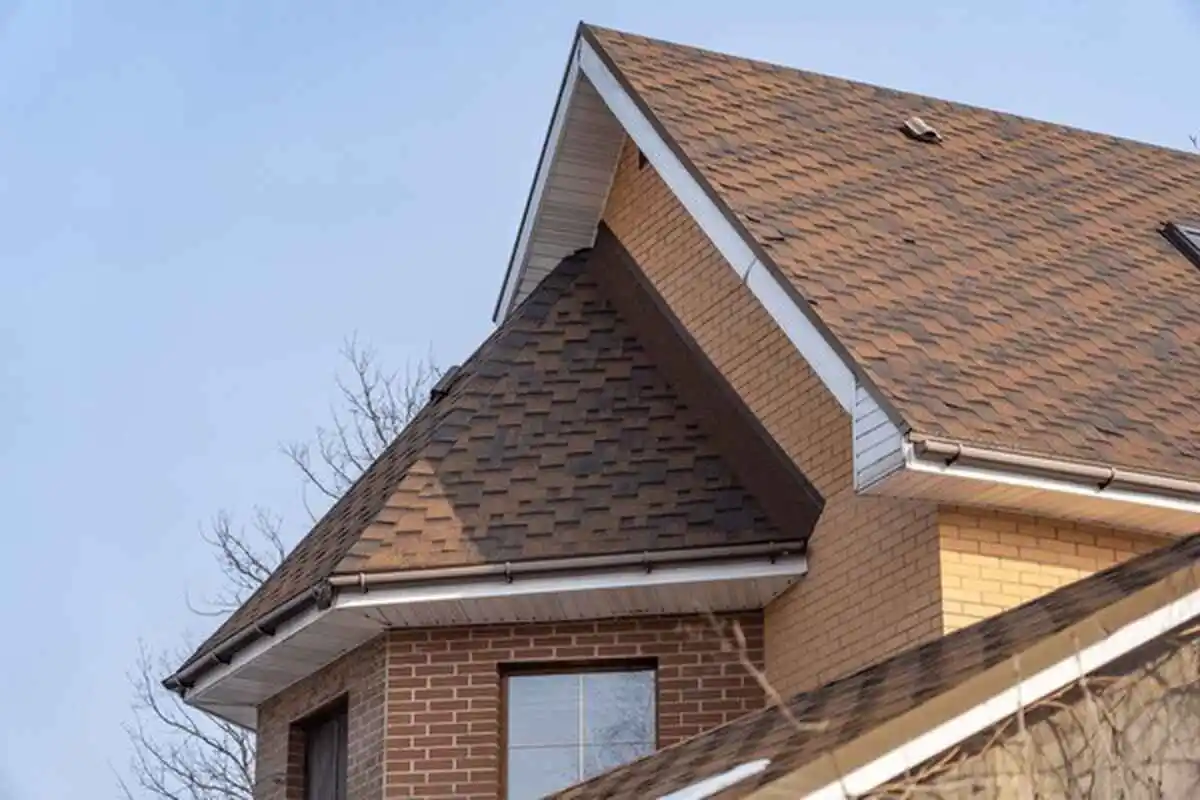
Figuring roof angles is essential for cutting rafters, checking if your roof meets code, choosing the right roofing material, and estimating how water and snow will shed off your home. When you understand roof pitch and how it relates to degrees, you can work with contractors more confidently or tackle basic framing and repair tasks yourself.
This guide explains what roof pitch actually means, shows several easy ways to measure it, and gives you a quick reference table so you do not have to redo the math every time.
Table of Contents
Roof angle basics: pitch, slope, and degrees
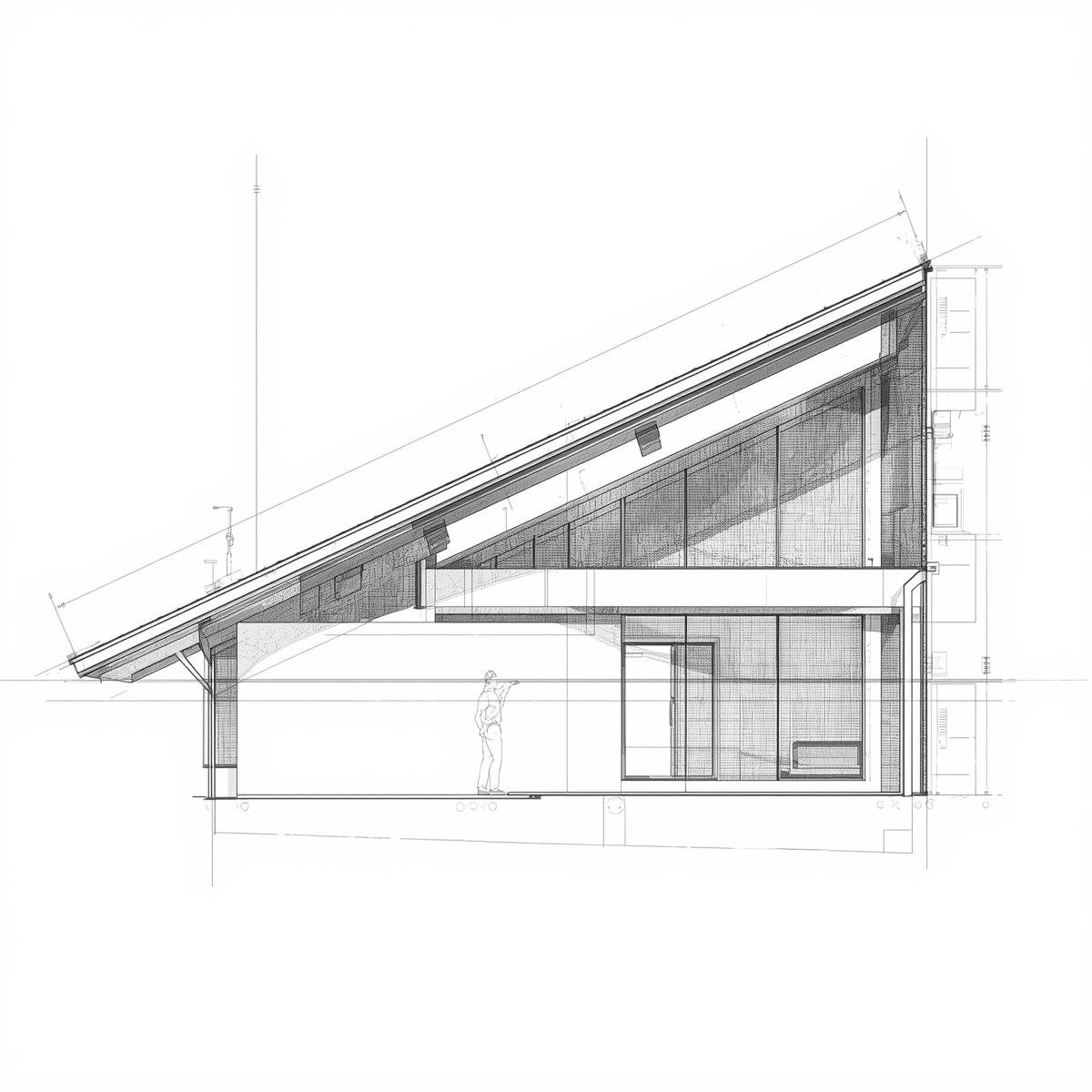
Roof “slope” is simply the amount a roof rises over a given horizontal distance, usually expressed as “rise over run,” such as “4 inches of rise for every 12 inches of run.” Roof “pitch” in residential work is commonly written as X/12, where X is the vertical rise for every 12 inches of horizontal run.
To convert that pitch to an angle in degrees, treat it as a right triangle:
For example, a 4/12 roof has rise/run = 4 ÷ 12 ≈ 0.333, and arctan(0.333)arctan(0.333) is about 18.4°, while a 6/12 roof (0.5) works out to roughly 26.6°.
Method 1: Level and tape measure on the roof
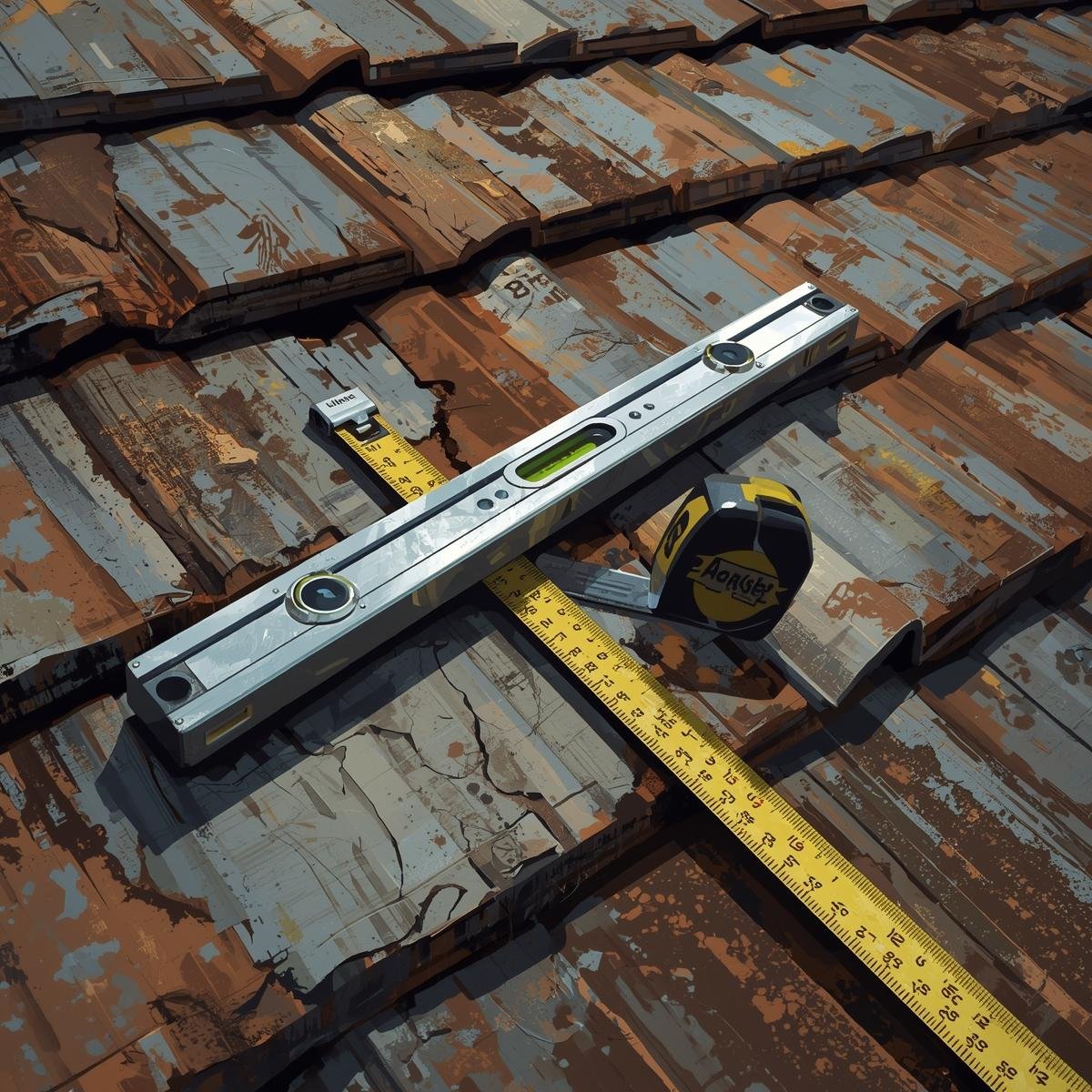
One of the simplest ways of figuring roof angles uses only a level and a tape. This method measures the actual roof deck and then converts that to a standard X/12 pitch.
Steps:
- Place the level on the roof.
Stand safely on the roof, set a 12‑inch (or 24‑inch) spirit level so it points straight downhill, and adjust it until the bubble is centered so you know it is perfectly horizontal. - Measure the rise.
From the underside of the high end of the level, measure straight down to the roof surface with a tape; that vertical distance is your “rise.” - Express as X/12.
If you used a 12‑inch level, the number you read in inches is directly the “X” in X/12 (for example, 4 inches of rise over 12 inches of run = 4/12).
If you used a 24‑inch level, divide the measured rise by 2 to convert to “per 12”; for example, 8 inches of rise over 24 inches is 4/12. - Convert to degrees if needed.
Divide rise by 12 to get a decimal (4 ÷ 12 ≈ 0.333), then use a calculator’s arctan / tan⁻¹ function to get the angle in degrees.
Always prioritize safety: use proper footwear, fall protection, and avoid working on wet, icy, or very steep roofs.
Method 2: Using a framing square on the bench

Carpenters often figure roof angles using a framing square because it lets them lay out rafters and cuts directly on lumber. This method works best when you already know the pitch you want (like 6/12) and want to see or transfer the angle.
How to do it:
- Place the framing square so one leg (the “body”) represents the horizontal run and the other leg (the “tongue”) represents the vertical rise.
- Align the 12‑inch mark on the body with the edge of the board, and align the desired rise (for example, 6 inches) on the tongue with the same edge.
- The square now shows you the triangle for a 6/12 roof; the diagonal from the corner of the square is the angle of the rafter.
This makes it easy to mark your plumb cut at the top of the rafter and your seat cut at the birdsmouth without doing separate trigonometry.
Method 3: Converting roof pitch to degrees with a calculator
If you know the pitch (X/12), figuring roof angles in degrees is straightforward using basic trigonometry.
Steps:
- Turn pitch into a decimal.
Divide rise by run: for 4/12, 4 ÷ 12 ≈ 0.333; for 6/12, 6 ÷ 12 = 0.5. - Use arctan / tan⁻¹.
On a scientific calculator or calculator app, enter that decimal and use the arctan function to get the angle. - Round to one decimal place.
For carpentry and roofing, one decimal place is more than accurate enough; framing tolerances rarely require finer precision.
Many roofing pitch calculator sites do this automatically: you plug in rise and run, and they show pitch, degrees, and sometimes even rafter length.
Method 4: Using online roof pitch and angle calculators
Online calculators are helpful when you want to avoid manual math or need several values at once, like pitch, degrees, and rafter length.
Typical calculators do the following:
- Let you enter either rise and run, total span and rise, or sometimes even length plus angle.
- Output roof pitch as X/12, angle in degrees, and often the length of a common rafter for your span.
To use them effectively:
- Measure your rise (vertical height) and run (horizontal distance) as accurately as possible.
- Enter them in the correct units (inches vs. feet vs. centimeters).
- Check the results against a quick mental estimate (for example, a roof that looks moderately steep is unlikely to be only 2/12).
Understanding the basics of figuring roof angles first helps you sanity‑check what the calculator gives you instead of blindly trusting it.
Method 5: Figuring roof angles from house dimensions
You can also figure roof angles without climbing a ladder by using attic or plan measurements.
Example approach:
- Find the span of the building (distance between exterior wall plates), say 24 ft.
- The run for one side is half the span, so 12 ft.
- Measure or read the rise from plans or from the attic floor to the ridge, say 6 ft.
- That gives a pitch of 6/12 (6 ft of rise per 12 ft of run), which is the same proportion used for inches.
Once you have 6/12, you can convert it to a decimal and then to degrees with the same method as above, or feed it into an online calculator.
Quick reference: common roof pitches and angles
Here is a handy table for figuring roof angles for common residential slopes without recalculating each time.
Manufacturers and codes often specify minimum and maximum pitches for particular roofing materials, so always check product data sheets or local building regulations before finalizing designs.
Common mistakes when figuring roof angles
People make a few predictable errors when they first start figuring roof angles, and avoiding them will save time and rework.
- Mixing up span and run.
Span is the full width of the building; run is only half of that for one side of the roof. Using the full span as the run will give you the wrong pitch. - Not standardizing to “per 12.”
If you measure over 16 or 24 inches and do not convert back to a 12‑inch base, your pitch ratio will not match standard X/12 charts. - Inconsistent units.
Mixing feet and inches or metric and imperial without converting leads to wrong angles; keep everything in one system until the end. - Measuring from finished ceilings instead of the roof deck.
Drywall or dropped ceilings can hide the true structural rise, so the angle you calculate may not match the actual roof framing. - Ignoring safety.
Trying to measure very steep roofs without proper fall protection is dangerous; in those cases, use ground or attic measurements plus calculators instead.
Why figuring roof angles matters in real projects
Once you are comfortable figuring roof angles, many practical tasks get easier:
- Cutting rafters and trusses correctly.
Knowing the angle lets you mark plumb and seat cuts accurately, preventing gaps and structural weakness. - Choosing suitable roofing material.
Some shingles, membranes, and tiles have strict minimum slopes; knowing your pitch ensures you stay within manufacturer limits. - Estimating materials and drainage.
Steeper roofs have more surface area for the same footprint, which affects how much material you need and how quickly water and snow shed.
Always verify your calculations against local building codes or manufacturer specifications, and consider professional help for complex roofs or structural changes.
FAQ: Figuring roof angles
What is the easiest way for a beginner to figure roof angles?
Using a 12‑inch level and tape measure on the roof is the simplest: measure the vertical rise at the far end of the level to get X/12, then look up or calculate the angle in degrees.
How do I convert 4/12 roof pitch to degrees?
Divide 4 by 12 to get 0.333, then use arctan(0.333) on a scientific calculator; the angle is about 18.4°.
Can I figure roof angles from the ground?
Yes, if you know the building span and ridge height, you can calculate rise and run and then convert to pitch and degrees without climbing on the roof.
Do I always need the angle in degrees?
Not always. For framing and most roofing work, the X/12 pitch is usually enough, and only certain design or engineering tasks truly need the exact degree value.
If you want, the next step can be turning this into a downloadable cheat sheet or adding diagrams that visually show each method for figuring roof angles.
🏠 Roofing Tips & Updates
Get free roofing advice, cost guides, and seasonal maintenance tips.

Roofing content specialist with 5+ years researching U.S. residential and commercial roofing. Has documented 200+ projects covering installation costs, material selection, contractor vetting, and DIY guides for homeowners across all climate zones.
Leave A Comment