Preloader Close

Table of Contents
The choice between 5V metal roof and standing seam systems comes down to budget, aesthetic preference, and weather exposure: 5V crimp roofs cost $7–$12 per sq ft installed with exposed fasteners and a traditional ribbed appearance, while standing seam systems cost $12–$18 per sq ft with concealed fasteners and a sleek, modern look that offers superior wind resistance and longer lifespan. Both deliver 40+ year durability and energy efficiency, but the fastener type—exposed screws penetrating panels (5V) versus hidden clips beneath raised seams (standing seam)—defines their maintenance needs, leak resistance, and installation complexity.
This comprehensive comparison covers design differences, cost breakdowns, installation methods, weather performance, maintenance requirements, and decision criteria to help you select the right metal roofing system.
What Is 5V Metal Roofing?
5V crimp (also called 5-rib or V-crimp) is an exposed-fastener metal roofing system featuring five evenly-spaced “V” shaped vertical ribs running from eaves to ridge.
Key Characteristics:
- Panels typically 3 feet wide with 12-inch coverage per panel
- Ribs create traditional corrugated appearance
- Fasteners screw directly through panel face into purlins/deck
- Available in steel (most common), aluminum, or copper
- Standard gauges: 26-gauge (residential), 29-gauge (light commercial)
Typical Applications:
- Rural homes and farmhouses
- Barns and agricultural buildings
- Beach houses and coastal cottages
- Traditional/rustic architectural styles
- Budget-conscious new construction
What Is Standing Seam Metal Roofing?
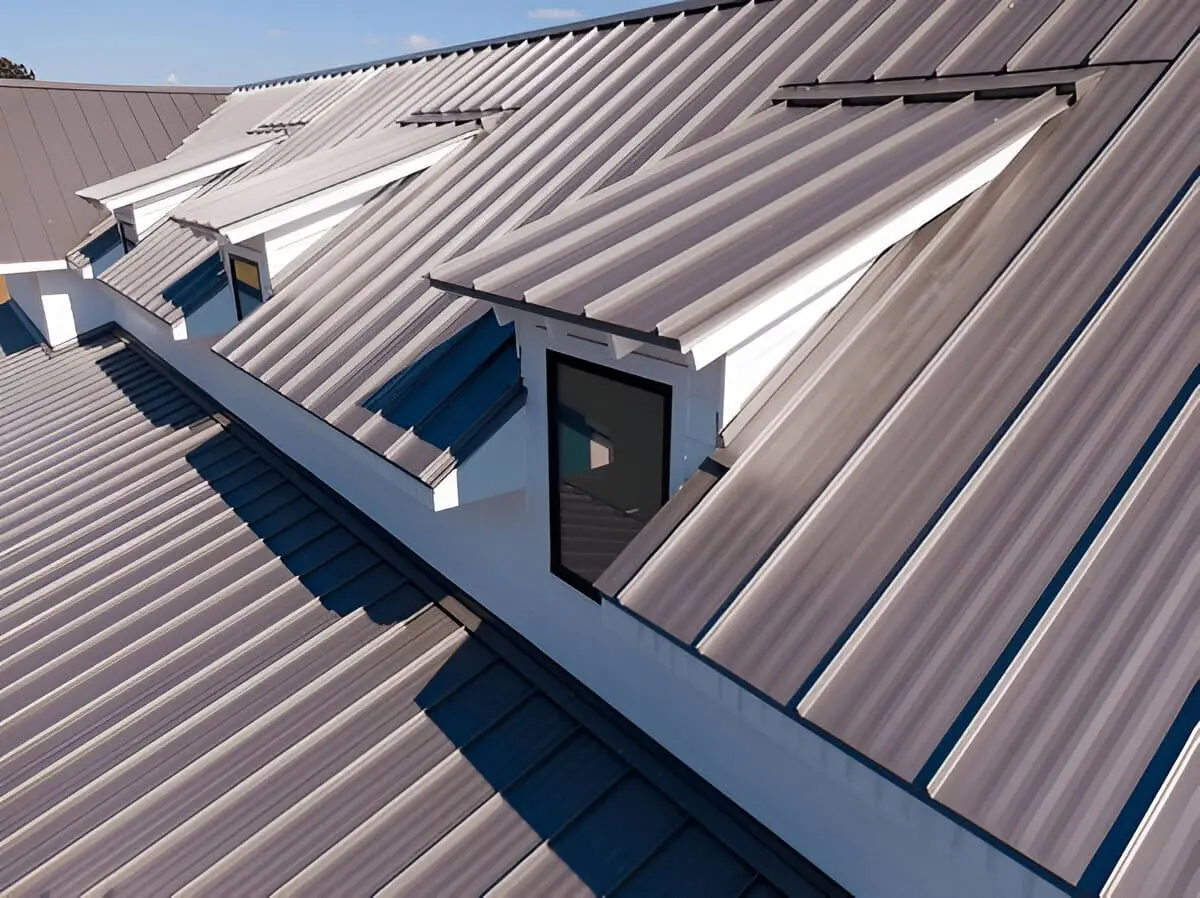
Standing seam is a concealed-fastener system featuring vertical panels with raised interlocking seams that hide fasteners beneath.
Key Characteristics:
- Panels range 12–24 inches wide
- Raised seams (typically 1–2 inches tall) run vertically
- Fasteners attach clips to deck; panels snap or crimp onto clips
- Flat panel surface between seams (smooth, uninterrupted)
- Available in mechanical seam (crimped) or snap-lock (interlocking)
Typical Applications:
- Modern/contemporary homes
- Commercial buildings
- High-end residential projects
- Hurricane/high-wind zones
- Architectural statements requiring clean lines
Design & Aesthetic Differences
5V Crimp Appearance
Visual Characteristics:
- Traditional, ribbed corrugated profile
- Visible fastener lines create texture
- Lower profile (ribs only 1 inch tall)
- Classic “metal barn roof” look
- Pairs well with farmhouse, cottage, rustic styles
Color Options: Wide range available (white, tan, brown, green, red, custom colors).
Curb Appeal: Less “obviously metal” due to lower profile; blends with traditional architecture.
Standing Seam Appearance
Visual Characteristics:
- Sleek, modern, minimalist profile
- Smooth flat panels with vertical seam lines
- No visible fasteners (clean, unbroken surface)
- Pronounced raised seams create shadow lines
- Contemporary/architectural aesthetic
Color Options: Same wide range as 5V, but often chosen in monochromatic schemes (black, charcoal, white) for modern homes.
Curb Appeal: High-end, sophisticated look; popular with architects and designers for contemporary projects.
Installation Methods & Complexity
5V Crimp Installation
Process:
- Install solid decking (plywood/OSB) or purlins over rafters
- Apply underlayment (synthetic or #30 felt)
- Position first panel at eave with 1-inch overhang
- Screw through panel ribs into deck/purlins every 12–18 inches
- Overlap next panel by one rib (conceals previous edge)
- Continue to ridge; install ridge cap with exposed fasteners
Fastener Type: Self-drilling metal roofing screws with neoprene washers (visible on surface).
Installation Time: Faster than standing seam (simpler attachment method).
Labor Cost: Lower ($2–$4 per sq ft labor) due to straightforward installation.
DIY Feasibility: More DIY-friendly for experienced builders; exposed fasteners easier than hidden clips.
Standing Seam Installation
Process:
- Install solid decking or purlins
- Apply high-temp synthetic underlayment
- Attach metal clips to deck/purlins at specified spacing (16–24 inches)
- Snap or crimp first panel onto clips
- Interlock next panel’s seam with previous panel
- Crimp seams together (mechanical seam) or snap-lock (snap-lock profile)
- No fasteners penetrate panel surface (all hidden)
Fastener Type: Concealed clips beneath raised seams.
Installation Time: Slower due to precise clip placement and seam crimping.
Labor Cost: Higher ($4–$7 per sq ft labor) due to complexity and specialized equipment.
DIY Feasibility: Requires professional installation; seam crimping tools and expertise needed.
Cost Comparison (2025)
5V Crimp Costs
Material Costs:
- Panels: $2.50–$5.00 per sq ft
- Fasteners/accessories: $0.50–$1.00 per sq ft
- Underlayment: $0.50–$1.00 per sq ft
Labor Costs: $2–$4 per sq ft
Total Installed Cost: $7–$12 per sq ft
Example (2,000 sq ft roof): $14,000–$24,000 installed.
Standing Seam Costs
Material Costs:
- Panels: $5–$9 per sq ft
- Clips/accessories: $1.00–$2.00 per sq ft
- Underlayment: $0.50–$1.00 per sq ft
Labor Costs: $4–$7 per sq ft
Total Installed Cost: $12–$18 per sq ft
Example (2,000 sq ft roof): $24,000–$36,000 installed.
Cost Difference Summary
Standing seam costs 30–50% more than 5V crimp due to:
- Higher material costs (specialty panels and clips)
- More complex installation (concealed fastening)
- Specialized equipment requirements (seaming tools)
- Longer installation time
Performance & Durability Comparison
Weather Resistance
5V Crimp:
- Good wind resistance (rated to 110–130 mph with proper fastening)
- Exposed fasteners can loosen over time in extreme wind
- Gasket seals on screws degrade with UV exposure (10–15 year replacement)
- More vulnerable to leaks at fastener penetrations
Standing Seam:
- Excellent wind resistance (rated to 140–180 mph)
- No fastener penetrations through panels (superior leak resistance)
- Interlocking seams create continuous weather barrier
- Better performance in hurricane/high-wind zones
Winner: Standing seam for severe weather; 5V adequate for moderate climates.
Lifespan
5V Crimp: 40–50 years with fastener maintenance every 10–15 years.
Standing Seam: 50–75 years; minimal maintenance due to no exposed fasteners.
Winner: Standing seam for longevity.
Energy Efficiency
Both systems offer comparable energy efficiency when coated with reflective finishes:
- Reflect 70–80% of solar radiation
- Reduce cooling costs 10–25%
- Energy Star certified options available
- Cool-roof coatings available for both
Winner: Tie (both excellent when properly coated).
Maintenance Requirements
5V Crimp Maintenance
Regular Tasks:
- Inspect fasteners annually; tighten loose screws
- Replace deteriorated neoprene washers every 10–15 years
- Check for rust at screw penetrations (touch up with paint)
- Clear debris from panel valleys
Maintenance Cost: $500–$1,500 every 10–15 years for fastener replacement.
Standing Seam Maintenance
Regular Tasks:
- Annual inspection for panel damage
- Clear debris from seams and valleys
- Check flashing at penetrations
- Minimal fastener maintenance (concealed clips rarely need service)
Maintenance Cost: $200–$500 annually for inspections; minimal repair costs.
Roof Pitch Requirements
5V Crimp: Minimum 3:12 pitch required (exposed fasteners need adequate slope for water runoff).
Standing Seam:
Winner: Standing seam offers greater flexibility for low-slope applications.
Pros & Cons Comparison
5V Crimp Pros
- Lower upfront cost ($7–$12 vs $12–$18 per sq ft)
- Faster, simpler installation
- More DIY-friendly
- Traditional aesthetic (suits rustic/farmhouse styles)
- Wide color/finish availability
- Good durability (40–50 years)
5V Crimp Cons
- Exposed fasteners require periodic maintenance
- Lower wind resistance than standing seam
- Visible screws detract from clean appearance
- Higher leak potential at fastener penetrations
- Shorter lifespan (40–50 vs 50–75 years)
Standing Seam Pros
- Superior weather resistance (140–180 mph wind ratings)
- No exposed fasteners (minimal maintenance, better leak protection)
- Longer lifespan (50–75 years)
- Sleek, modern aesthetic
- Works on lower slopes (0.5:12+)
- Higher resale value
Standing Seam Cons
- Higher upfront cost (30–50% more expensive)
- Requires professional installation
- More complex repairs if damaged
- Modern look may not suit traditional architecture
Decision Framework: Which Is Right for You?
Choose 5V Crimp If:
- Budget is primary concern (<$12/sq ft total)
- Your home has traditional/rustic architecture
- Roof pitch is 3:12 or steeper
- You’re in moderate climate (not extreme wind/hurricane zone)
- You’re comfortable with periodic fastener maintenance
- DIY installation is planned
Choose Standing Seam If:
- Budget allows premium investment ($12–$18/sq ft)
- Your home has modern/contemporary design
- You’re in high-wind or hurricane-prone area
- Low-slope roof (0.5:12–3:12 pitch)
- You want minimal maintenance
- Maximum lifespan is priority (50–75 years)
- Resale value and curb appeal matter
FAQ
What is the difference between 5V and standing seam metal roofs?
5V uses exposed fasteners screwed through panels with a traditional ribbed look, while standing seam uses hidden clips beneath raised seams for a modern, sleek appearance.
Is 5V metal roof cheaper than standing seam?
Yes. 5V costs $7–$12/sq ft installed vs standing seam at $12–$18/sq ft—approximately 30–50% less due to simpler installation and lower material costs.
Which metal roof lasts longer?
Standing seam lasts 50–75 years vs 5V at 40–50 years. Concealed fasteners reduce maintenance and leak risks, extending lifespan.
Can I install 5V metal roofing myself?
Yes, 5V is more DIY-friendly due to exposed fasteners and simpler installation. Standing seam requires professional tools and expertise.
Which is better in high winds?
Standing seam performs better in high winds (rated to 140–180 mph) due to interlocking seams and concealed fasteners. 5V is rated to 110–130 mph.
Do 5V metal roofs leak more than standing seam?
5V has higher leak potential at fastener penetrations. Standing seam has no panel penetrations, reducing leak risk significantly.
What roof pitch do I need for each system?
5V requires minimum 3:12 pitch. Standing seam works on 0.5:12+ (mechanical seam) or 3:12+ (snap-lock), making it suitable for lower slopes.
Conclusion
The 5V metal roof vs standing seam decision balances budget constraints against performance priorities: 5V delivers reliable 40–50 year performance at $7–$12 per sq ft with traditional aesthetics suited to farmhouse and coastal cottage styles, while standing seam justifies its $12–$18 per sq ft premium through superior wind resistance, 50–75 year lifespan, and maintenance-free concealed fasteners ideal for modern architecture and severe weather zones. Choose 5V for budget-conscious projects on moderate-slope roofs in temperate climates, or invest in standing seam for maximum longevity, low-slope capability, hurricane protection, and contemporary curb appeal. Both systems provide excellent energy efficiency and durability when properly installed by qualified contractors.
🏠 Roofing Tips & Updates
Get free roofing advice, cost guides, and seasonal maintenance tips.
For more on this topic, see Snap Lock Standing Seam Metal Roof: Installation Guide.

Roofing content specialist with 5+ years researching U.S. residential and commercial roofing. Has documented 200+ projects covering installation costs, material selection, contractor vetting, and DIY guides for homeowners across all climate zones.
Leave A Comment