Preloader Close
The minimum roof pitch for shingles determines whether your asphalt shingle roof installation will shed water properly or face chronic leaks and warranty problems. Most manufacturers and building codes set 2:12 as the minimum roof pitch for shingles, but only when specific underlayment requirements are met. Understanding slope requirements before you install shingles can save thousands in repairs and prevent premature roof failure.
Roof pitch is expressed as “rise over run” a 4:12 pitch means the roof rises 4 inches for every 12 inches of horizontal distance. The minimum roof pitch for shingles matters because asphalt shingles are a water-shedding system, not waterproof. They need enough slope for gravity to carry water downhill over overlapping courses. Below certain angles, water moves too slowly, wind-driven rain pushes under tabs, and capillary action pulls moisture backward into the roof assembly.
This comprehensive guide explains the real-world minimum roof pitch for shingles, manufacturer requirements, underlayment systems for low-slope installations, how to measure pitch accurately, and when to switch from shingles to low-slope membranes. Whether you’re a homeowner planning a roof replacement or a contractor verifying code compliance, you’ll find practical, actionable guidance here.
Table of Contents
Understanding the 2:12 Minimum Roof Pitch for Shingles
The minimum roof pitch for shingles in most manufacturer specifications and building codes is 2:12, meaning the roof rises 2 inches for every 12 inches of horizontal run. However, this minimum comes with strict conditions that many homeowners and even some contractors overlook.
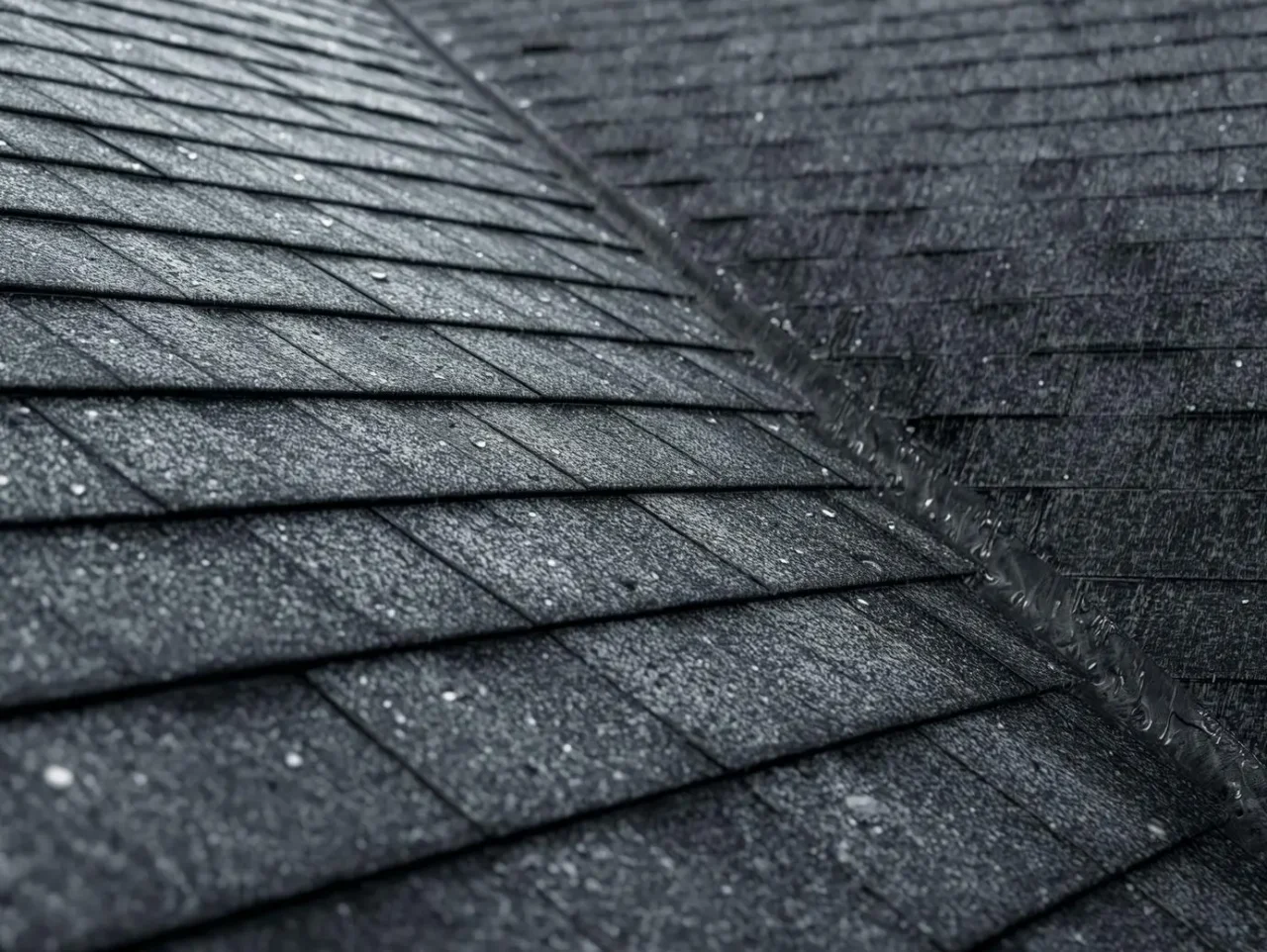
At exactly 2:12 pitch, water drains significantly slower than on steeper roofs. Snow melts more gradually. Wind-driven rain has more opportunity to push under shingle laps. These factors make the minimum roof pitch for shingles a threshold that requires enhanced installation practices rather than a comfortable working range.
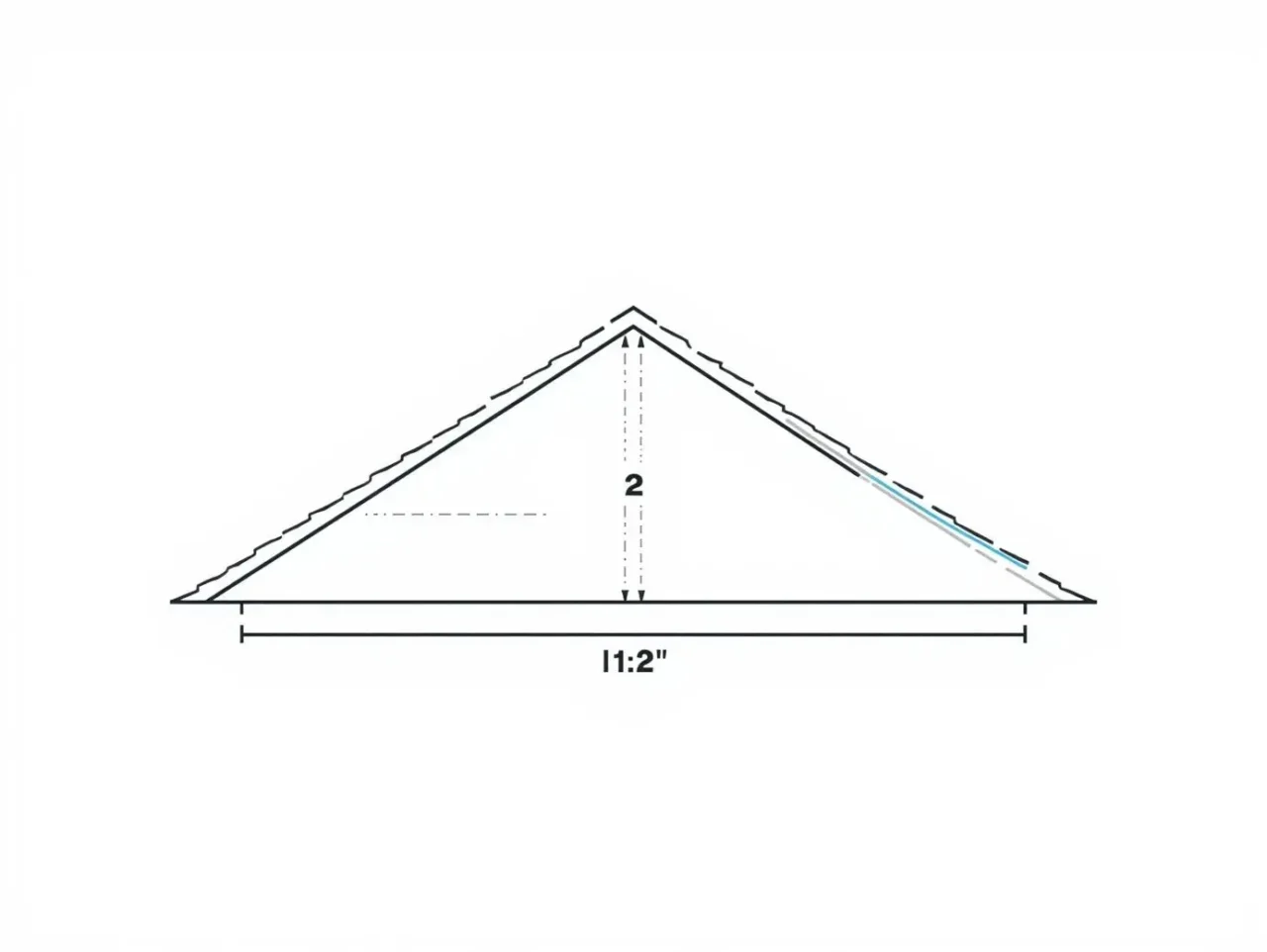
Slow water movement: On a 2:12 roof, water already moves noticeably slower than on a 6:12 or 8:12 slope. Drainage time increases dramatically, giving moisture more opportunity to find entry points through nail holes or worn sealant strips.
Capillary action: Water can wick uphill between overlapping shingle layers through capillary action. With low pitch and slow drainage, capillary forces have more time to pull water backward under shingle laps, defeating the gravity-based shedding design.
Wind uplift and driven rain: Strong winds can lift shingle tabs and push water upslope. The flatter the roof, the easier it is for wind to overcome gravity and force water under overlapping courses.
Ponding in depressions: Even minor deck irregularities or structural settling can create slight depressions where water ponds on low-slope roofs. Standing water accelerates shingle deterioration and finds any available leak path.
At the minimum roof pitch for shingles of 2:12, these risks become manageable only with upgraded underlayment systems that provide a secondary waterproof barrier.
Manufacturer Requirements at Minimum Pitch
Every major asphalt shingle manufacturer publishes technical manuals specifying their minimum roof pitch for shingles. While specific details vary slightly, the consensus is remarkably consistent:
GAF shingles: Minimum slope 2:12 for Timberline HDZ and most architectural lines, with double underlayment or self-adhered membrane required from 2:12 to 4:12.
CertainTeed shingles: Minimum 2:12 slope; requires two layers of underlayment or full-coverage peel-and-stick membrane on slopes under 4:12.
Owens Corning shingles: 2:12 minimum for Duration and Oakridge series; special low-slope application instructions mandatory below 4:12.
IKO shingles: Most lines allow 2:12 minimum with enhanced underlayment; some premium products may specify 3:12 or higher.
Installing shingles below the minimum roof pitch for shingles specified in the manufacturer’s manual automatically voids the warranty. If leaks or premature failure occurs, warranty claims will be denied based on improper application outside approved specifications.
The Three Critical Slope Zones
For practical asphalt shingle roof installation planning, roof slopes fall into three distinct zones with different requirements and performance characteristics:
Zone 1: Standard Slope (4:12 and Steeper)
Roofs at 4:12 pitch or steeper represent the ideal range where asphalt shingles perform best. This is well above the minimum roof pitch for shingles, and installation is straightforward:
- Single-layer underlayment: Standard synthetic underlayment or #30 felt is typically sufficient.
- Excellent water shedding: Gravity moves water quickly off the roof surface, minimizing exposure time and leak risk.
- Better snow performance: Snow slides off more readily, reducing ice dam formation in cold climates.
- Simpler installation: Roofers can work more safely and efficiently on moderate slopes.
- Longer shingle life: Reduced moisture exposure and better drainage extend service life.
Most professional roofers prefer slopes of 4:12 or greater for asphalt shingle roof installation because they offer the best combination of performance, safety, and ease of work.
Zone 2: Low Slope (2:12 to 4:12)
The 2:12 to 4:12 range is where the minimum roof pitch for shingles requirements become critical. Shingles can work here, but only with enhanced underlayment:
- Double underlayment required: Most manufacturers mandate either two layers of underlayment or full-coverage self-adhered membrane.
- Slower drainage: Water moves more slowly, increasing exposure time and requiring better secondary protection.
- Greater wind vulnerability: Wind-driven rain poses higher risk of water intrusion under shingle laps.
- Ice dam susceptibility: In cold climates, low slopes are more prone to ice dam backup that forces water under shingles.
- Warranty conditions: Enhanced installation requirements must be met or warranties are void.
If your roof falls in this zone at the minimum roof pitch for shingles, budget for upgraded underlayment materials and follow manufacturer specifications exactly.
Zone 3: Too Flat for Shingles (Below 2:12)
Below 2:12 pitch, standard asphalt shingles are not approved and should not be used:
- Water ponding: Even slight deck irregularities cause standing water that defeats water-shedding design.
- Extremely slow drainage: Water moves so slowly that capillary action and wind easily overcome gravity.
- No warranty coverage: All manufacturers exclude slopes below their specified minimum from warranty protection.
- High leak risk: Chronic leaks are nearly inevitable on shingles installed below the minimum roof pitch for shingles.
- Code violations: Building inspectors will fail installations that don’t meet minimum slope requirements.
If you measure below 2:12, plan for low-slope roofing systems like modified bitumen, TPO, PVC, or EPDM membranes instead of shingles.
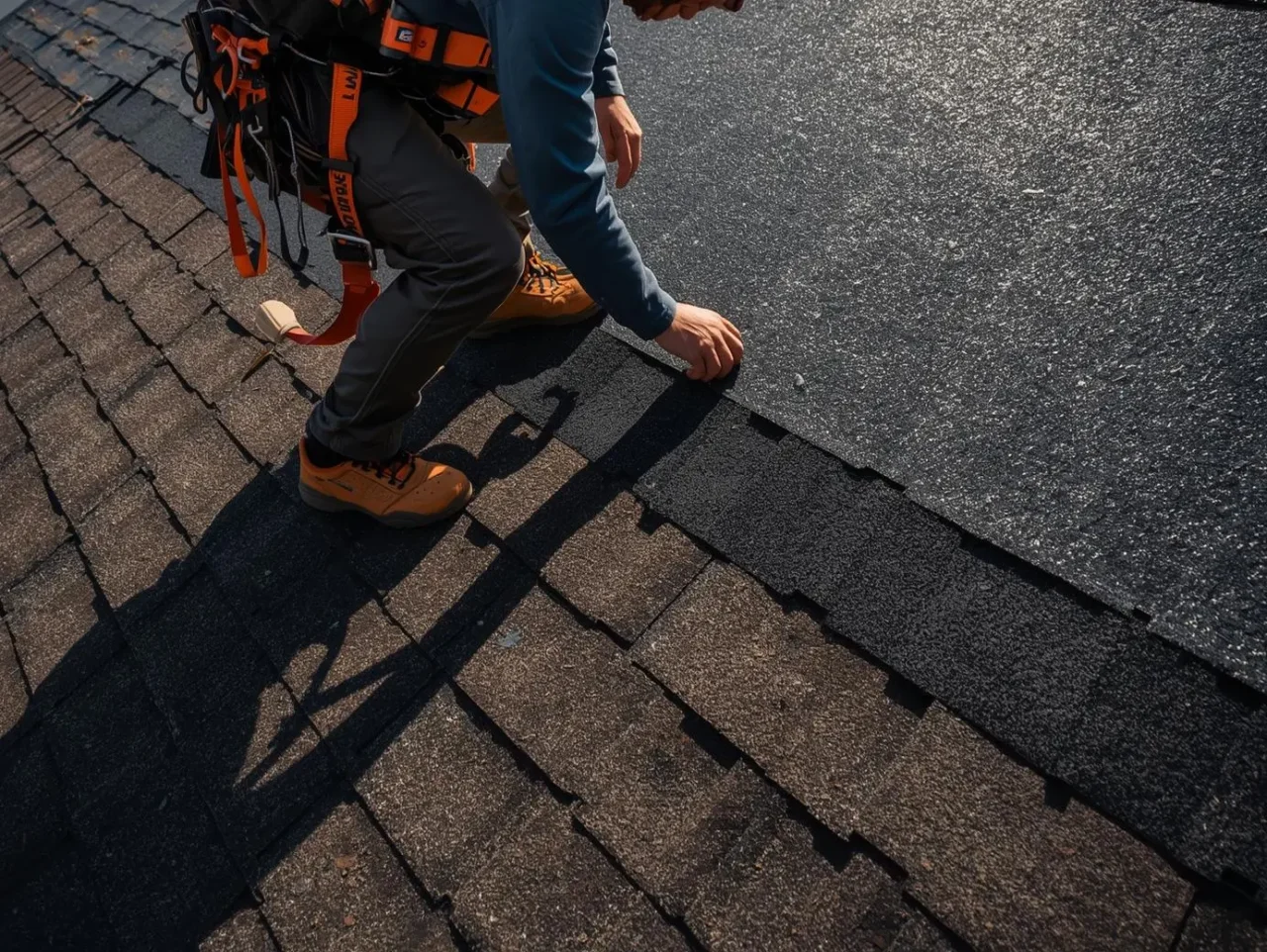
At the minimum roof pitch for shingles between 2:12 and 4:12, the underlayment system transforms from a simple backup layer to a critical waterproofing component. Manufacturers specify two main approaches to meet low-slope requirements:
Option 1: Full-Coverage Self-Adhered Membrane
The most reliable method for meeting minimum roof pitch for shingles requirements is installing a continuous self-adhered membrane across the entire roof deck:
Installation process:
- Apply peel-and-stick ice-and-water shield or similar self-adhered membrane starting at the eave
- Overlap seams by 6 inches minimum, rolling firmly to create watertight bonds
- Continue coverage to the ridge, ensuring no gaps or unbonded areas
- Install shingles over the membrane following standard nailing patterns
Advantages of full-coverage membrane:
- Self-sealing around nails prevents water infiltration even if it gets under shingles
- Continuous waterproof barrier protects deck from any shingle breaches
- Highest level of protection for roofs at the minimum roof pitch for shingles
- Excellent protection in high-wind or ice-dam-prone regions
Cost considerations:
Self-adhered membranes cost approximately $0.75-$1.50 per square foot compared to $0.15-$0.40 for standard underlayment, adding $750-$1,500 to a 1,000-square-foot roof project. However, this investment provides maximum protection when working at the minimum roof pitch for shingles.
Option 2: Double-Layer Underlayment
The second approved method for the minimum roof pitch for shingles is installing two layers of felt or synthetic underlayment with proper overlap:
Installation process:
- Install first course horizontally at the eave edge
- Begin second course starting 19 inches up from eave (for #30 felt) or per manufacturer specs
- Each subsequent course overlaps the one below by at least 19 inches
- Result is every point on the deck covered by two layers with staggered seams
- Provides double protection barrier if water penetrates shingles
Advantages of double underlayment:
- More economical than full self-adhered membrane
- Approved by all major manufacturers at minimum roof pitch for shingles
- Creates redundant protection without self-sealing features
- Works well in moderate climates without extreme weather
When to choose each option:
Choose full-coverage membrane when:
- Roof is exactly at 2:12 (the absolute minimum roof pitch for shingles)
- Climate includes heavy rain, snow, or frequent ice dams
- Budget allows for maximum protection
- Local building codes require enhanced protection
Choose double-layer underlayment when:
- Roof is 3:12 or higher (above bare minimum)
- Climate is moderate without extreme conditions
- Budget is constrained but code compliance required
- Standard protection adequate for regional weather patterns
Never skip the enhanced underlayment requirements at the minimum roof pitch for shingles. Single-layer installations in the 2:12-4:12 range void warranties and create high leak risk.
How to Measure Roof Pitch
Before determining whether your roof meets the minimum roof pitch for shingles, you need an accurate measurement. You can measure pitch from inside the attic or on top of the roof if safe access is available.
Simple Level and Tape Method
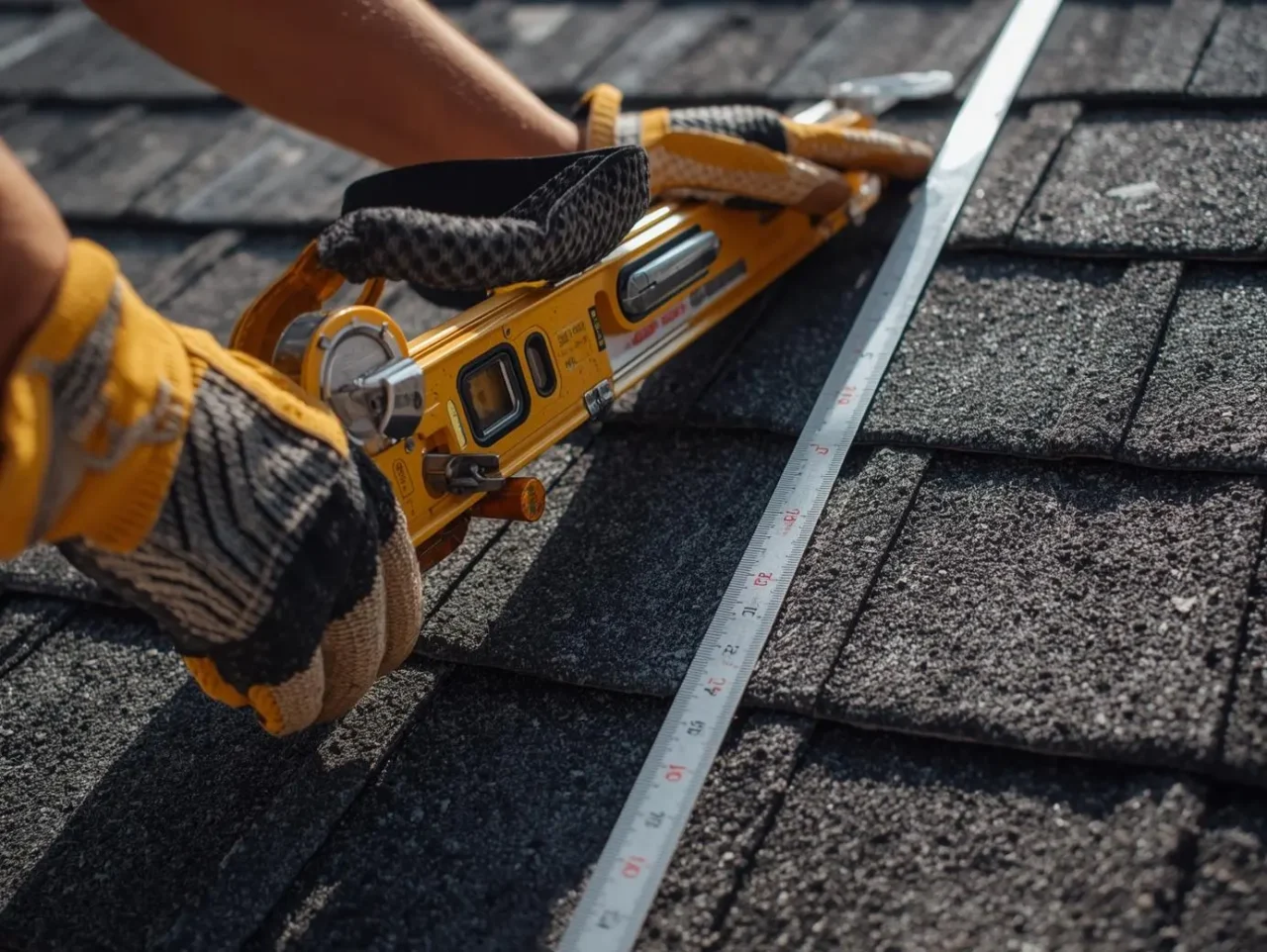
The most reliable DIY approach uses a 12-inch level and tape measure:
From inside the attic:
- Find a rafter running from eave to ridge
- Place one end of a 12-inch level against the bottom of the rafter
- Hold the level perfectly horizontal (check the bubble)
- From the other end of the level, measure straight up to the underside of the rafter
- The vertical measurement in inches is your pitch rise over 12 inches of run
From on top of the roof (if safely accessible):
- Place one end of a 12-inch level flat on the roof surface
- Hold the level horizontal
- Measure vertically down from the other end of the level to the roof surface
- The vertical measurement is your roof pitch rise
Interpreting measurements:
- 2 inches = 2:12 (exactly at the minimum roof pitch for shingles)
- 3 inches = 3:12 (low slope, enhanced underlayment required)
- 4 inches = 4:12 (threshold between low slope and standard)
- 6 inches = 6:12 (standard slope, good shingle performance)
- 1.5 inches = 1.5:12 (below minimum roof pitch for shingles, use membranes)
If you measure between 1.75 and 2.25 inches, treat it conservatively as 2:12 and follow all low-slope installation requirements for the minimum roof pitch for shingles.
Smartphone Apps and Digital Tools
Several smartphone apps can measure roof pitch using the phone’s built-in accelerometer:
- Place phone flat on roof surface or against rafter
- App reads angle and converts to pitch notation
- Verify accuracy by cross-checking with manual level method
Digital angle finders and laser levels offer similar convenience for contractors measuring multiple roofs. Regardless of tool, accuracy is critical when working near the minimum roof pitch for shingles threshold.
Below the minimum roof pitch for shingles of 2:12, attempting to install asphalt shingles creates serious problems that no amount of careful workmanship can overcome. The physics of water drainage simply don’t support shingle performance on very flat roofs.
Problems with Shingles on Too-Flat Roofs
Water ponding: On roofs below the minimum roof pitch for shingles, even minor deck irregularities, structural settling, or sagging between rafters creates depressions where water ponds. Standing water finds leak paths through nail holes, worn sealant, or aging shingles.
Reverse flow: With insufficient slope, capillary action and wind pressure easily overcome the weak gravitational pull. Water wicks backward under shingle laps or gets driven uphill by wind, defeating the overlap protection design.
Snow and ice accumulation: In cold climates, snow doesn’t slide off flat roofs. It melts slowly, creating persistent moisture exposure. Ice dams form easily, backing water under multiple shingle courses.
Accelerated deterioration: Prolonged moisture exposure on roofs below the minimum roof pitch for shingles causes premature granule loss, asphalt degradation, and shingle curling. A 30-year shingle might fail in 10-15 years.
Warranty void: Installing below manufacturer’s specified minimum roof pitch for shingles automatically voids all warranty coverage. If problems arise, you have no recourse.
Low-Slope Roofing Alternatives
When your measured pitch falls below the minimum roof pitch for shingles, switch to materials designed for low-slope or flat roof applications:
Modified bitumen: Multi-layer systems using reinforced asphalt sheets, either torch-applied or self-adhered. Works on slopes from flat to 3:12. Durable and proven, though installation requires experience.
TPO (Thermoplastic Polyolefin): Single-ply white membrane that reflects heat, mechanically attached or fully adhered. Excellent for flat to low-slope applications (1/4:12 to 3:12). Growing in popularity for residential and commercial use.
PVC (Polyvinyl Chloride): Premium single-ply membrane with excellent durability and chemical resistance. Higher cost than TPO but longer service life. Suitable for flat to low-slope roofs.
EPDM rubber: Black rubber membrane available in large sheets, fully adhered or mechanically attached. Proven performance on flat and low-slope roofs (flat to 2:12). More economical than TPO or PVC.
Built-up roofing (BUR): Traditional multi-layer system of asphalt and reinforcing fabrics, topped with gravel. Heavy and labor-intensive but extremely durable on flat roofs.
These systems are designed to be waterproof, not just water-shedding like shingles. They handle standing water, slow drainage, and wind-driven rain that would overwhelm roofs below the minimum roof pitch for shingles.
Transition Roofs: When to Mix Materials
Complex roof designs sometimes combine slopes above and below the minimum roof pitch for shingles. For example:
- Main house roof at 6:12 (shingles work great)
- Attached porch roof at 1:12 (below minimum roof pitch for shingles)
In these situations, install shingles on the steep section and a low-slope membrane on the flat section. Properly flash the transition between materials to prevent leaks at the material change line.
Many roofing contractors encounter these mixed-pitch scenarios and routinely combine different roofing materials based on actual slope measurements rather than trying to force one material across inappropriate pitches.
Climate and Regional Considerations
While 2:12 serves as the general minimum roof pitch for shingles, regional climate conditions influence whether working at or near this minimum is advisable:
Cold and Snowy Climates
In regions with heavy snowfall and freezing temperatures, roofs at the minimum roof pitch for shingles face additional challenges:
Ice dam formation: Low-slope roofs allow snow to accumulate rather than slide off. When attic heat melts the snow, water runs down to the cold eave and refreezes, forming ice dams that back water under shingles.
Prolonged snow cover: Snow sits on low-slope roofs for weeks or months, creating sustained moisture exposure as it slowly melts.
Freeze-thaw cycles: Moisture trapped in shingle crevices or under laps freezes and expands, accelerating damage on roofs at the minimum roof pitch for shingles.
Design recommendations for cold climates:
- Prefer 4:12 or steeper pitch when possible to encourage snow sliding
- Install full-coverage ice-and-water shield at eaves (typically 3-6 feet up from eave edge)
- Ensure excellent attic insulation and ventilation to minimize heat loss that causes melting
- Consider metal roofing on low slopes instead of shingles for better snow shedding
Many northern building codes require enhanced ice dam protection regardless of pitch, but requirements intensify as you approach the minimum roof pitch for shingles.
Hot and Dry Climates
In arid regions with minimal precipitation and high heat, roofs at the minimum roof pitch for shingles face different stresses:
Heat buildup: Low slopes present more surface area directly facing the sun, increasing attic temperatures and accelerating shingle aging.
UV exposure: Prolonged intense sunlight degrades asphalt and granules faster on any roof, but low slopes spend more time under direct sun angles.
Wind susceptibility: Desert winds can be strong and sustained; low-slope roofs near the minimum roof pitch for shingles are more vulnerable to wind uplift that lifts shingle tabs.
Minimal drainage issues: The good news is that rain is infrequent, so slow drainage at minimum pitch is less problematic than in wet climates.
Design recommendations for hot, dry climates:
- Enhanced ventilation to exhaust attic heat
- Light-colored or reflective shingles to reduce heat absorption
- High-quality shingles with superior UV protection and granule adhesion
- Secure nailing and sealing given high wind potential
While water management is less critical in dry climates, shingles at the minimum roof pitch for shingles still need proper installation to handle occasional intense storms and high winds.
Wet and Humid Climates
Regions with frequent rain, high humidity, or tropical storms present the most challenging conditions for roofs at the minimum roof pitch for shingles:
Constant moisture exposure: Frequent rain means water moves across low-slope roofs regularly, increasing leak risk at any vulnerability.
Algae and moss growth: Humid conditions promote biological growth that holds moisture against shingles and accelerates deterioration.
Wind-driven rain: Tropical storms and coastal weather can drive rain horizontally or even upward, easily defeating low-slope shingle defenses.
Hurricane wind uplift: Extreme winds in hurricane zones lift shingle tabs and test adhesive and nailing, especially on roofs at the minimum roof pitch for shingles.
Design recommendations for wet, humid climates:
- Strongly prefer 4:12 or steeper pitch to improve drainage
- Install full-coverage self-adhered membrane, not just double felt
- Use algae-resistant shingles with copper or zinc granules
- Enhanced nailing patterns and sealant for wind resistance
- Consider metal or tile roofing on low slopes for superior performance
Building codes in coastal areas often mandate specific wind ratings and fastening requirements. On roofs at the minimum roof pitch for shingles, these requirements become even more critical for long-term performance.
Frequently Asked Questions
What is the minimum roof pitch for shingles?
The minimum roof pitch for shingles is typically 2:12 (2 inches of rise per 12 inches of horizontal run) for most asphalt shingle products. However, this minimum is only acceptable when you install enhanced underlayment—either full-coverage self-adhered membrane or double-layer felt/synthetic underlayment. Between 2:12 and 4:12, shingles are considered “low-slope” applications requiring special installation procedures. Above 4:12, shingles perform optimally with standard single-layer underlayment.
Can you install shingles on a 1:12 pitch roof?
No, you should not install standard asphalt shingles on a 1:12 pitch roof because it falls below the minimum roof pitch for shingles specified by manufacturers and building codes. At 1:12, water drains too slowly, ponding becomes inevitable, and wind-driven rain easily penetrates under shingle laps. Installing shingles below the minimum roof pitch for shingles voids all manufacturer warranties and creates high leak risk. For roofs below 2:12, use low-slope roofing systems like modified bitumen, TPO, PVC, or EPDM membranes designed for flat and low-slope applications.
What happens if you install shingles below minimum pitch?
Installing shingles below the minimum roof pitch for shingles causes multiple serious problems:
- Water ponds in depressions instead of draining, leading to leaks through nail holes and seams
- Capillary action and wind pressure overcome insufficient gravity, pulling water backward under shingles
- Snow accumulates rather than sliding off, creating prolonged moisture exposure
- Shingles deteriorate prematurely from constant dampness
- Manufacturer warranties are voided, leaving you with no coverage for premature failure
- Building inspectors may fail the installation for code violations
The only solution is removing the shingles and installing appropriate low-slope roofing membranes designed for pitches below the minimum roof pitch for shingles.
Do you need special underlayment at minimum pitch?
Yes, when working at or near the minimum roof pitch for shingles between 2:12 and 4:12, you must install enhanced underlayment. All major manufacturers require either:
Option 1: Full-coverage self-adhered membrane (peel-and-stick ice-and-water shield) across the entire roof deck, which self-seals around nails and provides waterproof protection
Option 2: Double-layer underlayment installation where two courses of felt or synthetic underlayment cover every point on the deck with staggered seams
Standard single-layer underlayment is only acceptable on pitches of 4:12 or steeper. Skipping enhanced underlayment requirements at the minimum roof pitch for shingles voids warranties and creates substantial leak risk.
How do you measure roof pitch accurately?
To measure roof pitch and verify you meet the minimum roof pitch for shingles:
- Use a 12-inch level and tape measure
- From the attic: Place level against rafter bottom, hold horizontal, measure vertically from level end to rafter
- From the roof: Place level on roof surface, hold horizontal, measure vertically down to roof
- The vertical measurement in inches is your pitch (2 inches = 2:12, 4 inches = 4:12, etc.)
- If you measure close to 2 inches, treat conservatively as exactly at the minimum roof pitch for shingles and follow all low-slope requirements
Smartphone apps with accelerometers can also measure pitch, but verify accuracy with manual measurement when working near the critical minimum roof pitch for shingles threshold.
What roofing works better than shingles on low slopes?
For roofs below the minimum roof pitch for shingles (under 2:12) or barely meeting it where you want superior performance, consider these alternatives:
Modified bitumen: Reinforced asphalt rolls torch-applied or self-adhered in multiple layers; works flat to 3:12
TPO membrane: White reflective single-ply membrane, mechanically attached or fully adhered; excellent flat to low-slope
PVC membrane: Premium single-ply with superior durability; higher cost but longer life
EPDM rubber: Black rubber membrane in large sheets; proven performance and economical
Metal roofing: Standing seam metal works on slopes as low as 1:12 with proper detailing
These systems are waterproof rather than water-shedding, making them better suited for slopes at or below the minimum roof pitch for shingles.
The minimum roof pitch for shingles of 2:12 represents a critical threshold where asphalt shingles can still function, but only with enhanced underlayment systems and careful installation following manufacturer specifications. Between 2:12 and 4:12, shingles work in a “low-slope” zone requiring double underlayment or full self-adhered membrane protection. At 4:12 and steeper, shingles perform optimally with standard installation methods.
Before starting any asphalt shingle roof installation, measure your actual roof pitch accurately to determine whether you meet the minimum roof pitch for shingles and what underlayment system is required. For roofs below 2:12, plan for appropriate low-slope roofing membranes rather than trying to force shingles onto slopes where they cannot perform reliably. When in doubt, consult with licensed roofing contractors who can assess your specific situation and recommend the best materials and methods for your roof’s actual pitch and local climate conditions.
🏠 Roofing Tips & Updates
Get free roofing advice, cost guides, and seasonal maintenance tips.

Roofing content specialist with 5+ years researching U.S. residential and commercial roofing. Has documented 200+ projects covering installation costs, material selection, contractor vetting, and DIY guides for homeowners across all climate zones.
Leave A Comment