Preloader Close
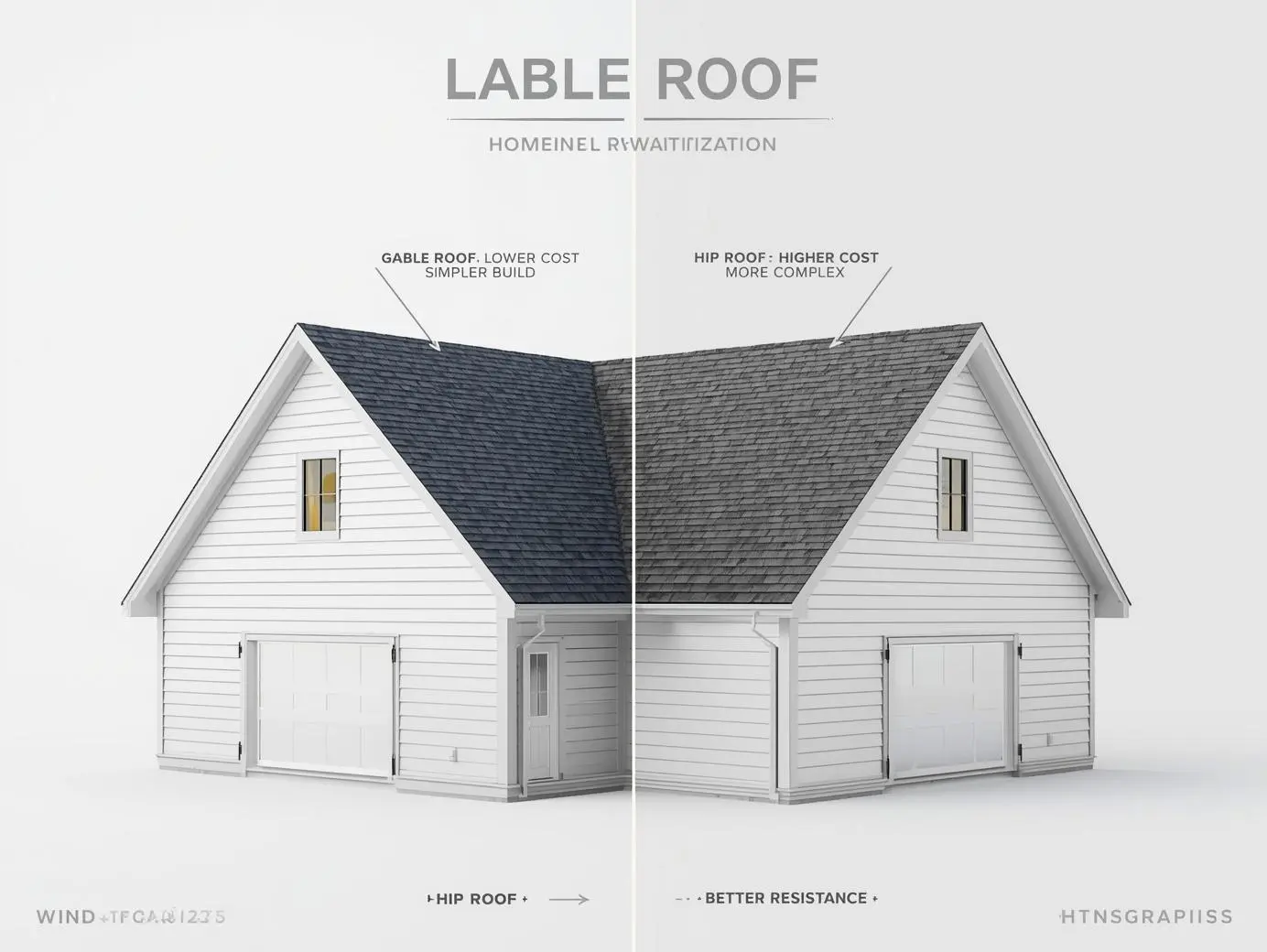
Hip vs gable roof cost is mostly driven by roof complexity: gable roofs are typically cheaper because they have a simpler two-slope design, while hip roofs usually cost more because the four-slope design needs more framing, more cuts, and more roofing materials. A common rule of thumb is that hip roofs require around 40% more materials than gable roofs, and total hip roof pricing is often quoted in the $20,000–$50,000 range (about $8–$12 per sq ft), while gable roof builds are frequently cited at $16–$30 per sq ft.
This guide breaks down hip vs gable roof cost in plain language, shows how to estimate roof installation cost for each style, and explains when the higher hip roof cost is worth it for wind resistance, insurance savings, and resale value.
Table of Contents
Hip roof vs gable roof: quick definitions
The gable roof vs hip roof comparison starts with structure.
- A gable roof has two sloped roof planes meeting at a ridge, with triangular “gable ends” on the two short sides.
- A hip roof slopes down on all four sides and uses “hip” lines where the roof planes meet, which creates more seams, more framing intersections, and more roof surface area to cover.
Those extra planes and intersections are the biggest reasons hip vs gable roof cost tends to favor the gable roof.
Hip vs gable roof cost (what you’ll pay)
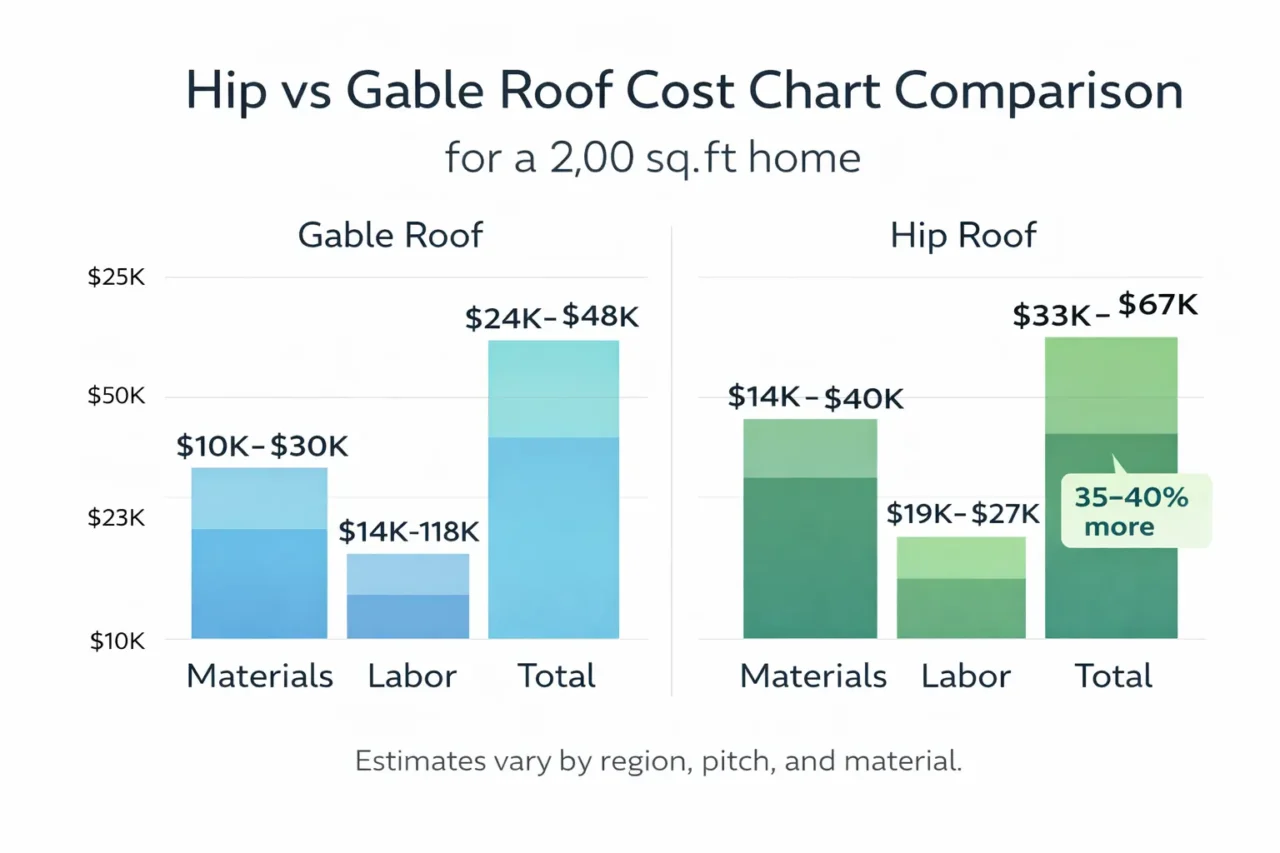
Costs vary by region, roof size, pitch, number of valleys, and material choice, but published comparisons consistently show hip roofs cost more than gable roofs.
Typical price ranges (widely cited)
Schneider Insurance cites these typical ranges:
- Gable roof: $16–$30 per sq ft (example “gable porch roof” build range)
- Hip roof: $20,000–$50,000 total (about $8–$12 per sq ft)
Roof River City provides another clear comparison for a typical home:
- Gable roof installation: $24,000–$48,000
- Hip roof installation: $33,600–$67,200
- Hip roofs cost about 35–40% more due to complex design and additional materials.
Why do per‑sq‑ft numbers look “inverted” in some sources?
You may notice some sources list gable roofs as $16–$30 per sq ft while hip roofs are $8–$12 per sq ft (yet hip roofs are still “more expensive” overall). This happens because different articles sometimes mix “roof build cost” vs “roofing surface cost,” and sometimes reference specific parts of a project (like framing or a porch roof) rather than the same scope and same measurement method across both roof types. For practical planning, the most consistent takeaway remains: hip roofs often run 35–40% higher total than comparable gable roofs because of added planes, hips, valleys, and labor.
What drives hip vs gable roof cost (the real levers)

If you want an accurate estimate for hip vs gable roof cost, focus on the cost drivers that change from bid to bid.
1) Roof surface area and material waste
Hip roofs typically have more roof surface area than a gable roof covering the same footprint, which increases shingles/underlayment/ice-and-water coverage. Schneider Insurance notes hip roofs can require about 40% more materials because there are more slopes to cover.
2) Framing complexity (labor and lumber)
Hip roof framing is more intricate because rafters/trusses meet at hips and ridges, and complex intersections require more cuts and additional bracing. Larson Keeney notes hip roofs require more time, materials, and skill to build, which increases price.
3) Seams, hips, ridges, and valleys (leak-risk detailing)
More intersections mean more flashing work and detail work. Schneider Insurance also notes that the “multiple angles and seams” of hip roofs increase complexity, which increases both material and labor.
4) Roof pitch and story height
Steeper roofs and taller houses increase labor time, staging, and safety setup for either roof type, but hip roofs already start with a complexity premium.
Hip vs gable roof cost comparison table (homeowner view)

Gable roof vs hip roof: pros and cons (beyond cost)
Cost matters, but roof performance and risk also influence total lifetime value.
Gable roof advantages
- Lower build complexity, usually leading to lower roof installation cost.
- Strong water shedding for rain and snow because of clear slopes and fewer intersections.
- Often simpler to ventilate and to add attic features, depending on design.
Gable roof disadvantages
- Gable roofs can be more vulnerable in high-wind environments because the “open ends” can catch wind and contribute to uplift if not reinforced.
Hip roof advantages
- Hip roofs are often preferred in hurricane zones and storm-prone areas because the four-sided sloped design deflects wind from multiple directions and reduces wind uplift.
- Many homeowners prefer the look of hip roofs for symmetry and curb appeal, which can support resale perception in some markets.
Hip roof disadvantages
- Higher hip vs gable roof cost because of complex framing and additional material needs.
- More seams and intersections can increase detailing requirements, which can raise labor cost and make workmanship quality even more important.
Insurance and storm risk (how roof shape can affect total cost)
Roof shape can influence storm performance, and some insurers consider roof shape as part of risk assessment. Hip roofs are widely discussed as more stable in high winds because wind flows over the roof rather than pushing on large vertical gable ends. Schneider Insurance also highlights wind performance and stability as a hip-roof advantage in storm-prone areas.
Practical takeaway: If you live in a high-wind or hurricane-prone region, the higher hip vs gable roof cost can be justified as a resilience investment, especially when paired with proper fastening and modern code-compliant installation.
Resale value: which roof adds more value?
Roof River City notes the decision can impact durability, insurance costs, and resale value, not just installation price. Because hip roofs are often perceived as more storm-resistant and architecturally “premium,” they may support resale value in some markets, while gable roofs can still be ideal where affordability and simple maintenance are priorities.
How to estimate your hip vs gable roof cost (quick method)
Use this method to get a realistic range before calling contractors:
- Measure roof area (or ask a contractor to measure) because roofing pricing typically scales with square footage of roof surface, not just home footprint.
- Decide roof type: gable roof vs hip roof.
- Apply a baseline: use published ranges as “sanity checks” (e.g., gable $24K–$48K vs hip $33.6K–$67.2K for a typical install), then adjust for your local labor and material choice.
- Add complexity multipliers: dormers, multiple valleys, skylights, chimneys, and steep pitch increase costs for both.
FAQs: Hip vs gable roof cost
Is a gable roof cheaper than a hip roof?
Yes, most comparisons report gable roofs are cheaper because they use fewer materials and are simpler to frame and finish, while hip roofs are more complex and typically cost 35–40% more.
How much more does a hip roof cost than a gable roof?
A common benchmark is that hip roofs cost about 35–40% more than comparable gable roofs because they require more roof surface coverage and more complex labor.
Why do hip roofs cost more?
Hip roofs slope on all four sides and require more intersections (hips, ridges, valleys), which increases both material use and labor time.
Which roof is better for high winds?
Hip roofs are commonly considered better for high winds because their four-sided slopes allow wind to pass over the roof more smoothly, reducing uplift risk compared to gable ends.
Does a hip roof reduce insurance costs?
Hip roofs are often associated with better wind performance and may help reduce storm risk, and some insurers consider roof shape in risk calculations, but discounts vary by carrier and region.
Which is better for snow: hip or gable?
Many sources note gable roofs shed rain and snow efficiently, while hip roofs can also perform well but may be chosen more for wind resistance than for maximizing steep snow-shedding geometry.
Final decision: choosing the best roof type for your budget
If your priority is minimizing upfront roof installation cost, a gable roof is usually the most cost-effective choice in the hip vs gable roof cost debate. If your priority is wind resilience and a more aerodynamic profile—especially in storm-prone areas—the higher hip roof cost may be justified, provided installation quality is high.
If you share your home size (sq ft), roof pitch (if known), and your region/climate (windy/coastal vs snowy), a tighter cost estimate range and a “which roof is better for you” section can be customized.
🏠 Roofing Tips & Updates
Get free roofing advice, cost guides, and seasonal maintenance tips.

Roofing content specialist with 5+ years researching U.S. residential and commercial roofing. Has documented 200+ projects covering installation costs, material selection, contractor vetting, and DIY guides for homeowners across all climate zones.
Leave A Comment